Is Amazon too big to care?

amazon_retail_store1The NY Times on Tuesday published an article on Amazon.com and the idea that the company works on ‘disrupting itself’. Scott Galloway of L2 is extensively quoted in the article ‘arguing’ that Amazon does not want to own a piece of retail but ALL of retail.

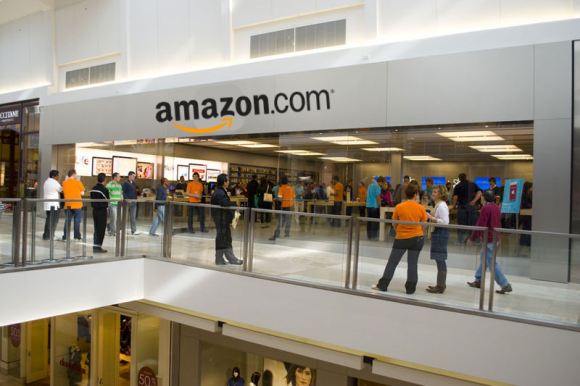
Also of interest in the article is that Amazon is readying the opening of its first brick and mortar store. Right here in Manhattan in fact across from the Empire State Building only a few short blocks away from my office. I wonder what kinds of things Amazon will feature in the store which is slated to open ‘in time for the holidays’ – whatever that means.

Amazon is now nearly 20 years old. With the recent settling of the Hachette dispute Amazon has lost some fans if not some credibility. Since I am somewhat of an aspiring writer I watched the Hachette proceedings with great interest. However I am also an inveterate reader and the idea of Amazon beating up writers and publishers to offer books at lower prices by holding down royalties ends up being a double-edged sword. If you have followed recording artist Taylor Swift’s recent tiff with Spotify.com you know that business disruption is the standard these days independent of industry.

So is Amazon now too big to care? I don’t think so but it sure can appear to be that way.   Amazon CEO Jeff Bezos bought the Washington Post last year and to date there is not an indelible Amazon mark on the venerated publisher. At least not yet.   There are some signs that Amazon is too big to care – lack of response to customer complaints and/or suggestions are mentioned in the article which while not surprising are disappointing from a company that likes to think of itself as making things better. We should expect more from Amazon.

The Kindle Fire tablet is improving (I still have the original Kindle Fire which is just an ok tablet at best); the Fire Phone has been a sales disappointment. It does seem apparent that Amazon wants to touch any and every part of your life in some way, shape, or form. A bit insidious but no cause for alarm, right?

Mr. Galloway suggests that Amazon will be opening ‘dark’ stores – places where customers can pick up items, although an Amazon spokeswoman said in a statement that the 470,000 square foot (!!!) building was “primarily” corporate office space.

If more Amazon brick and mortar stores are to be opened in the coming years perhaps existing locations of struggling retailer Radio Shack might be a nice fit. There are times that people would welcome the opportunity to return an item or have a physical store with real people working there handle an inquiry.   In turn that just might show that Amazon is not really too big to care.

Of course I could be completely wrong. What do you think? Is Amazon too big to care?


Posted in E-tailing, Marketing stuff | Tagged , , , , , , , , | Leave a comment

Another college shooting hits closer to home

AP_FSU_SHOOTING_141120_DG_16x9_992I was planning to write about Facebook and why people ‘like’ brands.  But when I woke up this morning I learned of another round of shootings on a U.S. college campus – Florida State University in Tallahassee, Florida.  Here in the United States this has become sort of a regular occurrence and most shockingly it’s no longer a shocking thing to hear about a campus shooting.  But this one was different.  Our precious daughter is a senior at Florida State.

Immediately upon looking at my phone I saw the texts, emails, and calls, all with well wishes and a desire to know if our daughter was ok.  She was indeed although my initial thought was that it would be highly unlikely for her to be in the library at 12:30 AM.  After all it’s not something I ever did back in my college days.  I came to find out that I was completely mistaken and in fact at times our daughter has been in the library at 2AM – just not last night.  Then I felt sick.

Once we knew she was out of harm’s way (for the moment) the question was ‘did she know the shooter who was shot and killed by fast responding Tallahassee police, or either of the three students that were shot?’  She did not.

Should there be tight security (metal detectors and screening) now in college libraries?  Apparently that’s what we’ve come to here in United States.  It’s no wonder that I hear from my friends and associates in other countries that it must be like living in the Wild West in the United States  I find it hard to argue that point.  We Americans all seem to agree the situation is completely out of hand.  And then we go back to business as usual.  Protecting our somehow inalienable right to carry firearms is somehow foundational to being an American to enough people that the overall situation never changes.  We complain, we complain, we complain, but nothing gets done.

Every time I walk into Grand Central Terminal I think it’s the least safe place to be in New York.  Sure there are what I see as an increasing amount of armed police and National Guardsmen omnipresent.  Yet the other day I had just returned from an out of town trip and was taking the train back to the suburbs and was wearing a big somewhat heavy backpack rolling an overnight back next to me.  If it were not me, that backpack might not have contained a laptop, some papers and cords, a tired banana and lots of pens.  It could have contained something much more dangerous. None of the police or guardsmen thought to give me a second look – perhaps I don’t exactly fit the profile?  Or perhaps at 6PM during the height of rush hour it’s simply too difficult to try to pick out persons of interest?

Here’s where it all could be going – security EVERYWHERE.  Airports and courthouses have thorough screening processes.  Schools from pre-K through university will have to employ these same measures, as will hospitals, commuter trains, arenas, stadiums.  You may need to plan to arrive three hours before any event so that one by one people can run their belongings through a detailed screening process.  It’s already happening in some locations (stadiums and arenas).  Why not movie theaters?  Broadway shows?

‘Just’ another college shooting has become an event closer to my home and heart, and I find it incredible to believe that my fellow Americans could feel the right to carry weapons anywhere they go should outweigh the safety of innocent people.  The rest of the world thinks all Americans walk around packing concealed weapons in the interest of self-protection.  While that’s far from the actual case, it’s hard for me to understand how second amendment protections are benefiting a majority of Americans.

I will write about FB some other time as I am not feeling it today.

What will it take to have things change?

Posted in Leadership | Tagged , , , , , , | 10 Comments

How did Toyota save the Prius brand?

Toyota PriusRecently Toyota Prius has been advertising on television with some amusing spots from Saatchi & Saatchi including one entitled “Rain’ in which an adolescent waits for the rain to wash the fourteen year old family Prius. Another spot entitled ‘Family Portrait’ depicts how the family has changed in the fourteen years they have owned their Prius.

What came to my mind were the issues with sticking in the accelerator pedal and the concern of unintended acceleration that plagued the Prius, reports of which began to filter in back in 2009. I remember at the time that anytime I was on the road I was on the lookout for any Prius’ to be sure I stayed clear. Right after the news became public I noticed Prius drivers on the road driving verrry slowly. Toyota ended up recalling nearly 2 million of the vehicles.

So how did Toyota manage to avoid what could have been a fatal blow to the brand? After all the EPA rates the Prius as one of the cleanest vehicles sold in the U.S. And the Prius is sold in more than 70 countries and regions and sales actually increased after the sticky accelerator reports.   Today the Prius sells nearly 5 million units worldwide. For me I never looked at the brand the same way again after the issues were reported. Apparently I am in the minority.

Maybe future Prius buyers were impressed that Toyota paid a $1.1 billion fine In December of 2012?   Maybe Prius buyers felt fuel costs were so high two years ago in 2012 that any hybrid was worth it since Toyota had addressed the sticky pedal issues (most car owners are well versed in auto manufacturer recalls these days)?

Of course Toyota maintained that the bulk of ‘unintended acceleration’ cases were due to floor mats that slid underneath accelerators and became trapped and were not the result of electronic defects in the cars’ engine computers. Not exactly standing tall and facing the music and any company that is able to offer a $1.1 billion settlement has to have more cash on hand.

It does not seem as if Toyota went out of their way to re-deliver on the Prius’ brand promise. Nothing special was done and buyers in short order flocked back to the brand making it bigger and more successful than ever before.

I just don’t understand why. Maybe you can help me?


Posted in Advertising, Brand Advertising, Green Products, Marketing stuff | Tagged , , , , | Leave a comment

Marketing intuition – overrated or underrated?

IntuitionMarketing_07SITESmart direct marketers have been doing evidenced-based marketing for a very long time. Yet even with the use of old school matrixes prior to the rise of spreadsheet marketing, a fair amount of experienced based intuition would be employed. What does that mean? That means that sometimes the numbers are ignored and even good marketers go with their gut instinct. I’m here to advise that intuition can be both useful and dangerous.

I came to this conclusion while reading Nobel Prize winner Daniel Khaneman’s very interesting book “ Thinking Fast and Slow’. I won’t get into the aspects of System 1 and System 2 any more than to note that the book’s central thesis is a contrast in two modes of thought: “System 1” is fast, instinctive and emotional; “System 2” is slower, more deliberative, and more logical. Spoiler alert – System 1 dominates and as Mr. Khaneman relates that’s not necessarily a good thing.

Is marketing intuition important? I say absolutely. If something feels wrong or right it bears further exploration.   You must test your hypothesis and not simply just act upon it since it seems or looks familiar, or fits neatly into some cubbyhole in your mind. Creative efforts in marketing are born from intuition.   Most successful creative efforts manage to meld that intuition with an empirical understanding of the responsiveness of a particular audience. Breaking the rules can be very effective but it’s always better if you know what the rules are in the first place.

Marketing measurement is nothing new. Yet the differences in the ability to measure today are significant compared to ten or twenty years ago (how did we manage without the use of analytics – Google or otherwise?).   To ignore the data staring you in the face is a perilous road to travel – and a likely less successful compared to using the data to bolster marketing intuition.

Over the years I’ve seen numerous instances of marketers ignoring the data. It’s sort of like a friend of mine who years ago moved to Las Vegas to play blackjack for a living. He counted cards (in the days before 8 deck blackjack). He did fine for a while and then deviated from his plan and started to play his hunches combined with his counting strategy. He did not last very long and soon was on his way back to New York. Counting cards in blackjack for a living was a boring and methodical – even tedious. But it works. Until you ignore the data.

In a multi-channel marketing effort there are many times when one particular media channel performs decidedly better than the corresponding ones. Marketing intuition would move you to increase your efforts in that media channel. But the first move should not be to employ the best performing channel to the exclusion of the other media channels that undoubtedly had contributed to the overall success of the campaign and best-performing channel. As we direct marketers always say – test, test, test, and test again.

How do you feel about data-fueled marketing intuition?


Posted in Advertising, Best business practices, Data driven marketing, Marketing stuff | Tagged , , , , , , , , | Leave a comment

Five reasons a football tailgate is all about social networking

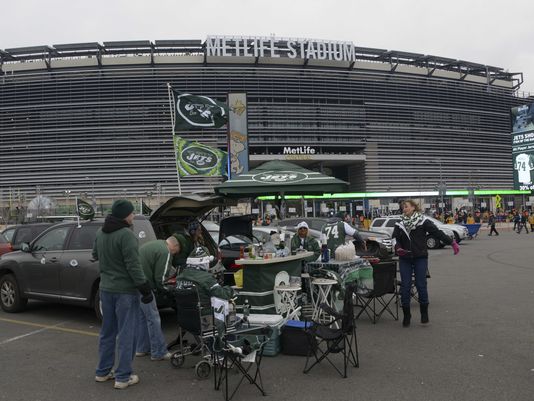
Jet tailgateBecause I am an American I watch football.  Some days I watch too much football.  Well almost.  Yet like most football watching fans I don’t attend many games in person.  There are obvious reasons for that – expense being a big one.  Tickets to football games are very expensive, parking is too.  But I’m here to inform you that not only is it worth your effort to go in person to attend a professional or major college game, YOU HAVE TO TAILGATE!  Why?  Because it’s the greatest thing ever!

Marketing folks like myself talk about brands, audience engagement and one –to-one conversations with clients and prospects (otherwise known as people).  Social network marketing is booming, (just check out Facebook’s latest earnings report).   And today more than ever, the mobile web keeps us up-to-the-second and in touch with our families, friends and co-workers.  (I often wonder what percentage of your FB friends are people you work or worked with and how odd is that?)

So why do I think tailgating is so great?   Here are just five to start with.  There are more.

  1. Attitude – For starters everyone that comes to a pre-game tailgate is there for a good time.  I did not see anyone that was not smiling and happy to be there.  At 9:30AM on a NY Jet 1PM scheduled kickoff Sunday outside MetLife Stadium, the air is already filled with the smell of charcoal and cooked meat.   Footballs in a variety of sizes and colors are already flying through (some are quacking) the air.  The opposition’s fans (as are the Jet fans) are decked out in full regalia.
  2. Camaraderie – The fans share something in common that runs deep – the undying love for their team.   People that might ordinarily despise one another’s politics (if they knew) are high-fiving one another as love for the home team far outweighs love of one’s party.
  3. Egalitarianism – Despite the cost of tickets, parking and whatever else, there are only a limited amount of home games in a football season.  People of extremely varied economic backgrounds all attend the same game, at the same time and tailgate in the parking lot – together.  BMW, Ford F-150, Honda Civic – it doesn’t matter when it comes to sharing food, drink and stories.  Nobody asks what you do for a living.
  4. Passion – Football fans, college or pro, are extremely passionate.  That passion is contagious and palpable.  This past Sunday the Bills plastered the Jets and there was much rejoicing amongst Bills fans and disgust amongst we Jet fans.  But it wasn’t boring.  We Jet fans were mad as hell but unfortunately it appears we will have to take it some more.
  5. Commitment – Just going to football game is a huge time commitment especially when you show up 4 hours prior to kickoff to tailgate.  And then there’s the trip home, which if you leave too soon after the final gun can seem longer than the game itself.

What makes it so vastly different from social networking as practiced via Facebook and Twitter is that so many interactions with fellow fans are anonymous.  As people walk by there are comments that are not tweeted but no less engaging.  High fives with total strangers before and after the game are common.

Tailgating is completely social, completely unmeasured and under-monetized.   And I am very thankful for that.

I think social networks like Facebook, Twitter, Instagram, Vine, Pinterest, and Snapchat , should take note of people’s behavior while tailgating to help them better understand the way people can share their passion and common experience.

When it comes to tailgating behaviors what do you think we can learn?


Posted in 50+ market, Advertising to Millenials, Community, Consumer Behavior, Sports Marketing | Tagged , , , , , | 1 Comment

Two fingers in a Tumblr – Yahoo has something to cheer about

tumblr images

Whisky-Glass-2


On Wednesday this week the New York Times reported that Yahoo CEO Marissa Mayer said that Yahoo had ‘strong third-quarter financial performance on Tuesday, breaking a pattern of revenue declines and posting profits from its core operations that far exceeded Wall Street’s expectations’  For a company that has not had all that much to cheer about recently it was welcome news for investors.

I think what Yahoo has done best is to have held on to its investment in Alibaba.com which by far is the best business move it has made (or not made) during Ms. Mayer’s tenure.  You’ll recall that in 2013 Yahoo bought blogging site Tumblr for $1.1 billion.

Because I consider myself a sometime blogger I have had a Tumblr account for a few years now.  I truly have no idea why or for what reason.  Every time I check my Tumblr I see an endless stream of random, mostly mindless photos and chatter about who knows what.   It’s obvious that I have no clue on how to get value from Tumblr   Not being a millennial may have something to do with that.

But what do I know?  Tumblr is expected to generate more than $100 million in revenue in 2015 thanks to a growing user base and a successful introduction of sponsored advertising, Yahoo Chief Executive Marissa Mayer said Tuesday.   It’s apparent that Yahoo has a clue on how to obtain value from Tumblr.

From an article in Wednesday Wall Street Journal

“The Tumblr update was something of a surprise. Yahoo has been largely silent on Tumblr’s financials even as critics repeatedly suggested that the deal was a dud. The company had been considering ways to recoup its costs from the deal.

Mayer said that in the past 15 months, Tumblr’s audience has grown 40% to 420 million users, while the number of registered blogs nearly doubled to 206 million. Mayer said this number includes logged-in users and people who land on one of its blogs.

More importantly, she said, people are hanging around on the platform for longer stretches of time – the amount of time spent went from 22 minutes to 28 minutes for something called dashboard sessions. “Tumblr is gaining share, we believe,” she said.

With the jump in users and engagement, Yahoo is now cashing in with sponsored advertising. Yahoo has been pitching Tumblr to marketers as a creative way to pitch to millennials. Marketers like the format, she said on the call Tuesday.”

Whoa – 420 million users is a big number.  I’d like to know more about these ‘users’ and their behaviors.   I still feel like I am missing something when it comes to Tumblr.  Maybe you can help?

Posted in Blogging, Digital media, Social Media | Tagged , , , , , , | 2 Comments

Have you actually ever stayed in an airbnb place?

airbnb-logo-hed-2014Before a couple of weeks ago I would have had to say – no, I think airbnb is a cool idea but I’ve never stayed anywhere via their portal.   That’s not true any longer, I’ve taken the plunge.  It wasn’t a big deal at all and that’s pretty much a good thing.

Yesterday it was reported in Crain’s NY  than 72% of airbnb offerings were basically illegal (or as it was put by NY attorney general Eric Schneiderman ‘. That they violate the law.

Don’t worry – it’s not a legion of grandma’s and grandpa’s renting out their spare room, nor is it mostly individuals that are looking for income to make ends meet by renting a room, a second home, or whatever they can on a person-to-person basis via airbnb.  No It’s – yes you guessed it, mainly corporations.

From yesterday’s Crain’s New York article:

‘It is generally legal to rent out a room while the homeowner or tenant is present, but many listings violated city zoning laws because the legal resident of the unit was away when the Airbnb client stayed there, a spokesman for Mr. Schneiderman said.

Additionally, he said, some listings violated state tax laws.

The report charged that large operators controlled a disproportionate number of listings.

According to the report, just 6% of hosts ran large-scale operations, but that group generated 36% of all rental transactions and collected 37% of total revenue, or $168 million.’

So renting the spare room is very much ok – particularly if you stay there.  I do not have information on the percentages of airbnb hosts that live or stay on the premises while their guests enjoy their stay.

In my case my wife and I stayed at an airbnb duplex condo on a recent trip to Florida.  We were there visiting our daughter and it was a big football weekend with it being parent’s weekend and well, it’s college football in the state of Florida.  What I am trying to paint a picture of is that there were almost no hotel rooms available even two months prior to the weekend.  We had wanted to try airbnb (ok I had wanted to try airbnb – my wife was less than enthused) and it was the best option for the price.

How was our experience?  Meh.  We knew there would be nobody else there.  The place was conveniently located (something we knew prior), large (something we knew prior), it had a full size small bed (something we knew prior and just accepted due to lack of other options).  It had ‘antiques’ (something we knew prior but did not value and for good reason.  Relics would be a more apt description).

The general appearance of the place reminded me of an old 1970’s TV episode (Like Columbo – but no sign of the great Peter Falk).  It was dark, kind of musty and kind of tired.  The place was clean – mostly.  Here’s the big thing – it was rated five stars on airbnb.  FIVE STARS?  I dare offer that while I admit I have what might be considered rather discerning standards, not one person reading this post would give it five stars.  Two stars maybe.

Would I stay in an airbnb-listed place ever again?  I would not rule it out on the basis of one experience in one city.  The thought of staying in someone else’s house in a spare room is the only option for some people.  I am interested in having more experience in this aspect of the sharing economy.  It’s all because I think Uber, Lyft, airbnb, HomeAway, all are just cool.

But be mindful of the ratings.  One man’s dump is another’s Ritz-Carlton.


Posted in Customer Experiences, Innovation, Living in the World Today, Sharing economy, Travel | Tagged , , , , , , , , , | 5 Comments

Commuting and stress – can you relate?

NYC commutersI’ve written about commuting to New York City before.  http://wp.me/pn6jX-jG    http://wp.me/pn6jX-RG .  But I was speaking with a friend recently regarding commuting and he encouraged me to share my description of what it is like.  Living outside of the city and commuting whether it’s every day as I have done for part of my career, or a few days a week as I do now, offers a great contrast in how my day starts and my morning commute winds down the moment I step off a train in Grand Central Station.   I suspect every commuter can relate.

To wit:

It’s a cool morning in the suburbs of New York City (but it really could be any city around the world).  Ok maybe if it’s Hong Kong there are not too many cool mornings but you get the idea.  It’s quiet in the suburbs and the sun is just coming up (well at least some of the year).  There are birds singing, pretty trees and the air smells fresh and clean.  I enjoy the routine of commuting into New York City since what I actually do in the morning is not all that different than what I do when I do not commute.

Most days I wake up, click on the local NYC news to find out if there are any problems with the commute or weather issues.  I shower, have coffee and breakfast, read emails), and catch up on what’s going on from a variety of sources – reading both online and an actual printed newspaper (we get two at home).   I am always on the lookout for interesting and relevant information on behalf of my friends, clients and colleagues.

Most days I am feeling pretty relaxed as I leave the house for the train station.  I am not too concerned with which train I catch since they run fairly frequently, though not  punctually, so when a train headed to Grand Central arrives I just get on it.  Spending the time in the morning on the train is quiet time and there’s not much conversation on a train that is on the move around 7AM.  This is in stark contrast to the return trip home which is much noisier.

That groove that I am happy with on the train; reading, thinking, contemplating, is one of the most enjoyable parts of my day.  It all comes to an end in the dark tunnel that starts at 97th Street and Park Avenue as people begin to gather their belongings and line up to exit the train before the poor souls that remain sitting down reading or sleeping. The race is on.  And so is the stress level.

We commuters file out into the city streets in waves – often waiting to climb a staircase as the volume of humanity streaming out of the train overwhelms the track exits into the station.  I notice my gait picks up just in order to keep up with the masses.  So does my heart rate whether I want to admit it or not.  I make hundreds of mental calculations on where to walk, who to walk in front of and who to go behind, and a critical skill is to know when to cross through the flow of people moving at a 90 degree angle – without breaking stride.  If you don’t do this you are much like a salmon struggling to swim upstream.

Exiting the station the choreography continues.  Timing the lights, walking diagonally across the street so as to be as completely efficient as possible in order to minimize any wasted time.  Walking between cars, buses, taxis all are part of my daily flow.  Using cars or pedestrians as screens from oncoming traffic (hey they’d get hit before me), it’s so ingrained that I do all of this without even thinking.  If it is raining a new dynamic is introduced, that is the dance of umbrellas which take up valuable space and serve to keep people dry (for the most part) but slow down the process.

The walk down Park Avenue is decidedly different (and more peaceful) than the walk down Madison Avenue which is chock full of buses and exhaust.  But in the interest of efficiency I eventually need to find my way over to Madison Avenue and its cacophony.

Finally I am on the street where my office is and I churn all the way to the front door.

Arriving at the office I take a deep breath and do my best to ratchet down the stress level that is only really ten to fifteen minutes old.  It’s quiet in my office and I can begin to regain the groove that started my day.

While I have spent nearly all my professional career in New York City, my travels around the world have shown me that it is not all that different in other cities.

The rat race really does exist and it’s up to each individual to find ways to cope. They don’t call us mad men without reason.

What is your commute like?


Posted in Living in the World Today | Tagged , , , , , , , | Leave a comment

Amazon and Apple – are they rivals or partners?

apple-vs-amazonAggravation: As of last week The Wall Street Journal application that resides on my ‘Original’ Amazon Kindle Fire is no longer is supported by Amazon.  I learned of this when last week I could no longer download the paper.   No warning, no communication from Amazon at all.  At first I thought it was my individual device but when I called (yes I really called the 800 number) I was informed of the news.  Since I called the Wall Street Journal I got their point of view that Amazon changes things rather consistently without any advance notice.

While I am far from being a member of the Apple cult (and a cult it is), I appreciate the good things (design elegance and usability) that come with Apple devices and platforms.  Those things are the cornerstones of the Apple brand.  But hey, what about Amazon’s cornerstones?  People tend to trust Amazon and have confidence in the platform, but I’ve never heard anyone mention anything regarding the elegance of an Amazon device.

I want to think that Apple would never handle an update the way that Amazon did.  As if Apple would ever allow a situation to occur like ‘Too bad Original iPad owner but we don’t support that anymore’’.  At least that’s my perception.

So I began to think exactly where do Amazon.com and Apple directly compete?   I decided to make a little scorecard.

The first thing that comes to mind is music.  iTunes vs. Amazon’s new Prime Music service. There’s a clear winner here even though Prime Music is relatively new and unknown.

OK Apple 1 – Amazon 0

How about books?   Again, there’s a clear winner but the other way around.  Amazon’s roots, past if not present, are books.  Just ask the folks and authors at Hachette.   There actually is an iBooks application but it is not built as an e-commerce platform in any traditional sense.

Apple 1 – Amazon 1

What about mobile phones?  Until very recently this was literally a no contest.  With the introduction of the Kindle phone it’s all so different now, isn’t it?  NOT.  Still no contest

Apple 2 – Amazon 1

How about tablets?   The Kindle Fire from Amazon vs. the iPad, iPad Mini or any tablet device from Apple.  Again no contest and I can tell you this from first hand experience.

Apple 3 – Amazon 1

And what about distribution of goods?  Starting with books, Amazon has built an impressive distribution platform that can deliver goods to Americans in less than 48 hours (this is without delivery drones).   Apple is not at all interested (at least not at the moment) in distribution.

Apple 3 – Amazon 2

I’m not even going to get into which company has made money over the years and which one has yet to make money.    Apple is the most valuable company on the New York Stock Exchange.  In 2012 Amazon did almost $18 billion in sales.  Amazon has always been about long-term value, which is why it has remained a popular stock on the Street.

Now my scorecard is totally biased with my own opinion.  However what did emerge is that Apple and Amazon (for the most part) do not really compete – at least not to any substantial degree. Yet they are not partners to any degree either.  In fact with Amazon’s handling of the Hachette situation there’s talk of Amazon already having or on the way to having an industry monopoly when it comes to books.  Not too long ago Apple was being called out for something similar when it came to music but not so much recently.

Both Apple and Amazon seem to have some unwritten gentlemen’s agreement not to get into each other’s stuff (the Kindle Fire and Kindle Fire phone non-withstanding).   So are Apple and Amazon rivals?  Partners?  Neither?  Something else?

Posted in Apps, Best business practices, Brand Advertising | Tagged , , , , , , , | 2 Comments

Direct Response Television – A mature industry still in the process of growing up

virginia-super-slims-advertisement1Most of my career has been in and around direct marketing. Sometimes B2B and sometimes B2C. I’ve attended countless conferences over the years although with my extensive background in print and mail dominates and I’ve had not nearly as much career experience in DRTV (you know the things you claim never to watch. Infomercials. Short form ones, like 30,60,120 seconds; or longer form, like 5,30 or even 60 minutes). Last week I attended my first Electronic Retailing Association (can we agree it’s time for a name change?) Direct to Consumer (ERA D2C) show/conference/expo (call it what you like), in Las Vegas where the focus is on DRTV. (The Wynn Hotel is awesome by the way).

When direct response pitchman Billy Mays died in 2009 I wrote about that from the standpoint that perhaps the time had finally arrived where DRTV marketers would stop all the yelling. To a degree that has happened but what continues to work are a plethora of low cost products that are as easy to purchase as a few clicks or a quick phone call. Most of the attendees, presenters and organizers appeared to have experienced successes in DRTV. And yes a few failures as well. After all DRTV is a business that necessitates failing fast.  If orders don’t come in when spots air cut and run as soon as it’s clear.

Like so many industries technology is having a big impact on the DRTV business. Viewing habits are very different from even five years ago. There are more cable channels than ever before and now with Internet TV channels countless viewing options so advertising inventory is spread out over an increasingly wider landscape. Audiences continue to fragment making it harder to reach likely DRTV purchasers of products and services.

One of the things that has always interested me regarding direct response is that if it doesn’t work you don’t keep doing it since your direct sales figures are the only indicator of success or failure. Professional marketers readily admit that brand advertising is nearly impossible to correlate to an overall ROI.

I’ve heard ratios like one in thirty DRTV spots actually work. And in pure direct response terms you are always hoping for that grand slam like a Snuggie from a few years back, or the expandable garden hose that is everywhere today. In recent years a direct to retail strategy has become increasingly popular. The real success today is often seen in using DRTV to create some sales to offset media and production costs that will enable a hit DRTV product to then be sold at retail – Wal-Mart, Kmart, etc.

What I became aware of as I took it all in with an industry colleague and good friend, was that most DRTV efforts have still not graduated from being strictly tactical to being strategic first before going to tactics. The machine is still working (although not as effectively) – spots are written and produced, and media is purchased in pretty much the same fashion as it has been, (with more technology to better catalog and report to clients where and when spots aired).

The prevailing notion is that the best DRTV products appeal to the broadest range of people. For that reason fitness and health products rule the roost. Yet when we asked marketers and companies who was their target audience we often heard “everyone can use it” or something like women from 16-55. Instead of determining the most likely segments to purchase, since everyone needs to be fit everyone is a prospect. Since everyone wants to be healthy than health products are for everyone!   Let’s face it folks – DRTV for most of its history has been nothing but a blunt instrument.

There’s so much useful data in the marketplace that can be used to finely target the people that would MOST likely purchase your product. At the same time it’s just as important if not more so to not reach out to people who might be able to use the product but would NEVER BUY it. One of the show personalities, a sometime DRTV spokeswoman, noted that even DRTV now has begun to realize that shouting is not the answer, and that a conversation should be had with the prospective customer. The only way that can happen is if DRTV folks grow up and understand that leveraging behavioral and attitudinal data is the key to unlocking those conversations that your prospects and customers will be interested in having.

Unlike the old brand ad for Virginia Slims cigarettes, DRTV’s version of the line should be ‘You’ve got a long way to go, baby’.   And yes I am going to go back again next year, after all, it’s Vegas baby.

Posted in Direct marketing, Direct Response Television, Marketing stuff, Targeting, Television advertising | Tagged , , , , , , , , , | 2 Comments