U.S. luxury retailers want to go out for Chinese

china-louis-vuitton-line-super-169This past Tuesday morning I attended an interesting session at the SUNY Confucius Institute for Business in midtown Manhattan. I was invited by my friend and colleague Michael Zakkour of Tompkins International (who is co-author of the 2014 book China’s Super Consumers). The session was part of the China Business Series and entitled “China Going Global”.

Introduced by SUNY CIB Director Maryalice Mazzara, Michael had just returned from a trip to China. The audience was primarily executives and even nearby Madison Avenue store executives and personnel whose stores have one or more significant customers from China.

Mr. Zakkour’s remarks included updated information from his 2014 book (in China information updates so fast that what was written last month is out of date at times!), and noted that there are soon to be 700 million online shoppers in China alone up from 550 million today.

Today’s luxury Chinese consumer is a worldwide shopper – Shanghai and Beijing yes, but also Paris, London, and New York City are increasingly important to the luxury Chinese buyer who is interested in exclusivity and a great customer experience.

One question from the audience was posed regarding how to best communicate with Mandarin speaking shoppers in New York City (but it could be any non-Chinese speaking major city). Mr. Zakkour was quick to answer that the need was to hire one or two Mandarin speaking sales associates and to have one on the floor at all times. This makes total sense to me as one big sale to a Chinese customer could cover that expense for months.

It also will not be long before China’s economy is the single largest in the world supplanting the United States. China now invests so much all over the world that the country is a net positive FDI investor – that is more money for investment flows out of China around the world than into China. That was unthinkable not so long ago.

Some other interesting bits from Mr. Zakkour,

Age 57 – Average age of American millionaires

Age 37 – Average age of Chinese millionaires

This is important since catering to a 57 year-old American millionaire is vastly different to catering to a 37 year-old more recently minted Chinese millionaire. At the least it would present a substantial merchandising challenge.

Mr. Zakkour rounded out his comments by mentioning that 1 out of 3 luxury purchases are made by Chinese citizens. And 70% of those purchases are made outside of China. U.S. luxury retailers had better be paying close attention to these details in order to not miss what is a great opportunity.

It’s not too late.  Yet.


Posted in Brand Advertising, Business in Asia, Business in China, China, China Marketing, Consumer Behavior, Luxury Marketing | Tagged , , , , | Leave a comment

Reddit and Gawker are moving in the right direction

Gawker_Media_Logoreddit-logo-01-674x5011

‘Reddit.com is turning its back on the foundations on which it was built!’ ‘Gawker.com is selling out and risking everything!’ Well if you ask me I will tell you that for veteran internet companies like Reddit (founded 2005) and Gawker (founded 2002), their two principals Steve Huffman and Nick Denton are 100% right. Of course when it comes to moving to or maintaining a sustainable revenue model I will almost always be a brand’s champion.

For those unfamiliar, both stories are quite interesting and important. For Reddit to admit that unregulated hate threads are not what the brand stands for, was an about face from their heretofore core principles. This is not the Reddit of 2002, or even 2010 for that matter. Reddit has millions of dedicated users. Despite its desire to be appealing to the widest possible amount of people – even those with extreme opinions, Reddit today is too big and too important to cater to fringe audiences.

For those that will leave Reddit (those fringe audiences), they will find other forums in which to foster their hate and vitriol. And if they cannot find those forums they will build new ones and that’s just fine. In the meantime Mr. Huffman has done the public and his company a great service in the process. The not-unimportant by-product is securing a more successful business model and future.

As for Mr. Denton’s undoubtedly excruciating decision to pull down content not due to legal concerns, let those on the fringe travel down those narrow corridors of ‘pure-truth’ posts independent of who might be antagonized.   Apparently those people do not have businesses to run or employees, rent and vendors to pay.

There will always be need and reason to test the outer limits (see Donald Trump’s attempt to win the 2016 Republican Presidential nomination), and in a country that values free speech, fringe forums will and should continue to exist. When there is a business to be run however, choices have to be made and as far as I am concerned the right choices have been made in both cases.

Agree or disagree?

Posted in Internet forums, Internet news | Tagged , , , , , | Leave a comment

In-car navigation systems offer little utility

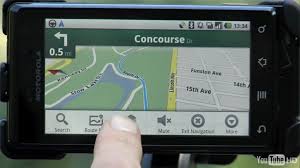
google maps in carIt’s summer here in the U.S. and since we Americans are still so keen on driving navigation assistance remains very important. Today most people don’t use AAA for TripTiks and maps any longer (cue nostalgic music).

Just last week Nokia’s GPS app HERE, (The Financial Times reported), was being pursued by BMW, Daimler and Audi. Audi has tried this before as has Kia but as yet Google Maps has not taken hold as the default car navigation platform.

Clearly car manufacturers and people expect more from in-car navigation services. Resultingly, stand-alone navigation devices such as a Garmin, Magellan, and Tom-Tom (remember this company?) have all been forced to change their business models.

Back in 2013 Forbes ran an article on the changing fortunes of Garmin. It has not gotten better for Garmin since then.

I thought of all this while I was sitting in traffic recently. The reason I was sitting in traffic is that I was driving alone and used my car’s navigation system. When I first drove the car the in-car navigation system worked well although did not include real-time traffic results.

After having the car for one year the manufacturer offered me the opportunity (at $99 per year) to update the navigation system. It would still not have real-time traffic reports but the display is nice and convenient.

A little more nostalgia – remember MapQuest? It’s still around but I don’t hear much about that company anymore and I don’t know many people that are users. Why? Google Maps!

In fact, Google Maps is what most people I talk with are using all the time. You may be aware that Google purchased Waze – real time traffic reports by people on the road, (who are hopefully passengers or else we have hit the mother lode of using phones while driving not texting while driving but maybe even worse).

Thanks to Waze, Google Maps’ ‘time to destination’ fluctuates based on real-time traffic conditions. Alternate routes are offered when there are traffic issues. I have had my bacon saved a number of times by Google Maps – to the tune of saving me 2 hours or more on a given trip due to a horrible accident that Google Maps smoothly navigated me around.

Did I mention that Google Maps is FREE? Why would I EVER want to pay to update my in-car navigation system for an inferior piece of technology that is obsolete the moment it is delivered? Are car manufacturer’s that hard pressed for new revenue as to offer something with utility that does nothing more than degrade day by day?

Wait, please don’t answer that one – it’s too easy. I agree that in-car navigation systems should be as non-distracting as possible. Why not just allow your phone to plug into a cradle in the car that would then display the Google Maps real-time data on the car’s screen? Or is that a trick question?

Posted in Apps, Customer Experiences, Technology | Tagged , , , , , , , , , , , | Leave a comment

Boomer and Gen X parents contributed to the disaffection of working Millennials

Barney_610You hear it all the time from experienced professionals both baby boomers and Gen Xrs – Millennials have way too much of sense of entitlement, lack a work ethic, expect rewards for what might be seen as just doing their job, and expect salary raises and promotions to happen in a matter of months.

As a parent of two Millennials I’m here to tell you that we were part of the problem. And by the way Millennials are really not all that messed up. Maybe a little but then aren’t we all?

Back around 2000 when I was heading up the ‘Board of Directors’ for our local Little League (how sad is it that there’s a need for a board of directors to administer baseball games for 5-12 years olds?). Sitting in a board meeting, a past board president mentioned that across all leagues there should be trophies for all the kids since they loved trophies – for some even more than playing the game. The board voted yes and, for us at least, the trophy generation was created. I was not in favor but the vote was with the majority.

Let’s be clear. Players on the sixth place team in a six team division that may have only tasted victory in a game or two, all received trophies.   Even the players thought it was odd but they had no problem accepting the trophies. We’re all winners, right?

Then there was Barney. That cute (a cute dinosaur?) and sensitive purple dinosaur that constantly promoted that every one is special “in his or her own way”. As Dana Carvey’s church lady character would say – “Isn’t that special?).

Fast forward to 2015 – what I hear almost daily is that Millennials are lazy, don’t want to come in on time and want a flexible work schedule. They want to be able to check social media during the workday (could you imagine?), and text their friends during work hours. When Millennials accomplish a setout task they want recognition, or a raise, or a promotion.

Is it possible that Millennials are modeling a behavior that we, Millennial their parents, created through our misguided efforts to build up the self-esteem of an entire generation? All that’s left is for Millennial parents to complain about how today’s young people just don’t get it. I seem to recall a similar opinion on Boomers from Greatest Generation parents when we were coming up through the ranks.

From my vantage point Millennials are incredibly versatile, and can be extremely driven to achieve either a short or a long-term goal. And just as surely Millennials can be confused and disaffected about the ‘traditional’ working world, which is undergoing massive changes on a daily basis. Boomer parents worked more like their parents than Millennials ever will. And now Millennials, on their own, must try to figure out how to shake that trophy generation dogma.

Boomer Millenial parents – can we admit we own some of disaffection on behalf of Millennials? (you referred to them as millennial parents everywhere else.)

Posted in Millenials | Tagged , , , | Leave a comment

Sharing customer data with third parties –companies should think about it

sharing dataI received the following email from Pinterest this past Monday –

Hi there,

Soon, we’ll launch buyable Pins to U.S. Pinners on iPhone and iPad. Today, we’re rolling out a few updates to our Privacy Policy to help you understand how these buyable Pins will work. Here’s a quick look at those updates.

  1. When you buy something on Pinterest, you’ll need to share some payment and contact info with us so that we can complete your order. We’ll save this info so you don’t have to type it in next time you make a purchase. We’ll also share this info with the seller, and they’ll treat it as if you bought from their website directly.
  1. We also hope to make Promoted Pins even more relevant and useful to Pinners like you. For example, if you purchased a camping tent on Pinterest, we may show you Promoted Pins for other outdoorsy products.

If you don’t want your purchases to be used to customize Pinterest, just go to “Order history” from your account settings and swipe to hide your purchases.

To see these updates, visit our Privacy Policy. To learn more about buyable Pins, check out our Help Center.

The Pinterest Team

 
Points off Pinterest for not at least writing, “Hi Mark, (instead of Hi there), but aside from that I saw this as a good clear explanation of Pinterest’s policy with regard to data collection and usage and how users can make changes.

If had you received this email from Pinterest (as a user) would you have been offended? I think not. And yet read it clearly. Pinterest is offering that in order to make your experience easier when purchasing a pinned product, they will keep your card data AND share it with the seller. Additionally Pinterest might share offers for other products based on your past buying behavior.

People like to think that they want ALL of their data to be protected and not shared. But what people really want is the ability to understand and then manage how their data is collected and shared.

That same day an article in the New York TimesWhen a Company Is Put Up for Sale, in Many Cases, Your Personal Data Is, Too” Natasha Singer and Jeremy B. Merrill, reported that companies like Hulu that declare that it “respects your privacy”, might not do so if the company is ever sold or goes bankrupt. In fact of the top 99 websites (as ranked by www.Alexa.com), with English language terms of service or privacy, 85 said they might transfer users’ information if a merger, acquisition, bankruptcy, asset sale or some other transaction occurred.

This is disturbing since undoubtedly customers have no idea that this possibility is even remotely possible!   This is far from being a best practice as I am sure you would agree.

Customer privacy in general and protection of sensitive customer data has to be a baseline corporate policy.   However I offer this advice to companies that have a blanket “we don’t share your data with anyone, anytime, anywhere” policy. If you are truly adhering to this policy (and it would never be stated as such after the lawyers got through with it), you are missing opportunities to create a better customer experience as well as increase the bottom line.

There’s value in your customer transactional data. If a company clearly indicates its policy (and adheres to it), with regard to collection and storage of transactional data, and gives the customer an opportunity to modify its default preferences, that company is giving up more than it probably realizes.

Wouldn’t it be advisable to better understand what value is being forsaken when you have having a privacy policy in which you do not share customer data?


Posted in Best business practices, Consumer Behavior, Data driven marketing | Tagged , , , , | 1 Comment

Some Angel and VC investors are averse to cold water

Silicon-DragonThis past Monday evening I attended my fourth NYC Silicon Dragon event hosted by Rebecca Fannin of Silicon Dragon.  Rebecca (author of the 2011 book Start-up Asia ) always puts together an interesting program and she conducts these programs all over the globe but primarily in the U.S. and in Asia.

This was by far the most well-attended event (and well-run too) in NYC that I have attended and the venue – at NASDAQ is perfectly appropriate for the subject matter – what’s happening in the startup world in Asia and the United States (primarily).  Panelists and speakers from China and the U.S.; as well as Israel and Hong Kong offered opinions on the general state of the tech and startup investing environment.

Some of the panelists and speakers:

DEALMAKER PANEL
Jim Robinson, Co-founder/Managing Partner, RRE Ventures
Alessandro Piol, Partner & Co-founder, Alphaprime Ventures
Nihal Mehta, Founding General Partner, Eniac Ventures
Claudia Iannazzo, Partner, Pereg Ventures
Brian Cohen, Chairman, NY Angels
Annemarie Tierney, VP, Head of Strategy and New Markets, NASDAQ
Moderator: Rebecca Fannin, Silicon Dragon / Forbes

INNOVATION SPOTLIGHT: DIGITAL CURRENCIES
Francesco Rulli, Founder, BitLanders & BitCharities
Sarah Martin, VP, Digital Currency Council
Tatiana Moroz, Founder, Crypto Media Hub
Alan Yong, Founder, DNotes
Moderator: Porter Bibb, Managing Partner, MediaTech Capital Partners

TECH CHATS WITH UP AND COMING CHINA-CONNECTED ENTREPRENEURS
Mark Hookey, CEO, DemystData
Ronald Li, Founder, Novoheart
Ding Ding, Founder, Saywhatyo.com

HIGHLIGHT
Mobile photos of Beijing lifestyles and culture taken through the lens of China tech guru Frank Yu

I enjoyed the straightforward style of Brian Cohen (co-author What every Angel Investor Wants you to know) and Jim Robinson (who I’ve met before), as well as Alessandro Piol (co-author of the 2013 book Tech and the City), Claudia Iannazzo, Annemarie Tierney and Nihal Mehta.   It was mentioned (out loud!) that most angel investors do not make money on their investments.  In fact more than most – nearly all angel investors invest in companies that ultimately are unsuccessful.

So why do Angels invest?  Besides having the money to do it (“Stupid money” as Brian Cohen mentioned on multiple occasions), Angel investors have belief, ego and desire, (my words not theirs, and not necessarily in that order).

In prior posts on this blog I have cataloged my own work with Chinese companies and the main reasons why that work has not been sustained.  To top off my own experiences many of the panelists noted that the market within China is so large, and yet still untapped to a great degree (think Tier 2,3 and 4 Chinese cities for unrealized opportunity), that there’s less and less reason for Chinese companies to make efforts to do business in the U.S. or other western countries.

When I started on my own path 6 years ago that was not even a consideration.  Things change fast in the world of global commerce and that pace is not slowing down anytime soon.  India is still in its own early stage of having a majority of its citizens using smartphones.   And for that matter there still are another 600+ million Chinese who have yet to come online.

Having little infrastructure to replace (unlike the U.S.) India (and China for that matter) will skip steps in the economic development chain that more established economies have had to endure.

The possibilities are intoxicating and the energy in the room was palpable.  Until the very end, when Brian Cohen pointed out an industry legend in the audience – Harry Edelson of Edelson Technology Partners  who per Mr. Cohen was there at the outset of the VC industry as someone to be respected and admired.  Shortly thereafter in a brief Q & A Mr. Edelson raised his hand to make a point.

The point he made was that many of the panelists were smart, earnest and honest. They discussed the upsides and downsides of investing.  But in Mr. Edelson’s opinion they were all talking about a bull market that would be eventually followed by a market correction.  There had even been a mention by Jim Robinson that a correction of maybe as much as 20% is in the not-too-distant future (my sense was 2 years or less overall).  But none of the panelists/investors mentioned a bear market which Mr. Edelson advanced was inevitable and the risks therein should be highlighted to a much greater degree than he had heard that evening.  “What goes up still must come down”.

For ten seconds you could have heard a pin drop.  It was a delicious few moments.  It reminded me of former Fed Chairman Alan Greenspan’s “Irrational Exuberence” speech back in 1996.  And we all know how that turned out.

The program resumed and was completed shortly thereafter but the residue of the cold water that was splashed on all of us remained.  To be clear this is an extremely exciting time in the world of startups, investment capital and new ideas.  I am no less excited from having attended – in fact I am even more excited as a result.  But I still have a little taste of that cold water in my mouth and I think that may be a very good thing.


Posted in Angel Investing, Business in Asia, Business in China, Innovation, International business, Start ups, Venture Capital | Tagged , , , , , , , , , , , , , | 4 Comments

Social media can and does provide users with true utility in the real world

faces-fans-watching-game-remotely-are-displayed-robotsWhen people think about all those lost hours on Facebook, Instagram, Snapchat, Twitter, Pinterest, LinkedIn, or any other social network do they think about the true utility or value in passing time engaging on these networks? The answer is a resounding no. Most employers however feel much differently.

This week I had yet another occasion to experience a true benefit of social media – and this happens to people all the time. I attended a NY Met baseball game at Citi Field and a Facebook push notification popped up that a friend of mine whom I see rarely was at the game as well. I let him know that I was at the game and he came over to my seat later in the game and we watched the last couple of innings together. Without FB this in person social meeting would not have happened. And by the way neither of us looked at our phones the entire time we sat and talked and watched (a gritty 3-2 victory for the home team).

In person social networking was and is far better than virtual social networking. Foursquare.com was trying this years ago with check-ins by friends that you would see on your phone leading you to actually SEE them in person. This is why I thought when it launched in 2009 that Foursquare had a real chance to be something I would use for a long time but that’s not the way it turned out as I have written in a prior post.

As far as I am concerned unanticipated (and spontaneous), meetings with people I like and know are worthwhile and act as serendipitous opportunities to truly connect with those people on the most personal level – IN PERSON!

Watching people’s lives go by via social media applications is better than not knowing anything at all (provided you are actually interested in them and not practicing social media voyeurism which is all too typical) about their lives.

However it cannot be argued that those virtual encounters are in anything close to an in-person meeting. In the future our avatars will virtually meet and engage (think about the movie Avatar) but if we begin to believe virtual interaction is a replacement for in-person interaction, the apocalypse is a lot closer than it is has ever been before.

Tell me if you think I am mistaken.

Posted in Networking, Social Media, Uncategorized | Tagged , , , , | Leave a comment

WalMart tightropes the brick and mortar world to the online world

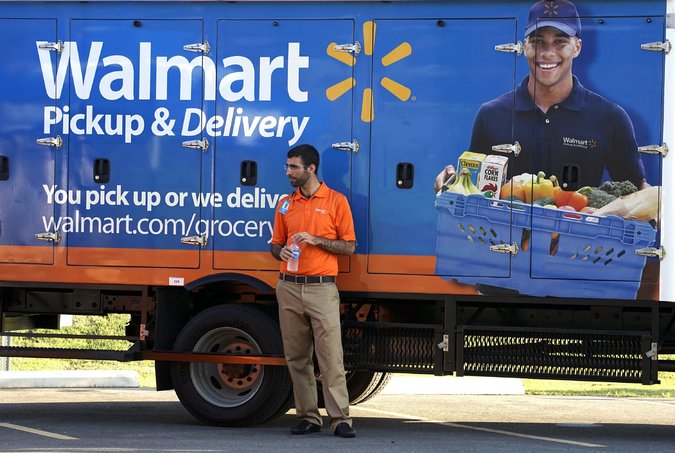
Wal-martMaybe you missed it last week. The little Article in the New York Times – Reporting that Wal-Mart is falling behind in the area of online sales – far behind Amazon.com for example. In the world of online sales WalMart already is a titan, ringing up more than $1 billion of sales a day. Read it again. $1 BILLION of sales per day! And they are falling behind.

From the article on June 5, 2015 and reporter Hiroko Taguchi

“But in the online world, the retailer’s business, while growing, remains far behind Amazon. With less than one-sixth the online sales of Amazon, Walmart has been repeatedly outgunned and outsmarted by Amazon’s price-matching, robot-utilizing, competition-crushing machine.

And now that sluggish sales are persisting at its supercenters, and with consumers spending more and more time shopping online, Walmart’s need to play catch-up in its online business loomed large at its annual shareholder conference on Friday.

Doug McMillon vowed to tackle that quandary as part of the changes he outlined as the company’s relatively new chief executive.”

“One customer can shop with us in so many different ways — in stores, on their phones, at home,” Mr. McMillon told 14,000 shareholders and Walmart workers gathered at an arena outside the retailer’s Bentonville headquarters. “We’ll win one customer at a time.”

“As part of its effort to become competitive on the web, Walmart has made a flurry of tech hires, committed to a billion-dollar war chest and announced a delivery program to challenge the king of online orders, Amazon Prime.

Walmart is set to start sending invitations this week to a pilot program called Shipping Pass, which offers unlimited, free three-day shipping from its online store for $50 a year.

Shipping Pass is a direct challenge to Amazon Prime, which charges shoppers a $99 annual fee for unlimited, free two-day shipping. It is also a desperate bid by Walmart, analysts say: The retailer is unlikely to make money on such a cut-rate offer.

Walmart, however, needs to make up for lost time online, said Burt P. Flickinger III, managing director of the Strategic Resource Group, a New York-based retail consulting firm. “Walmart.com has been severely mismanaged,” Mr. Flickinger said. “Walmart would go a few years and invest strategically and significantly in e-commerce, then other years it wouldn’t,” he said.

“Meanwhile, Amazon is making moves in e-commerce that’s put Walmart so far behind that it might not be able to catch up for 10 more years, if ever.”

Looking up at the leader is an unfamiliar perch for Walmart, which for decades had dominated retailing with a vast supplier network, stripped-down supercenters and rock-bottom prices.

Before Amazon, Walmart was the retailer that undercut everyone else with impossible-to-beat prices and hefty scale, muscling them out of business.”

It’s understandable to me that most of Walmart ‘s customers are conditioned to shop in the store.  Changing that behavior is difficult to say the least. So WCWMD? – What could Walmart do?

Well one thing that could be tested is to analyze customer transactions (with permission of course) that could assist shoppers in better understanding their own personal behavior as Walmart customers.

Take dry goods for instance. Purchases of paper towels, napkins, toilet paper, all could be segmented and then buying behavior over a period of time – three months minimum but better yet six months or even a year. The resulting data would then allow Walmart to offer to deliver the goods on a timed schedule. This would be done on the Walmart.com website.

But the offer could be made via and email, on a store receipt, even a direct mail piece that points out the many ways auto-shipping could save Walmart customers time, money, and needless effort. Less time at the store, less money for gas and transportation to and from the store and less hassle for things that one does not need to see before buying.

The message from Walmart to its customers is – yes we want you in our stores, but we want to make your life easier! Moving in-store shoppers to purchase more online is a long-tail strategic initiative. Walmart cannot afford to wait any longer s the stakes are high with the shift to online purchasing well underway.

Do you think this can be done by Walmart without them appearing to be creepy?

Posted in Shopping | Tagged , , , , , , | 4 Comments

Outdoor advertising in the U.S. has room to grow

outdoorads01Earlier this week I had lunch with a smart OOH (out-of-home advertising) executive.  His company is one of the largest OOH companies in the business. Not all that long ago (twenty years) OOH advertising primarily consisted of billboards and stadium signs, which are really another type of billboard, and the tops of taxicabs.

Today OOH exists in many places that when first noticed appeared a bit out of place. Like elevators and bathrooms (above the urinal displays are becoming more popular every day). Digital OOH advertising has been game changing both for advertisers as well as media providers. The new darling term of display advertising (and now television) – programmatic buying has already begun in the area of digital OOH ads.

The OAAA Outdoor Advertising Association of American reported that in 2014 OOH constituted 5.1% of total advertising spend. Below is the list of the 2014 top 20 OOH USA advertisers.

Top 20 OOH Advertisers
McDonalds Restaurant
Apple
Metro PCS
Verizon
Geico
Warner Bros Pictures
Citi
Chase
Coca-Cola
NBC
AT&T
Samsung
Fox
20th Century Fox Pictures
Comcast
HBO
Cracker Barrel Old Country Restaurant
Universal Pictures
Paramount Pictures
Pepsi

My associate and I were discussing that creating interactive OOH ads have a long way to go before they provide true utility to passers-by. OK maybe that was my having said that. But he understood my point and did not disagree that creating easier methods of interaction on the part of viewers of an outdoor ad was a work in progress. When it comes to an OOH many people feel that the average viewing opportunity is less than seven seconds. Not much time to get a message across at least not one that requires any deep interaction.

When you look at the list of the top 20 OOH advertisers it becomes clear that all of those brands have no need to ‘explain’ what is their brand and it’s promise. They advertise in OOH platforms because driving the brand toward top of mind is effective. And as he and I talked about it’s even more effective when part of a multi-channel marketing effort.

Because of the specific geography of OOH product, distributors like to see outdoor advertising near the places of business of their customers since it allows them to point out that there is support for their business right around the corner. If we are talking about a coffee shop that makes sense as the message is easily understood. However if the OOH unit is for a new product, or something that is somewhat complex it would less than ideal (to say the least). Unless there is other channel in-market support that would offer some point of reference – don’t do it. Remember – in OOH advertising there are less than seven seconds to get your message across.

With attention spans diminishing by the day I believe OOH advertising can actually be ahead of the curve since it plays into the snackable content shift. For that reason I believe there are better years for OOH ahead as the move continues away from traditional static roadside billboards.

Do you notice pass certain OOH ads on a regular basis?

Posted in Out of home advertising | Tagged , , , , , , , , | Leave a comment

Alibaba’s U.S. based online shops site 11main.com hangs in there. Why?

11mainNot only do I have deep interest in all things Chinese, (or at least a lot of things Chinese) I also have a soft spot for a once and former client Alibaba.com. My experience with Alibaba was in helping them with some of their U.S. based marketing efforts in 2012.

I did not realize it in 2012 but from what I am seeing from Alibaba’s U.S. focused shopping mall site 11main.com Alibaba’s U.S. approach is to hang around without really making a commitment.

What makes me feel this way? Back in 2012 we helped develop content and graphics used to generate interest on the part of U.S. entrepreneurs and purchasing managers so that they would consider strategic sourcing via the Alibaba.com platform – which was the main business of Alibaba prior to Taobao.com and Tmall.com.

Our work was in advance of the public offering by almost 24 months. What surprised and disappointed us was that Alibaba did nothing to follow up on the leads we generated.

Last June 2014 Alibaba began beta testing 11main.com an ‘exclusive’
Invitation-only (for vendors) shopping platform hosting virtual stores offering interesting and quality-oriented products. Amazon.com appeared (by the lack of any comment) to be not all that worried.

It was my opinion at the time that it might be interesting to pitch selected clients of ours as possible 11main.com store operators as an alternative outlet to the big shopping sites or stores like Amazon, Target and Wal-Mart. I applied and was politely turned down and asked to wait for the right opportunity. Last week I received a voice mail from someone at 11main.com in regard to one of the clients for whom I had written an application.

I called the number back the next day and it was – a fax tone (and I hate getting the fax tone sound don’t you?) I found another number to call and someone answered and I asked the question about the person who left me a voice mail (hey it was a long shot) and the man answered that he’d pass the message along as that person was not around at the moment. A week later I am still waiting for that call. I am not holding my breath.

Even last summer Forbes columnist Walter Loeb wrote that 11 Main was already a ‘Flop’

What I failed to realize was that the 11main.com platform would not be supported – by advertising or really in any other way. I venture a guess that 99% of the people that read this post will never have heard of 11main.com. 11main.com CEO Mike Effle has the right pedigree having founded (and sold to Alibaba) vendio.com.  Don’t even get me started on the email ‘offers’ I receive and the opportunity to buy that blouse…

If I could ask Mr. Effle one question it would be – what was the strategic plan?

Posted in E-commerce, Internet Shopping | Tagged , , , , , , | Leave a comment