In ten words or less – the 24 books I finished in 2015

eReader-Vs.-Printed-Book-Which-Is-Better-For-Your-Eyesight-300x225I saw that Facebook CEO Mark Zuckerberg publicly pledged in 2015 to read two books per month. Well in 2014 I did that and once again in 2015. Mr. Zuckerberg is still winning overall. There are times when trying to keep up with something close to reading two books is a bit burdensome and I’ve also taken to reading a greater number of books simultaneously than ever before.

I finished 24 books in 2014. There are several that I am fairly far along on but just can’t seem to finish and I do abandon books but too often by that point I’ve already invested too much time already. And I again had no particular total number in mind when I started 2015. Reading more than half on my Kindle app it seems to always work out to about two books per month.   For some reasons e-books fool me into tackling longer reads but I don’t know exactly how long that they are until I’ve been reading the book for awhile.

As I noted last year the point is that if you want to read more literature you have to make the time available. It can be done. Below I’ve offered a ten-word mini-review of each if you care to read. Happy New Year!

What If – Serious Scientific Answers to Absurd Hypothetical Questions – Randall Munroe Interesting questions answered with humor. Not just a bathroom book.

Genesis Code: A Thriller of the Near Future– Jamie Metzl – Good storytelling on a provocative subject. Have corresponded with Jamie.

How We Got to Now – Six Innovations That Made The Modern World Steven Johnson – Cool stories of innovation: glass, cold, sound, clean, time, light.

The Bad Guys Won – Jeff Pearlman – Finally read the story about my beloved ’86 Mets.

Rise of Superman – Decoding the Science of Ultimate Human Performance – StevenKotler – Intense and heartfelt with lots of supportive data. Think Flow.

Into the Wild – Jon Krakauer – So glad I read it. Big fan of the author.

Decoded – Mai Jia – One of China’s most popular authors. Unusual and compelling narrative.

Cracked: The De-Textbook: The Stuff You Didn’t Know About the Stuff You Thought You Thought You Knew  – Cracked.com – If you love counter-intuitive thinking and questioning almost everything…

Men In Green – Michael Bamberger – Golf writer’s candid interviews with players, caddies, wives, and others.

The Assistant – Bernard Malamud – Wrote The Natural. Offers a sad, yet immersive time-capsule.

The Organized Mind: Thinking Straight in the Age of Information Overload– Daniel J. Levitan – Organizing The Junk Drawer of Your Mind – an interesting concept.

The Little Prince – Antoine de Saint-Exupéry – Somehow never read it before. Glad it was very short.

Think Like a Freak: The Authors of Freakonomics Offer to Retrain Your Brain – Steven D. Levitt, Stephen J. Dubner – They always deliver an entertaining read. No different this time.

Good Chinese Wife: A Love Affair with China Gone Wrong – Susan Bluberg-Kason – Revealing true story of east and west culture/customs colliding

Blindsight– Peter Welles – 2000 Hugo Award (Science-Fiction), nominee. Out there fun read.

Venture Deals: Be Smarter Than Your Lawyer and Venture Capitalist – Brad Feld & Jason Mendelson – They try their best to keep it simple. It isn’t.

Baseball in 100 Objects – Josh Leventhal – Obviously I am baseball nerd. If you are, read it.

The Trident Deception – Rick Campbell – Sort of updated Hunt For Red October. Author has credibility.

Misbehaving – Richard Thaler – I am a big fan of this groundbreaking behavioral economist.

The Sun Also Rises – Ernest Hemingway – First read in 1970’s. Great snapshot of 1920’s postwar Paris.

Zero to One – Notes on Startups, or How to Build the Future – Peter Thiel – Pragmatic thoughts and advice from a leading investor and thinker.

The Harder They Fall – T.C. Boyle – Another winner from one of my favorite current American writers.

The Big Short – Michael Lewis – Movie was good. Book was better. Read it before seeing.

The History of Food in 100 recipes – William Sitwell – Long but incredibly engaging and interesting. Lots of aha moments!

I enjoyed the Hemingway enough that I plan to re-read more of his books in 2016. Got any good books you’d like to offer?


Posted in Books, E-books, Entertainment, Reading | Tagged , , , , | 1 Comment

The Economist plays hardball – and is right to do so

the-economist-logoFor the past few years I have been a subscriber and reader of The Economist which calls itself a newspaper even though most people would call it a magazine.  I really like the non-U.S. focused viewpoint of The Economist.  If I don’t get to it right away I will often read it from back to front.  I recommend giving this a try if you have not.

In addition to being a substantial financial commitment, (it costs more than $2.00/issue for the print subscription on an annual basis and there’s even an additional cost to also receive full digital subscription access), any Economist subscriber will tell you it’s a two plus hour time commitment to read on a weekly basis.

Having spent a fair amount of time working within the publishing industry on the circulation side, I did not respond to the regular entreats from The Economist to re-subscribe early.  Or what I thought was early.  After all, traditional magazine subscription practices had renewal offers being sent after six months of receiving the subscription, sometimes less.

So when I noticed that my “last issue” was fast approaching I continued to ignore it figuring that even after the date I would still receive the magazine along with letters from the Economist noting that “perhaps I have forgotten”.  I expected that my value as a controlled subscriber would keep it coming and eventually I’d get around to re-subscribing.  What happened next was surprising.

The Economist cut me off.  And really, they were right in doing so.  It’s just another reason I like the magazine er, newspaper so much.  I did have a little trouble re-subscribing on the website.  After a few attempts I was confident it was not my ‘operator error’ and called and had no trouble re-initiating my subscription with the nice chap on the phone – British accent and all (nice touch).

It still bothers me that as a print subscriber I do not receive automatic digital access, (seems unusual to me but then that’s also in The Economist’s DNA).  Since there others in my family that like to read articles now and again, it’s one of the only print-only subscriptions I receive, (I still get Sports Illustrated in print mostly due to habit and an overall nostalgic feeling).  I also find that long form articles are nice to read in printed form, (yes I still read printed books regularly along with those on my Amazon Kindle App).

Publishing as we all know has taken a series of blows since the dawning of the internet era in the 1990’s.  The shakeout is far from over.  The days of mass audience for new publications appear to be over.  Still, publishers like The Atlantic and The Economist seem to have adapted better than most and are better positioned for their continued relevance and success.  Their circulations may not be enormous, but their readers are loyal and most important, are willing to pay.  And keep paying.

Thanks for reading and Merry Christmas and my best wishes for health and happiness in 2016 and beyond!


Posted in Publishing, Uncategorized | Tagged , , , , | Leave a comment

Change takes longer than people wish but it does happen

old-smoking-ads-3The news this week came out that cigarette smoking among American high school students has dropped again. That’s of course really good news for the general health of Americans.

From a December 16th article in the Wall Street Journal:

“Daily cigarette smoking has plummeted among high-school students, falling 50% or more over the past five years, according to a new government-sponsored study.

In the University of Michigan survey, backed by the National Institutes of Health, 3% of 10th-grade students reported smoking cigarettes daily, down from 6.6% five years ago. About 5.5% of 12th-graders said they smoked, down from 11% five years ago, and 1.3% of eighth-graders, down from 2.9%.

The percentage of 10th-graders who report daily use of marijuana is now higher than cigarette smoking, not because marijuana use is on the rise but because so many fewer students smoke cigarettes, said Dr. Nora Volkow. “The results are quite spectacular,” she said.

Tabby Block, a 17-year-old high school senior in San Francisco, said she can recall going to parties a few years ago and seeing many students smoking, but now only a tiny percentage of her classmates smoke daily and they are ostracized. “It seems stupid to do something that could give you cancer,” Ms. Block said. “It has a stigma.”

The study, known as the Monitoring the Future, surveyed about 45,000 students from more than 380 schools nationwide. It found that teen use of electronic cigarettes continued to outpace use of traditional cigarettes. About 16% of 12th-graders reported using an e-cigarette over the past month compared with 11% who reported they had smoked a cigarette.”

Before the risks and dangers were publicized cigarette smoking flourished in the United States (and later around the globe), its use growing exponentially in the 20th century.

Cigarette smoking has had an interesting history in the United States. By 1870, approximately 13.9 million cigarettes were smoked annually in the United States or .36 per capita. Over the next 60 years, the number was to reach 976.91 per capita (Gottsegen, 1940: 28).

Anti-tobacco sentiment dates back to the 1890’s and before.

The decline in smoking amongst the youth of the nation bodes well for the future health of Americans, as the habit will simply not be formed on such a widespread basis.

I grew up with two parents that smoked cigarettes and at times nearly chain smoking. They would smoke in the car. With the car windows closed. I remember this since my sister and I were often riding in the back. That was enough to deter me from cigarette smoking for my entire life.

Major tobacco companies have being doing everything in their power to hold on to their customers and e-cigarettes and ‘vaping’ are now foundational to their prospects for future success. However with regard to the ‘coolness’ factor of smoking cigarettes, the behavior has now been forever changed and cigarette smoking will never be the way it once was both in sales and perception.

Consuming processed food is different of course than smoking cigarettes. If you believe (as do I), that the eating of processed foods is the old way, should change and people would be better off avoiding processed foods, then do you agree that processed food has a chance in the future to become passé as is now the case with cigarette smoking?

If you do agree, how long do you think it will take? It took cigarettes almost 150 years to get to that status. Processed foods date back to even before the 1940’s http://www.barharborfoods.com/blog-detail.php?A-Brief-History-of-Processed-Foods-155.

Surely 2090 is a too long a time from now for processed foods to become uncool?


Posted in Advertising to Millenials, Gen X advertising, Human Behavior | Tagged , , , , | Leave a comment

5 Technology Gifts for 2016 I’d like to see

Tech giftsReading an article in today’s Wall Street Journal entitled ‘Auto Makers Losing Battle for Dashboard Apps’ reminded me that there are a number of technology-based changes that would be wonderful to use in 2016.

What must be kept in mind is that all are what should be considered “First World Problems” and collectively American lives will not be vastly better with the advent of the five things noted below. But it would be cool. And that’s something right:

  • A fully connected car. We’ve seen the ads for cars that offer Wi-Fi apparently to mollify bored children riding in the back. That’s nice, yet having my mobile phone completely sync with the car’s operating system – including Google Maps, contacts, a really adept voice response system etc. is still coming soon but probably not in 2016. It’s taking a long time and longer than it should. Apple Car Play and Google Android Auto are good signs.
  • An EZ-Pass app. I’ve written about this before  and based on response it is something that many people would like to see but for some reason it still has not happened. I hate the transponder thing as it’s so circa 1995.?
  • Wi-Fi on commuter and subway trains, and buses. I am willing to pay a reasonable additional fee. Throw in taxis while we’re at it
  • A good projectable virtual keyboard. What is taking so long to have a tablet or even a phone project a virtual keyboard so mobile devices will be ever more useful?
  • Better interface for streaming music. I use Spotify and it’s changed the way I listen to music (I listen to so much more), but the inventory while expansive has limitations. All the services should find ways for people to purchase music not included in the streaming catalog – yes Taylor Swift and Adele but also The Beatles. Why should I need multiple services?

There are so many more of these ‘gifts’ so please be encouraged to share ones you’d like to see for 2016 and beyond.

Posted in Mobile Communication, Technology, Uncategorized | Tagged , , , , , , , , , | Leave a comment

The Food Network Airport Restaurant Brand Fail

Food Network Kitchen logoIf you have watched Cable or Satellite television in the U.S. in the past few years you are at least somewhat aware of the Food Network. Not being an avid watcher I am aware of shows like Cutthroat Kitchen, Chopped and Diners Drive-Ins, and Dives (Triple D according to host Guy Fieri).

For the record, Food Network is an American basic cable and satellite television channel that is owned by Television Food Network, G.P., a joint venture between Scripps Networks Interactive and the Tribune Cable Ventures Inc.

As a pioneer in the cable TV industry having been founded in 1993, Food Network has a high brand value and has played an important role in introducing Americans to new approaches and styles regarding cooking, eating, and dining out. One could even say that Food Network is a cutting edge and innovative brand. I feel that way.

Traveling from the airport in Fort Lauderdale recently on a Sunday evening I noticed that there was a Food Network Kitchen restaurant complete with televisions and a bar which actually looked pretty bright and cheery as I walked to my gate.

When my flight was delayed (inevitably) I decided it would be worth a try so I walked in and took a seat at the bar. Football was on TV, what had to be interesting food and drink choices, and I had at least an hour and a half prior to my departure. This was all going to work out pretty well. Until it didn’t.

The first thing I noticed were that the two people behind the counter working there looked bored and unenthused. I could have received that kind of welcome just about anywhere. The menu choices for wine were pedestrian and uninteresting – not exactly representative of a cool brand.

Food choices were even more pedestrian – no interesting twists, options, and sauces. For lack of better choices I chose the chicken quesadilla with guacamole and sour cream. The wine came in a commercial glass and was more expensive than it should have been but that’s endemic to airports for the most part.

Then the food was delivered. A reasonable portion prepared reasonably well and was reasonably edible. I had higher hopes than reasonably edible. The guacamole and sour cream (each $1.00 additional) came in plastic cups and plastic utensils were provided. The whole experience had me thinking cafeteria.

Food network chipsWhat a buzz kill! What a BRAND kill! WHY? I ask, or WHO perhaps better, should answer the question – what were they thinking when Food Network lent its name to an operator that is representing their brand in this manner. I mean surely nobody from the actual Food Network could be involved in this fiasco right?

I believe there may be another Food Network Kitchen unit in the Hartsfield (Atlanta) airport and I suspect the story is similar. It’s really a simple in-airport sit-down, grab-and-go type restaurant and is about as far away from being an innovative and cutting-edge brand representation as could be possible.

Brands have to keep in mind that when their name is licensed, their brand is as well and doing it incorrectly can yield everlasting brand damage.

Posted in Brand Advertising | Tagged , , , , , , , , , | 1 Comment

Ah to be in Paris – this Thanksgiving

French turkeyAs I have posted about both that Thanksgiving is my favorite holiday and also about whether there is Thanksgiving in China, ever since the unfolding of the terrible events in Paris last Friday, I’ve been thinking I wish I could celebrate Thanksgiving in Paris.

No I would not expect any turkey although I am certain that if one wanted to have an American-style Thanksgiving meal in while in Paris whether that be in a restaurant or at home it could be accomplished.   And I checked.

Yet it’s quite appropriate to think about Paris and the French around Thanksgiving. After all France was instrumental in helping the United States attain its independence. And for whatever reason we Americans have an affection for Beaujolais Nouveau at Thanksgiving due to smart marketing by Georges DeBoeuf for example.

I love Paris. I’ve only been there a couple of times and never for more than several days. My wife and I both speak French (and my wife lived in Avignon for six months during her university days) and talk about going to Paris and France often.   Now the desire is stronger than ever.

Why? Paris is a truly international city – like New York. The pace and vibe of Paris is unlike any other place. It’s vitally important that the vibrancy that makes Paris a great world city be maintained and even nurtured.   When I think of Paris today I think of Parisians and French people that are so varied when it comes to background, race and beliefs. And somehow it works. Not perfectly but it works.

After 9/11 here in New York, there was a real need to get people to come back into the city (Manhattan in particular where the Twin Towers fell), to go out to restaurants, museums and Broadway shows.   We New Yorkers were grateful for the support received from our own citizens as well as tourists and visitors from around the world that heeded the call to come back into the city.

As is the case in Paris now, after 9/11 the American people and New Yorkers in particular were and are disturbed, frightened, appalled, and angry just to name a few emotions. The 10th and 11th Arrondissements in Paris which attract so many young people – (millennials were prime targets), are indeed an attack on the Paris life and joie de vivre that goes hand in hand.

Most Americans do not have the wherewithal to, at the drop of a hat, jump on plane and jet to Paris for a few days. Like New York City, Paris is expensive – and amazing. So while I wish that our immediate plans could be changed to celebrate Thanksgiving in Paris to show my support and love for the people and customs there, I will also relish spending the day with family and reliving a rich tradition.

And I vow to get to Paris in 2016 as soon as I can. With a little time and planning it does not have to be super-expensive proposition and it’s the least I can do.

Happy Thanksgiving to all and…Long live Paris! 

Posted in Living in the World Today, Uncategorized | Tagged , , , , | 1 Comment

Did you feel it? $200MM ad spend so far DraftKings and FanDuel

draftkings-vs-fanduel-1024x512If you’ve turned on your television or walked into any sports bar you cannot fail to have seen the incessant ads for DraftKings and FanDuel. On Tuesday New York State Attorney General Eric Schneiderman shut down the two sites in New York State.

As reported on ESPN:

“New York Attorney General Eric Schneiderman declared Tuesday that daily fantasy sports constitute illegal gambling in his state, and he sent game operators DraftKings and FanDuel cease-and-desist notices in a significant blow to the embattled, billion-dollar industry.”

Schneiderman demanded that DraftKings and FanDuel, the two industry giants, stop accepting “wagers” from New York residents. He did not ask the company to stop conducting its national business in New York.

“Our review concludes that DraftKings’/FanDuel’s operations constitute illegal gambling under New York law,” Schneiderman wrote Tuesday in the letter obtained by ESPN’s David Purdum and Darren Rovell and ABC News.

Inc Magazine reported in October that ‘FanDuel’s investors include Comcast and NBC Sports. DraftKings’s backers include Fox Sports. In addition, two of the NFL’s most influential owners–Jerry Jones of the Dallas Cowboys and Robert Kraft of the New England Patriots (who happen to be facing each other this Sunday)–are investors in DraftKings. And the NFL’s Jacksonville Jaguars have a deep alliance with FanDuel: This season, the team opened FanDuelVille, a dedicated space at its stadium with room for 3,000 fans to watch games, monitor their fantasy football stats, and enjoy a few cocktails.’   Does anyone sense a slight conflict of interest here?

While the issue of whether or not the two companies will be further regulated (I am betting they will be although that may be a poor choice of words) will play out over the coming months the amount of money the two have spent in advertising in 2015 is staggering. DraftKings and FanDuel, are the two of the biggest startups in fantasy sports. Through October 15 2015 $206-million —($131.4 million by DraftKings and $74.5 million by FanDuel) has been spent according to CNN.com for television ads airing nationally.

The impact on advertisers has been kept quiet by media agencies. However when more than $200 million (not even through 10 months) in television advertising time has been taken off the market it follows that costs for advertisers have increased. It’s true that most of the two companies ads have appeared during sports programs. Yet compared to past years when GM, Ford, Mercedes, Lexus, etc., seemed omnipresent, they are now forced to outbid each other (programmatically or otherwise) to reach their target audience.

The argument that somehow fantasy sports ‘leagues’ and more so daily fantasy sports ‘leagues’ are games of skill is laughable. The same could be said for playing Blackjack in the casino –there can be skill involved but nobody believes for one second that playing Blackjack in a casino is anything but gambling. I expect that these fantasy leagues will end up having much stricter disclosure guidelines but won’t and should not be shut down entirely.

In the meantime while all this was going on (the air) advertisers and their agencies have had to make the best of reduced inventory and increased prices. The networks both broadcast and cable win too. Pretty much the rest of us are all losers.

What do you think – should fantasy sports leagues be prevented from advertising themselves as games of skill?

Posted in Advertising, Television advertising | Tagged , , , , , , , | Leave a comment

1111 – Is it Singles Day again already?

ecommerce_spending_1.png.CROP.promovar-mediumlargeWatching a secondary holiday having been ‘born’ is seldom compelling. Most of the holidays on the U.S. calendar were created before I was born. I know there’s a Grandparent’s Day (I had no idea when and looked it up – September 13th this year and Boss’s Day (October 16 this year) and recalled that there used to be a Secretaries Day (you missed this too April 22nd this year) which is now called Administrative Professionals Day.   Obviously “secretaries” is archaic today, unless we are talking about desks.

The biggest relatively new holiday in terms of participation is undoubtedly Singles Day – in China.

From Wikipedia a little history of the holiday:

Singles‘ Day or Guanggun Jie (Chinese: 光棍; pinyin: Guānggùn Jié; Wade–Giles: Kuang-kun chieh; literally: “bare sticks holiday”) is a day for people who are single, celebrated on November 11 (11/11). The date is chosen for the connection between singles and the number ‘1’.  

In recognition of the day, young singles organize parties and Karaoke to meet new friends or try their fortunes. It has become the largest online shopping day in the world,[2] with sales in Alibaba‘s sites Tmall and Taobao at US$5.8 billion in 2013 and US$9.3 billion in 2014.[3]

Singles’ Day or Bachelors’ Day was initially celebrated at various universities in Nanjing during the 1990s, and originated from Nanjing University in 1993. It got the name “Singles’ Day” because the date consists of four “one”s.

Singles’ Day serves as an occasion for single people to party with single friends. The holiday was initially only celebrated by young men, hence the name, “Bachelors’ Day,” but is now widely celebrated by both genders. ‘Blind date’ parties are also popular during this day in an attempt to bid goodbye to their single lives.

Some schools of a university put forward a special program to gather singles together for celebration. Singles may take on a bemoaning or self-deprecating attitude for remaining single as a university student, but this has helped curb that negativity.

Once again Chinese online shoppers will spend more on Singles Day than U.S. shoppers will spend on Black Friday and Cyber Monday combined (US$4 Billion in 2014)! China’s Singles Day ain’t no Hallmark holiday!

Now there is talk of having Singles Day become a ‘holiday’ in the United States. Move over Valentine’s Day? I am not betting on that. How about you?

Posted in Business in China, China, China Marketing, Internet Shopping | Tagged , , , , , , , , , | Leave a comment

For entrepreneurs it’s not the money, it’s the M-O-N-E-Y

Monopoly Money with real moneyWhen I began working back in the 1980’s I worked at a major NYC bank in the marketing department as a marketing associate alongside a number (more than 10) of very smart women (there were one or two men but that’s about it). The marketing department had a number of initiatives not the least of which was to train bank managers on the sale of bank products and services.   I distinctly remember our ‘mantra’ counseling bank managers with “It’s not the money, it’s the M-O-N-E-Y”.   I thought I understood at the time.

Years later I am not so sure that I ‘got it’. There are so many expressions regarding money that resonate. “Don’t throw good money after bad” and I like that one. Working with start-ups and early stage companies over the recent few years has given me a new take on “It’s not the money, it’s the M-O-N-E-Y”.   How much money founders/owners propose they need is, often wrong.

Here are two principal reasons:

  • Founders/owners don’t ask for enough since they feel it will be more appealing to stage it and in the process try to appear as fiscally responsible as possible.
  • Money raised to help drive company growth (i.e. sales of the product or service), is to be used for company growth and most investors are not inclined to have their investment in marketing and sales growth utilized for operating expenses. Entrepreneurs/founders have a hard time with this.

I, (with intention) am staying away from including research and development funding which is critical in the biotech startup environment. The cost for development and approvals for biotech can greatly exceed all other funding needs and skews everything.

To be clear, the M-O-N-E-Y is the combination of:

  1. The profit that will be generated from the cogent and plausible revenue model created that is mission critical. That realistic revenue model is also missing as foundational for many start-ups as I have written before.
  2. The value of the enterprise itself based on current investment. Not what it would be if everything that was hoped for worked out perfectly.

Investment capital should never be thrown around like Monopoly money. The more I see three and five year plans from young (and sometimes not-so-young) companies, the more I am surprised at the naivety of entrepreneurs when it comes to how investment capital is best directed to grow the company.

It’s not the money, it’s the M-O-N-E-Y! Get it?

Posted in Entrepreneurship, Start ups | Tagged , , , , , | 2 Comments

Micropayments are almost ready for prime time

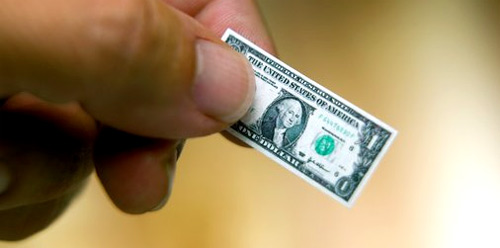
tinymoneyThis fall has been a baseball dream season (so far) for this Mets fan. Even when traveling I want to at least be able to listen to the game if not watch on television (or better yet in person). MLB.com is one of the best pro sports licensing operations around.   They are so good that the National Hockey League has tapped MLB.com to power its NHL.com offerings. More importantly MLB.com has exclusive rights to broadcast TV and radio feeds for all 32 MLB teams. So if I wish to listen to my Mets on my smartphone, there is no access to the local broadcast except through MLB.

So say for instance I am at the beach one fine summer day and I wish to listen to the game. Unless I subscribe to MLB.com or have a transistor radio (I know I have one in the basement someplace), I am out of luck.

Having taken this path myself I ended up back at MLB.com (I have subscribed in the past for an entire season but have not over the past few mundane Met campaigns).   However instead of having to pay the full ‘annual’ fee two months prior to the end of the regular season I was given a monthly option of $2.99/month for non-premium TV that included team-by-team radio feeds. That sounded reasonable, I subscribed and it’s been great to have that utility. The annual non-TV feed MLB.com subscription fee was $19.99/season. Add what MLB.com refers to as ‘premium’ TV coverage is over $100 annually.

So when I think about a micropayment (generally considered to be under $10), I consider $2.99/month to fit that category. Much has been written about micropayment platforms such as Bitcoin (I am a believer) and competitors such as Apple Pay, Google Wallet, Venmo, Pay Pal, Snapcash and Facebook.

Publishing has been hoping that micropayments would be the salvation of an industry based on annual subscriptions. Cable TV and Internet service providers are not nearly as ready to consider a world in which people might not HAVE to subscribe over a long or long-ish period to receive service. Yet publishers have adapted. Users receiving 5 or 10 free articles per month prior to paying for content understand the idea that nothing is free forever. Offering these possible future customers the opportunity to buy month-by-month access at substantially reduced costs (maybe 1/10th the price of an annual subscription) with no future commitment is I admit not the most secure business model, but times have changed and so must the ways people buy, consume, and stay engaged with content producers.

What if after the ‘free’ access articles were offered for cents on the dollar? Read an article it costs $.25. Episodic television shows via platforms such as Hulu.com and Netflix already are far down the road with the pay-as-you-go model. I believe that in the future the bulk of micropayments will be less than $1.

The big difference maker is technology and its ability to assist in processing and keeping (securely) track of all the billions of present and future micropayments. WE have the tools. People just have to get used to the idea and I am 100% convinced they will. Eventually.

Have you been using any of the micropayment services? Probably Paypal, Google Wallet, Apple Pay and Venmo are most well known and I have used three of them however I’ve yet to try Bitcoin. How about you?

Posted in Technology | Tagged , , , , , , , | Leave a comment