Healthcare and Mobile communication are right for each other

Since I went to see my doctor last week for my annual physical I thought about the interaction that I have with my doctor and how mobile communication could enhance that experience. If you are like most people you get to the doctor’s office on time for your appointment and more times than not are then informed that the doctor is running late.

Many physicians now have your mobile telephone number as a way to reach you with important news. However doctor’s offices could also use SMS texting to inform you that the doctor is running late by fifteen or however many minutes. This does not happen and there are probably several reasons for that, the primary one being the medical profession is not conditioned to communicate with patients in that manner.

An article in Media Post Wednesday by Reggie Bradford http://bit.ly/HHfmlw, highlights other ways in which mobile is being used to enhance the patient experience. Kaiser Permanente, the largest managed care organization in the United States, has launched an optimized mobile site. So now Kaiser-Permanente patients are able to access their own medical information, securely and from anywhere in the world, through any Web-enabled device.

Mr. Bradford writes ‘Kaiser Permanente hopes to greatly increase the customer experience by featuring 24/7 access to lab results and diagnostic information as well as providing direct and secure email services with their doctors via a site that has fast load time, automatically scaled to the device’s screen size and providing easy navigation and scroll features. By focusing on the services that matter most to their patients, the company expects mobile traffic “to increase significantly with the new mobile-optimized site.”

Walgreens and CVS are two examples of pharmacies that truly understand the priorities of customers that are accessing their storefronts via mobile. In both their smartphone apps and optimized mobile Web sites, customers are able to input and/or scan their prescription barcodes for quick and easy refill orders. Additionally, these two sites feature a consumer-friendly navigation system with efficient scrolling features as well as e-commerce capabilities. Upon accessing the site, customers have the option to immediately download their respective smartphone apps -– a feature that more loyal and frequent customers surely appreciate.’

Mr. Bradford makes a great case for how mobile communication can enhance the doctor-patient relationship. I find that there is an increasing use of mobile communications by my doctors and friends of mine in the medical profession. The former reticence to mobile and internet information by medical professionals seems to be on the wane as doctors have realized that informed patients are not always ‘infused with a little knowledge that can be termed as dangerous’ and can be actually easier to consult.

I wholly agree with Mr. Bradford that mobile should be built into marketing efforts. The healthcare industry is a perfect example of how it can benefit both patients and medical professions.

Have you offered your mobile phone number to your doctor? If not would you?

Posted in Communication, Customer Experiences, Healthcare marketing, Marketing stuff, Mobile Communication, Technology | Tagged , , , , , , , , | Leave a comment

Being a member of AARP – it’s not what you think

Since I am old enough to be a card-carrying member of AARP I am also old enough to remember what the acronym stood for – American Association of Retired Persons. In 1999 AARP ‘officially’ changed its name to “AARP” – or Ay Ay R Pee to illustrate that its focus was not on retirees but people over 50.

Still I have an ingrown prejudice that AARP = OLD GUY. I don’t really feel old, and I am far from retirement (whatever that might look like). When I received the invitation to join AARP a couple of years ago I was not overjoyed. Despite that I joined anyway. Part of it was to see from a marketing perspective what I might be offered – after all it was free. So far the main ‘benefit’ I have seen is the monthly magazine, which for those of you who do not know remains the single largest circulation magazine in the world. In fact AARP claims more than 40 million ‘members’ but of course those members don’t pay anything to BE a member.

I have to admit the magazine (cleverly entitled ‘AARP – the magazine’) is something I rarely look at. Part of the reason is that it screams – HEY OLD GUY READ THIS! My own problem I realize but I am betting I share that little prejudice with many others. I truly wonder how many 50 year olds that receive the magazine actually open it. Last night I somehow stumbled upon the most recent issue and thumbed through it.

My takeaway was that the magazine isn’t bad at all and there were a couple of articles worth reading and the membership benefits section outlined something I had not seen before –show your AARP card at Dunkin’ Donuts and with a purchase of a large or extra-large coffee receive a free donut. When I drove past Dunkin’ Donuts this morning I thought about it but decided to pass. I like donuts as much as the next guy. However donuts don’t help me, or anyone, look like less of an old fat guy. But I know I will take advantage of it before too long provided I can actually FIND my AARP card.

AARP also produces radio and television programs (I’ve never heard or seen one). Specific products include Medicare supplemental insurance; member discounts on rental cars, cruises, vacation packages and lodging; special offers on technology and gifts; pharmacy services; legal services; and long-term care insurance.

There are other benefits as well although I fail to take advantage of them since that acknowledges what I prefer to not think about – somehow I am over fifty – and how the heck did that happen? And I really don’t care to be reminded by a magazine of that fact.

AARP has great assets that people like me try to ignore. And if you are not yet eligible you probably are not in a big rush to get there. That does not seem to be as good a business model as it could be.

I think AARP could use a total rebrand don’t you?

Posted in 50+ market, Advertising, Communication, Community, Customer Experiences, Living in the World Today, Retirement | Tagged , , , , , | 6 Comments

China’s Foxconn and Apple – a match not quite made in heaven

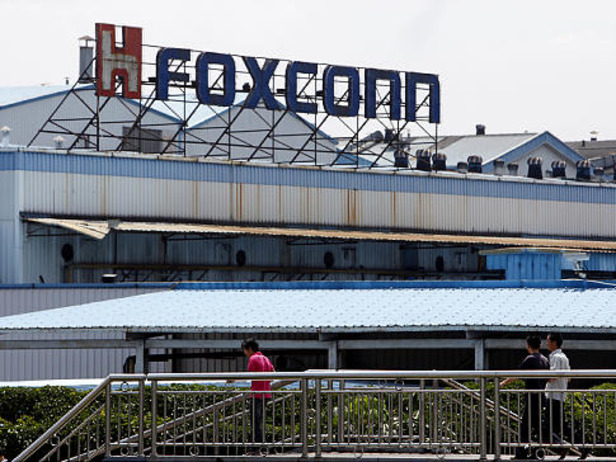
Although I have visited a number of factories in China I’ve never had the opportunity to visit the giant Foxconn factories which are located in several different parts of China. Foxconn is actually a Taiwanese company as an affiliate of Hon Hai Precision Industry. Yesterday (Thursday) Apple Inc. agreed that it would work with its partner Foxconn to improve wages and working conditions at the factories where iPads, iPods, and iPhones (among other products) are made – http://www.msnbc.msn.com/id/46896890

The independent Fair Labor Association claims that the results of their probe ends up being good for Foxconn, good for Apple and not least importantly – good for the factory workers themselves. Foxconn has more than 1.2 million workers. Does this mean that popular products made by Apple will become more expensive? Probably but keep in mind that labor costs are only a small part of the total cost of Apple devices made in China. Other companies such as H-P, Amazon, and Sony will all face similar changes and possible price increases.

When I have visited factories in China I cannot ever recall being appalled by the working conditions. That may just be my particular experience and not indicative of things in general. The factory buildings are inelegant and utilitarian. South China, where the city of Shenzhen is located, is very warm for much of the year and there are areas in the factories that are not air conditioned. In fact the Chinese are cost conscious and therefore energy saving conscious. Many offices only have room air conditioners (no central A/C) which are left off when the rooms are not in use. I recall many meetings in a room with temperatures in the mid-80F range when the meeting began. We all were sweating but by the end of the meeting the temperature was a more bearable 75F which somehow felt really cool. But on the factory floor there were fans everywhere and while it was warm it was not uncomfortable and the employees seemed to not be bothered at all.

The probe centered a great deal on the amount of hours Foxconn factory workers were working. What was interesting to me is that during peak production, workers put in more than 60 hours a week on average. Apparently they were paid overtime for additional hours over what they signed on for. Since many of the workers travel far distances to work in factories in order to earn money, they live on the premises in dormitories during the week and some even on the weekends if they live too far away to travel back and forth. It’s possible that those workers counted on the overtime as often is the case here in the United States. But Apple acknowledging that it can play a part in making working conditions better for Foxconn’s employees is a positive development overall.

As China’s economy continues to grow and standards of living continue to improve, it will become more important for Chinese factories to provide technological solutions to problems and challenges and not just bodies. There are now new places in the world that can offer labor costs less expensively than China. Yet since the worker cost in a device like an iPad is small, the likelihood of moving production out of China is not as imminent as some people might like to believe. Accordingly the uneasy marriage between Foxconn and Apple will be around for quite a while yet.

Do you feel Chinese factory workers are being treated unfairly? And if so on what basis do you make that assertion?

Posted in Best business practices, Customer Experiences, Living in the World Today | Tagged , , , , , , , , | 2 Comments

The cost of airline travel today has never been cheaper

Back more than thirty years ago when I went to college in Los Angeles and flew back to New York to visit my family, I recall paying (well actually my parents did) $99 each way to fly from L.A. to New York. It was a really good deal then. Translated into today’s dollars that round trip would cost more than $300 each way or a roundtrip fare of over $600. Anyone that has flown recently is aware that a round trip coast to coast fare for less than $600 can be purchased rather easily.

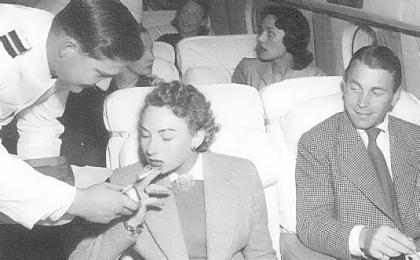
So even with skyrocketing airline fuel costs, the cost of air travel today continues to be less (inflation adjusted) than what would be expected. Is it possible that airline travel is too cheap? Well maybe in terms of the kind of service you receive flying domestically in the USA. However most people I talk to don’t feel airline travel is inexpensive. People seem to wax nostalgically about the halcyon days of air travel with better meal service, more attractive and attentive flight attendants and smaller crowds. Of course it’s easy to forget that until 1988 people could smoke cigarettes on airplanes – I doubt many people wish to return to that particular practice. Here’s a video of those not-so-good old days – http://www.youtube.com/watch?v=6_caR1bkOEg

Cheap (or cheaper) airline travel has enabled many people who heretofore could not have traveled by air to afford to fly to see family, friends, do business or take a vacation. Would people today be so willing to fly to Las Vegas (just as an example) from New York if the round-trip fare was $1,000 or more?

While it’s true that the level of service on airlines has dropped overall and yet at the same time air travel is being segmented such that the ‘Elite’ traveler continues to receive something reminiscent of the ‘classier’ airline service of the past, while the ‘proletariat’ (low-fare) traveler is taking what amounts to be an air bus – literally. But then the low-fare traveler would not have been able to do that thirty or more years ago. At that time air travel was still considered to be a bit of a luxury. Today, airline travel, if nothing else is…a commodity. And if you agree that airline travel today is a commodity – is that a bad thing?

Here in 2011 people think nothing of hopping on a plane to do whatever strikes their fancy. They can use a myriad of online services to check out the lowest fare and if that’s the driving force they can get to where they are going – perhaps not directly and maybe even with three or more connections, cheaply and for the most part safely. This is not only true in the U.S. but something I’ve noticed when traveling in China and Asia in general. There is not much ‘class’ in airline travel anymore as it’s become a tool for the masses. I think that’s a positive thing and something people overlook more often than not.

People like to complain (I’m among them) and ignore basic facts such as airline travel is cheaper than it’s ever been and airfare costs are not usually the determining factor on whether to fly somewhere – or not.

So the next time you have to fly somewhere and you go for the lowest cost think about that cost being 3 times what you are quoted and ask yourself would you still be doing it?

Posted in Best business practices, Customer Experiences, Living in the World Today, Travel | Tagged , , , | Leave a comment

I am waving bye-bye Blackberry

I could not wait any longer. As a longtime customer (more than ten years) of Blackberry devices I feel I gave them ample time to give me a reason to buy a new device from them as my now ancient BB Storm 2 was dying a slow death day after day. After waiting for over a year for Blackberry to come up with something I might want to buy, I finally gave up and purchased a Motorola RAZR Droid.

Here’s what I will miss from Blackberry. Very little. Email security? Maybe a bit, but that’s more based on Blackberry’s reputation than anything that’s ever happened to me. Syncing with MS Outlook? Yes I will miss the ‘ease’ of hooking up a firewire and syncing all of my desktop MS Outlook data (contacts, calendar etc.) with my mobile device. It won’t be as easy but I have a feeling the adjustment will not be all that troublesome. Will I miss BBM? Not really. Since I have unlimited texting it’s not a big issue and I only had a few ‘BBM’ friends. Most of my other BBM friends have migrated off the Blackberry platform as well. The Motorola RAZR Droid is an impressive piece of technology on the Android platform.

Here’s what I will not miss: the limited amount of apps available on the Blackberry platform. I also won’t miss the seemingly incessant need for my Blackberry phone to be rebooted. Frequently it rebooted itself for no reason at all. Rebooting would take more than five minutes. In support of the Blackberry Storm 2 at least I could replace the battery, but I won’t miss it really since the charge barely lasted 8 hours and I needed to carry multiple batteries at all times. I also won’t miss the slow video transmission or the painfully slow internet browser.

Having a new mobile device is always fun during the honeymoon period. Whether the new phone rapture will last is something to be evaluated over the long haul. I think there are many other Blackberry owners that are right on the edge of giving up on the platform as well. After all, why would you want to ‘commit’ to a two-year contract for a phone on a platform that might not last one year?

Sorry RIM – you took too long to give me a reason to continue being a loyal customer. And that’s too bad – it was good while it lasted. Bye-bye Blackberry.

Posted in Brand Advertising, Communication, Customer Experiences, Mobile Communication, Technology | Tagged , , , , , | 6 Comments

Tim Tebow and the Jets – a good marketing story

While I readily admit I am not overwhelmed with Tim Tebow’s prospects as an NFL starting quarterback, he is not without assets that could help my favorite NFL team – the New York Jets. In fact the sting of Tebow’s 95 yard late fourth quarter march to victory over the Jets as a member of the Denver Broncos still smarts. Now Tebowmania will be coming to New York and while his addition hardly makes the Jets an immediate Super Bowl contender, the attention and buzz created by the signing shows the Jets understand that football is entertainment and if nothing else Tebow and the Jets offers great prospects for ongoing entertainment. Entertainment + fan engagement = marketing success.

So what if the Jet signing of Tebow was as much for marketing reasons as it was for football. The Jets just extended starting quarterback Mark Sanchez’s contract to five years at a total of $58.25 million. The concern that Mr. Sanchez’s feelings might be bruised with the addition of Tebow is totally overblown. Nobody should feel sorry for Mark Sanchez – he would tell you that himself.

No doubt the first time Sanchez throws a late game interception or fumbles the boo-birds will be out in force calling for Mr. Tebow to ‘take over’. The Jets management team was well aware of that but the allure of bringing in such an interesting player like Tim Tebow was too strong. By NFL standards Mr. Tebow’s contract at roughly $1 million per year makes him a pretty inexpensive backup/wildcat quarterback.

Was the move to bring in Tebow a thinly veiled attempt by the Jets to take back some of newspaper back pages lost to the New York Giants in their unlikely Super Bowl run to the championship this past season? Jet management would tell you no, this was a football move that makes the team better. But don’t think for a moment that the ‘added-value’ of having a New York Jets version of ‘Linsanity’ in ‘Tebowmania’ didn’t play a role in the decision. And is there really wrong with that?

I want to believe that having Tim Tebow take ten snaps a game at quarterback will contribute to the Jets finally returning to the Super Bowl. After all it’s been more than 43 years. Jet owner Woody Johnson, GM Mike Tannenbaum and coach Rex Ryan have made the Jets a preferred destination for NFL players – let’s not forget that as recently as 5 years ago few players had desire to ‘be a Jet’.

If nothing else Tim Tebow’s tenure with the New York Jets will not be boring. However long it lasts.

Do you think marketing played a role in the Jets signing Tim Tebow?

Posted in Entertainment, Marketing stuff, Sports Marketing | Tagged , , , , , , , , , | 4 Comments

‘Mad Men’ would not be crazy about ‘The Pitch’

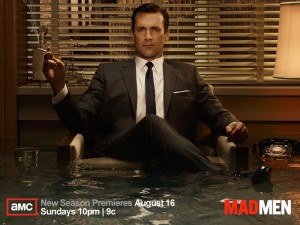
After a 17 month hiatus AMC’s ‘Mad Men’ returns this Sunday in its regular 10PM slot. AMC has also created another new show which debuts with a ‘sneak preview’ April 8th at 11PM (right after ‘Mad Men’) called ‘The Pitch’ – Stuart Elliot of the New York Times covered this in his excellent column on Monday – http://nyti.ms/GHuVXI.

The premise is that a number of real-life advertising agencies compete to win the business of clients such as Subway, Waste Management, and Frangelico to name a few. Apparently the successful highlighting of brands on shows such as ‘Undercover Boss’ has emboldened brands to continue offering themselves up for deeper dives into their collective corporate cultures.

Fifteen agencies agreed to appear – all of them are small or midsize independent shops. The larger agencies have all declined as well as a number of notable smaller ones. Were our agency given the opportunity to participate I’d quickly decline as well. If I were a betting man I suspect fictional Don Draper of Sterling, Cooper, Draper, Pryce would also decline. In fact I recall a terrific scene from season 3 where Don and Conrad Hilton have a meeting where Mr. Hilton asks Don for advertising advice.

I’m Donald Draper.”
{Reminds him they met}
“We have, haven’t we?”
“We had a drink, of course.”
“I can’t believe you’re Conrad Hilton.”
“Don.”
“I’m fine.”
“I really should have known that.”
“Well, they don’t do that for everyone.”
“How did you find me?”
“Well, here I am. What can I do for you?”
{Mr. Hilton asks Don for advice on advertising}
“I think you wouldn’t be in the Presidential suite right now if you worked for free.”
“Connie, this is my profession, what do you want me to do?”

I can understand the attraction of having your agency get exposure as well as an opportunity to show off the kind of thinking that goes on every day at marketing and advertising agencies. However, it is a very slippery slope to offer high level strategic thinking and marketing concepts for free in the hope that your agency will stand out and then be hired. Why buy the cow when you can get the milk for free? Clients really get a big benefit in shows like ‘The Pitch’ in getting free consulting that they may or not choose to avail themselves of, and there’s not much protection for a version of that idea being employed by the client with no restitution to the agency that came up with the idea.

This has been going on in the advertising industry for years and it’s not likely to stop or even slow down.

I’m not mad about the idea at all. Would your agency choose to participate or pass?

Posted in Advertising, Marketing stuff | Tagged , , , , , , , | Leave a comment

A Kindle Fire is cool, an iPad is cooler – an iPadlet could be coolest

When I got my Amazon Kindle over the past holiday season I had my first opportunity to use a tablet for any length of time. I liked the smaller compact size – it fit into my briefcase better than an iPad would and is eminently more portable. Recently my wife got an iPad (2 not the new iPad) and I have had my first extended opportunity to see what all the iPad fuss is about. The Kindle Fire is useful but the iPad is cooler to use – it’s just not as conveniently portable. The Kindle is also 40% or (even less) than the price of an iPad.

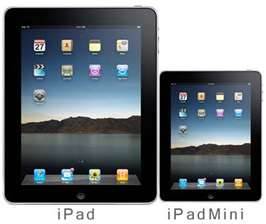
When Apple announced the features of the new iPad on March 7 there were not any dramatic changes – just more speed, supposedly much better graphics quality and a few other various enhancements. By the end of last week I began to hear of the new device that Apple has in the works, a sort of mini iPad. I am going to term it the ‘iPadlet’ for now. This is because at 7-8 inches or so it is close to the size of a Kindle Fire – so more portable, and it will be priced close to the current cost of an Amazon Kindle Fire.

Could that be game over for Amazon, could the Fire be put to rest? My thought is, if Amazon is not going to offer improvements to its first generation Kindle Fire, then quite possibly. But that’s very unlikely. Jeff Bezos is one smart guy and like the late Steve Jobs knows that when it comes to the creation of a device, the journey can be its own reward. Certainly the Amazon Kindle Fire’s price would be reduced to below that of an ‘iPadlet’ (a $100 tablet computer – one for everyone!). But racing to the bottom is hardly a game-winning strategy. The Kindle Fire was a good start but it won’t be long before people are asking Mr. Bezos – ok good start but what’s next?

For now having both the Kindle Fire and an iPad is a great situation. At home having the iPad is great – handy, always ready to go and easy to use. The Kindle Fire is what I take out and around – books, newspapers, email, Facebook, LinkedIn, and Twitter are all easy to use on the go (although the inability to buy wireless service is a pain as wi-fi is sorely lacking when commuting by train to New York.

An iPadlet could be just the answer for me. How about you – are you married to the ten inch screen of the iPad or if there were a smaller and less expensive Apple tablet would you jump in and buy another?

Or your first?

Posted in Communication, Customer Experiences, Innovation, Mobile Communication, Technology | Tagged , , , , , , , , , | 4 Comments

The debate should be about how to pay for Universal Health Care in the U.S.

It’s difficult for me to understand any argument against universal health care for all Americans. However I can understand that the great concern is how to create such a program without having costs go through the roof. I am going to go out of my way to be apolitical when it comes to universal healthcare. I truly do not believe this is a partisan subject – do you agree or disagree?

As a longtime owner of a small business I know all too well that the costs of benefits like healthcare and retirement plans is a major expense we have to consider on an ongoing basis. When discussing the hiring of new people (since small businesses remain the largest employers this is crucial in terms of improving national employment percentages) the ‘total’ package has to be factored. Many small businesses today are finding that they cannot consider new permanent hires due to the uncertainty of the future costs of healthcare and other benefits like retirement plans. Consequently small business outsourcing of certain job functions has never been more in vogue.

If workers/job seekers (notice I will not call them employees) had access to affordable universal healthcare they would have many more options when it came to finding work. Companies could then decide to either continue to outsource talent on a project basis, or when it made financial sense to hire them full time without the burden of taking on the uncertain costs of rising healthcare.

The United States has the distinction of being the country that brought health insurance into existence going back to World War II when salaries were frozen and non-cash benefits were the only way to incent potential hires. The results look somewhat like an unplanned city – overly complicated, built-in inefficiency and a legacy system that offers patronage and great opportunities for misappropriation of funds.

Whether it was Hillarycare, Obamacare or National Healthcare, the narrative has been for a long time, partisan. I’d like to believe that the basic opposition to universal healthcare is how it could be made to be affordable such that government costs to administer would quickly explode out of sight. That’s a reasonable question to ask and a reasonable topic of discussion. Somehow it has not happened that way.

Is there really any good argument about the concept of universal healthcare for all Americans?

Posted in Best business practices, Living in the World Today | Tagged , , , , | Leave a comment

Starbucks has already become that 3rd place

It’s generally accepted that for most people, home and work are the first two places. For retail establishments like Starbucks and McDonalds (to name just two), the battle to become the most popular 3rd place is never-ending.

I’ve expressed my ambivalence toward Starbucks in past posts. The willingness of people to spend US $4.00 for a cappuccino never ceases to amaze me. Over the weekend I stayed at a Courtyard by Marriott and the brand has been refurbished to include a nice café in the lobby anchored by Starbucks. People were queued up much of the day (I came in and out of the hotel multiple times during the day) waiting to buy their beloved Starbucks.

What amazed me is that thirty feet away the hotel offered ‘free’ regular and decaffeinated coffee (it was good coffee too) that people spurned in favor of paid Starbucks. Talk about your brand acolytes – since when did paid beat free when it comes to something like coffee? Starbucks is ingrained deep into the mindsets of not only Americans but people all over the world. In fact whether you are in North America, Europe or Asia the Starbucks brand is omnipresent and consistent. I’ve not been to South America or Australia but am willing to bet it’s no different in those places.

Yesterday I had a meeting at a Starbucks in New York City since it was more convenient for my associates to meet us near Penn Station. We chose Starbucks because it had free Wi-Fi and we knew there would be tables to sit at and show our presentation. Most of the other people there had laptops or iPads or some other tablet and were busy meeting and working. I noticed that this particular Starbucks had covered up all of the electrical outlets so that people could not recharge their computers (or phones for that matter). I don’t remember having noticed that before but it was obviously done with the intent of limiting the amount of time people could both use the Wi-Fi as well as linger in this 3rd place. There was no limit to how long you had access to the Wi-Fi – something I have experienced in other Starbucks where the user is kicked off after a preset time and has to log-back on.

McDonald’s also offers free Wi-fi (as do many establishments today) but the feeling of sitting in a McDonald’s is discernibly different than at Starbucks. There’s a collective energy in Starbucks that is not easy to replicate.

I will never be a huge Starbucks customer or fan but I respect what the brand represents and how – for better or for worse – it has become the world’s 3rd place.

Do you agree or disagree?

Posted in Advertising, Best business practices, Brand Advertising, Community, Customer Experiences, Living in the World Today | Tagged , , , , , | Leave a comment