First run movies at home won’t kill going to the movies

First run movies at home copyLast week Sean Parker (of Napster and Facebook fame) announced a new startup project, and as FORTUNE magazine put it “… called the Screening Room, that would allow users to pay to watch movies from home on the same day they’re released in theaters, according to Variety, which was briefed on the idea. The films would cost $50 per view, and would run on a $150 set-top box that would stream the movies over the Internet to users’ homes. In comparison, an individual movie ticket can cost anywhere from a few dollars to $30, depending on the theater.” 

VARIETY countered by offering their version of the news: “Screening Room, the brainchild of entrepreneurs Sean Parker and Prem Akkaraju, offers movies for $50 at the same time as they open in theaters. It plans to charge $150 for access to the anti-piracy equipped set-top box that transmits the films and will give customers 48 hours to watch the movies. It represents perhaps the greatest challenge to theatrical release windows since a 2011 DirecTV initiative to offer movies on-demand while they were in theaters. That push resulted in a fierce rebuke from filmmakers such as Michael Bay and Peter Jackson.

There are reasons for this and lower ticket sales are at the top of the list. Yet I am surprised at the idea that this approach would seriously impact the movie-going business in the first place.

FORTUNE went on: “Despite the major cost difference, movie studios and theater partners have been grappling with ways to get more people to see their films. Last year, the Motion Picture Association of America (MPAA) revealed that theater attendance had hit its lowest point in 20 years, with just 1.3 billion cinema tickets sold across the U.S. That said, revenue has been skyrocketing in recent years, with 2015 global box office sales topping $38 billion for the first time last year, according to film industry tracker Rentrak. In North America, box office sales hit a record $11 billion.”

Variety had a slightly different take:

The National Association of Theatre Owners said that movie theater chains will individually decide whether or not to back Screening Room, but in a statement Wednesday (March 9), the exhibition industry lobbying group dismissed the startup, while reaffirming its commitment to theatrical release windows.

“The exclusive theatrical release window makes new movies events,” NATO’s statement reads. “Success there establishes brand value and bolsters revenue in downstream markets.”

The group went on to say that any new distribution models should be created in consultation between studios and theater owners, not with the help of a “third party,” a clear dig at Screening Room.

“More sophisticated window modeling may be needed for the growing success of a modern movie industry,” the statement reads. “Those models should be developed by distributors and exhibitors in company-to-company discussions, not by a third party.”

I am a fan of disruptive technology and thinking. The back and forth here is interesting since obviously there’s concern about how cinema fans will behave. After all the folks that have those $5,000, $10,000 or even $100,000 (or more) home theaters would be prime target customers.

However, as good as home theaters can be – and they can be VERY good, home theater viewing will almost never be the same as going to the movies and it’s not because of the $8.00 giant tub of popcorn. No, movie-going behavior is deeply embedded in the psyche of Americans and movie-watchers all over the world. Most people will never pay $50 for a first-run movie and the experience of being at the movies with other people, gauging their reactions – good and bad, is an integral part of the experience. Look at it this way – live staged plays are ok when aired on TV (think of the recent live performances of The Sound of Music, and Grease, but being at a live stage presentation is vastly different – and better. Not only because the actors are live, but also because of the shared experience of seeing and being there in the audience – together.

So there’s room for both wouldn’t you agree? Or do you really believe the advent of home screening portends the end of movie-theater going?

Posted in ads in movies, Movie theater advertising, Screenvision, Technology | Tagged , , , , , , , , , , , , | 2 Comments

Build your professional confidence in thinking there’s nobody better than you

whos-better-than-you-nobody-78447986Here in the U.S. Major League Baseball’s ‘Spring Training’ games have been going on for two weeks and for those of us that love ‘America’s Pastime’ the sights and sounds of spring are inexorably wrapped up with baseball.

I had the great pleasure of coaching Little League and Babe Ruth baseball as my son made his way up through the ranks. Prior to that I had not played organized baseball since I played Little League myself back in the day. One summer when I was just past 40 I was enticed (induced?) to play Men’s Senior League Baseball. I was not a good player and the level of the other players which consisted of former high school, college and even an occasional retired professional player, was far above anything I could really handle.   Yet one of the best things was that I learned a great deal about teamwork, team support and team spirit.

What was most interesting to me about playing baseball (as opposed to watching it from the stands), was the constant infield chatter and constant support when a team member was at the plate.   “Nobody better here Mark” “You’re who we want up in this situation”. “Work your way back in the count”. “ Good eye”. Constant, positive encouragement helped keep my confidence up even when I really knew I wasn’t very good.   I am not going to say that our team used that approach to win the championship that season (we didn’t) as all the other teams in the league did pretty much the same thing.

And when things did not go so well (like I didn’t get a hit, made an error in the field or gave up two home runs in a row), the support was still there in the form of – “Tough day”, or “You’ll get ‘em next time”.

I took what I learned from that experience and brought it to the young players that I was coaching at the time. Because those young players were far from being professionals, I found the impact of positive reinforcement made them more effective than other teams they played that did not practice “Nobody Better” as I like to call it.

As business professionals having a success ratio of 30% (making one a multi-millionaire in professional baseball), is unacceptable. The stakes are higher as your livelihood is directly correlated to your performance. At least hypothetically speaking. However business leaders and managers all too often miss the opportunity to improve their team by offering a show of confidence that in the current project there’s “Nobody better” and “There’s nobody we’d rather have at-bat in this critical situation.”

The “Nobody Better” approach won’t turn a lousy player into a star. But it very well can push a team member to focus more and give his or her best effort more often because the team believes and is relying on them.

How do you motivate your team?


Posted in Leadership, Team management | Tagged , , , , , , , , | Leave a comment

The DMV is still where you’d rather not be

DMVAs the nation that invented the driving of automobiles, any licensed driver feels a chill go up his or her spine when they have to consider a trip to the Department of Motor Vehicles.   I’ve been going there now for forty years and on one of my recent visits, (in what was far from a nightmare) I almost began to buy the concept that DMV service and information was getting better. After today’s visit I don’t know how I could have felt that way.

Americans know that things like government sequestration and budget cuts have impacted service delivery of the vast network of DMV’s, (which are regulated by individual states).

To me it appears the average DMV (I’ve been to them in no less than four states over time) is a place that time and technology have forgotten. When I arrived today at what I thought was an off-hour (10:30 AM) the line was out the door.   I found out after the fact that one can go on the DMV website to get an idea of waiting time. Except that those people waiting outside the door are not counted. In fact the wait time has nothing to do with the first line you stand in. So there’s no way to know unless you actually show up.

There’s no visible signage – digital or otherwise but the good news is that they sell some packaged pastries and soft drinks. People showed up with books to read while they waited. I have not seen that in a long time (used to be in banks in Los Angeles in the 1970’s that people showed up with books and I wondered why, at first).

There was no way to know one person’s reason for going to the DMV over another aside from those of us that were carrying license plates. I just knew if I actually reached the Oz-like window (opening?) and was able to actually talk with a DMV employee, that the first question would be “are you returning your plates?” Aside from going to see the dentist I can’t think of a place people would want to avoid going more than the DMV. It must be disheartening for the people that work there to see the frustration and have to deal with thoroughly aggravated people who’ve waited longer than an hour to perform what should be a very simple task.

Could Fedex or UPS or Amazon or some private company do a better job of managing the DMV? The answer is YES! But it seems like it will never happen and that’s just too bad. Smart use of technology could help alleviate some of the problems, but the approach is all wrong as DMV’s are under-funded, under-resourced, under-staffed and overwhelmed.

That DMV data is seen as so vitally important to local and national security makes privatizing a complicated concept. But what exists currently is not working. People deserve better don’t you agree?


Posted in Living in the World Today, Personal Privacy | Tagged , , | Leave a comment

Create more professional opportunities using the VC strategy of Deal Flow

deal flow funnelIt seems today as if everyone knows someone who’s trying to raise money for something. In my experience it’s often an entrepreneurial idea or an effort to take a struggling enterprise to a higher level.   As a business strategy advisor and marketing professional (they do go hand in hand), having good opportunities to meet and engage with new clients requires a great deal of research, follow up, and consideration of when to press harder or move on to other things.

In the start-up world the term ‘Deal Flow’ is used regularly. If you are not familiar with the term:

From Wikipedia: Deal flow (or dealflow) is a term used by finance professionals such as venture capitalists, angel investors, private equity investors and investment bankers to refer to the rate at which they receive business proposals/investment offers. The term is also used not as a measure of rate, but simply to refer to the stream of offers or opportunities as a collective whole. An organization’s deal flow is considered “good” if it results in enough revenue- or equity-generating opportunities to keep the organization functioning at peak capacity.

The most famous and successful venture capital firms regularly receive hundreds of business plans each month. From among these, it is not unusual for a VC firm to actually fund only 0.25%–0.5%. Active angel investment groups will typically receive dozens of plans monthly, but because of the much smaller number of plans compared to VCs they tend to fund a somewhat higher percentage (0.5%–1.0%). Once a company makes it through the group’s screening process, however and is invited to present to the group’s full membership, its chances of getting funded rise to about 18%, according to the University of New Hampshire’s Center for Venture Research.

Sounds familiar right? Any good business development person knows that having a robust and replenish-able source of good leads is essential. Yet many business development professionals are trained to think and act in a transactional manner and not in a consultative or strategic manner.

When I look at a ‘deal’ for a company that is seeking outside investment I always consider my contribution as a business strategist to be equally as important as trying to match an appropriate investor with the appropriate opportunity. What value can I bring to the table? And if the answer is – not all that much, then it is obviously not the right opportunity for me, or for the company I am trying to help.

The point I am making is that whether it is business development, sales, or capital raising/deal-making in the investment world, you have to kiss a lot of frogs before finding your prince. But if you look at it through the lens of how you personally can add value you will be able to much more quickly eliminate dead ends and time-wasting opportunities.

Saying ‘not for me’ is powerful and it’s too easy to be distracted by flash and dazzle. Be better about evaluating your own opportunities and you’ll have a much better batting average.

What do you do to parse good opportunities from one’s that do not fit your skill set?

Posted in Career Development | Tagged , , , , , , | Leave a comment

Is Facebook’s Mark Zuckerberg among the best CEO ‘s in the U.S. today?

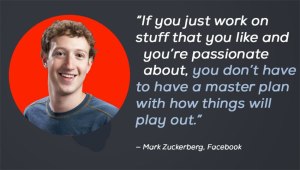
Mark-ZuckerbergA few years ago it would have been unthinkable to consider twenty-something and millennial Mark Zuckerberg in the same vein as Jack Welch. But there I just did it and I think it’s worth consideration. Jack Welch was a terrific CEO for GE (his 20 year tenure ended 15 years ago in 2001) and for the time. Clearly Facebook is a vastly different company than GE yet Facebook has had to face challenges to its business model and the results have been impressive. And anyone that cares to nominate Howard Schultz of Starbuck’s would be well within his or her rights to do so.

It’s not only the appreciation in the price of Facebook’s share price (currently around $105/share with a market cap of $307 Billion), although that in and of itself has been impressive. Mr. Zuckerberg now at 31 makes decisions with the assistance of a stellar team that includes a fantastic hire in Sheryl Sandberg as COO.

An article by Paul R. La Monica @lamonicabuzz in CNN Money Magazine late last month also weighed in on the effectiveness of Mr. Zuckerberg’s tenure as CEO.

‘Mark Zuckerberg is not the same guy that Jesse Eisenberg famously (and unflatteringly) played in “The Social Network. Yes, the Facebook (FB, Tech30) co-founder may still have an unhealthy affinity for grey hoodies. But he’s now a philanthropist, education investor, aspiring artificial intelligence creator and a new dad. He also just might be the best CEO in America.’

It is true that for many, the portrayal of Mr. Zuckerberg in the movie “The Social Network” was unflattering and biased and I have said it might be one of the best business movies ever made. Movies tend to be biased to make their point. The same can be said of political candidates but that’s a different story.

People want to work at Facebook.   It’s got a cool campus-y workplace, employees get to work on cool stuff (think Oculus Rift), and most importantly Facebook makes money. A lot of money. No other social network even comes close to Facebook when you keep score on the P & L sheet. You can credit Ms. Sandberg if you like but if the expression “the fish stinks from the head down” correlates for mismanaged companies in today’s business climate, Mr. Zuckerberg at least has done a great job of not messing things up.

Now a philanthropist and father Mr. Zuckerberg weighs in on things such as Apple’s refusal to turn over data to the U.S. Justice Department (he agrees with Tim Cook) and other important issues regarding consumer privacy.

And then there’s China. Facebook is still blocked (not banned) in China for its refusal to allow the Chinese government to choose how Facebook is accessed in China.   At the same time Mr. Zuckerberg has taken to learning Mandarin (he is married to an American woman whose parents were ethnic Chinese refugees who fled Vietnam in refugee boats.), and going to China and making his remarks in Mandarin. The slow courting of the Chinese is a long game indeed but with tremendous stakes (add China’s total population to Facebook’s current users and nearly half the planet would be on Facebook).

Facebook makes mistakes. Remember Facebook Beacon? However from what I have observed, Facebook is willing to move away (and quickly) from its missteps perhaps because it actually listens to what its users are saying and doing.

Like many millennials, Mr. Zuckerberg is smart, sometimes brash, and seems intent on making Facebook better and making the world a better place.   Even if you don’t like or use the Facebook platform you have to acknowledge that what has transpired under Mr. Zuckerberg’s leadership of Facebook is impressive.

How long can it last?

Posted in Entrepreneurship, Facebook, Social Media | Tagged , , , , , , , | Leave a comment

Sirius XM – Are they serious?

Sirius packagesHaving recently completed a 3,650-mile drive (that’s nearly 5,900 kilometers for my non-U.S. readers) over a three-week period, I was thankful for the ‘free’ trial offered by Sirius XM Satellite radio.

It’s the second free trial for the car I lease and was offered to me after a recent minor service. I’ve had the trials in the past that come automatically with new car leases but I’ve never subscribed as I don’t normally drive long distances on a regular basis.   For those that do not know the current Sirius XM subscription price is U.S. $14.99/month plus tax (apparently it comes out to more than $19.00 monthly. That’s more than $200 annually and simply not worth it for me.  The up to date package prices can be found here.

I did enjoy the variety available on satellite radio and as I began to think more about it I wondered why Sirius XM does not offer tiered subscriptions based on how much time per month a subscriber might listen.   There has to be an overall monthly average (number of hours subscribed are active divided by the number of subscribers) whether that’s 10, 25, 50 or some other amount of hours.

To be clear, I feel I’d be willing to pay $7 per month and if I were limited to 10 hours or something like that I likely would consider subscribing. I’d also like the opportunity to buy more time (which would cost more per hour than I had subscribed at the normal price) if I so desired. It would be much like the way that Verizon and other mobile carriers handle customers that go over their subscribed data usage.

Perhaps Sirius XM is not able to track individual usage by vehicle? That’s hard to believe, but possible. And of course subscribers also are able to listen over the internet as well (of course that all access pass costs even more – $18.99/month plus tax)  but shouldn’t it all be trackable as well?

Full disclosure, in 2009 I wrote  that the second Howard Stern (he started on Sirius back in 2006) deal on XM would not work and that satellite radio was doomed to fail. Obviously I was mistaken, at least so far. As reported by Sirius XM there are roughly 29.6 million subscribers. It claims to be the largest radio company. Doing the math – $14.95/month x 29.6 million subscribers = $442 million per MONTH in revenue. Keep doing the math and it’s more than $5.3 billion annually.  Only it isn’t, at least not exactly.

A friend of mine noted that Sirius XM makes deals on an individual basis. You don’t want to pay $14.95/month? Call them up and they will drop the price. I have not tried this. Yet. So it follows that 2015 revenue as reported by Sirius was $4.6 billion. That’s $700 million in deal making. It works out to $12.90 per month per subscriber. No matter what, there’s ample revenue to track both individual subscriber usage AND behavior.

As a marketer it’s been difficult to recommend that our clients advertise on Sirius XM since their programming is unrated. While program rating companies like Nielsen et al are themselves being disrupted, there are not other metrics that allow us to offer adequate performance indicators unless direct response is employed.

And then there are Sirius XM user reviews. I looked through several review sites like this one and let’s just say that I had a difficult time finding a significant number of positive reviews. In fact now I am a bit concerned about the full on assault that I might receive if and when I decide to not subscribe. I expect that Sirius will try to auto bill me and I will have to call to get them to cancel. This is based on my reading various review sites.

What I am more likely to do is to call Sirius XM (since I have to anyway even though I’d much rather do it online), and see if I can get the price at $7/month or less. Wish me luck. I am not all that optimistic.  They have a Sirius “Lite” (my word not theirs) version for now $10.99/month but that is not at all attractive to me.

I do know a number of people that subscribe to and enjoy Sirius XM satellite radio. What they all have in common is that they are all basically well-to-do and the $18.00+/month charge is not significant for them AND they feel they are getting value. That’s all well and good but I believe Sirius XM is missing a big-time opportunity to grow their business, be more customer-friendly and provide more value to subscribers.

For the record, I also have a Spotify subscription (which I love – now there’s a high-value proposition) and could (and sometimes) do just as easily stream Spotify while driving. Yet I like having radio stations that curate things and find that when I listen to radio I am introduced to artists that I may never have come across elsewhere

So Sirius XM – are you listening?

Posted in Direct marketing, Satellite radio | Tagged , , , , , | Leave a comment

Chinese dance troupe Shen Yun is a big digital advertiser in the USA

ShenYun_thumbnailIf you live in or around any major city in the U.S. you’re are likely to have seen advertising for something called Shen Yun which appears to be some sort of Chinese dance troupe along the lines of Cirque du Soleil. The advertising, digital, outdoor and sometimes even radio and local television makes little reference to what you will see, only that it will be a spectacle in and of itself. I’ve never attended a show (shame on me since I am a self-proclaimed sort of Sinophile and yes I have plans to attend this year).

Having worked with a number of Chinese companies I’ve seen few that do any kind of consistent advertising – consumer advertising in particular in the U.S. Yet Shen Yun at times is omnipresent. Or so it seems to me. I found by checking out info on Wikipedia that the group is part of Falun Gong which if you do not know ‘On 20 July 1999, the Communist Party leadership initiated a nationwide crackdown and multifaceted propaganda campaign intended to eradicate the practice. It blocked Internet access to websites that mention Falun Gong, and in October 1999 it declared Falun Gong a “heretical organization” that threatened social stability’

Also from Wikipedia:

‘Shen Yun Performing Arts is a performing-arts and entertainment company formed in New York City.[1] It performs classical Chinese dance, ethnic and folk dance, and story-based dance,[2] with orchestral accompaniment and solo performers. The Shen Yun website translates the phrase shen yun as “the beauty of divine beings dancing”.[3]

Shen Yun was founded in 2006 by practitioners of the Falun Gong spiritual discipline,[4][5] with the mission of reviving “the essence of 5000 years of Chinese culture,” which it states to have been nearly destroyed by the Chinese Communist Party government.[6] Performances around the world are hosted by local Falun Dafa Associations 

The group is composed of three performing arts companies: The New York Company, The Touring Company, and the International Company, with of a total of over 200 performers. For seven months a year, Shen Yun Performing Arts tours to over 130 cities across Europe, North America, Oceania, and Asia.[7] Shen Yun’s shows have been staged in several leading theaters, including New York City’s Lincoln Center for the Performing Arts,[8] London’s Royal Festival Hall, Washington, D.C.’s Kennedy Center, Paris’ Le Palais de Congrès.[5] The company has performed extensively in Taiwan,[9] but has yet to perform in Mainland China or Hong Kong. The show’s acts and production staff are trained at Shen Yun’s headquarters in Cuddebackville, in Orange County, New York.’

I find it highly interesting that an outlawed mainland Chinese troupe is able to survive across the United States and is doing a good job using advertising to drive awareness and sales. I continue to wonder why more PRC (mainland Chinese companies), don’t advertise like Shen Yun. After all, while driving domestic Chinese consumption is seen to be critical to the future of the Chinese economy, selling goods and services outside of China appears to be increasingly important than ever to Chinese companies

Shen Yun can give a few lessons there but I doubt that Chinese companies will pay much attention for both political and non-political reasons.

Posted in Advertising, China Marketing, Digital media, International business, Marketing stuff | Tagged , , , , , | Leave a comment

Self-driving cars will hasten the death of the road trip

Road trip sf22408-edit.jpg__800x600_q85_cropI just finished the first leg of a drive (1,200 miles) of what will be a quasi-road trip since I intend to stay in one place for two weeks. Like many of my peers way back at age 16 in the 1970’s, I applied for my license on my 16th birthday – and in my case, applied for my road test as well. Having a driver’s license ASAP was the road to freedom – even it meant borrowing my Dad’s car. Today 16 year olds are obtaining their driver’s permits and licenses at a lower rate than in over thirty years. With the advent of self-driving cars (Thanks again Google!), the American road trip may somewhat soon be a thing of the past.

The road trip was born in the USA. A short article in The Smithsonian attributes the road trip to the genius of Henry Ford. When I was younger my family did take a few road trips – not like some families who’ve made annual sojourns a part of their life. The expression “A journey is its own reward” rang true even if it included running out of gas, broken down vehicles, flea bag hotels and barely edible food. Because we have the memories! There were seemingly only a couple of dozen radio station to listen to, 8 track and cassette tapes, no air-conditioning (or you wouldn’t run it since it used a lot of gas AND could cause engines to overheat). We had products to buy for the road like Zerex and Prestone. Battery brands like Sears’ DIE HARD were advertised continually.

Between the behavior change of millennials, and the promise that Google (as well as Tesla, Uber and others) wants to drive your car what will become of the American road trip? How about road trips in other countries? Or through Europe, Asia, or China? The Chinese are buying cars – maybe not quite as fast as in recent years but still at substantial rate. Are there Chinese road trips?

Car ride-sharing apps like Uber and Lyft are amazing innovations. Most of those rides have the rider looking at or talking on his or her phone almost the entire trip. The journey is nothing, but a journey.

Why will people in the future do a road trip if Google is driving their car? A very different experience to be sure and only a sense of nostalgia will motivate people to try it the old fashioned way. If your car insurance will allow it.

I still love driving myself. In fact I drove all 1200 miles only because my wife couldn’t care if she drives or not and I prefer driving to being a passenger. It’s a good thing I am not a control freak.

It’s evident that the era of owning cars and driving them around is on the way out. It will take a few more years but not more than twenty and possibly less than that. IF that happens then the old-fashioned road trip will have lasted maybe 125 years.

Currently gas is cheaper than it has been in years. Automobiles are the safest they’ve ever been. Mobile communication takes so much risk (and excitement if you ask me) out of the road trip equation. Still, if you love driving as much as I do, get out there and get rolling across the USA before it’s too late!

Posted in Living in the World Today, Public Transportation | Tagged , , , , , , , , , , , | 2 Comments

Personal recommendations have greater risk than reward

linkedinrecommendationsthumbsMost businesspeople agree that referrals and recommendations are the best way to grow your professional network, reputation, and career. Personally I am always flattered when I receive a referral or recommendation from someone I know and respect. And then I think – oh, now I REALLY have to perform.

It’s not that I actually work any harder or differently when recommended or referred than under other circumstances. But I am keenly aware that I have now another stakeholder in the house – the recommender or referrer.   I have learned that it pays to be thoughtful when recommending someone you know to someone else.

Why be careful? I often say that when offering a recommendation, you should not expect any kudos if the recommendation works out well. After all the reason they asked you for a recommendation (since they respect your opinion), is that there’s an expectation that you would not send over an idiot. Of course the recommended person is capable. That’s why they came to you in the first place!

So then there’s the converse. The recommended person messes things up. And worse sometimes handles the situation poorly. A poor reflection on you to be sure and all you were trying to do was to help!

I’m not advocating your suspending making recommendations. I continue to and will continue to offer recommendations when I feel they are appropriately matched and that there’s a high chance of a successful interaction or engagement.

I am suggesting being more thoughtful about your recommendations. When was the last time you spoke with or met the person you are recommending? It does not take long for professional lives to change these days!

A suggestion: You actually could do what I do sometimes which is to offer that ‘I have someone in mind who I feel may be able to help but I’d like to talk with them first to be sure it is a good fit for both parties’. It’s an extra step to be sure, yet I guarantee that you will actually make fewer recommendations once you add this step to the process since you will inevitably run into a few situations where making that recommendation would be the wrong thing. In that case you have done a great job in forestalling an outcome that would hurt all concerned!

The professional (and job-seeking focused) LinkedIn often asks if you would like to recommend fellow professionals with whom you are connected. Be mindful here since that recommendation from 2008 may be much less relevant today than it was at the time. I doubt many LinkedIn users ever go back and un-recommend someone they recommended 6 years ago or more.

Maybe you should take a look again at whom you’ve recommended?   Just a thought.


Posted in Career Development, Networking | Tagged , , , , | 2 Comments

The Power of Sound – for Dolby’s brand the beat goes on and on

dolby-digital-logoMany people around the world went to movie theaters over the holidays (and continue to do so in early 2016). If you’ve seen Star Wars Episode VII, you recall that the movie promotes that it is” PRESENTED IN DOLBY VISION AND DOLBY ATMOS!”

I recall when Dolby Laboratories ‘Surround Sound ‘came into prominence in the 1980’s (1982 to be specific but I had to look that up http://www.dolby.com/us/en/about/history.html) and that the company was founded in the 1960’s by Ray Dolby who passed away in 2013 – video here http://www.dolby.com/us/en/about/leadership/ray-dolby.html.

That Dolby has maintained a market presence for some 50 plus years overall and not only that but has remained a relevant force is more impressive than you might think.   Back in the 1980’s a musician named himself Thomas Dolby – a sure sign of respect for what was at the time a singular technology. I could not even name a competitor in the field then or now for that matter.

I think the history is interesting:

1965: Dolby founded in London.

1966: Dolby creates first product to reduce noise in music recordings.

1971: A Clockwork Orange is the first film to use Dolby noise reduction.

1976: Dolby moves headquarters to San Francisco.

1977: Star Wars opens with Dolby Stereo®.

1982: Dolby creates surround sound for the home.

1989: Ray Dolby and Ioan Allen awarded Oscars® for contributions to cinema sound.

1992: Batman Returns is the first movie to be released in Dolby Digital.

1996: Dolby receives Scientific and Engineering Award from AMPAS for design and development of Dolby Digital sound system.

1998: First live HDTV broadcast with 5.1-channel Dolby Digital audio.

1999: Star Wars: Episode I—The Phantom Menace debuts in Dolby Surround EX.

2004: Primetime Emmy® Award presented by NATAS to Dolby for outstanding achievement in engineering development.

2005: Dolby completes initial public offering.

2006: New Korean office opens in Asia, joining offices in Tokyo, Shanghai, Beijing, and Hong Kong.

2010: Dolby Professional Reference Monitor PRM-4200 is awarded TV Technology Mario Award.

2012: Dolby acquires rights to Dolby Theatre®.

2012: Dolby reinvents cinema sound with Dolby Atmos®.

2013: Dolby enters business communications with Dolby Voice®.

2014: Dolby launches Dolby Vision™.

2014: Dolby launches Dolby Cinema™.

2015: Ray Dolby receives a star on the Hollywood Walk of Fame.

2015: Dolby wins two Daytime Emmys for its work with Silent.

So what about competition? Dolby’s main competitor is DTS. In the past, Dolby was the standard audio formatting for DVDs, while DTS was relegated to another supported position, but the growing popularity of Blu-Ray, which must support both Dolby and DTS audio formats, means that Dolby no longer has had a monopoly over the market for home theater audio.

Dolby Labs is a publicly traded company on the NASDAQ and has a market cap of more than $3.1 billon. DTS also trades publicly but is much smaller with a market cap just over $365 million. Not exactly a tight competition.

To me Dolby Labs and their products have stood for high quality sound for more than thirty years. Talk about maintaining your brand’s equity! There’s an object lesson here.


Posted in Technology | Tagged , , , , , , | Leave a comment