Diners – an American tradition whose days are numbered

Like many of my fellow baby boomers I grew up going to diners. They came in many forms – chain and independent. Friendly’s for instance was a chain diner as was Denny’s. My favorite diners were and still are independent ones although when traveling the highways and byways of the U.S. a Friendly’s or Denny’s is still a welcome site.

Over the weekend I traveled to the Jersey Shore (it was decidedly not a search for Snooki or J-Wow BTW) and had occasion to stop at a diner for breakfast early on a Sunday morning. This particular diner owned and operated by a Greek family (no surprise there) appeared like many to be a vestige from the 1960’s, complete with the rotating dessert case showcasing attractive cakes and pies that were baked I don’t know when.

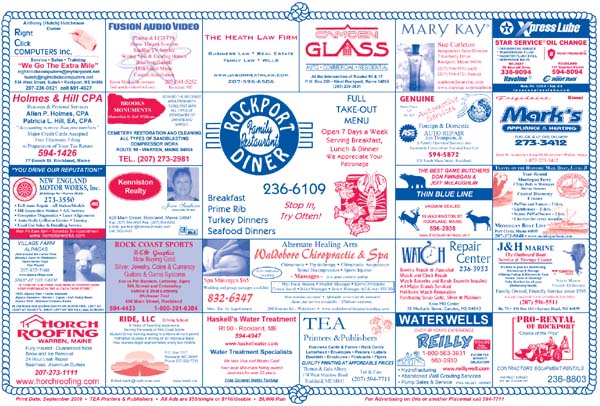
And don’t forget the placemats. When it comes to placemats there is the evidence of the marriage between local diners and local businesses, and it is in full bloom when one looks at the placemats chock full of ads. That always interested me since I have a perception (which I can neither prove nor disprove) that as many out-of-towners eat in diners as locals – which would mean if I am right, half the audience is relatively uninterested and of little value. It is not easy to get specific demographic and psychographic data related to diners alone since restaurants are not categorized in that fashion.
Diners are uniquely American although there are some found in parts of Western Europe. And no lie – the first diner (at least according to Wikipedia) was created in 1872 by Walter Scott (Witzel) who worked at a printing press. Apparently we printing folks have been continually trying to find a new occupation for more than 140 years.

Diners are frequently open 24 hours. However when one finds themselves in a diner at 3:00 AM it is rarely a sign of good things. The food can be good at diners but in my experience ordering ‘safe’ food makes the most sense – eggs, grilled cheese, etc. Greek diners often offer Greek specialties like gyros and chicken, beef, or lamb souvlaki and those are also what I would consider to be safe choices.

Why do I think diners are on the way out? Not just because everyone has no time to do anything but to go to Starbuck’s and Dunkin’ Donuts, but the speed at which America operates today is in stark contrast to a diner experience which often ends up making me feel as if I’ve entered the land that time forgot. Diners take too long, the food is too often mediocre at best and to me they seem to be much more expensive than they should be. And the selections could not be more boring particularly when compared to the change in the American palate which requires spicier and edgier menu choices, something diners decidedly do not offer.

I’ve posted before that Denny’s is on to something with the retro refitting of its units and their value meals at $2/$4/$6/$8. So maybe Denny’s can help continue the tradition. There has already been one revival in the 1970’s when diners were built in a retro-type fashion harkening back to halcyon days when America was a simpler and gentler place (if you actually believe that). In fact Webster’s dictionary refers to diners as ‘a restaurant usually resembling a dining car in shape’. I did not know that did you?
Diners will not disappear entirely but I think they will for the most part go the way of the Automat (yes I’ve been around long enough to have been to Horn and Hardart but that’s another story altogether). I will miss diners when they are few and far between.
How about you? Do you like diners or have you long since passed them by?


Posted in Best business practices, Community, Living in the World Today, Travel | Tagged , , , , , , , , | 1 Comment

You’re raising a barn on Farmville – nobody cares

With Facebook’s successful IPO this past Friday Zynga (creator of Cityville, Words with Friends, Draw Something, Farmville, Frontierville and other ‘villes) has more motivation than ever to unwean itself from the mother ship that is Facebook since Facebook may come to Zynga looking for an even better deal. Things are bound to be different now that Facebook is a public company. A recent report on Zynga earnings http://nyti.ms/IczvAQ noted that its net loss was $85.4 million in Q1 2012.

Since Zynga relies on Facebook for the bulk of its revenue the attempt to disassociate itself from the FB hoodies will not be easy. At the same time Facebook takes $0.30 of every dollar that people spend on Zynga.

I am surprised and not pleasantly so at how many people allow Facebook updates off of Zynga to appear in their Timeline (formerly Newsfeed). That you scored 30 points playing Words with Friends’ or that you are trying to raise a barn in ‘Farmville’ and would like some help doesn’t interest me. And I doubt it interests many of your FB friends either. When I see that update during the workday it makes me wonder how you might have time to get any work done. Of course I am reading your update during the work day too…

Do us all a favor – turn off the automatic update from your Zynga games to your Facebook Timeline stream. If you are doing it, it’s probably an oversight on your part but now’s a good time to fix it. Besides, I barely have time to watch the videos everyone posts on Socialcam.
Really – how is anyone actually getting any work done when they are so busy playing games at work?

Posted in Community, Social Media, Technology | Tagged , , , , , , | Leave a comment

Drowning in data – Searching for significance

Marketers talk it every day – ‘It’s all about the data’. Everyone nods their collective heads in agreement and the quest to gather even more data continues. There’s so much data available that marketing agencies and their clients are having a difficult time figuring out what’s significant and useful and what is not.

The data deluge is not slowing down, it’s actually speeding up. I believe that the practice of marketers sifting through the gobs of data in order to pull out worthwhile actionable information is precipitating paralysis by analysis. There are some companies (like Amazon and Netflix) that have managed to successfully filter their own customer and prospect data in order to offer real-time marketing suggestions to customers. Yet there are countless other companies that have been collecting masses of data but have no idea as to what to do with that data.

Are we over-measuring? It’s possible. In the context of companies spending so much time and effort organizing and stacking data they often fail to act, or when they do are conflicted as to what the data is telling them they ought to do. Look, I’m a big believer in data collection and its ability to assist companies in making better marketing and media decisions. Yet in the rush to measure EVERYTHING it’s only natural to then draw lines of connection borne from the data itself that does not necessarily have any correlation to good marketing instincts. What does one do when collected customer data suggests one approach which is at the same time contradicted by what is known to be a sound marketing practice?

Don’t read me wrong. I particularly enjoy challenging my own assumptions and I have on many occasions found the marketing data to be completely opposite of what I would have thought would be the case in terms of customer response or affinity. When that happens it’s our practice to test again to learn if our instincts were incorrect. Sometimes they are, but sometimes they aren’t.

Here’s an example. Let’s say you are testing an email campaign with an offer. You see results that show people prefer content over a sweepstakes. At the outset of the campaign you expected based on experience that a sweepstakes would outperform non-sweepstakes. Yet in the subject line of the email you note ‘Win…’ and really what may have happened is that spam filters sent that email to spam purgatory and recipients saw far fewer of those emails than they did for the offer of content. Drawing the conclusion that providing content is the way to go in the future may not be the right decision.

My point is not to stop testing or stop collecting data but to not blindly make decisions on the basis of the data alone. In the meantime we marketers will continue to swim in data and hopefully keep our head above water.

Are you drowning in data?

Posted in Advertising, Customer Experiences, Living in the World Today, Marketing stuff, Television advertising | Tagged , , , , , , , | Leave a comment

The television upfront buying season – the casino is now open

Various articles regarding this week’s television upfront buying have highlighted rising ad rates. The Wall Street Journal http://on.wsj.com/JAMUAg noted that this week’s annual ‘upfronts’ are kicking into high gear. David Carr in the New York Times http://nyti.ms/JJWaAJ wrote about the peripatetic nature of television watching in his house (and mine) – he who controls the remote, controls viewing of live television. But no surprise to anyone, increasingly more people (nearly 50% of the population has a DVR) are watching shows recorded on their DVR.

The upfront television ad-buying market seems to me to be a high-stakes poker game in an expensive casino. Networks, both broadcast and cable, promote their new (and old) shows to advertisers in an effort to get maximum rates for their programming. Successful programs like CBS’ 2 Broke Girls would constitute a ‘win’ in the casino whereas the NBC show Playboy Club that flamed out in less than a month last fall would be a losing bet.

As Mr. Carr puts it:

‘Part of what keeps legacy television in the game is that it is the last refuge of mass and reach. For retailers who want to flag a sale or an entertainment company with a weekend movie opening, a commercial on a broadcast network or a highly rated cable station can still hammer a message into a lot of noggins. In this targeted age, it’s breathtakingly inefficient — you pay to reach everyone, even the millions not in the desired age group — but making a big television buy is a kind of comfort food, easy and familiar.”

I suspect that the days of upfront television buying are nearing an end. This is not a hope or desire of mine, more of an observation that increasing numbers of advertisers will just say no to the Monte Carlo aspect of outbidding one another in order to spend money on any particular show or shows.

But for the present with the CW network booking $9 billion in advertising revenue and the big four up 2 to 4 percent over 2011 the end is seemingly far from near. Cable networks which now surpass broadcast networks in ads booked during upfront anticipate nearly $10 billion in buys for the new season. There will be winners and losers – both in the creators of the shows themselves as well as the advertisers that were unlucky enough to back the wrong ‘horse’. The whole thing just seems archaic to me.

The stock market is seen by many as a giant casino. Do you think the television upfront market is really any different?

Posted in Advertising, Marketing stuff, Media, Television advertising | Tagged , , , , , , , | 1 Comment

A really cool NBA 2012 Playoff television commercial

Maybe I’ve seen something like it before and cannot remember but the intense ad http://www.youtube.com/watch?v=MZ6N-4p1kLc in which type flashes quickly throughout the 0:30 television spot is highly unusual and highly engaging. I found it haunting and very memorable.

For starters there’s zero dialog. The ‘music’ marries so well with the images and I consider this a great job of editing. The pace of the spot is almost dizzying even if you are not a fan of basketball or the NBA.

In the ad business it’s so easy to offer criticism and by that I don’t mean constructive criticism. When a client gives an agency a directive to produce advertising to promote an event (and the brand) it rarely starts off as a blank sheet of paper. This NBA playoff spot strikes me as being the brainchild of the agency – I wish I knew which agency it was so I could offer my kudos to them.

What do you think of the ad and is it groundbreaking? Do you have any other examples of provocative and effective recent television ads?

Posted in Advertising, Entertainment, Marketing stuff, Media, Sports Marketing | Tagged , , , , | Leave a comment

Foursquare continues to be more than public check-ins

I’ve said for a long time that Foursquare’s location based platform originally based on user check-in’s, is one of the most interesting social media applications around. An article in Wednesday’s Wall Street Journal http://on.wsj.com/IT3IVJ did nothing to dampen my enthusiasm. There’s also a video featuring Foursquare CEO Dennis Crowley on what’s next for the platform which can be clicked on from the article.

Foursquare has indicated it is planning to allow merchants to buy special placement for promotions or personalized local offers as of July. This is in keeping with the delivery of value-based promotions once a user ‘checks-in’ that Foursquare users like me have been enjoying for more than a year. I still get a kick out of obtaining a discount (free drink, appetizer, or other benefit) after I’ve already decided to go to a certain place and then check-in once I arrive. That’s real customer value. It will keep customers coming back and checking in and the special placement plans will only continue along that theme.

There are still issues – with check-ins due to the imprecise nature of GPS on smartphones. For instance I have upon more than one occasion forgotten to check in at a place I visited but did so after the fact – that is after I had left the location and had gone someplace else. While I cannot check-in to a place that’s ten miles away it seems I can check-in at a place I am going to before I get there, after I’ve left or most concerning – a place I did not go to at all.

What I am highlighting is that there has to be a general mistrust of check-in locations until the supposedly soon-to-be forthcoming (maybe July with the launch of the personalized local offers?)
improved GPS integration with Foursquare’s platform is launched. Until that time Foursquare user behavior (frequency and proximity) data will be suspect and its veracity compromised. Mr. Crowley’s point that “We are building software that’s able to drive new customers and repeat visitors to local businesses” sounds great but unless local businesses can be confident a user is actually in or within 100 feet of their business I believe merchants will be reluctant to participate.

My friends tend to snicker about my continued use of Foursquare. There are occasions when I get ‘badges’ for visiting my 10th coffee shop or 5th wine bar. What those friends fail to realize is that I am getting value far beyond the public display of a check-in which can easily be seen as self-aggrandizing.
It’s decidedly not self-aggrandizing to take advantage of discounts for places I’d visit anyway right? What Foursquare hopes is that the next level is getting me (and therefore delivering real marketing value to local merchants) to go try a new place because I’ve received an offer for a discount to a place I might never have really considered visiting.

As Garry Trudeau once had Mike offer in his wonderful strip Doonesbury so many years ago – ‘I prefer not to think of it as selling out – I prefer to think of it as buying in’.

Are you ready to buy in?

Posted in Advertising, Community, Customer Experiences, Innovation, Mobile Communication, Social Media, Technology | Tagged , , , , , | Leave a comment

Major League Baseball puts listening to the game behind a paywall

Over the weekend I came into the office to catch up on a couple of hours of work. On the way to the office I had been listening (on the car radio) to my beloved New York Mets’ – http://newyork.mets.mlb.com – attempt to win the rubber game of a three game series with the Arizona Diamondbacks – http://arizona.diamondbacks.mlb.com. I went to the MLB website and like I have done many times in the past (or thought I had) tried to get the live feed of the game which is carried locally on WFAN 660 radio in the New York DMA. It took me a few minutes to figure out that without registering and paying the fee of $19.95 for the year, I could not stream the radiocast of the game (I knew I would not be able to get the video feed without paying).

As a marketing agency I am well aware of the desire and need to leverage and monetize assets whenever and wherever possible. I did not count on getting an ad-free radio broadcast and that’s fine. I don’t know about you, but not being able to listen to a radio broadcast in real time without paying what is a fee (nominal though it may be if looked at over the course of a 162 game season) still struck me as usurious. I understand that there are always complicated licensing arrangements when it comes to broadcasts and re-broadcasts on the web. But surely there are a number of other ways for MLB to derive revenue without insisting on my paying $19.95 to listen to 4 innings of one game. I might never have had occasion to listen to another game all season!

The MLB smartphone application for iPhone, Android, or Blackberry (while it lasts) is really good and a good value proposition, and in fact I’ve subscribed for the past two years but did not this year (I just had not yet gotten around to it and now probably won’t). In the past I would be able to listen to the live feed of the game on my phone (the app is somewhere around $15) and watch highlights of any game as soon as they are posted. However I had no idea that if I wanted to listen to a game outside of a terrestrial (that is non-satellite) radio station, I would have to sign up and pay the proverbial piper.

Baseball is known as America’s pastime. Maybe it should be renamed America’s revenue opportunity. Forget for a moment that to attend a game at Citi Field requires a family of four to consider which meals they will not eat for the week (parking is $20 and even inexpensive tickets (if bought as part of a plan) can be $12/game although you would need buy 81 games to achieve that price). Imagine if the Mets actually had a chance to make the playoffs.

I feel that offering the opportunity to listen to a game for free (with ads and promotions and I’d even sign up if they required it so MLB could market to me) would be good for baseball and the promotion of the game. It seems to me that the next likely step for MLB.com is to move terrestrial baseball coverage to satellite radio (which I still won’t pay for). Then only paid subscribers will be able to listen to the game.

What do you think?

Posted in Best business practices, Brand Advertising, Customer Experiences, Marketing stuff | Tagged , , , , , , , , , , , | Leave a comment

Time Magazine wins magazine of the year – but I don’t know anyone that subscribes except doctors

Time Magazine was recently honored by the American Society of Magazine Editors with the top prize of ‘Magazine of the Year’. My first thought was – how many people actually still read that magazine? The award was for editorial excellence in both print and digital platforms. Being that I have not read an issue of Time Magazine in countless years (print or digital) I might just have to pick up a copy to see what all the fuss is about. When I do I will be in good company since the weekly magazine has a readership of 25 million – 20 million of which are in the United States. Paid circulation (not the same as readership of course) is nearly 12 ½ million.

I can’t say that I don’t read a weekly news magazine since I am subscriber to the Economist but in outside of the Economist I don’t have much use for weekly magazines. There are many weeks that go by that I don’t have time to actually read the Economist and they pile up (ominously since each full issue takes a couple of hours to read if you read it from cover to cover) until I take a trip someplace where I can read them unencumbered. I’ve taken to reading those old issues of the Economist back to front since I have found the content to be consistently more interesting and fun in the back. The front section with topical recent news is pretty boring three weeks after the fact and I’ve already read about the events covered in newspapers and online.

Questions that cross my mind –

1) How is Time Magazine winning awards and still appealing to so many people?

2) If I were to subscribe (hypothetically) could I treat it the way I treat the Economist and when the pile gets big read it from back to front and have the same engaging experience?

3) Not that I need another periodical to read but would I get something out of reading Time Magazine every week? After all it did win a prestigious award. It should be great right?

For me Time Magazine is something I see in a waiting room when I go to see the doctor or dentist. I know
I will incur the wrath of many but sort of akin to the way I look at Reader’s Digest – I’d never pay for it but if I am sitting and waiting someplace and the magazine is there I might pick it up and flip through it.

Reading back over this post I see that I’ve probably defined myself as a magazine snob. If so then I am guilty as charged.

But Time Magazine readers – tell me why you subscribe. Do you enjoy particular writers and/or regular features?

Posted in Advertising, Marketing stuff, Publishing | Tagged , , , , | Leave a comment

Personal handheld computers have already won

This week my associates and I had two different ‘pitch’ meetings with companies that were vastly different. One of the companies was a large electronics and appliance retailer primarily doing business in the New York DMA. While they do sell tablet computers they admitted to not being all-in when it comes to promoting those products. It was more of an accommodation to their customer’s wants and needs – or what they thought were those wants and needs. One of my associates made the point that in the long run tablets will lose out to what we still term ‘mobile phones’. He could not have been more right.

Calling handheld devices mobile phones is fast becoming a misnomer. Of the tasks people perform on their mobile phone my guess is that phone calls are near the bottom of the list. So calling them mobile phones is more of a legacy term than anything else. My trips to Asia have shown me for more than ten years that the handheld computer (that’s really what it is) is the be-all and end-all device. People in Asia do use tablets like the iPad and Android tablets but they are not convenient to carry around on the weekends or when people are not on their way to or from a meeting.

Tablets are the second hottest thing in technology right now. Worldwide the sale of handheld mobile devices crushes the sale of tablets. And handheld mobile devices are getting better and will continue to improve. A projectable keyboard would be a great place to start. This is also a problem when typing on tablets. Apparently these projectable keyboards are past the prototype stage but not yet ready for prime time.

I saw a statistic this week that more people today have access to a mobile phone than to clean water or the electrical grid http://bit.ly/xcvpqa. While that strikes me as being more than a bit sad, it is just another indication of what I see as the overall trend.

This week I went to see an associate of mine, Shaun Rein who just wrote a very interesting and well-written book called ‘The End of Cheap China’ http://amzn.to/KliLc6. Mr. Rein points out that living in China he recently met a young woman that has a salary of US $1200 per month. She had just plunked down US $1000 for an iPad. When he asked her how she did it she told him that she went without lunch for six months and saved in other areas.

Tablet computers are cool now but will never achieve the market penetration of personal handheld computers (I mean mobile phones). The screen is small and not ideal for reading anything long form but I suspect that there will be ways to increase the display area (how about screen projection?) so you would not need to carry anything but one device – your personal handheld mobile computer.

Am I dreaming? I hope not.

Posted in Best business practices, Customer Experiences, Innovation, Mobile Communication, Technology | Tagged , , , , , | 5 Comments

Traveling by covered wagon was no fun

Americans by nature like to travel. Although it’s still a young country we’ve always been that way. Complaining about traffic, air travel, or traveling in general seems to be the norm rather than the exception. I thought about that while I drove nearly 12 hours this past Sunday (alone). When I finally reached home everyone was so concerned that I must be tired. I had just driven more than 750 miles after all however I reminded everyone that the car did most of the work.

Driving long distances can be boring but should not be all that tiring. Flying 16 hours to Asia through 13 time zones is also boring and can cause jet lag that does not really kick in until a few days after one’s arrival. But in and of itself it’s not all that arduous to sit in a seat, eat, read, watch movies and get up to go to bathroom every once in a while.

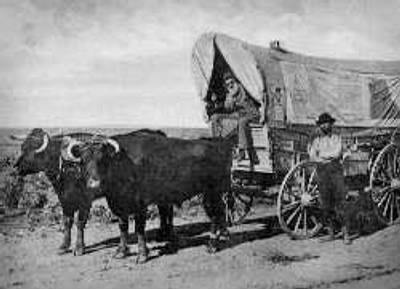
Traveling by covered wagon – now there’s something that I imagine would make you tired. I don’t know much about covered wagons. Sure I’ve seen paintings, some old photos, and movies depicting the lives of American settlers traveling west (did covered wagons ever travel east?), and it looks completely non-glamorous, uncomfortable, unsafe, dangerous AND boring.

I don’t like flight delays or traffic any more than anyone else. I do try to keep in mind that not even 150 years ago traveling around the United States was much more tiring and dangerous than it is today. Traveling outside the United States to Europe or Asia required taking a ship which also was often dangerous and nearly always boring.

In the entirety of human history the main method of transportation for mankind has been…walking. Sure there were horses for those that could ride back in 1862 (think Civil War), but traveling was truly a different experience than what we complain about today. Think about trying to explain a flight cancellation to a Civil War General for a 3000 mile flight that required you to connect through multiple cities in order to get to your destination – the same day. I would not expect any sympathy to say the least.

How quickly mankind has forgotten the way it used to be.

Posted in Customer Experiences, Living in the World Today, Travel | Tagged , , , , | Leave a comment