What if accessing the Web was completely a VR experience?

minority_report_intelligent_billboardsSince the dawn of the Internet era (a keyboard and a screen), users have had to stare at a screen and enter by way of typing or voice, commands that direct the user to the desired destination.

It’s worked out well and today with the increased focus on the mobile web, economy of action to ‘do stuff’ on the web has become ever more important.

Well then why only a screen-based and type or speech based interface? Just because it’s the legacy of interfaces created long ago? What if it were completely different?

The Internet as a VR experience would be a sea change from what users today.

For example: Let’s say you wanted to go shopping for clothes. In a VR experience you call for the retailer and a VR assistant (hologram) pops up in your living room and invites you into the virtual store. A door opens and you ‘step’ inside. “What are you looking for today” asks the VR assistant/guide. Red V-neck sweaters. Immediately holographic selection of red V-neck sweaters appears and you can easily choose ones to look at more closely and in fact even virtually try them on to see how they will look on you.

This does mean you would ‘wear’ some sort of technological interface (helmet, glasses etc) and have enough ‘space’ to move around a bit. The sensation of walking will occur in VR is a solvable problem. Once you have decided upon your purchase the VR assistants asks if you will pay with your normal Internet Wallet card (Amex/Visa/ or MC most likely will still carry forth), and once agreed to, the product gets sent to you to arrive the same day (if Mr. Bezos of Amazon is able to deliver on this future).

The VR web will help you find information, places to eat or visit on vacation with the ability for you to virtually walk through the restaurant or take a walk down the center of Dubrovnik (which I liked very much visiting in person) or wherever you may be considering traveling. And while I feel there will be amazing utility in the utilization of the virtual web it in no way truly replaces being there in person. Nor should it and I’ve written about that before.

Do you have ideas on how the web VR experience might manifest itself?

I’d love to start a discussion here.

Posted in Advertising, Advertising to Millenials, Brand Advertising, Consumer Behavior, Internet Shopping, Marketing stuff | Tagged , , , | Leave a comment

The Dark Side of Programmatic Buying

Short and on-point from my business partner. Good stuff.

David Adelman's avatarDiary Of A Media Man

Programmatic digital can be dicey when it comes to getting what you paid for and you should be concerned about fraud, bots, safety, and viewability issues that result in bad outcomes.

A few months ago a prospective client asked me to evaluate a small programmatic buy her agency had executed for her with one DSP. The agency thought the buy was great, given that they drove a CTR of .48%, higher than most campaigns with a CPM of $1.40. On the surface I would agree.

That is, until I looked at the source of clicks report. This was a small enough campaign, just under 10,000 clicks, that a simple scan of the source of the clicks made me question the real value of the campaign. Many of the URL’s were from out of the US (Belgium, Brazil, Malaysia to name a few) but his was supposed to be a US…

View original post 307 more words

Posted in Uncategorized | Leave a comment

When it comes to start-ups don’t fall for “If you build it they will come”

If you build itWorking with start-up and early stage companies is interesting and full of unknowns and yes that’s the fun part of the challenge!   What almost all startups share is a passion for excellence, a cool idea and real business potential. Most importantly startups need to show that they have a deep understanding of their revenue models. Having a clear revenue model does not assure (or insure) success. It does however afford investors and potential investors that a business plan (a too-fast fading endeavor) has been developed.

Experienced direct marketers will know exactly to what I am referring. The marketing of services as opposed to products are very different challenges. Both require well thought-out revenue models. To boot, when it comes to the overall enterprise viability, the same rules apply, i.e. The cost of the product or service, the cost to acquire a customer, plus the cost to operate the enterprise in contrast to the lifetime value of the customer.

This week I read an interesting piece on the cbinsights.com blog, which covers the VC industry:

The (mis)interpretations of CLTV to CAC

In this guest post, Sapphire Ventures’ Rajeev Dham and Nino Marakovic dive into what the customer lifetime value to customer acquisition cost ratio actually means for a company’s ability to be profitable and successful.

My first thought is that it is hard to believe that startup companies might not inherently know that there are evidence driven ratios between cost and sell.. It’s scary too. In direct response marketing for a product – a sale to cost ratio of at least 4:1 or 5:1 (there are rare exceptions of course) are minimal baseline ratios that are used to determine if a product has a chance at success.

To be overly simplistic, you invent something that costs $5 to make and ship to a customer. The sale price of that item needs to be more than $20 in order to create consumer awareness and sales for the product (Advertising and Promotion). That’s just for starters. Can you motivate the customer to become a multi-buyer? That is either multiple purchases at the same time or multiple instances of product purchase etc.?   If you are only able to sell your product for twice or three times the cost to produce and ship you most likely do not have a sustainable business model and you should go back to the drawing board or find something else to do.

Service businesses are different since the length of the customer’s tenure (LTV again) is more critical to the enterprise’s overall success.   The idea may be cool but that does not mean it will make a great business.

With TV shows like ABC’s Shark Tank many more people have been exposed to the idea of entrepreneurship and what it takes to be successful – at least according to Shark Tank. What many of the participants trip over is their revenue model. That and their (too often unrealistic) view of their own company’s enterprise value (hint: enterprise value is only as good as what someone would actually pay)!

There is only one Facebook. Even Twitter continues to work on its revenue model. The idea of “If you build it, they will come” is a cop-out when it comes to developing a realistic revenue model that merely indicates a chance for success.

No?

Posted in Start ups, Venture Capital | Tagged , , , , , , , | Leave a comment

If you don’t want to be happy you’ll get there

Having written this post nearly five years ago, I still I say this often. It’s no less true today than it ever has been.  I never intended to suggest being blindly positive and ignoring reality in the face of adversity or worse.   I am suggesting that those that strive to not be happy (it’s disturbing how often you can notice this behavior), your success rate will be nearly 100%.

If you don’t want to be happy you’ll get there.  Maybe I say it too often at times. By nature I am an optimistic and positive person. I have issues dealing with people that are negative and feel compelled to take those around them to a lower level. Wallowing in your own misery will definitively not make ‘it’ better.

In business you meet all kinds of people, some good and some not so good. When you are building a great team the single most important thing is to create an environment of positive attitudes. When people are positive and happy, they interact with one another better, think better and the output is better.

There are times in business as well as in life when you might be dealt a lousy hand. Perhaps you are dealt a series of lousy hands. It happens to everyone. Without attempting to see the world through rose colored glasses, maintaining a positive attitude in the face of adversity offers a much better opportunity for a positive outcome.  It does not mean everything will be all right, yet it’s worth the effort in my view.

People that react to stress and their own misfortune by trying to take everyone else down with them never succeed in making it better for themselves or anyone else. After a while a person’s unhappiness becomes a habit and in some misguided and twisted way, fulfilling – or so that person may think.

I’ve a good friend who frequently mentions the difference between those people that make it better and those that do not. It’s easy when things are going well to be happy.  What you do when you are having a bad day at work is what separates the professional from the unprofessional.

How do you handle things when it’s raining lemons?

Posted in Living in the World Today | Tagged , , , | 5 Comments

Do Americans really want to Trump-ize their country?

donald_trump_mm_150616_16x9_992I’ve been ruminating on writing about the phenomenon known as Donald Trump for a couple of months now.   I write about marketing, consumer attitudes and behavior, and technology and its impact on our lives – at least for the most part. For me, Donald Trump has become too compelling a story to not write about, especially as it pertains to attitudes and behaviors of my fellow Americans.

I will plainly state that when it comes to Mr. Trump I am decidedly not a fan. OK, now that those people who will read no further have left, I will offer some reasons I think people are attracted to the current poll leader for the 2016 Republican Presidential nomination.

Because Mr. Trump is a multi-billionaire he does not have to adhere to traditional campaigning approaches such as civility and discussion. Add to that the notion that as a billionaire he is not beholden to anyone and can truly call things as he sees them with all honesty. He can speak his mind and say the things that (supposedly) many Americans are thinking but never say. Speaking without a self-imposed filter can appear to be intoxicating since, well, nobody else can really do it and expect to function in society. So right on Mr. Trump – keep telling them the way you think it really is, and the way you think it should be!

Earlier in the summer I considered Mr. Trump to be akin to that page-turning trashy summer novel that you feel guilty about reading but for some reason cannot put down. With the second Republican Presidential candidate debate last night we were able to finally see a few layers peel off of the Trump-onion. It’s up to you to determine if anything really happened that revealed something we did not know about Mr. Trump during the debate. Mr. Trump continues to offer little in the way of specifics other than ‘We’ll make America great again’ and things like ‘I’ll make good deals for America’.

It’s difficult for me to accept that Americans really want Mr. Trump to run the United States in the same manner as he presided over The Apprentice show on the NBC television network. It’s safe to say that up until this point diplomacy, as far as Mr. Trump is concerned, begins with “You’re fired” and goes downhill from there. That’s entertaining on a television program, however I have a hard time picturing Mr. Trump interacting with Chinese President Xi Jinping and saying, “You know what China? You’re fired!”

I won’t begin to explore Mr. Trump’s history as it pertains to deals he’s made except to offer that I really don’t relish the thought of having as President someone who readily uses bankruptcy as a business tactic.   U.S. Presidents and world leaders don’t get do-overs nor do I think citizens want them to have to try.

There are elements of Mr. Trump’s campaign that are positive and that starts with challenging the traditional political hyperbole and trying to replace it with plain- spoken honest discussions of real issues and concerns. This is the reason Mr. Trump has resonated with so many Americans for far longer than I would have thought was possible. His campaign has disrupted the Republican establishment, which can only be a good thing for the party and also the county in the long run.

Summer’s just about over now and so ends the trashy novel reading season. However the final chapters in Mr. Trump’s 2015 summer novel have yet to be written.

How do you think this story will end?

Posted in Presidential Politics, World Poltics | Tagged , , , , , | 4 Comments

Why won’t Amazon give up on hardware?

Fire_HD6_Hero-970-80Since Apple had their big fall announcement yesterday regarding the new iPad and iPhone updates/features, as usual the hardware news belongs to Apple and not Amazon. In a recent report Amazon did sort of not announce that this holiday season it MAY release a $50 six inch tablet. If it works anything like the Kindle Fire (of which I am a first generation owner), it’s likely to be less than wonderful.

I neglected to mention that my Kindle Fire’s recharging port stopped connecting and the device is now dead in the water. That is until or unless I replace it myself (a 15 minute how-to-fix-it-yourself video convinced me to not bother and I don’t have a working soldering iron anyway).   That Kindle Fire device never worked that well as anything but an e-reader as far as I am concerned.

I also should remind those of you that don’t know that I am a big fan of Jeff Bezos and Amazon.com in general. When it comes to distribution of consumer goods, hosting and deployment of business services and innovative ideas Amazon is a brilliant company.   When Amazon tries to be a hardware company it almost always fails miserably. The original Amazon Kindle was cool and innovative (pre-iPad mind you) however Amazon has been chasing its tail (and Apple and Android) ever since when it comes to consumer hardware devices. The Original Amazon Kindle was the best device it ever has made. Remember the Amazon Fire phone?   Didn’t think so. That was so 2014.

It’s not surprising that Amazon would have the desire to provide hardware devices in order to control the user experience as much as possible. From a business perspective there’s great motivation to create as closed a system as possible.

Do Amazon’s continued consumer hardware problems hurt its brand image? I think the answer is a definitive YES. Personally I know few if any people that have positive experiences with Amazon consumer hardware. For the record very few people I know HAVE Amazon devices.

The expression ‘those that ignore the past are destined to repeat it’ applies here. So why does Amazon keep trying?

Posted in Amazon, Customer Experiences, E-commerce, Internet news | Tagged , , , , | Leave a comment

Under-18 student data should be sacred

PF FlyersWhen I was really young I really believed that PF Flyers would make me “Run Faster, Jump Higher!), and had I had the ability to purchase I would have purchased as many pairs as possible. Fortunately my mother knew better particularly about the running faster and jumping higher thing. Just over two months ago I wrote a post in which I suggested that use and sharing of non-sensitive customer data on a macro level is not something to be cast aside without thought. An NY Times article that appeared in the New York Times this past Monday caused me to want to be more specific about when it is not acceptable to use or share data to influence an audience.

Students under the age of eighteen should not have be subject to personalized marketing pitches based on their behavior. There have to be limits and remember that as a marketer and consultant I have a deep aversion to giving up revenue models.

The article states, “In May, Georgia adopted a law barring online services designed for elementary through high school from selling or sharing students’ names, email addresses, test results, grades or socioeconomic or disability information. It also bars them from using the data to target students with ads.”

Leave it to The Peach State to be a leader in simply doing the right thing. And this is about as slam-dunk a concept as there is today. It’s one thing to make the mental adjustment understanding that marketers will forevermore serve advertisements based on your behavior and preferences as much as can possibly be done. We’re all adults and since the dawn of advertising, adults have eventually (sometimes longer than others), realized what is a pitch versus an unbiased offering if there is such a thing.

It’s not that there isn’t value in gaining understanding in the data and behaviors of under-18 students. There’s great value, which can be used to create better pathways to learning and development. When there’s confidence in the validity of data you can believe in the historical evidence regarding trends, behaviors and actual preferences of students.

What you should not be able to do is market to those students on the basis of their behaviors. Development of young people happens at varying rates and steering the behavior of young people before they’ve had an opportunity to develop their own opinions and beliefs is a very dangerous path on which to embark. If you believe as I do that diversity of opinion and choice is critically important then surreptitious steering of behavior is watershed.

The bottom line is that students (i.e. children) have not lived enough to be categorized and marketed to as groups.

Sharing under-18 student data for marketing purposes – JUST DON’T DO IT!.

Posted in Data collection, Data driven marketing, Digital media | Tagged , , , , , | Leave a comment

Should being the best version of yourself be your ultimate goal?

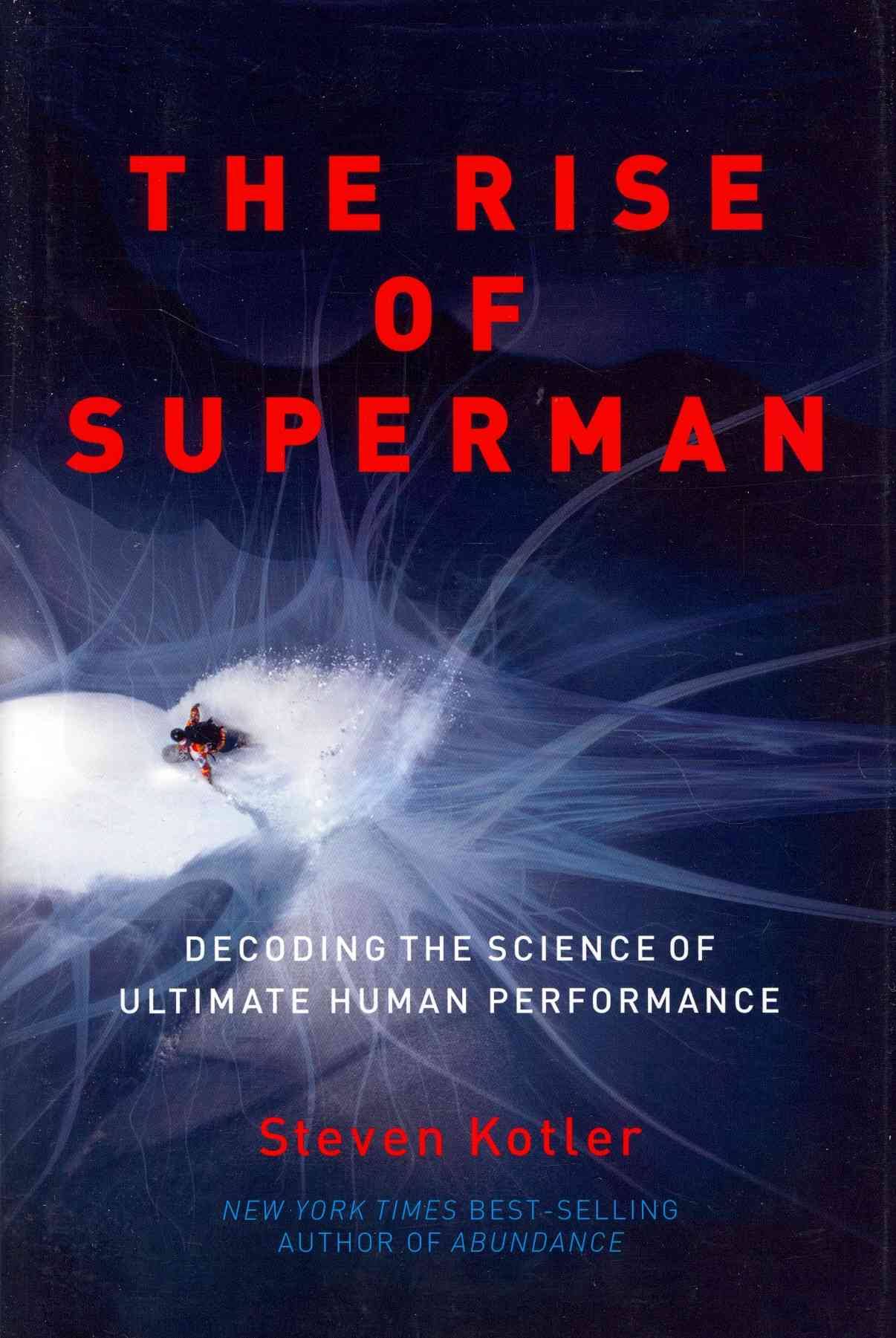
Rise of SupermanAmazon.com’s Jeff Bezos has been taken to task over a recent article that appeared in the New York Times. A follow up article on August 18th h suggests a brewing debate over work culture. In my view it’s long overdue.

The seemingly never-ending quest for the highest efficiency is seductive for any leader of any business. That makes sense from a strategic perspective, right? ‘Optimizing Everything’ (perhaps that should be the title of Mr. Bezos’ next book).

The drive for efficiency and optimization transcends business and has entered our personal lives with tracking devices meant to monitor one’s health and physical activity. Monitoring your health and fitness is of course all in the interest of helping you improve your performance. It does not end there since for example, continuing education and learning surely adds to your ability to be effective. Eating and drinking the right food and drink are other ways in which personal performance can be improved.

Outliers are the kinds of people that truly drive the human condition to higher performance and heights. In Steven Kottler’s interesting book “ The Rise of Superman” among other things he explores the thoughts and habits of people that ‘push the envelope’ above and beyond where it has been before. Clearly human achievement advances in large part not from the masses but from these outliers. It also must be understood that MOST people do not fit the category of ‘Superman’. And there’s nothing wrong with that!

This brings me to my question – how far will non-‘Supermen’, (Superpeople just does not work) people be willing to go to create the best or even Super-version of themselves? The answer is it depends on the person. Individuals need not be concerned with their own place in the pursuit of their optimal selves. The Outliers always help define what is in the middle.

Amazon’s work culture appears to be hyper-competitive and the weeding out reminiscent of Jack Welch’s ‘fire the bottom 10%’. In an environment of continual performance optimization Amazon’s pushing of the envelope is not surprising and not necessarily altogether wrong. That hyper-competitive environment is not for everyone and when employees are hired at Amazon.com surely they are aware of that into which they are buying.

What Mr. Bezos and his compatriots cannot do is have it both ways. Amazon.com cannot be the hard-driving, high-stakes company it has demonstrated it prefers AND be warm and fuzzy and a wonderful place to work where everybody holds hands, gets amazing compensation and perks, and employees also have substantial flexibility on how, when and on what they work.

Amazon can try to come back to the middle a bit from its Outlier position as sometimes too much is….just too much. Being the best version of yourself you can achieve is a good overarching goal.  It’s also exhausting!


Posted in Best business practices, Personal Development, Professional Development | Tagged , , , , | 2 Comments

Tech Crunch and the exuberance of start-ups

Tech Crunch NY Meetup Pitch off 081815I’ve been a fan of Tech Crunch for some time now and even more so since I’ve been watching HBO’s Silicon Valley (I so want to go to Disrupt!). This past Tuesday night I attended a NY Meetup and Pitch-off
at Les Poissons Rouge (The old Village Gate) in downtown Manhattan. I’ve never attended one before and it was a very interesting evening but for reasons different than I anticipated.

The event was a centered around 10 start-ups each having 60 seconds to pitch their concept. Moderator and Tech Crunch Senior Editor Jordan Crook deftly managed the proceedings which included 5 panelists who acted as judges. The description of the event 666from Tech Crunch:

“Judges included Greycroft’s Alan Patricof, Foursquare’s J Crowley, FirstMark’s Amish Jani, Quire’s Erin Glenn, and TC East Coast Editor John Biggs.
Each pitch concludes with a brief Q&A session and at the end of presentations, judges will determine a winner.

First place will receive a table in the Startup Alley at TechCrunch Disrupt SF in September. Second place gets two tickets to the conference and the Audience Choice winner will take home one ticket to the big show.”

The event was a sell-out – and then some. For a modest fee of $25 you were granted access to the event, (which went a little less than two hours though it was scheduled for one) including pizza and open bar which was cleverly unadvertised. It was so crowded that I had an eye on the closest exit in case of emergency. I probably would not have made it however.

What made it different than I anticipated was the warmth of the crowd, which was made up of young wanna-be entrepreneurs, frustrated millennials working in finance trying to find a way out, and real entrepreneurs who wanted to get the feel of pitching at an event such as this. As one of the few guys wearing a jacket, I stuck out more than I would have preferred. The warmth of the crowd was in stark contrast to what were almost entirely modestly interesting tech concepts almost all without any real revenue model.

About half the presenters were able to get through their base concept in the allotted 60 seconds and the other half were cut-off by Jordan Crook in mid-sentence. Follow-up questions from the panel generated more revealing information on the concept and the possible ways to advance that concept.

Having a founder present their concept is a tech specialty. There are no spokespeople as investors and people in general prefer to hear the idea from the creator. My first advice to potential technology company creators is to be more polished in the presentation of the concept (how could you run over when you KNEW the time was one minute? Ever hear of rehearsal?).

And there’s the whole pesky revenue model thing. The idea that if we build it correctly the people will come and then we can think about monetizing is – well, short-sighted at the least. Investors know that pre-revenue valuations are most often better than post-revenue. So not claiming any particular revenue model seems to be being worn as a badge of honor. Those days cannot end soon enough as far as I am concerned. It’s fine if there are several possible revenue models and the decision has not yet been made on which to put in the front. But there are not many Facebook’s and Google’s out there and Twitter and Amazon have huge audiences and are still looking to return a substantial profit on operations.

In order for a tech concept to have a chance at success the product has to have utility, scalability, and some ways to make money. If they do not possess all three why would any investor be interested?

I love the energy, intelligence and can-do attitude endemic to the start-up community. I also feel that it’s not only acceptable for founders to offer possible means of monetization around their idea, it’s critical. Do you agree?

Posted in Start ups, Technology, Venture Capital | Tagged , , , , , , | Leave a comment

Mobile technology continues to flatten the world

hypnophoneHave you ever met a billionaire? I have met a few and in somewhat casual circumstances. No I am not ‘good buddies’ with any of them nor will I ever be. I’m here to let you know that the billionaires I’ve met all have been very nice (why shouldn’t they be? – They’re billionaires!) and thoughtful people.

At the other end of the socio-economic spectrum I do know a good many more people who are living less than what is considered lower middle-class economic lives. In other words, by economists’ standards they are ‘poor’. I am friendly with lots of these people whom I get together with in varying degrees of frequency.

The two ‘groups’ – that is billionaires and those that live above and below the poverty line (which in the United States in 2014 was $23,850 for an individual), do have something in common. Their smartphones.

Earlier this year an article reported that 75% of Americans who had mobile devices had smartphones. That number was projected to approach 85% by the end of 2015.   So think about the fact that American billionaires AND the least prosperous Americans all use the same iPhone or Android phone, (Or Blackberry, which may or may not have the right to be called a smartphone).

So why is there not a luxury/high performance smartphone experience that can be purchased from Apple, Samsung, or any other manufacturer? I don’t mean studding your phone case with beads, wood, diamonds, or any other precious gems. It’s what’s on the inside that counts and smartphone manufacturers surely could create a high-end exclusive model and sell it for an exorbitant price. People would buy it. And not only billionaires would buy. In recent years China‘s young entry-level workers have found ways to set aside months of salary or more just to purchase an authentic iPhone.

For now smartphone utility is the same independent of economic status. The same apps area available to all, the same functionality, as well as the same frustrations when one’s smartphone performance begins to degrade – and eventuality that (sadly) is also a universal smartphone customer experience.

As user daily mobile interaction continues to increase so will the habits and the similarities in behavior of billionaires and everyone else. After all we’re all staring for hours a day at our 4-inch screens. It’s never before been possible for the super-rich and the extremely poor to exhibit such similar daily behavior.

In an odd twist smartphone behavior brings us all closer together in some ways.  Is that important?  I think so.

Posted in Consumer Behavior, Living in the World Today | Tagged , , , | 4 Comments