Is your brand right for ABC’s Shark Tank?

episode-621Working with start-up companies is intense as the stakes are high and often the fees are low.  It’s something I and our team have a great deal of experience with and no two start-ups have ever been remotely alike in the way they operate.

One of our clients is theaquavault.com so I will take the hits if this post is seen a shameless plug.  This Friday night March 13 at 9PM AquaVault will appear on ABC’s Shark Tank.  The AquaVault founders Avin, Jonathan, and Rob, will stand up in front of Sharks Mark Cuban, Daymond John, Kevin O’Leary, Lori Grenier, and Robert Herjavec. The efforts up until now have been on the B-to-B side with hotels buying AquaVault’s and then renting them to their guests.  There have been many individual website sales but the founders felt the opportunity to be on Shark Tank was too good to pass on.  Is it the right thing for AquaVault?

In truth an appearance on Shark Tank was not among the primary things we were focused on in helping AquaVauit grow their company and at the same time maintain the high brand standards we’ve all agreed upon.  Personally I find Shark Tank to be entertaining if not overly theatrical.  Which makes sense since after all it’s a television show designed to achieve the highest ratings possible.

But is it a good idea for your start-up brand? If you ascribe to the old adage any publicity is a good thing then it’s a no-brainer. Keep in mind that many companies audition for Shark Tank and very few make it onto the air.  The personalities of the pitchers become as important (if not more so) than the product.  I’ve talked with many people about it and found that viewers of Shark Tank are passionate and dedicated – meaning they watch almost every week.

We questioned if an appearance on Shark Tank for AquaVault could in any way damage the brand’s reputation with higher end hotels that rent the units to their guests.  This was a primary reason why it was not a formative strategy. Now that it is in the can and ready for airing, we could not be happier or more excited.

The way I see it is most start-ups would benefit from appearing on Shark Tank and we are thrilled that AquaVault will appear tomorrow night.

Do you have a product that could benefit from being on Shark Tank?  Under what other conditions might such an appearance be detrimental?  Are there any?

Posted in Advertising, Brand Advertising, Innovation, Marketing stuff, Reality Television | Tagged , , , , , , , , , , , , , | Leave a comment

Don’t think millennials watch TV commercials? Think again

tv-and-textingAre millennials watching television commercials?  My informal survey of millennials (a small sample of less than 10) provided a takeaway that millennials DO watch television commercials.  Sort of.  As we know millennials are the ultimate mult-taskers.  Texting, tweeting, and many other social networking platforms are engaged during the commercials and from what I was able to determine, millennials actually welcomed the interruption as an opportunity to catch up on being thoroughly interconnected.

For so many brands television advertising still delivers broad reach and (mostly formerly) the ability to time the deployment of marketing messages at specific times. I note formerly since with DVR’s and subscription channels so many viewers can choose to watch what they want when they want.  And as we know, viewers can fast forward through many of the commercials (although C3 and C7 agreements have resulted in fast forward being disabled during the seven day period after the broadcast).  Not to mention that viewers can often watch shows without commercials at all.

In the context of how millennials behave I came to the following very surprising conclusion:

When viewing movies or programs that they had seen before, or were only mildly interested in, television commercials made for a lower-key, less intensive viewing experience. In fact since we are talking mostly about re-runs, television commercials offer content that millennial viewers may not have seen before.  I.e. commercials can actually get more attention than the program itself. 

Should it really be so surprising?  No, certainly not on behalf of the generation that grew up with Hey Arnold, Rugrats, and Power Rangers. They’ve been watching television and television commercials their entire lives.  Perhaps Generation Z (beginning born five years either before or after 2000 as there’s no agreement on this) will fit the profile of serial (or cereal) television commercial avoiders.  But from what I am learning apparently not millennials. 

Most television viewers will probably tell you that they’d prefer not to watch commercials at all.  That does not mean they aren’t willing to watch commercials in lieu of paying to watch a particular program.  We all have our price.  It just depends on the individual.

So what about millennials?  Millennials can be anywhere from early 1980’s to the early 2000’s). With their mastery of viewing technology alternatives, if you are like me you think ‘who’s better at avoiding the watching of commercials?’  There’s a mound of statistical evidence to support the concept.  Or is there?  An article from Statista.com noted that millennials who watch television either online or on a television 55% watch 4 or more hours per day, 32% watch up to four hours per day, and only 13% watch no television on a television per day.  So millennials are watching television after all.  But an article from the New York Times from November posited that millennials don’t necessarily desire what we consider traditional televisions.

Think about that as you consider how to reach this highly desirable demographic group.  Millennials are watching.

Posted in Advertising, Advertising to Millenials, Consumer Behavior, Television advertising | Tagged , , , , , , | Leave a comment

NY Health Insurer Oscar wants to get in your shorts

oscaroscar_flash1-e1418082788438I don’t live in New York State and as such am not able to consider Oscar as our health insurance company, but I’ve watched the development of this interesting web-based insurance company.  An article in Fortune Magazine this past December offered some interesting background on the company as well as the way it conducts its business.

Without a doubt when it comes to marketing Oscar is cheeky to say the least.  There have been ads for Oscar on the NYC subway promising “Health insurance that won’t make your head explode.” …. and if it does, you’re covered.  Ha-ha.  But to me from the start the concept behind Oscar – simple, straightforward, focusing on wellness, less expensive, was reason to be interested.  But as they say in the NFL – ‘After further review’ …I’ve become less enthused.

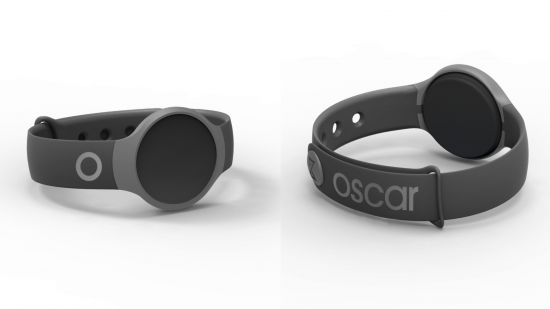
Perhaps it was the radio spot I heard today (I had not seen this offer earlier) that Oscar is giving members $1 for each day they walk a targeted number of steps, as measured by a free wearable fitness tracking device made by Misfit Wearables. Oscar will pay the rewards in the form of a $20 Amazon gift card.  Sounds good right?

Wait a second.  Let’s make sure we know what’s going on here. For $20/month, (which is somehow less than the aforementioned $1/day – unless Oscar months are only 20 days which would be an explanation why prices might be lower if you only covered 20 days out of the month. I’m kidding of course), Oscar will track your movements to ascertain your discount-worthiness.  Even if you are ok with that concept since it is supposedly designed to motivate you to be more ambulatory and active, just exactly what might happen to your data?

Let’s say you then agree with the concept. At $20/month are you selling your data too cheaply?  What are the risks?  We all know data is super-protected right?  Especially when it comes to medical data (just ask Anthem Health). Oscar would surely never sell your data to a third party and that would be covered with terms and conditions.

But what if for some reason, criminal or not, the government decided to subpoena your Oscar data for some reason (that may or may not be disclosed)?  Think about it do you really own that data?  The point that Oscar might use the data to refute a medical insurance claim is mentioned in an article from Gigaom per Oscar CEO Mario Scholsser who noted ‘We are very careful to never use [Misfit health tracking] information internally in any process around determining clinical necessity for certain procedures or authorizing procedures..”  Feel more comfortable now?  I’m glad that Oscar will be careful. That’s far from a guarantee.  Quite far actually.

I’m all for innovation and a champion of doing new things and things differently.  I thought Oscar was on that track but the more I look at it they appear to be a careless healthcare provider.  What do you think?

Posted in Data collection, Healthcare Advertising, Living in the World Today | Tagged , , , , , , , | Leave a comment

The Super Bowl XLIX ads that weren’t shown

doritos11q-1-webThe reviews are in regarding the TV spots aired during this past Sunday’s Super Bowl. My partner Nader did a great job reviewing the ads on his blog earlier this week. Before the Super Bowl we marketing people like to preview the ads. I saw nearly all of the ads shown during the telecast before they aired. However not every ad that was previewed actually did air and for a couple of the brands it was a good thing and for one of the brands I wished we had seen them all.

Biggest loser ad that did not run: GEICO ‘Swag’ spot. . Actually created as a NFL playoff spot (one that I never saw and I watched a LOT of NFL playoff football but I guess I just missed it – or ignored it). GEICO has done some terrific advertising over the years and is to be applauded for much of what the company has created in the past. Not this time. I understand that it’s Super Bowl ads are supposed to be original, fun and offbeat, but it’s none of those, simply insulting, and I daresay even racist. The only good thing I can say about it is that GEICO decided to not run it during the Super Bowl.

Second biggest loser ad that did not run – GoDaddy.com.   A parody of the too much-loved Budweiser Puppy and Clydesdale spots (one last year and one this year), GoDaddy is expected to push the environs of bad taste and this spot is no different. Again that it did not run is the best thing GoDaddy could have done. It’s arresting and surprising (many people saw it online before the Super Bowl as there was much discussion in ad circles regarding it), but it also was in very bad taste. Selling puppies to puppy mills is not funny in any way. I was shocked, and then disgusted. That’s the GoDaddy way.

Biggest winner spot that did not air. Doritos. There were actually a number of ads created by non-advertising agencies as part of the ‘Crash The Super Bowl’ contest. I loved the ‘When Pigs Fly’ ad as well as this one that did not air. The best thing about the ads is that they combine fun, irreverence and they put the brand at the center. They all hit the target audience perfectly.

Exciting game, Katy Perry did a good job at halftime for the most part (I like her), and for marketers it was a great day to highlight what can be done both good and bad.

Finally – the whole Roman numeral thing has come full circle as apparently there will not be Super Bowl L next year. It will be Super Bowl 50 so it’s possible that we are done with the Roman numerals at last. By the way this year it could have been Super Bowl IL. But that did not work so they came up with XLIX since the former would look like the Super Bowl was not feeling well. At least that’s the way I see it.


Posted in Advertising, Advertising to Millenials, Brand Advertising, Sports Marketing, Super Bowl Advertising, Television advertising | Tagged , , , , | 2 Comments

Marketing Chinese companies in the U.S. is DOA – dud on arrival


China Internet-ImgBack in 2009 the concept of our assisting Chinese companies that wish to gain customers and brand awareness for their products in the United States marketplace sounded both interesting and possibly fruitful. Longtime readers of this blog may have noticed that I am not posting about our having worked with newer companies since we worked with Alibaba.com and a couple of other lesser known Chinese companies over the past three years.

I have continued my intense study and following of the marketplace in China as well as the entrance of Chinese companies into the United States market. Needless to point out is that the activity that is inbound to China from U.S. and other western countries, is dramatically higher than Chinese companies entrance into the U.S.

I attended an interesting session yesterday presented by the SUNY Manhattan Confucius Institute. The program was moderated by Michael Zakkour of Tompkins International and co-author of the book China’s Super Consumers: What 1 Billion Customers Want and How to Sell it to Them. The featured speaker was Frank Lavin former Undersecretary of International Trade and current CEO and founder of ExportNow.com.   The program was great and interesting. But it was an answer to a question that I asked after the session ended that really opened my eyes.

I asked Mr. Lavin’s associate Jonathan Dillon (in attendance) – Founder and CEO of ad2china – about whether or not he had any experience with or feeling on Chinese companies and helping them market their products in the US. He answered that his company tries to stay away from that entirely. To paraphrase, he felt that Chinese companies are too cheap to invest marketing dollars in the United States when there’s so much opportunity in China itself.

While I had come to the same basic conclusion over the past year or so (having worked on this for about 5 years), it never occurred to me that the idea itself simply might not be a good one – now or possibly for a long time. So now what?   I’ve developed great relationships with people, companies and partners in China. Are we ready to help U.S. based companies make inroads into the incredibly vibrant Chinese marketplace? The marketplace that has 650 million Chinese online which represents only HALF the market? The answer is yes but only because it’s taken almost six years to develop the network to where I feel we truly have competent and trusted partners with boots on the ground in China.

Eventually as Chinese companies mature in their marketing approaches within China, they will in the process become more aware of the marketing investment necessary to make inroads into new markets such as the United States. In the meantime I will do my own ‘pivot’ to Asia and help companies here in the United States explore their opportunities in the Middle Kingdom.

It’s not as farfetched an idea as you might be thinking. Ask me about it. You might be surprised!


Posted in Business in China, Marketing in China | Tagged , , , , , , , , | Leave a comment

Can digital display advertising have a positive ROI?

??????????????????????????????????????????????????????????????????????????????????????????????????????????????????????????????????????????????????????????????????????????????????????Spoiler alert. The answer is it depends. Taking a broader view it’s a concept that (to me) seemed laughable since banners and display ads first came into being. Digital display has always been more about brand advancement and staying top of mind. So what has changed?   Really nothing at all, other than using digital tools to better evaluate collected customer and prospect data. This is the data that has been there all along!

We have first-hand evidence that there are ways to use digital display AND to have it connect to a positive ROI. To have the best chance of positive ROI for a digital display campaign you will need to focus on higher priced yet niche oriented products and services.

A few target areas to be considered:

Medical devices

Medical procedures – cosmetic procedures included

Legal services

IT services

Professional services

Keys to success:

  • The tools must include a response based landing page or microsite with baked-in analytics to track user behavior.
  • Set up a scoring system to evaluate user behavior. Activities that the user performs are given a point value – some are more valuable than others with purchase always being the goal. Yet for medical devices and procedures HIPA laws will not allow marketers to track the prospect would-be customer all the through the shopping cart.   So the path to purchase is not always clear but attribution is always a challenge.

Use CPSA to evaluate campaign success.

What is CPSA? I am terming it Cost-per-significant action. Since each action has a point score the total points divided by the media cost to run the ads give you a CPSA.   Then the value of the product or service can be correlated to the CPSA. For medical products without a clear path to purchase or procedure employment you then would correlate the actions in particular markets with overall sales in those markets. The higher the scores in a market, the lower the CPSA will be. Then the actual sales activity in the market would be compared to the behaviors of those that visited the landing page or microsite.

I will admit that CPSA is not a perfect measurement and I hope it’s step in a more accountable attribution method for display advertising. Can high value non-niche products (think automobiles, mattresses, etc.) find positive ROI employing the use of digital display advertising? That remains to be seen. As any direct response marketers knows there’s only one way to find out – test it!

We’re working on putting together some case studies and I will share when they are ready.

What do you think? Is CPSA a valid metric? Can digital display work on an ROI basis?


Posted in Advertising, Data driven marketing, Digital media, Marketing Attribution | Tagged , , , , , , | Leave a comment

The Pebble watch barely makes a wave

Pebble_watch_trio_group_04Bag phone motorola_m900_m800_bag


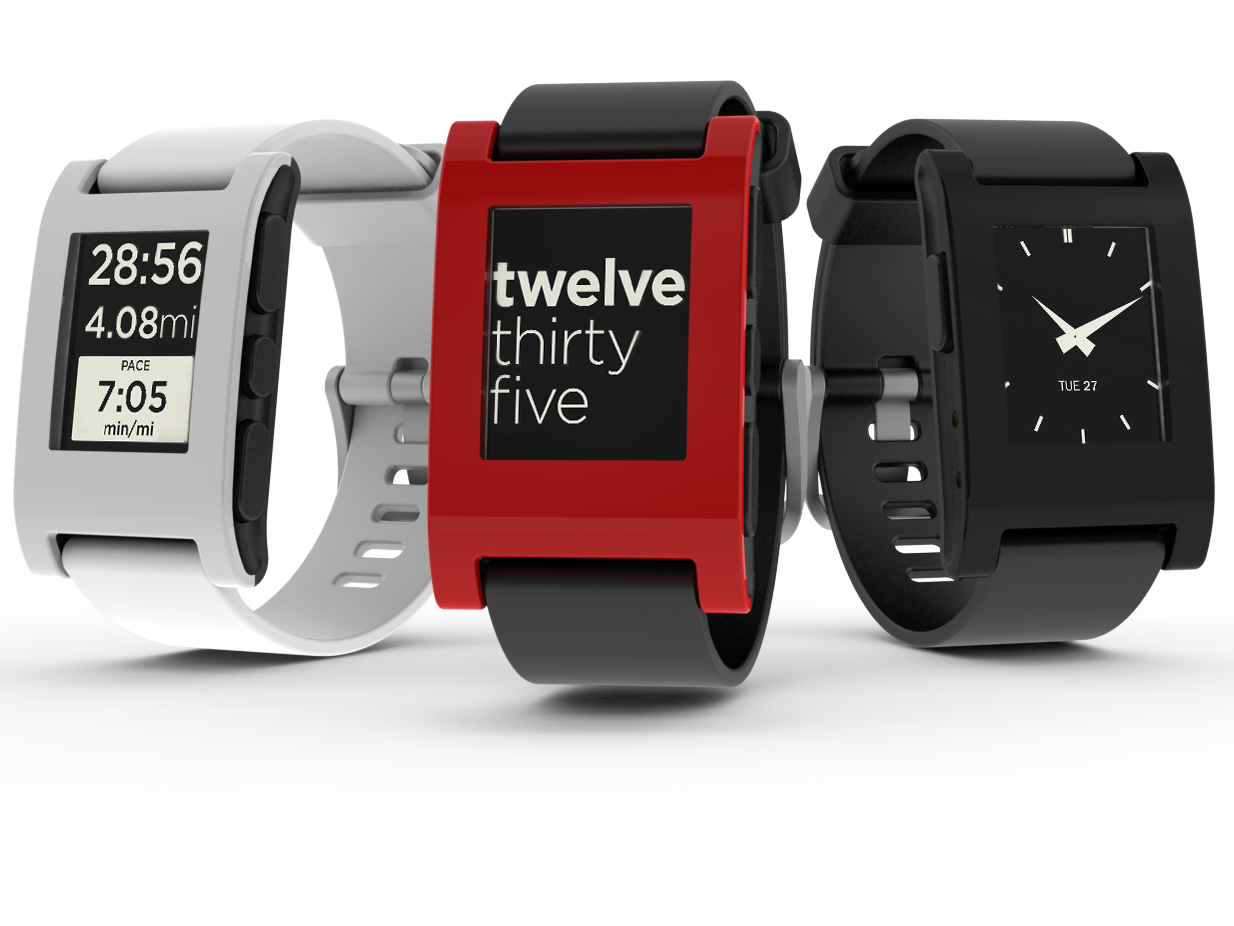
Back in June of last year I wrote that wearable technology still had a long way to go.  Having just attended a conference on wearable technology I was very unimpressed with what was available in terms its utility. For the holidays I asked for and received a Pebble Watch since I was interested in actually experiencing what it’s like to use wearable technology first hand – or in my case on my left wrist.  As far as I am concerned the Pebble Watch equates to the old cellular bag phone of the 1980’s.  It’s clumsy, faux-cool, and buggy (remembering the consistent dropped calls of the 1980’s).

The imminent launch of the Apple Watch slated March of this year is said to be the future of wearable technology.  I have no doubt that Apple will do a good job and put out a product that far exceeds the limitations of the Pebble Watch.  Yet as good as the Apple Watch may be I find it difficult if not impossible to accept that in the long run it will be a both a fashion piece and something that people will wear ALL THE TIME.

Being a student of human behavior I am aware that old habits die hard.  A wearable technology wristwatch today is more of an illustration that the wearer embraces technology – good or bad. I’m not going to review the Pebble Watch as that has been done numerous times since 2014 although if you care to read one you can do that here

Simply in terms of utility – getting email, tweets, and Facebook and other social media updates on my wrist is mildly useful.  The fitness apps that measure steps, activity, calories and such just don’t work all the time.  Measuring one’s sleep patterns is an interesting and perhaps useful application, until you realize that you have to wear your watch to bed.  And it you want some historical data of your sleep patterns you need to wear the watch every night.  Are people really going to change their behavior to do that?  Do I need to answer that?

Don’t misunderstand what I see as utility. The idea of constantly monitoring your body, sleep patterns and activity is extremely useful.  The monitoring will improve quickly to include things such as heart rate patterns, respiration activity, body temperature and other important moment-to-moment statuses regarding one’s body.  Yet in order for wearable technology to have true utility it must be worn ALL THE TIME.  And watches or wristbands (think FitBit) will not be worn 24/7.

Will you shower with your smartwatch?  How about wearing it for that night out on the town?  I don’t see even Apple Watches going well with an elegant evening gown or even a tuxedo but I’ll admit I am probably too old-fashioned that way.  And do I really need to have email, tweets and FB statuses posted to my wrist?  Is pulling my smartphone out of my pocket that much of a trial?  Have we become that lazy?

I maintain that 24/7 wearable technology has tremendous future utility. It will take time as the products are only in their infancy.  The Pebble Watch was a cool idea as much because it was crowd-source funded as it was for it being one of the first wearable and popularly available technology pieces on the market.  The Apple Watch will be better yet still far from what wearable technology will become.

For now with regard to wearable technology I can wait for the future.  This is because I know the future waits for me.

Posted in Customer Experiences, Facebook, Innovation, Technology | Tagged , , , , | Leave a comment

24 Books I finished this past year

stephen-king-quotes-books-are-a-uniquely-portable-magicI’m not one for New Year’s Resolutions. Yet at the start of 2014 I decided to do my best to always be reading a book or novel. It’s not as if I had not read much in 2013 and the years prior. It’s more a case of my reading newspapers, magazines and the sea of what I hope is relevant business information on the Internet as opposed to reading literature.

It’s easy to get lost reading and learning about so many different and interesting things. But I felt I was missing out on the joys of reading literature and books as opposed to articles.   So I made a conscious decision to keep track of all the books I finished in 2014. I note ‘finished’ as there are books that I start and just don’t finish. I‘m betting you know what I mean.

So I finished 24 books in 2014. And in no way do I wish to be seen as showing off – my friend Pete read 75 books in 2014 and yes he is both employed and has a family.   I had no particular total number in mind when I started 2014 but it quickly worked out to about two books per month.   I was tempted to re-read George Orwell’s Animal Farm (really short) after reading Donna Tartt’s The Goldfinch (really long) but since there was no total number in mind that was only a passing thought.

My point is that if you want to read more literature you have to make the time available. It can be done. I’ve offered a ten word mini-review of each if you care to read. Happy New Year! My best wishes to all for health and happiness in 2015.

The Fault in Our Stars – John Green – Surprising, engaging, endearing. Didn’t and won’t ever watch the movie.

One Summer – America 1927 – Bill Bryson – Lindbergh, Ruth, Yankees, Capone, Coolidge, great stuff from a favorite.

Tech and the City – Maria Teresa Cometto and Alessandro Pio – 20 year journey of NYC’s Silicon Alley startup community. Interesting.

Timebound – Rysa Walker – Time travel story echoing Jack Finney’s Time and Again. Entertaining.

The Hundred Foot Journey – Richard Morais – Fun and quick read. Made me hungry. Will see movie.

Essentialism – The Disciplined Pursuit of Less – Greg McKeown – Doing more by doing less. Easier said. Ironically somewhat long.

On China – Henry Kissenger – China geeks only. Fascinating history and Dr. K’s frequent pomposity.

The Four-Hour Work Week – Tim Ferriss – Explored possibilities. He’s a direct marketer at heart. Worth reading.

Zorba the Greek – Nikos Kazantankis – Amusing, dated, at times sagacious. Glad I stumbled upon it.

China Goes West – Joel Backaler – Smart, insightful, relevant to my interests.   Hope to meet Joel.

80/20 Sales and Marketing – Perry Marshall – Another direct marketer as self-help artist. Better than expected.

Medium Raw – Anthony Bourdain – Love Bourdain. Always makes me laugh. Happy to finally read.

Hooked: How to Build Habit-Forming Products– Nir Eyal – All marketers should read this short important behavioral science book.

The Goldfinch – Donna Tartt – Pulitzer Prize winner. Great narrative. Very long but worth it.

Drive: The Surprising Truth About What Motivates Us, Reviews – Daniel Pink – Provacative, “Carrots and sticks are so last century.” Love that.

The One Hour China Book – Jonathan Woertzel and Jeffrey Towson – Took longer. Cool and interesting guys. Great overview for newbies.

Fluency – Jennifer Foehner Wells – Sci-Fi. Technical. Different. Great refreshing heroine. Plot somewhat formulaic.

Thinking Fast and Slow – Daniel Kahanamen – Brilliant, long, challenging. Read slowly. Changed the way I think.

End of Copycat China – Shaun Rein – Intelligent, Influential American Shanghai-based researcher tops his first book.

To Sell is Human – Daniel Pink – Not equal to Drive, good writing style, easy, quick read.

Influence – Robert Cialdini – Art of persuasion, why people say “yes”. Marketers should read.

Age of Ambition – Chasing Fortune, Truth & Faith – New China – Evan Osmos.   Terrific read from a terrific New Yorker magazine writer.

The Martian – Andrew Weir – Great debut novel. Engineer stranded on Red planet. Loved it.

China’s Superconsumers – Savio Chan & Michael Zakkour – Good foundation for China business strategy, interesting corporate case studies

In reading through the list it’s apparent that I have segmented my reading into three primary pools – Behavioral Science, China, Science Fiction. I need to work on expanding those pools in 2015, but if you want to end 2015 having read more books, I’m living proof  that it can be done.


Posted in Living in the World Today, Uncategorized | Tagged , , | 2 Comments

Lending e-books should be easier

Laptop computer with books, isolated on whiteI recently finished a book called The Martian a debut novel by Andrew Weir and enjoyed it very much. In fact I told a number of people about it and many of them seemed interested.

Before e-books I would have considered lending my hard copy to any one of my friends who expressed interest. Alas as an e-book that I read on my Amazon Kindle Fire that did not seem possible. While it turned out that I was incorrect in that assumption (you can lend Kindle e-books with some major limitations), the lending of e-books has a long way to go – in my book.

To better illustrate my point here is what Amazon.com writes about the lending of e-books:

You can lend a Kindle book to another reader for up to 14 days. The borrower does not need to own a Fire or Kindle device and can read the book after downloading a free Kindle reading app.

Note: A book can only be loaned one time. Magazines and newspapers are not currently available for lending.

Table of Contents

Loan a Kindle Book from the Product Detail Page

You can loan eligible Kindle books from the product detail page of a book you purchased on Amazon.

During the loan period, you will not be able to read the book that you loaned.

To loan a Kindle book:

  1. Go to the Kindle Store from your computer, and then locate the title you’d

like to loan.

  1. On the product detail page, click Loan this book. You will be sent to

the Loan this book page.

  1. Enter the recipient’s e-mail address and an optional message.

Note: Be sure to send the Kindle book loan notification to your friend’s personal e-mail address and not their Send-to-Kindle e-mail address.

  1. Click Send now.

Easy right? NOT!   14 days is a relatively short time for some of us to read an entire book. And that the clock is ticking from the moment your lending recipient clicks on the book does not enhance the experience.   You can lend a Kindle book to a non-Kindle user but the user has to download the free Kindle app – that’s ok and even smart as it will introduce the platform to non-users.

The practice that you can only lend the book one time is a bad one. Perhaps Amazon is worried that Kindle users might become their own lending libraries robbing Amazon of future revenue opportunities.

With all the technology that Amazon.com has at its disposal how could a reader be confused with a lending library?   If I have a printed book I am able to lend it as many times as I would like – which is normally mitigated by the fact that people don’t necessarily return lent books from one another.

Why wouldn’t Amazon Kindle allow me the e-book ‘owner’ to lend the book as many times as I like?   I feel that it’s acceptable practice (to me) if the e-book owner would then not be able to read the book (as is the case) until the person to whom the book was lent ‘returned’ the book. In this example then one copy moving around but at the e-book owner’s discretion to be lent as many times as desired. It also would follow that the owner of the e-book should have the option of pulling back the book at any time.

Overall I remain an Amazon.com aficionado but as time as passed the bloom is coming off of the rose and what’s left behind is not always so pretty.

Do you agree that lending e-books should be easier and better than it is today?

Posted in Direct marketing, E-books, E-tailing | Tagged , , , , , , , | 4 Comments

Just don’t take away my printed Sunday New York Times

n-NY-TIMES-large570As a big fan of digital publishing I read my daily newspapers digitally (The NY Times and Wall Street Journal) – all except for the local newspaper (The Norwalk Hour), which along with a printed New York Times are delivered to my front door each day. I don’t read the printed NY Times during the week but I relish receiving the New York Times on the weekends when I am home. In fact many of the best sections of the Sunday New York Times are delivered to home subscribers – on Saturday.

My partner David likes to talk about media dwell time. How much time an individual spends with any particular media should be considered when crafting marketing messaging. When it comes to the Saturday and Sunday printed New York Times my personal dwell time is probably more than four hours. I fully realize that in many ways this defines me as an ‘older’ if not ‘old’ person.  1010

Printed newspapers are dying and there’s not much argument on that fact. The reasons (outdated information, outdated model of production and delivery), are well documented and I, like many people, have adapted to digital publishing and I do feel I read my digital newspapers for as long as I did the printed version. This does not mean it’s the same experience, but if the point is to consume what I feel is interesting and worthwhile information, then digital newspapers do a good job and are improving.

Recently I’ve found myself spending more time reading through articles delivered to me (with my own preferences included) via the Flipboard app. Articles from all over the United States as well as the world in general are fed to me in a daily ‘newspaper’ which is essentially a curation of choices made for me based upon my behaviors and preferences. If I like a particular publication I can of course subscribe. It’s an interesting and evolving delivery vehicle and I like it a great deal.

So then, the reported closing of the printed and inserted USA Weekend Magazine should not have come as any surprise.   It did not offer much of value aside from obscure stories on celebrities, birthdays of noted personalities, an attempted heartwarming story on some aspect of Americana and a bunch of full-page ads for foods I rarely eat.

Every Saturday the square color newspaper insert into my local newspaper was stacked with other inserts such as coupons and perhaps an old-fashioned free-standing insert. The odd thing is – I read it.   Every week. Maybe somehow I knew its days were numbered.   Alan Mutter – founder of Fast Company magazine and who writes an interesting blog – Reflections of a Newsosaur, wrote that  with the closing of USA Weekend (once limited to the weekend edition of USA Today but then distributed in local newspapers around the country, only Parade magazine is left in the Sunday Newspaper insert business.

I’ve said for a long time that ultimately printed newspapers will be reduced to being one of the three national dailies – The NY Times, Wall Street Journal, and USA Today, and that’s about it.   Weekly local newspapers will soldier on for a while longer but it’s hard for me to see many left five years from now.

For those people that want that old-fashioned printed newspaper experience (because it IS old-fashioned), I believe there will be an opportunity to enjoy that experience – at a substantial premium. The audience will be smaller – perhaps one-tenth the size of today, and it will pay through the nose for it. $20 for one issue of the Sunday New York Times? $30? There will be people that will gladly pay for what will be a nostalgic experience.

And I will be one of them.   How about you?

Posted in 50+ market, Newspapers | Tagged , , , , , , , | 2 Comments