Zynga did not lose as much money last quarter as forecast – Oh boy!

Zynga logoI admit I am far from being qualified to understand the proceedings on Wall Street. Tuesday afternoon online gaming platform Zynga ‘reported a fourth-quarter loss of $48.6 million, or 6 cents a share, on sales of $311 million. The “adjusted” earnings were 1 cent a share. Street consensus was for an adjusted loss of 3 cents a share, and sales of $250 million. The revenue figure was down just a hair from a year ago – $311.17 million compared to $311.24 million – and the loss was far narrower, 6 cents compared to $1.22.’

Among the well-known Zynga properties are Farmville, Frontierville, and Cityville. Zynga projected that revenue will fall in the first quarter of 2013 by as much as 20% over 2012 –
Wall Street apparently was buoyed by this news as the stock rose more than 7% in late trading on Tuesday. Maybe it is the work of pure speculators but I still have no idea how Zynga could possibly be any kind of buy and hold investment. That losing nearly $50 million in a quarter with a projection of sales dropping by 20% in the following quarter is seen as a positive sign is mystifying to say the least.

Zynga CEO Mark Pincus has made it well known that Zynga needs to A) have a life outside of Facebook, and B) find a way to make the mobile channel work. To date I’ve seen nothing that would lead me to believe that Zynga is closer to achieving either of those objectives. Full disclosure, I’ve never played a single Zynga game. This is mostly because I fear being sucked into a great time void that would provide me with hours of insubstantial but somehow compelling activity.

I realize that I am as vulnerable to falling into online gaming as anyone so I choose to simply not play any online games. Where would I draw the line? Words with Friends (yes another Zynga title) would be fun – after all I like Scrabble, but I just won’t succumb. I wonder how many other people feel as do I?

Zynga also is considering adding a gambling component to its platform by announcing (this past October) a partnership with Bwin. Party Digital Entertainment with launch in the UK planned for later this year. Zynga has also filed an application in Nevada for a gaming license in the state.

I get the feeling that people that I know who play Zynga games are beginning to tire of the activity and may be quite ready for the ‘next thing’ – whatever that might be. I’d love to hear from those of you that play Zynga games even if only occasionally. Do you like it as much as you did when you first started? After reading the earnings report do you think Zynga will find a way to make it for the long haul?

Posted in Best business practices, Entertainment, Online gaming, Social gaming | Tagged , , , , , , , | Leave a comment

Being habitually late is inconsiderate and rude

Naomi CampbellYou can tell from the headline that this post has great rant potential. You’d be correct. It’s not because someone in particular recently made me wait, stood me up or let me down, or at least not in particular.

I read in this Sunday’s USA Weekend an excerpt of an interview with model Naomi Campbell (there was a photo of her with it and it naturally caught my eye) who claimed her biggest flaw was “Most of the time, it’s punctuality, (the writer Gayle Jo Carter noted that the interview itself began twenty minutes late). I was lucky a lot of people forgave me.” Cue the sound of tires screeching to a halt. What???

Not to throw Ms. Campbell under the bus as I’ve never met her and know little about her although a quick check on her name brought up numerous incidents over the years of purported rudeness on her behalf. If Ms. Campbell is to go under that proverbial bus for lack of punctuality she has impressive amounts of company.

This thought coalesced for me after reading the article and thinking about a dinner I had this week with a very good friend who was right on time. I actually was coming from another meeting and was about 4 minutes late (it made me nuts). Ironically this friend for many years had the reputation of always being late. He even joked about it wearing it as some sort of personality adornment. It did not look as good on him as he might have hoped.

Anyway as I sat down he smiled and said he’d only been there five minutes – on time and that it was a representation of the ‘new him’. And that was true since the past four or five times we’ve gotten together he’s been right on time. I wonder how hard it is/was for him to change that habit? It shows that people, if they really want to and make an effort, can change what is one of the most inconsiderate things a person could do – not respect someone else’s time.

I consider myself lucky as most of the people I am friendly with and do business with are respectful of my time and that courtesy is returned (or initiated) by me as I simply cannot operate any other way. My family and I all take that very seriously and when we make appointments, or are invited someplace you can count on us being there five to fifteen minutes early if not more. 1

It’s not difficult if you make it your personal responsibility to be on time. (Not leaving it to your agent or handlers to manage). The habitually late people know who they are. How they can live with themselves being that ‘type’ of person mystifies me.

Does it bother you?

Posted in Leadership, Living in the World Today | Tagged , , , , | 4 Comments

Super Bowl Ads in Preview – good idea or bad idea?

kate-upton-super-bowl-ad-mercedes-commercialThe trend of releasing ads early that will run on the upcoming Super Bowl began a few years ago. Already this week I’ve seen people commenting on the previews of some of the ads that have been released.  Already one of the Volkswagen spots has created a bit of controversy (much ado about nothing as far as I am concerned).

Since the price for a 30 second spot is nearly $4 million is there any way you can blame a brand for trying to get more mileage out of such a large investment? Additionally does the early release of a Super Bowl ad take away from the ‘WOW’ factor by lessening the impact when it is shown live during the game? I say that it does not take away and in fact does nothing but help with recall, buzz and brand awareness.

I first noticed this in prior to the 2011 Super Bowl where I saw the preview of the notable ‘Darth Vader’ spot for Volkswagen several days before the game. The pre-game buzz was unfailingly positive and that spot for many people was the most enjoyed spot watched during last year’s game. I can’t say that will be repeated this year but the viewing public is more likely to be attuned and interested in watching this year’s spot. Even if it is not as good as last year’s, brand recognition will be aided in the process. Should Volkswagen put out Super Bowl spots in future years that continue to fall short of the ‘Darth Vader’ spot you can be certain that the agency creating the spots will be fired, and a new creative approach will be employed.

Already I’ve seen spots from Budweiser, E-Trade, Century 21, Audi, Kia, Taco Bell, and Speed Stick just to name a few. For only one of those spots would I leave the room to get a cold beverage. I’ll leave it to you to try to figure out which of those is that one. I’m in the business and don’t expect other people to necessarily see and watch the spots the way that I do.

If you’ve watched the Super Bowl for many years as have I, the games often are not the most interesting ones to watch although in recent years that’s not been the case as the games have been more consistently close-fought and even exciting. This explains why advertisers are more prone to buy spots late in the game than had been the case for a while when the games were blowouts or uninteresting (sometimes both).

So here’s my question – do you think pre-game showing of Super Bowl ads takes away from the ads, adds to them or has not impact at all?

Posted in Advertising, Brand Advertising, Media, Sports Marketing, Super Bowl Advertising, Television advertising | Tagged , , , , , , , , , , | Leave a comment

YouTube’s shot across the cable brow

It was a small story in this morning’s Wall Street Journal  “Google’s YouTube in Talks to Let Video Creators Charge Viewers”. People familiar with YouTube and its need for finding new revenue streams will not be surprised at all. Take a few moments to think about the impact of a for-pay channel on YouTube. The cost would of course have be drastically less than what a cable network might charge on a per subscriber basis. More importantly the a la carte method of purchasing what a viewer wants to see when a viewer wants to see it is long overdue.

Is this the beginning of the end of cable? Not even close. But I hope the result would be that the cable industry finally has to adapt to what’s taking place in the marketplace which to this point has not occurred. Competition almost always results in a better result for the users/customers. The fact that in many areas you have one choice for a cable provider does not make it better for the consumer.

My guess is that people under 30 will be unlikely to ever subscribe to cable television in general as it is irrelevant to them. It’s already the case that bundling internet service with phone and cable may be the only way to bring in younger ‘subscribers’. The digital natives already consume video quite differently than do the digital immigrants (i.e. people like me). YouTube’s creating of pay ‘channels’ will enable underfunded networks to continue on, or be established in the first place. More and varied choices sound good to me.

What will also be interesting is how fast the ‘cost’ of these new for-pay YouTube channels increase and where will be the point at which people will complain and reject that outlet for the yet undiscovered alternative – whatever that might be.

Are you ready to give up your cable subscription? Or have you done so already?

Posted in Television advertising | Tagged , , , | 2 Comments

Ty Cobb – A Hall of Fame content marketer

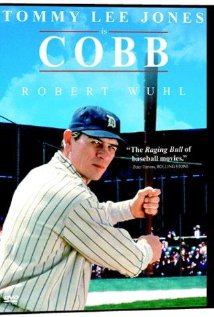
Cobb movieMarketers talk about ‘content marketing’ as if it is something new and shiny. In fact if you go and sit with a prospective or current client and talk about your agency’s experience in using content marketing to increase brand equity and drive sales, they always listen with great interest and almost always say they need to do more content marketing. Increasing brand equity and currently driving sales are often mutually exclusive as the two don’t always work together but can and often do when it comes to content marketing. But as is the case with many marketing strategies and tactics content marketing has been around for a very long time.

I don’t know what made me remember a story I read when I was a kid by the great sports writer Furman Bisher in ‘Strange But True Baseball Stories’ from Random House written in 1966. For whatever reason I must have read this book twenty times and have good recall of many of those stories which I have not read in, well a long time. The story about Ty Cobb was entitled ‘Young Man in a Hurry’. It was my first exposure to an example of content marketing – I just did not realize it at the time.

As I remember the story, Ty Cobb was an up and coming teenager playing baseball in Georgia. Apparently Cobb was not moving up through the organization minor leagues as fast as he believed should have been the case. So young Ty Cobb decided to write postcards to famous sportswriter Grantland Rice who wrote about many sports, particularly baseball, for the Atlanta Journal Constitution while travelling around the south.

Cobb had been playing for the Augusta Tourists but was released. While he hooked on with the team from Anniston, Cobb wrote promotional postcards describing his talents under different aliases and mailed them from all the different cities he played in all over Georgia. Finally Rice himself wrote a small note in the Journal that a “young fellow named Cobb seems to be showing an unusual lot of talent.” Sure enough he was recalled by Augusta and then after the season had his contract purchased by the Detroit Tigers. The rest as they say is history. This is not to suggest that Cobb would not have made it to the big leagues but it surely shortened the path which was the aim of his ‘campaign’ in the first place. If that’s not a great use of content to market something – in this case oneself, I don’t think I understand content marketing. It made me think a lot about what makes a content marketing campaign successful.

If you are interested, Tommy Lee Jones portrayed Cobb in the 1994 movie Cobb which I recall being worth watching.

Do you have any good content marketing examples to share?

Posted in Advertising, Communication, Content Marketing, Social Media | Tagged , , , , , , , , , , , | Leave a comment

Lexington – not my old Kentucky home but I’ve always felt welcome

Lexington downtownlexington_ky_mag

It’s been nearly a year and a half since I was in Lexington, Kentucky, a city I’ve visited four or more times a year for nearly fifteen years prior. You know you’ve been to a city a lot when you don’t need directions to get around anymore. Being a provincial northeasterner I remember my first trip to the Bluegrass and how surprised I was at the overall quality of life and ease of travel around this city of 300,000.

Like many people that have never visited Kentucky before I had a somewhat hardscrabble and rustic notion in mind. While Lexington is not what you would call cosmopolitan, it does have many nice places in which to live, eat or play, (remember that the Keeneland horse track is prominent as is thoroughbred money). Not much has changed since I last visited although I have noticed that it seems the entire city never seems to eat at home.

Restaurants are crowded noon and night and I am not referring to Shoney’s or Waffle House. Last night at Malone’s, (part of the Bluegrass Hospitality Group) I had a terrific New York strip steak – as good as any I can have in New York, Chicago or any larger American city. Bluegrass Hospitality Group operates six restaurants in the greater Lexington area and all are a bit different but very well run – I’ve been to them all.

I was told by a friend here in Lexington that there are apartments and houses in town in which the kitchen has never been used. Based on my experiences going to restaurants here I can well understand. I cannot tell if it is a local cultural anomaly, if many of the people in Lexington all have good paying jobs (to eat and drink at BHG restaurants is not exactly done at bargain prices), or if Lexingtonians collectively are lousy cooks at home. Maybe it’s a bit of all three. What I do know is that people are friendly, like to enjoy themselves, and that you need to be prepared to wait on a weekend night even if you do have a reservation.
Lexington is also an active test market for new restaurant concepts. Apparently if you can make it here you can make it anywhere or at least other-where.

They sure love their UK Wildcats here in Lexington – particularly during college basketball season. Kentucky is also noted as being a ‘red state’ and you can hear some of that on local radio but aside from that I’ve never felt it in the city as a polarizing place.

Lexington is not necessarily a warm climate in which to retire – it was eleven degrees yesterday morning. But summers are hot and humid, winters are certainly milder than those in the northeast (well not this week), and because the city is about as far west in the Eastern time zone as one can be, the sun sets near 10PM in the summertime and even past 6PM here in late January. However, you have to live with the sun not rising until well after 7AM in the winter.   Still in 2010 CNN named Lexington one of the ten best places to retire in the U.S.

If you haven’t visited Lexington, KY you should put it on your list. A tour of the nearby Kentucky Bourbon trail is a fun way to spend an afternoon or day as there are many working and interesting distilleries. If you go for the all-day thing you might want to hire a driver.

On my way out to dinner now. When in Lexington…


Posted in Travel | Tagged , , , , , , , , , | Leave a comment

What next for Foursquare?

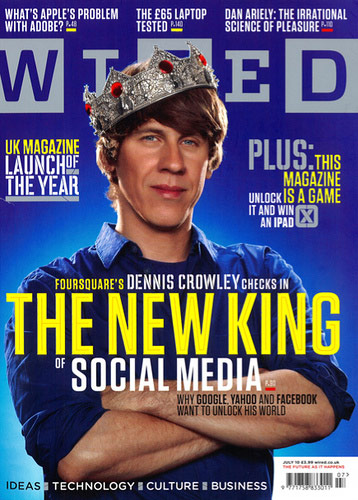
dennis-crowley-wiredI was a fairly early adopter of Foursquare having joined up in March of 2010. I was particularly interested in how people might use the platform with check-ins and how Foursquare might monetize the platform. Nearly three years later I still check-in on Foursquare pretty regularly but I have noticed that my Foursquare network of friends appears to be losing interest and most are no longer checking in. Apparently they have collectively become disassociated (or dissatisfied) with the value proposition. What is the value proposition? Well that’s a big part of the problem with Foursquare.

Over the three years I have had some good experiences using Foursquare – things like friends seeing that I ‘checked-in’ someplace and who happened to be in the area and we met up. That was something that might not have happened had I not checked in. A decent value proposition but surely not enough to sustain interest much less a company.

Over the period that I’ve been using Foursquare features – cool features, have been added. I’ve written about the tie-ins at events like the U.S. Open tennis tournament where by checking in I was given a $10 off coupon (in partnership with American Express) to use to buy food at one of the concessions. Even if it only saved me a beer it still was cool to get something for nothing. At that point I felt that Foursquare was on its way to a more lasting success. Subsequent visits to various establishments after checking in have generated free appetizers, a glass of wine or other bonuses. The value proposition seemed to be high.

Foursquare’s best known investor, Fred Wilson of Union Square Ventures in an article in Crain’s New York noted that Foursquare will soon be raising money and will become profitable “in the next year or two”   From the article are some interesting statistics but I am not convinced they are important statistics since usage is not included. ‘According to comScore’s Mobile Metrix, Foursquare had 6.7 million unique visitors to its app in November, a 32% increase over March, when the research firm started tracking mobile app usage. That puts Foursquare just ahead of growth in the overall mobile app audience, which was 28%. By contrast, Pinterest grew by 230%, to 9.8 million unique visitors, and Instagram by 472%, to 21.7 million.’

Foursquare is also banking on the idea that small businesses and large retailers will pay for ‘promoted updates’. A future revenue stream has been in the works for a long time now, (eons in internet time) but in-app mobile advertising (not quite native advertising exactly but sort of) appears to be the aim.

That’s all well and good but if the engagement of the user base is evaporating at the same time (if my small sample is any indication and I have a suspicion it is) Foursquare had better hurry up before it’s too late.

If you are or were a Foursquare user how about letting us know what you think – why you dropped it, or why you keep using it.

Posted in Advertising, Communication, Community, Customer Experiences, Networking, Social Media, Technology | Tagged , , , , , , , , , , , , | Leave a comment

Why all the fuss about energy drinks?

5 hour energy Drink-articleInlineThe National Advertising Division (NAD) an advertising watchdog has been for five years telling Living Essentials the maker of 5-Hour Energy to drop its ‘no crash’ claim. Apparently a five year old study showed that the product resulted in a ‘moderately severe crash’ in nearly 25% of users. An article earlier this month in the New York Times detailed the ‘dispute’.

I’m all for protecting the public from false advertising complaints but this situation seems to me to be completely overblown. If 75% of the people did not report a ‘crash’ severe or not, what’s the barometer? Do 100% of the people have to claim no crash? 86%? Drinks like 5 Hour Energy, Red Bull, and Monster Energy have become incredibly popular. Most people are aware that the drinks contain caffeine as well as some other ‘proprietary’ ingredients. People keep buying these products because legitimately or not, they feel that they work for them.

Personally I have had maybe one Red Bull in my life, never tried Monster Energy, Rockstar Energy, or 5-Hour Energy preferring to drink an old-fashioned cup of regular coffee or if I need a quick shot of caffeine an espresso. Both give me a lift and I’ve never even thought about or cared about the ‘crash’ factor. That the FDA disclosed it has received reports ‘over the last four years citing the possible role of 5-Hour Energy in 13 deaths’ but this becomes meaningless when the FDA report admits this does not mean the drink caused a death or injury. If there was proof that the drink caused death, believe me we’d have heard the news loud and clear.

The retail cost of these one-shot drinks is often over $2.00. A cup of coffee in most places costs less than that and has a similar amount of caffeine as a regular 5-Hour Energy bottle (an extra strength version is available with more caffeine). Since I like coffee I have no real desire or need for an energy drink but there are plenty of people who don’t like or cannot stomach coffee and energy drink products help them get through the day. Good for them.

I just don’t understand how the public interest is being protected here by the NAD and it seems as if there may be another agenda here. But I can’t figure it out – can you?

Posted in Advertising, Best business practices, Brand Advertising, Community, Marketing stuff | Tagged , , , , , , , , | 2 Comments

The U.S. Economy – it is what it is

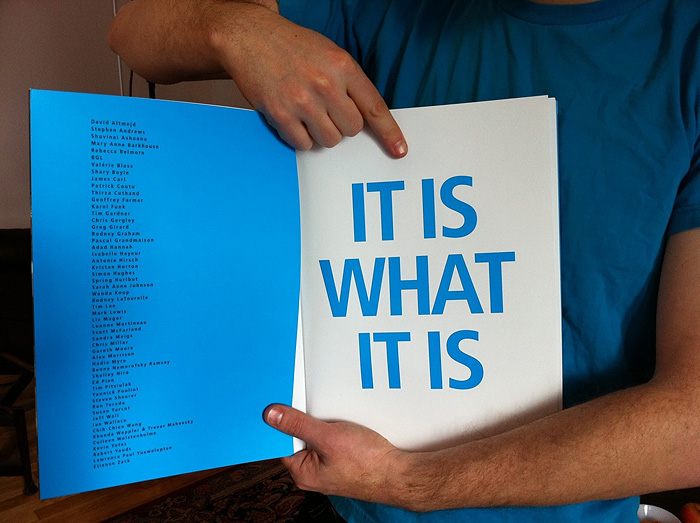
It is what it isIt’s been more than four years since the economic crash of 2008 that affected (and still affects) many countries around the world including the U.S. The behavior of many Americans has changed and some of those changes are likely permanent. Many of the jobs that have been lost are never coming back. Nor is there a forecast of a return to the income levels that Americans enjoyed before 2008. When it comes to the economy in the U.S. – it is what it is – and what it probably will be for a long time to come.

Americans have lamented about their downward mobility almost since the beginning of the ‘Great Recession’. While the complaints have continued, many Americans (including me) have gotten accustomed to the way things have been, are and will be. For example many Americans who went out to eat with abandon before the recession, don’t go out to eat the same way we did before. We dine out less frequently and at less expensive restaurants. Sure there will be occasional splurges but behaviors have been changed and it is unlikely that things will go back to the way they were before 2008.

I like to use the expression ‘life goes on while you are not paying attention’. This has to do with people’s capacity for adaptability and people should not be surprised that they are so much more adaptable than they think. Necessity truly is the mother of invention.

Do I think there’s no hope for better days? Absolutely not, in fact I wake up each day and try working toward making things better for me and my family and those around me. Maybe I even have the entire concept of betters days all wrong and I am living them right now. Things can always be worse. The U.S. Economy could be better but I also know that it could be worse. Much worse. It’s easy to talk about things policy can do to impact an economy and a vastly different thing to actually execute a foolproof strategy.

I personally know a substantial number of people who are out of work, and have been out of work for quite some time coming from industries that have changed dramatically and inexorably. Starting over in a new industry after ten, twenty or more years is becoming altogether too common. With continued advances in technology, entire industries will continue to undergo rapid changes impacting the lives of the people that work for and with the company. There’s zero chance of that trend diminishing.

For some people who’ve been out of a job, falling behind, and/or running out of options, better days would mean something quite different than what you and I might think. When it comes to the U.S. economy – it’s all relative. And maybe it just is what it is.

Can we live with that? Should we?

Posted in Living in the World Today | Tagged , , , , , , | 1 Comment

Do you have ‘pure’ experiences anymore?

Pure ExperiencesIt was this past Saturday afternoon and before getting started on helping cook dinner I found myself alone at home at just the moment the Baltimore Raven – Denver Bronco NFL Divisional Playoff game took place. Yes I know, funny how that just kind of ‘happened’. I had a cold beverage – (no it was not a beer) and sat back to watch the game with no distractions. I hadn’t set out to do so but I was about to have what I call a ‘pure’ experience.

I had no other distractions (answering email or reading something on my phone, iPad or even something lying on the cocktail table). I would have only been happier to have my wife, son, father, or football fans watching with me. Tweeting about the game or posting on Facebook (I did one time) is a far cry from having a shared experience much less a pure one.

The best aspect of the pure experience part is that by single-tasking (that is NOT multi-tasking) I was able to watch and enjoy one of the best football games I’ve ever had the pleasure of watching. It was as if by not being distracted I was able to see and hear things that I would have missed. Not many NFL games are played at such a high and such an intense level. I was lucky to have been ready and in the proper frame of mind and I was rewarded with a gem – a wonderful and pure experience.

I realized I don’t have enough of those pure experiences. I am guessing I have a lot of company. Shutting out the distractions is becoming increasingly difficult. The ability (and beauty) to be able to focus on a singular thing is so very important when it comes to optimal performance and optimal enjoyment (they are not always tied together).

I admire people who while reading a book (or whatever), are so focused that the only way to get their attention is to physically touch them. That level of concentration and focus is undermined by the ringing, dinging, singing and vibrating of the personal interruption device you carry in your pocket or purse.

Think about music for example. Before recorded music, performed live music was the only way to experience music. You’d sit and listen, and watch, (although there was no a lot of action in the orchestra). It was a pure experience. When you walk around with your iPod and listen to music is it the same experience? How could it be when your eyes are taking in the changing landscape? How often do you just sit and listen to recorded music without doing anything else? Note: Looking at your phone that’s playing the music counts.

I watched the entire game – well that’s not entirely true as I had the game on while I helped cook dinner. I was connected to the game walking over to watch play frequently and I never lost touch with the moment to moment. It was a bit frantic but I’m glad I did. So it was not like one of the purest experiences I’ve ever had – back in 1995 a World Series Game 4 at Jacobs Field in Cleveland where I watched Steve Avery and the Braves pitchers shut down a powerful Indian team. Thanks for inviting me Norm. It was 35 degrees but I did not feel cold, I didn’t have a beer, and remember so much of that night so vividly.

Do you have some great pure experiences to share? Shouldn’t we all try to have more of them?

Posted in Customer Experiences, Living in the World Today | Tagged , , , , , , , , | 4 Comments