Money right under your nose – your business data assets are valuable to other marketers

Money keyCustomer acquisition via email is a tricky business.  In the (B2C) business-to-consumer segment positive ROI is particularly difficult to achieve.   (B2B) business-to-business marketers have considerably more success for a myriad of reasons that include higher price points for products and better targeting capabilities since consumer marketing is so broad-based.

Email marketing is always worth testing since it offers a low-cost channel that if viable can be a primary business driver.  Most marketers are aware that building a data-leverage-able house file (internal customer and prospect databases), is a critical part of CRM.   However too many companies miss the opportunity to leverage (make money) by not marketing and trading their customer data.  Hampered by their own draconian privacy policies, marketers are ignoring list rental revenue as well as reciprocal opportunities with non-competitive partners.    And it all stems from trying to protect customers/users from receiving supposedly unwanted emails.

You read it correctly.  I am advocating that companies consider renting their customer names (more valuable) and even prospect names (less valuable but still some value), to curated third party marketers whose products and services would match up well with the house file.

There would of course need to be a clear description of how to unsubscribe so that the recipient could immediately opt-out and never receive emails from that curated third party marketer again.   Since this type of endeavor would likely require a change in the company privacy policy, house file names would have to be made aware of changes in the privacy policy and given the opportunity to opt-out of all third party messages if they so choose.     Believe me when I tell you that there will be a significant portion of the customer and prospect database that will remain ‘opted-in’.

The list rental business has been undergoing major changes in recent years as business and consumer mailing lists have dwindled in popularity and email lists have taken hold.   Back in the 1980’s and 1990’s there were extremely few companies that were created simply to acquire and resell customer names.  At the time birthday names were especially valuable.  People would send a dollar (they would mail it as this was the 1980’s after all) to receive within a week their personal horoscope for the day on which they were born.  A computer algorithm would spit out the horoscope and off it would go.  In the process the marketer now had personal data – birthday, name, address, gender etc.   Those names could then be rented to other marketers (permission marketing was still a long way away) and the real value was the multiple rentals of (list rentals are one-time use only), customer data to a wide variety of third party marketers.   Cheesy – oh yes for sure.  Successful?  At times, wildly so.

To be clear, I am not suggesting a return to cheesiness.   However I strongly feel that businesses that are struggling to make ends meet (there are more than a few) are not leveraging what is a valuable asset.    We’ve all seen enough digital display advertising and retargeting ads to understand that people who looked at sites, bought things etc. have affinities for ancillary products.  The right offer from the right third party marketer at the right time is of benefit to the recipient.  People tend to not like to admit that.  It’s as if they’d prefer drowning in a sea of irrelevant email and display offers.

For marketers remember you have gold contained in your customer data.   I know many companies that would love to trade data (in a reciprocal arrangement your customer data to them their customer data to you), or rent that data.

Is your company ready to reconsider its privacy policy so it can realize untapped revenue?



Posted in Advertising, Best business practices, Direct Mail, Direct marketing, Email marketing, Marketing stuff | Tagged , , , , , , | Leave a comment

Affiliate Retargeting: the next, next thing?

Thoughtful idea from my partner.

Affiliate Retargeting: the next, next thing?.

Posted in Uncategorized | Leave a comment

Wearable technology still has far to go

Dick Tracy 2wrrI remember Garmin.   So Garmin has gotten into the market for wearable technology (I guess Tom-Tom and Magellan must be doing the same thing as how irrelevant have stand-alone GPS units become?). I find it interesting that as a growing panacea (because that’s really what it is) wearable technology has received so much attention, interest and investment from large players like Apple, Google, Samsung and Nike, just to name a few.

Why do I say that ‘wearables’ have far to go? Because people will tire and ultimately not want to visibly wear technology.   Google Glass is cool and I definitely want to try one but I don’t see myself wearing a Google Glass for all of my waking hours.   Which begs the question – when to wear the technology and when not to?   I’m interested and curious enough to try wearables (on the wrist is most common), to monitor my health, activities, and conditions.   The idea that I want to look at my wrist to access things on my phone is, I guess, the future and will become normal behavior (as if I am too lazy to take out my phone?).

Are you going to ‘wear’ an Apple smart watch to bed every night?   It would monitor your sleep patterns which is cool and interesting – once or twice but every single night?   I don’t know about you but when I sleep I want to be as comfortable as possible. Having something on my wrist while asleep is not and cannot be more comfortable than going without.

I look at the path of wearable technology as just that – a path. Today it is ‘watches’ (those of us that remember reading the Dick Tracy comic and he had the coolest watch) that are the default wearable, but in the end I see wearables as a chip (that will be virtually invisible) that is placed behind your ear.   In my view, a behind the ear wearable is something that could be truly worn 24/7 without interfering with your outfit, (i.e. how would wearable technology look with an evening gown, or bathing suit?).

People are far more concerned with their appearance in the long run.   Visible wearables will be replaced by invisible or barely perceptible wearables.

Do you agree or disagree?


Posted in Communication, Consumer Behavior, Technology | Tagged , , , , , , , | 2 Comments

What exactly are you doing these days?

I-have-no-idea-what-Im-doing-dogIt has been nearly two years since the closure of my former print-centric company.  Having been so focused on commercial printing for many years before moving into the digital world has made for a bumpy ride.   Sure I added a number of marketing service aspects to my business prior to closing it, but there’s nothing like a blank slate to really motivate a move forward.

Recently a longtime friend and business colleague (former client) and I were catching up by phone.     After we caught up on our families he asked ‘So tell me what exactly are you doing these days?’   That moment was living proof that I have much work yet to do in communicating my own personal brand.

The question of ‘what are you doing?’ comes up often in my case for obvious reasons.   There are many people in the printing and mailing industry with whom I have been friends, clients or just simply business associates that I’ve not spoken with in two years or more.   For them I all but disappeared.  While I realize I am far from unique, (so many people in the marketing industry, print or otherwise, have had their lives disrupted), like the proverbial shoemaker’s children, I get so busy that I neglect my own brand.

So what exactly am I doing these days?

Well first off, I have great partners in moddern marketing.   We have a good understanding of when and how to work together on behalf of our clients – and maybe more importantly, when not to.   Our concept of a micro-network/marketing consultancy, dovetails well with my overall position as a business consultant specializing in helping companies gain and retain more customers be it through digital means or otherwise.   Sometimes I work alone (with the help of my amazing wife Michele), and other times the three partners work together with our associated teams to handle larger and more comprehensive engagements.

Second (and the best part), is that I am truly enjoying working with companies and brands – some of them challenger brands and some of them established brands, that have unique positions in the marketplace and make things in the world – better – if only modestly.

Third is that I am still focused and interested in working with brands in China and Japan.   There are major differences in approach to branding and marketing when you compare the two.   The Japanese have much broader and longer experience than do the Chinese when it pertains to modern (or moddern!) marketing and branding.  Yet having worked with companies from both countries, I feel that I have a good understanding (from a non-expat’s perspective), of the unique challenges and personalities that are part of the makeup of Chinese and Japanese companies

What has become clear about my ‘new’ path is the critical need to make thoughtful choices about who to work with.  This would include both on the customer side as well as partner side, and also when to decline something that does not fit well.   Anyone who is doing consulting knows that the latter is more difficult that the former.

So there it is.  That’s what I am doing these days.  What are you doing these days?
 

Posted in Career Development | Tagged , , , | Leave a comment

Jersey Mike’s – what exactly IS the brand promise?

Jersey Mike'sRecently a national sandwich chain Jersey Mike’s opened a franchise near my home.  I had seen the brand on trips around the southeastern U.S. but never had the inclination to visit.  I don’t eat many submarine sandwiches when on the road.  That does not mean I don’t like subs as in fact I always have liked Subway and Blimpie, and even Quiznos was ok for awhile.

Obviously, I have a predisposition for submarine sandwiches and it was only a matter of time before I finally tried Jersey Mike’s.   After all it’s been around since 1956.  Yet there was nothing in the store that offered information about the history of the franchise.   It kind of looked like it had a history but even after visiting, I was not sure.

The store offered much of the same type of fare to be found at the competition.   They offer to toast the sub – nothing groundbreaking there these days.  The cost of the sandwich was definitively more than at Subway or Blimpie or even Potbelly’s, which I have come to like.   The quality was fine – that is to say that there was no discernible difference other than it was more expensive.

So how is it possible that there are more than 1,300 locations for Jersey Mike’s?   Was there anything unusual about my first (and possibly last) visit?   Well maybe.   I asked for a small sub sandwich but apparently this somewhat newly opened unit had run out of the smaller bread and decided to give me larger size at the same cost. …with the same amount of tuna, cheese and lettuce as the smaller sandwich (I presume).   An ocean of bread with tuna was not a great combination.

But even if the sandwich had been good it was not likely to be substantially better than at other competing chains.   Just exactly what is Jersey Mike’s POD?   A look at their website history page offers a pretty interesting and cool story.

Buried at the bottom of the history is their brand promise:

Today, the authentic taste – served Mike’s Way® with lettuce, onions, tomatoes, oil, vinegar and spices – is available nationwide. Our secret? Everything about Jersey Mike’s is high quality. Our certified Angus Beef top rounds are trimmed and cooked right in the store. Our meats and cheeses are all top-quality premium brands. Our bread is fresh-baked each day on the premises. And of course, everything’s prepared right in front of you. It’s what makes Jersey Mike’s the most authentic tasting submarine sandwich available. And it’s a tradition of quality we’ll never outgrow.

Ok so maybe I ordered the wrong thing since obviously line-caught tuna is out of the question.  Yet in no way did I understand that the Jersey Mike’s go-to-market promise was quality.  I can assure you that the fact that ‘it is prepared in front of me’ (sic) is not a brand attribute as far as I or anyone else is concerned.  At this point I have no real reason to try the brand again.  Somehow I feel I am missing something.

Can anyone tell me what makes Jersey Mike’s so great?

Posted in Best business practices, Brand Advertising | Tagged , , , , , , | 2 Comments

Direct marketing week in New York City – Integrated Marketing week and DMA Echo awards

MeasureI’ve attended countless editions of direct marketing shows over the years.  For many years the spring show in New York City was called Direct Marketing Days.  (Actually it was originally Direct Marketing Day).   Way back in the 1980’s and 1990’s it was primarily a place for print vendors, list vendors, and mailing houses to have a booth and schmooze with their old pals.   The direct marketing business was much smaller then and in fact the show for most of its history had been held at the NY Hilton Hotel before leaving that intimate setting for the cavernous Javits Convention Center (a sad day that was).

Fast forward to the present and the DMA endorsed spring show is now termed ‘Integrated Marketing Week’.   This year IMW as held at the Metropolitan Pavilion.  It is an intimate setting to say the least.  Noisy too.   Or too noisy as during the sessions one could hear other sessions over the cubicle style dividers.

Yet there was a big difference from what I remember at the DMDNY shows of the past.  The attendees were overall substantially younger than I remember.   This is not solely because I am older.  There was much less gray hair and also more energy among the attendees that had been missing.  Combine that with the fact that there were nearly zero print vendors, list vendors and mail shops exhibiting.  While there were fewer exhibitors compared to the past, they were the right mix of app developers, mobile and CRM vendors.  Much more relevant and as I see it much more of value to today’s marketer.

In my conversations with some of the attendees when we discussed my drumbeat phrase ‘digital is direct’ I was happy to hear overall agreement and that this show had good and interesting marketing tracks and content.  That’s something I do not recall hearing about DMDNY very often.

As part of IMW the Direct Marketing Association (DMA) holds its judging sessions of the DMA International Marketing awards – The ECHO awards.  I’ve been a judge for many years now and always enjoy seeing the work from other marketers and other countries.   I am surprised when I read through the entries on how many entrants do not really understand how to position a direct response campaign in terms of measuring its direct response success.  In fact a large national pizza chain’s ad agency entered their campaign as a direct response effort and yet their primary success measurement was that they sold more pizzas.   Not exactly a direct response metric is it?  That does not mean it’s not an important metric as selling more pizzas is of course the goal.  But selling more total  pizzas not a direct response measurable .  So it’s not direct response.   Had an e-coupon, email sign up, app download, or mobile game downloaded (just to name a few) been employed and then success could have been measured in a quantifiable way.  That’s direct response.

Still it was a good week to be a direct marketer in the Big Apple.   The role of direct response has been evolving and direct response leading to retail sales has become a defining path for many start-up brands.  And that makes total sense.  I’ll write more about that in a future post.


Posted in Advertising, Best business practices, Data driven marketing, Digital media, Direct Mail, Direct marketing, Email marketing, Marketing stuff | Tagged , , , , , , , | Leave a comment

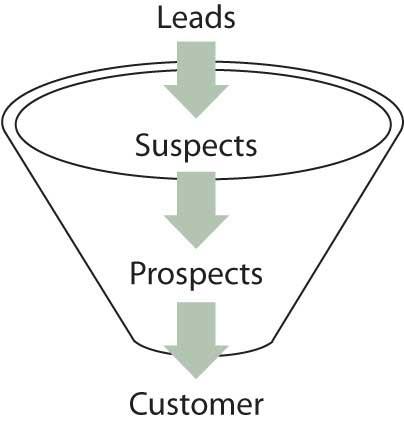
Are you marketing to customer prospects or customer suspects?

suspects and prospectsBy now most people are aware that Facebook likes, retweets on Twitter and recommendations on Linked In don’t pave a smooth road to customer acquisition.    We’d all like that to be the case but it simply isn’t a linear equation.

More likes don’t automatically lead to more customers.   Nor do more tweets or more recommendations.    I am frequently heard saying that digital marketing is direct marketing mainly due to the measurability of individual actions that depict the journey from prospect to customer.   This is keeping in mind that there are infinitely more ‘suspects’ when it comes to future customers than there are prospects.

So how can marketers tell the difference between customer suspects and prospects?   The truth is – it’s not always possible but the employment of marketing science offers the ability to focus on the more likely prospects and more quickly dispense with the suspects.  The suspects self-identify by rarely or never purchasing products that they have liked, retweeted about or recommended.

The use of customer data modeling complete with third-party transactional data overlaid is a critical element in being a smart marketer.   All too often I hear clients talk about views and engagement like watching a video or making a comment on a brand as being the primary campaign measuring in the digital world.   While I agree that what we term as ‘micro-conversions’ are extremely important, if those incremental steps toward conversion are not measured against the individual’s  actual behavior both within the platform as well as historically from third parties, then likes, tweets, and recommendations have little value.

Direct marketers have been all over the idea of micro-conversions for many years even if it was not called that.   In the golden days of magazine circulation (pre-internet) and subscription marketing, getting customers to renew their subscription through the mail could sometimes require seven or more separate mailings to a subscriber.  Crazy right?   The trick was to (through the use of data modeling) figure out when to NOT send an appeal based on customer behavior as well as customer look-alike behavior.

An example – I was never one to respond to an early appeal to renew my magazine subscription preferring to wait until the subscription was actually canceled as I knew it would be a rare occurrence that the magazine would cease to be mailed to me until long after my subscription had expired.  So if there were seven efforts in a renewal sequence I might be served only effort three, five and seven due to my history of never responding early.  Not mailing me four efforts in the sequence is saved money that goes right to the bottom line.

Since digital marketing and in particular email marketing are vastly less expensive than marketing through the mail, the need for efficiency in a marketing effort is often overlooked.   That has to change or we will all drown in a sea of irrelevant marketing messages.  Just because I like something does not mean I am a prospective customer.  Nor does it mean I want to see posts from the marketer or receive invitations to the marketer’s events etc.  The employment of predictive modeling should be used to determine my likelihood in becoming a customer  – moving me from suspect to prospect.

Yes of course it’s a numbers game and just by liking a Justin Timberlake video identifies me as someone more likely to purchase music or videos having to do with Mr. Timberlake than someone that did not like the video.   But if I’ve never bought any music or movies online (hypothetically) slamming me with offers to purchase will more likely turn me off than make me want to purchase.   Too many marketers subscribe to the idea that message frequency and offers can wear people down when I was never a prospective customer in the first place.

People that don’t spend money aren’t customers.  The key thing is having a better understanding of who is a customer prospect versus a customer suspect.


Posted in Advertising, Best business practices, Data collection, Data driven marketing, Digital media, Direct Mail, Direct marketing | Tagged , , , , , | Leave a comment

Searching for my inner minimalist

minimalismI’ve had some recent major changes to my routine which combined with some interesting reading has me almost constantly questioning why I am doing what I am doing.  Is it the most important thing right now?  The reading has included Essentialism – The Disciplined Pursuit of Less by Greg McKeown, The Four Hour Work Week by Timothy Ferris (yes I know I am apparently one of the few people who admits to not having read it), and Zorba the Greek by Nikos Kazantankis, (those that read TFHWW will know why).   All have combined to make me look and think hard about the way I go about doing things on a daily basis.

Fear not that I am going to go completely philosophical here dear readers.  But I would like you to keep in mind that having external forces blow up your plan can be an opportunity to reboot your approach.  The experience of having major changes comes with negatives to be sure, but they also come with positives that initially were not and may not be immediately apparent.

A big question I asked was one about my ability to be at my very best eight hours a day, five or six days a week.  Actually I know the answer.  I am not able to be at my optimum performance level every single moment.  I know that on an intellectual level but in practice was trying to be ‘productive’, ‘additive’ or whatever stupid adjective you can think of yourself.  There’s so much to do and learn that everyone knows it’s impossible to do everything, do it well, and do it on a constant basis.  So why do I, and so many people keep trying?

I’ve phased in and out of being an effective minimalist.   Being a sometime jazz pianist I know about minimalism in the sense that the best pianists can play a million notes, and play them amazingly fast, but the amazing thing about them is that they all know what notes not to play.  One of the reasons I’ve always loved Hemingway is the sparseness of his prose.  Doing things less isn’t the point, it’s doing the things that are essential and doing them well – that’s an ideal to which I aspire.

The first thing I have been working on during this renewed effort (which will be a battle to last the rest of my life) is email.  That may seem banal but email is by far my most used communication tool and I was using it like a walkie-talkie.  There were far too many hours staring at a screen when I could have been thinking.  That’s right thinking.  Too much ‘work’ and not enough thinking mistakenly gave me the impression that I was communicating and staying on top of things.  In actuality I was becoming more disconnected the more that I tried to stay e-connected.

The result is that I am making more calls, trying to see and spend time seeing and meeting with people, while at the same time answering fewer emails.   Also I am answering those emails more thoughtfully if not less immediately.

My search for my own inner minimalist goes far beyond email and even social media.    In truth, the conscious effort to overthrow my routine and get out of the mind-numbing sameness was spurred by outside events.  I can’t admit that it was a blessing in disguise but I am resolved to use the jolt as positive as opposed to negative energy.

Do you agree that most often less is more?


Posted in Career Development | Tagged , , , , , , , | 2 Comments

Three things that could derail Alibaba’s master plan

alibabaHaving had Alibaba.com as a recent client (helping them in the U.S.), I have had several years to watch its development.  A couple of years ago I visited the campus in Hangzhou which is both one of the oldest as well as the most beautiful cities in all of China.  The campus was impressive if not a bit sterile.  It was obvious then that Alibaba was a much more formidable operation than most Americans and westerners were aware.   Had you asked me then if Alibaba would go public on the New York Stock Exchange I would have thought that highly unlikely.  I remain surprised – pleasantly so, that Alibaba decided to have its IPO on the NYSE.

There are at least three reasons that could become huge impediments to Alibaba’s quest to be the biggest of them all.  Because let’s face it, that’s what Jack Ma really wants and his supporters within the PRC government will be doing what they can to help.

Reason #1…Disclosure.  Up until the IPO launches Alibaba has been able to hold back detailed information on its individual business units (Alibaba.com, Tmall and Taobao for starters).   In fact many on Wall Street have expressed concern at the thin amount of data that Alibaba has released to date in advance of the IPO.   This is no matter since it’s obvious to all that pay attention that Alibaba makes gobs of cash and has some of the most impressive margins a business of its size could ever hope to imagine.

Once the IPO has launched, Alibaba will be subject to SEC and other financial reporting mandates that will require a much higher level of transparency than it has ever had to provide.  When Wall Street gets to look under the covers it may not like what it sees.

Reason #2 – Google and Amazon are going to fight back.  Hard.  Alibaba has had a pretty free reign in China.   Sure there’s Baidu.com for search, Weibo for messaging (but both really only within China) and Tencent’s WeChat is poised to become a much more significant international player, but while there’s still a growth curve to be had in China as only 45% of Chinese people are online, Google, Amazon, and yes even Facebook have a huge head start in the international arena.  It will not be as easy to conquer the world as it was for Alibaba to conquer China.

Reason#3 – Payment security.  Alibaba.com, Taobao and TMall all rely on the Alipay secure payment system (conveniently conceived and administered in large part by Mr. Ma who fought hard to keep control).   Alipay has thus far proven to be a very secure and effective payment system and most Chinese make everyday payments using their mobile devices in a way Americans could only dream of.   However, and this may be a big maybe, if there were to be a breach of security in the Alipay system even temporarily the loss of confidence would be crushing for Alibaba and the whole thing could come crashing down like a house of cards.  It may be highly unlikely, but it isn’t impossible.

Despite all that I am bullish on Alibaba and its forthcoming IPO.  The company has done an overall great job in being both particular and methodical in forging its growth path over the past seventeen years.   I just keep in mind that with seemingly everyone on the Alibaba bandwagon when something seems too good to be true it should put your radar on extra-sensitive.

Will you be buying into the Alibaba story?


Posted in Best business practices, Business in Asia, Business in China, China, China Marketing | Tagged , , , , , , | Leave a comment

Are you doing enough to motivate your prospective customers?

horse waterI’ve been saying for many years that digital marketing IS direct marketing.  People on mobile devices or desktop and laptop computers are having one-to-one device interactions.

Most prospective customers who provide contact information do so in order to receive content, information, and offers, for your brand.  Perhaps unconsciously, people that have raised their hand also count on receiving relevant communications.  We all know there are many marketers that abuse that opportunity by sending too many, or too irrelevant (or both) communications to those hand-raisers.   Even worse, there are many more marketers that fail to have a plan to manage the new prospect’s interest.  The creation of a comprehensive lead management program should be a big part of the toolbox belonging to the smart marketer.

Independent of the channel where the lead has been generated, the contact information (most often an email address, physical address or phone number) is your portal to a potential conversion from prospect to customer.   This database can be appended with additional information (for purchase) regarding the prospect.  The average lifetime value of customers should be your guide when deciding if appended data makes dollars and sense.  This appended information is compiled from a variety of sources and can include demographic, household, store and brand preferences, all based on information that the prospect has provided to various retailers and service providers.  By having a deeper view of the prospects marketers can make better decisions in targeting prospective customers with the right offer at the right time leading to more conversions.

It is very common for me to hear from a client or prospective client that they wish to do an email campaign, or display advertising campaign and yet do not have a plan for what the prospect should specifically do once they receive the communication.  And even if there is clear direction, (visit this URL, call this number, email us at xyz@company.com), little thought is given to those that receive the communication but do not respond.

How long should a prospect be kept in the database?  How often should that prospect be contacted?  In fact the same can be true for current customers – what is your program to stay close to your current customers, how can you get them to buy more and be advocates for your brand?   All of these questions should be part of a coordinated campaign to move your prospective customers along the lead management trail.

Testing messaging for frequency, subject lines, and offers should be a continual process of marketing optimization.   Not having a lead management program is a tremendous misuse of valuable prospective data and preferences.   Creating one is an investment that will pay many multiples on your marketing investment.

Are you doing enough to motivate your prospective customers?  How about your actual customers?

Posted in Advertising, Customer Experiences, Data driven marketing, Lead Generation Management | Tagged , , , , , | Leave a comment