At all costs avoid the ‘endless feedback loop of you’

feedbackI wrote a post recently about serial cookie deleters in relation to online tracking http://wp.me/pn6jX-Iw. One of the sources I cited was Jeffrey Rosen’s Sunday NY Times article “Who do they think you are”  . I also noted a line in the article that now a week later I cannot stop thinking about a quote from Eli Pariser, author of The Bubble ‘Personalization can lead you down a road to a kind of informational determinism in which what you’ve clicked on in the past determines what you see next – a Web history you’re doomed to repeat. You can get stuck in a static, ever-narrowing version of yourself – an endless you-loop.’ Pandora and Spotify are good examples of feeding back your own preferences to you – it can be good, but not (in my opinion) when it requires the exclusion of being served anything outside of your own historical behavior.

I think there are many people already that are stuck in an endless feedback loop of themselves and for whatever reason I find it to be incredibly disturbing. Viewers of Fox News and Current TV can be included as participating in that endless feedback loop if they never watch any other ‘news’ outlets. Constant reinforcement of the same concepts is so narrowing that it can cause blindness. And that’s a very bad thing.

When I was a kid in grade school I used to go into the library sometimes and stand with my back to the biographies. I’d reach behind me and pull one without looking. They were short and obviously not too long since it was at an elementary school. (Yes I know pretty nerdy). I read a book on Crispus Attucks – American slave and the first casualty of the American Revolution. I also remember reading a book on John Deere and how he started his company that still exists today. Another book on mountain man Jim Bridger has also stuck with me. The point is that I was exposed to biographies and stories I would likely have never chosen to read and probably would not have been assigned in any class.

Having an advertising stream be directed at you solely based on your prior behaviors can at times be useful in showing you something of relevance and in which you might be truly interested. But say no to ONLY being shown things that are based on your prior behaviors. How and where will you learn about new things? How many times have you tried something you thought you’d dislike and found that you actually enjoyed it?

I feel that being open to ideas, experiences and things you’ve never had or seen before is what makes people interesting and breeds yet more new ideas and approaches. Being exposed to a continuing sameness in a feed of ‘information’ that you’ve been, reading, watching, listening to, and talking about, leads to myopic provincialism, and at the same time increases polarization. Today, it seems to me, it is increasingly difficult to have a conversation with someone who does not share your opinion. Too often people wave each other off at best saying they’ll agree to disagree. Or worse, they don’t discuss what are considered to be ‘touchy’ subjects at all.

It doesn’t mean you should try to cover all bases at all times as that is totally impractical. But I cannot think of few worse things than being caught up in only seeing things that an algorithm might think interests me based on my prior behavior. Give me something to look at that I’ve never seen before and I might actually try something new or learn something new. Imagine that.

Are you worried about being caught in an endless feedback loop of yourself?

Posted in Customer Experiences, Entertainment, Innovation, Living in the World Today, Media, Personal Privacy, Technology | Tagged , , , , , , , , | 1 Comment

The NHL is playing a dangerous game of Russian roulette

NHL hi-res-151961921_crop_exactIn case you weren’t aware the National Hockey League – arguably the highest level hockey league in the world has been subject to an owner’s lockout this entire season. If you are a hockey fan and it seems to you like this is a re-run of a bad movie, there’s good reason to feel that way. The entire 2004-2005 season was wiped out by a player lockout by the owners. Had I been blogging at the time I would have surmised that hockey having the smallest audience of the four North American professional sports was risking its own extinction. And that was before the distractions of smartphones and tablet computers.

Of course the issue is about money. The owners are claiming that their current share of total revenue creates an unsustainable business model for them. The players respectfully disagree. I am not going to offer an opinion on who’s right and who’s wrong. However I will offer that in the process the collateral damage to people that are employed as a result of NHL hockey makes me feel the two sides really don’t care about anything other than themselves. Sports Illustrated had a blog post on that angle.  That an arrangement has to be acceptable to both sides is obvious, but the tactics of sports lockouts and strikes is tired and wholly overused.

I am actually a person that likes professional hockey. The game in person is often breathtaking to watch especially if you can get a seat in the lower sections, better yet near the ice itself. Unfortunately my favorite team the New York Islanders has not given fans like me much to cheer about over the past nearly twenty years. Yet I cannot recall one conversation over the past two plus months (the NHL regular season was to have started in early October) with anyone telling me how much they have missed hockey and could not wait for the lockout to end so they could get back to watching games. I’m sure there are a good number of fans who feel that way but I don’t run into them, or, more worrisome, maybe they have found that they don’t miss it as much as they did last time.

If you have been to an NHL game in recent years and paid for the ticket(s) yourself you are well aware that a night at the ol’ hockey arena for two people can easily run $150 when you factor in tickets, parking, food, and any souvenirs you might want to buy. And that’s not for the rink-side seats mind you. To take a family of four to a hockey game (like most professional sports in the U.S. these days) requires a substantial investment. I am flabbergasted that the two sides would treat their shrinking fan base in such a callous fashion.

Perhaps the owner and players are thinking – ‘they came back in 2005, they’ll come back this time too whether it is this season or next’. If that’s their thinking I would remind them of how different the world is in 2012 than it was in 2005. It’s a hand I would not want to play as the risk is too great.

In the meantime fans like me will do other things and become accustomed to the new habits they are being forced to develop. To me that seems akin to holding the gun to your head and spinning the chamber hoping it stops on the empty one when you pull the trigger.

Do you think fans will forgive and forget and the NHL will rise once again from the ashes it has self-created?

Posted in Customer Experiences, Sports Marketing | Tagged , , , , | Leave a comment

A few surefire ways to abuse social media

Social media failureLike so many things in the world when it comes to social media there’s a definite etiquette that has existed and continues to evolve. I myself – an active user and marketer of social media – am very aware of the pitfalls and lines that can but should not be crossed. In the past week I have witnessed several ‘epic fails’ when it comes to what not to do in social media. I attribute most of the mistakes to a general lack of experience and understanding – so the people were well-meaning, just a bit clueless when it came to where that line-not-to-cross exists.

For example, recently a peripheral acquaintance from my local town sent me an invitation to Link In. I have met the person a couple of times over the past fifteen years since our children played some youth sports together some time ago. I knew the spouse more than I knew the person making the invitation but I accepted since I had no reason not to accept. Immediately thereafter my wife received a ‘friend’ invitation from this person on Facebook. Interestingly enough my wife knows this person even less well than do I. We both thought it was a bit strange and my wife did not accept the invitation.

Just yesterday morning I received in my email an e-newsletter promoting this person’s business as if I were a subscriber. The only thing is, I did not subscribe (nor would I) and now I have to go through the process of unsubscribing to something I never wanted to be a part of in the first place. Talk about your #epicfail! I am not ready to throw the person out of my LinkedIn network but am a bit worried that my extensive network could be contacted by this person in some form or another. Let’s just say that one more false move and this person will be tossed out of my network.

What could have been done differently? Not once did I receive a personal message from the person acknowledging that while we do not know each other well at all, they’d like to Link In with me for some other purpose than sharing information and possible contacts. Had it been made clear that there was a desire to use my contact information to include me in business content related to this person’s business I would have said I am happy to Link In but not to include me as a subscriber. Posting updates to the Linked In feed offering me the opportunity to view the content and if interested then subscribe would have been fine and appropriate. I suspect there are others that have been contacted by this person that feel exactly the same way.

Also yesterday I received an email from a Linked In contact (I’ve never actually met or talked to this person but was introduced by a third party that I trust). The email asked me about my Thanksgiving and told me all about a new job and how there was a desire for a personal connection with me to tell me more about their wonderful services. Oh and they hoped me and my family will have happy holidays. One word – EEEW! You have never met me and you are asking me about my holidays and family? We don’t even have a professional relationship beyond a third party introduction and you haven’t just crossed the line – you pole-vaulted over the line! Needless to say I will not be responding and likely never will.

I understand the need today is greater than ever to stand out and that can be done using social media. But the examples above should be fair warning that you can do more damage than you realize in taking the wrong approach.

Posted in Best business practices, Networking, Social Media | Tagged , , , , | 6 Comments

Will Serial cookie deleters change online tracking for the better?

Last week I had lunch with a friend who I met through business. He runs a very good company that helps other companies manage and leverage their data as well as aggregate outside data to help make accurate real-time marketing decisions. I asked him what he thought about serial cookie deleters and how many of them that might be actively covering their own digital tracks. The answer I got was a bit surprising. But I will get that in a moment.

The online advertising world relies on so called ‘Big Data’ and the ability to ‘bucket’ website visitors by their IP address (avowedly not by using their name or personal information) in order to provide relevant ads and offers in front of the website visitor. I myself have argued that a world of irrelevant online ads would be much more aggravating than people realize. After all, I am not at all interested in seeing advertisements for women’s hygiene products or Justin Bieber, yet because both are popular (in their own way) that would be more likely in a world where there was no tracking of any kind simply based on number of possible interested people. At the same time companies are buying access to my IP (and everyone else’s) online behavior activities without my knowledge or any direct financial restitution.

What my friend said that was surprising was that he himself was using a service to block 3rd party cookies to websites he visited. He has no problem with first party cookies being sent back to the site he is visiting so those sites can better understand what visitors view and with what they interact. Neither do I, for that matter. He also referred me to the free service is using – www.Abine.com (like Free Conference Call I wonder how these companies make money since they are ‘hoping’ people will subscribe to additional services which is something I personally rarely do). Abine.com has a neat little two minute demo that takes you through what they are doing when you download the software. There are competitors like www.AllAnonymity.com and others I am sure.

My friend and I discussed the idea that the Obama administration – emboldened by re-election, is on a mission to curtail online tracking with ‘Do Not Track (DNT)’ legislation that appears likely to pass in one form or another despite herculean efforts from certain associations to counter. An article in AdAge in October by Scott Meyer addressed this – http://bit.ly/V9n2yB although it appears one of his primary concerns as a marketer is the idea that a small number of big companies would have total control over the market as well as the impact on the increased cost of data if DNT were to be implemented. Mr. Meyer also offers ‘that there are no credible examples of anyone being harmed by the collection of non-personally indentifiable information, the kind of data that is routinely collected to enable interest-based (behavioral) advertising.’ I don’t necessarily agree that just because there are no ‘credible examples’ of harm that harm is not being done.

In this past Sunday’s New York Times Magazine http://nyti.ms/TExfUA entitled ‘Who do they think you are’, Jeffrey Rosen noted that Microsoft’s IE 10 browser automatically makes DNT the default setting. I thought the most interesting point made in the article was a quote from Eli Pariser, author of The Bubble ‘Personalization can lead you down a road to a kind of informational determinism in which what you’ve clicked on in the past determines what you see next – a Web history you’re doomed to repeat. You can get stuck in a static, ever-narrowing version of yourself – an endless you-loop.’

Does that quote make you feel as uncomfortable as it does me? I believe that if people were given a clear option to block third party cookies when beginning a browsing session, be it on a desktop, laptop, tablet or mobile device, 99% of them would choose that option. It’s what people want. We marketers have to deal with what people want and stop trying to position third party cookie collection as being completely benign.
It doesn’t feel right to me to simply allow the trafficking of people’s third party data.

How do you feel about it?

Posted in Best business practices, Communication, Innovation, Marketing stuff, Personal Privacy, Technology | Tagged , , , , , , , , , , , , , , | Leave a comment

The option to eliminate NCAA sports is a terrible idea

NCAA  If you’ve been reading my blog at all over the past couple of years you know I don’t have a lot of love for the NCAA as an organization – http://wp.me/pn6jX-iu. That does not mean that I am not a fan of NCAA athletics. Despite my beloved USC Trojans having an extremely disappointing 2013 season (capped off by a loss to arch-rival Notre Dame over the Thanksgiving weekend), I still watch and follow the major, (and not major sometimes), sports for both men and women in college.

With Ohio State being on probation for football (they finished a 12-0 season vs. Michigan over the weekend) there’s been more noise about the idea that NCAA sports are a sham, the players are not really students and colleges might be better served by eliminating NCAA athletic programs entirely. Not only will that never happen since college sports keep alumni pocketbooks open which fund so many things at the university level, it would take away a shared student experience that helps shape the futures of multitudes of bright young minds that become tomorrow’s leaders.

Do you think that’s a crazy notion? There are several reasons why I feel this way.

1) College athletics at the DI, DII and DIII level is more popular in the United States than anywhere else in the world. While it is not uniquely American (the U.K. has had university athletic teams for hundreds of years for example), the passion and fervor displayed by Americans for college athletics borders on the insane at times. On campus, going to the games, talking about the teams, and sharing in the triumphs and devastating losses brings the student body closer together. There’s no other single area of the college experience that bonds students for life more than rooting for their team. These connections are powerful and should not be underestimated in their long term impact.

2) Americans are known to have entrepreneurial spirit and are willing to take risks – sometimes to a fault I admit. I believe that for students at colleges and universities some of that spirit is imbued from watching and experiencing the memorable and amazing victories as well as the crushing losses of their teams.

3) Students in other countries are missing out on the shared experience. For example, when I think of Chinese universities and the fact that the students focus is so firmly and fixedly on academics and don’t get experience the ups and downs of their team (because they don’t have teams), I feel those students are really missing something important. There’s a big difference between going to classes together as opposed to doing that AND attending/watching games and talking about the team’s performance.

I’m aware that there are a number of problems inherent in the NCAA system and alterations – perhaps major ones like paying the athletes should be considered. But eliminating college sports would inexorably change and diminish the ‘college’ experience and more importantly negatively impact the future networking created by those shared experiences. And aside from that, the fervent alumni would have even less reason to stay connected to their alma mater as well as less reason to connect with and help current and graduating students which I believe to be incredibly important in the development of future leaders.

What would the U.S. university system look like if there were no NCAA athletic teams?

Posted in Sports Marketing | Tagged , , , , , , , , , , | 5 Comments

Keeping up on China by following Westerners

As I’ve not been in China for a longer period than usual I have a feeling of disconnection from my Chinese friends and colleagues. Via email, social media and Skype I have kept in contact with many people but as I have noted in prior posts being there makes all the difference. Yet sometimes (like right now) being there is not possible while the desire to stay connected to what’s going on in China remains strong.

One way I try to stay in touch is to read and follow the writing and posts of people that I know or know to be interesting. Since information coming from China is ‘filtered’, my Chinese-born friends are disinclined to write about what’s really going on in their view. The view of expatriates (mostly western) becomes even more timely since expats are given more freedom and in the absence of other information, the most direct and accurate source of trends and information (I admit accuracy is in the eye of the beholder and the opinion of people I know and trust is of much higher value than a reputed expert).

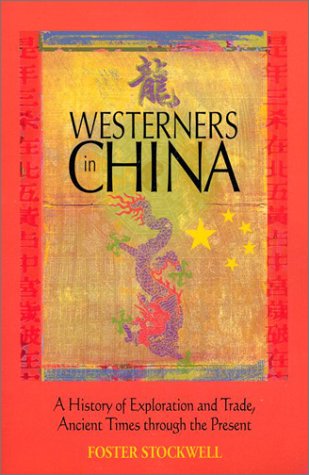
I’ve come to know people like Shaun Rein author of The End of Cheap China http://amzn.to/Tq4NJ6 and Michael Dunne author of American Wheels Chinese Roads http://amzn.to/UXSSyd both of whom I’ve met in New York. Their books are well worth reading for different reasons. Shaun’s book discusses changes in the Chinese consumer marketplace leading up to the current situation, in addition he runs a company CMR China which is a strategic market intelligence firm focused on China. Michael’s book catalogs the development of GM’s entry into China along with the partnerships and frustrations of same that were a part of his deep involvement in the process. His views help offer perspective on the dramatic growth of the Chinese economy and consumer marketplace. It has a cinematic feel to it at times and I’d love to see a movie made about his book. Also worth reading is Rebecca Fannin’s Startup Asia http://amzn.to/ReA8zg which also covers startups in India and Vietnam.

I’d like to meet Tom Doctoroff – current CEO J. Walter Thompson China whose book ‘What Chinese Want’ http://amzn.to/WsxYsm details the changes in behavior of the Chinese consumer and he postulates the reasons behind those changes. I also read an interesting book by Tim Clissold entitled ‘Mr. China’ http://amzn.to/U8ujzX about Mr. Clissold’s experiences in China in the 1990’s and 2000’s dealing with a country that had no understanding of western business protocols and methods. Right now I am reading (on Mr. Dunne’s recommendation) ‘Poorly Made in China’ http://amzn.to/Tq5VMD by Paul Midler which is a behind the scenes account about shifting manufacturing to China.

Staying in touch with and following westerners who live and work in China is a good idea whether you actually live in or travel to China. But when you can’t be there you take what you can get. I particularly enjoy diverging viewpoints and counterpoints from the many different people I follow. I feel that the more varied the sampling the better opportunity I might have to get a more accurate picture.

A lot can happen in five months don’t you agree?

Posted in Business in China, China, Communication | Tagged , , , , , , , , , , , , | Leave a comment

What’s behind the cyber Monday print ads for Omaha Steaks?


Today is ‘Cyber Monday’ the Monday after the 2012 Thanksgiving holiday and stories abound from the start of the shopping weekend kicked off by ‘Black Friday’. Of course as everyone now knows the sales began on Thanksgiving evening itself. Our daughter and her college age high school friends trekked up to the mall at midnight on Friday morning and literally shopped ‘til they dropped since she arrived home at 5:00 AM on Friday morning.

Personally I spent $9.86 at Radio Shack on Friday buying a cable for my iPod. That was the sum total of my Black Friday/holiday weekend purchases. Somehow retailers in the U.S. have managed to make a four day event out of the period from Black Friday to Cyber Monday. Since I am so deeply involved in marketing in general I have to go beyond the online world and pay attention to all channels – including print. This morning’s New York Times and Wall Street Journal both carried quarter page ads for long time direct marketer Omaha Steaks www.omahasteaks.com . (Full disclosure – our team is helping local New York City online food retailer www.nykoshersteaks.com so I am more attuned to the marketplace than most people.)

When looking closely at the two ads side by side I found some interesting differences. The demographic and psychographic profiles of NYT readers and WSJ readers are rife with differences – and similarities. Socio-economically the two audiences would not seem to be that different. However behaviorally and psychographically the two audiences are very different. Keep that in mind when you take a look at the two ads side by side.

First, the Wall Street Journal ad offer is $10 higher than then one for the New York Times. That is further evidenced by the purported savings of $116.01 for NYT readers vs. $102.01 savings for WSJ readers. Is there an insinuation that WSJ readers can pay more and take less of a perceived bargain than NYT readers?

Second, the offerings are different. Both offer the same 2 FREE GIFTS, but the make-up of the WSJ offer is different than the NYT offer. This makes it more difficult to compare but it is interesting that NYT readers are offered 8 Gourmet Jumbo Franks (franks being gourmet is a difficult concept for me in the first place) and no filet mignons, while WSJ readers are offered burgers (not termed gourmet thankfully) instead of franks AND a 6 inch chocolate cake. NYT readers are also offered 4 boneless chicken breasts while WSJ are not.

The phone numbers to call on both ads are the same. The order codes are different. The ads are well constructed with photos and calls to action prominently displayed. There’s no doubt Omaha Steaks with $450 million in 2011 revenue and more than 2,000 employees http://bit.ly/V1QfM8 understands direct marketing. But I find the differences in the two ads to be interesting and indicative of behavioral targeting in the print world – something many people think is limited only to the online world.

What do you think of the differences between the two ads? What does it say to you?

Posted in Advertising, Customer Experiences, Direct marketing, Marketing stuff | Tagged , , , , , , , , | 2 Comments

Is there a Thanksgiving in China?

On Tuesday this week I attended a conference at the Harvard Club in Manhattan sponsored by the Chinese province of Guangdong. Most of the attendees were Chinese, some living in the United States but many from the mainland. Since this is Thanksgiving week here in the United States I was surprised at the number of Chinese people talking about this very American holiday. In my conversations with ex-pats living in China there appears to be a desire to have the traditional Thanksgiving feast among westerners who often invite local Chinese friends to join them to eat and enjoy, (sadly) without American football on television in the background.

I did a little research on Thanksgiving in China and found a few things that I did not expect. There are web pages http://bit.ly/Qt2TYX that outline the origins of American Thanksgiving as well as the actual traditions that are celebrated. The Chinese call it ‘gan en jie’, or thanks holiday, but to a Chinese person a true Chinese Thanksgiving is celebrated with the Moon festival. In China there’s little mention of American Thanksgiving and all it means is that the U.S. capital markets are closed on a Thursday.

The political and sometime economic rancor going on between the U.S. and China would not suggest there would be a great deal of thanks being exchanged at the governmental level between the two countries. But I’ve been impressed at how many Chinese people I know go out of their way to wish me a Happy Thanksgiving. I wouldn’t expect our holiday to even be on their radar!

Even in a challenging time for many people in the U.S., around the world, and even me on a professional level, we all have much for which to be thankful. A positive attitude and a continued willingness to grind it out is really the best way to move forward when things are not going as well as they might. It’s not easy but I am thankful to have been able to maintain that attitude and know it’s the path to future success.

To all of my friends, colleagues and partners, Happy Thanksgiving.

Posted in China | Tagged , , , , | 1 Comment

Recreational bowling could use a total brand refresh


Growing up in the 1960’s and 1970’s bowling was relatively popular and something my friends and I did upon occasion. This was even before we were of legal drinking age. I note that since I believe for many Americans bowling and alcohol consumption are inexorably linked together. I remember my parents owning their own bowling balls in the ‘60s and going out weekly in some sort of bowling league. That lasted a few years and was not unusual in those days.

I’ve not done much bowling in recent years. When my kids were young there were the requisite birthday parties, bumpers and all but the parents neither bowled nor drank alcohol (obviously) making that hardly an enjoyable ‘bowling’ experience. News this week that bowling giant AMF was seeking bankruptcy protection http://reut.rs/SBn5Tq (and not for the first time) did not come as a shock to me – after who is going bowling these days anyway?

At the same time I realize there are still many people that enjoy going out bowling but when I checked I was still surprised the bowling was a $3 billion industry that employs more than 75,000 people. In fact one report http://bit.ly/ULPAUp showed that more than 71,000,000 people bowled at least once in 2010. I was not one of them. AMF says what?

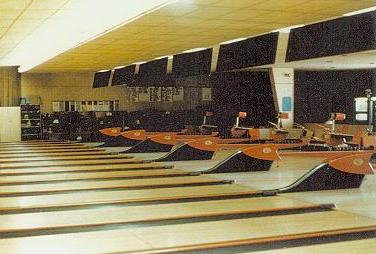
One of the main reasons we don’t bowl is the atmosphere in the local bowling alley. The fact that our city actually has bowling lanes is unusual in the first place. And while I’ve not set foot inside in several years my recollection is – dark, dingy, worn and tired. The really strange thing is, I like and have fun when I actually do go bowling – even if the facilities seem a bit dour and depressing. Maybe it’s a reason why alcohol is such a big part of the bowling atmosphere?

I also recall that a night out bowling ends up being more expensive than you think. , It’s pretty easy with 4 people to go in, rent shoes, bowl three games each and drop $100 before you’ve had anything to eat or drink. The whole experience might last a couple of hours if you don’t rush.

A few years ago in Tampa my family ended up at a place called Splitsville Lanes – http://www.splitsvillelanes.com/ a place that calls itself ‘Luxury Lanes & Dinner Lounge’. It was the middle of the afternoon but inside the place looked cool, there was upscale food like sushi, just 4 lanes, pool tables, good music playing and a completely different feel than what I had ever seen before. We had a good time, bowled a few games and ate and drank good food. It was not inexpensive but the entire experience was so much better that the cost-value equation was more balanced.

The business of bowling appears to be a challenging one since there needs to be a fair amount of real estate just to have a few lanes and the hourly take on those lanes would not appear to be nearly enough even at $5.00 a game and shoe rentals. However 71,000,000 is not a number to ignore. There’s obviously a substantial desire for the past? time but I think the current model is calling out for changes.

Is it just me or is the recreational bowling experience far short of what it could be?

Posted in Customer Experiences, Sports Marketing | Tagged , , , | 2 Comments

Where are the individual supermarket store apps?

Every now and then I find myself at the Home Depot not far from my house. I’ve heard that Lowe’s is considering moving into my area of southwestern Connecticut and I will no doubt go there as well once they actually open. As my wife and I walked (wandered would be more the word) around the cavernous structure that is endemic to most Home Depots I wondered if there was a smartphone application, that offered the layout of the store I was in so that I could put in what I was looking for and be directed to the proper aisle.

When I checked it out later I learned that in fact there is such an application provided free by Home Depot. The apps offers the ability to purchase online, find a store near you and (for me) most important search items in the individual store and find the proper aisle. Lowe’s also has an app but the app does not offer the ability to search for particular items within the store – that’s a big drawback and it should be fixed.

Stop and Shop is very prominent in our area and at times I’ll be in a store that I don’t visit very often and wonder where I might find a particular item. One might think the Stop and Shop smartphone app would allow for an in-store item search. Sadly it does not. You can scan your items, create shopping lists, and check out ‘more easily’. You can order ahead of time and pick up at the store – something that sounds good but is not a habit ingrained in most people at this time. I realize that individual store units are laid out in different fashions making an individual store smartphone app a bit more challenging. However in terms of serving the customer I would say more easily finding items once in the store should be a primary focus, not a secondary one. I mean how hard could it be and even if it is difficult the value to the customer would be high and isn’t that reason enough?

As we all move forward in this mobile world, mobile applications and websites are fast becoming critical must-haves. I am often surprised at the lack of thinking that goes into what a smartphone app would actually perform. That the app has to be fast loading, easy to navigate are givens. Yet it seems to me that when it comes to smartphone apps that people really could use to their advantage, stores are often more interested in offering more ways to shop, or locate a store than what you would use it for once you were actually IN the store itself.

Have you found great or lousy smartphone store apps?

Posted in Customer Experiences, Mobile Communication, Technology | Tagged , , , , | 3 Comments