Direct mail grows in defiance of ‘print is dead’

Despite all the talk about marketing via social networks, mobile marketing and digital display, the ‘traditional’ consistently performing channel – good old direct mail – continues to grow. While mass mailings of the 1980’s and 1990’s have diminished (I still recall the days when we would print more than 10,000,000 mail pieces for some of CGSM’s clients), 1:1 print marketing has flourished.

How can this be? Weren’t digital advertising and social media going to be the death of direct mail? To paraphrase Mark Twain – ‘Rumors of its death are greatly exaggerated’. Winterberry Group’s Bruce Biegel recently reported that in 2010 direct mail spending in the United States was $ 45.2 billion. More than any other single direct response channel.

The primary reason direct mail is growing once again is that it works. There were declines in 2007, 2008 and 2009 due to economic concerns and the general business climate. But the fact is that people trust direct mail more than online offers. Highly targeted direct mail via the use of sophisticated personalization resonates with consumers. There is also a perception (correct I might add) that direct mail requires a greater investment on the part of the marketer when compared to digital marketing techniques such as display or email marketing.

There are initiatives floating around the U.S. Congress such as ‘Do Not Mail’ and ‘Do Not Track’. The ‘Do Not Mail’ initiatives stem from the perception that trees are being harvested to send people mail they would rather not receive. The Direct Mail industry has to do a better job of adopting consumer choice initiatives in order to not send people mail who do not want to receive marketing messages.

As for ‘Do Not Track’, clearly people have privacy concerns when it comes to the use of their personal data for marketing purposes. The digital marketing community also has work to do in order to educate and assure people that individual behavioral and purchasing data is not being passed around from marketer to marketer. This debate has supplanted the ‘Do Not Mail’ debate in Congress which is yet another advantage for direct mail marketing.

Customer prospecting via direct mail remains challenging but not impossible. Financial institutions like banks and insurance companies continue to refine their efforts to acquire new customers through direct mail. And direct mail as a contact management strategy is an extremely effective tool to build a relationship and move an identified prospect to becoming a customer.

I still look at the mail every day that I am home to see what we’ve been sent. Yes some of it is not relevant to me but it might be to other members in my family. We only have one mailbox after all, unlike email, text or mobile messages.

So don’t abandon all your direct mail efforts for the hot new channels of today. While social media marketing, digital display, search engine marketing, mobile marketing and word-of-mouth marketing are all great new channels, tried and true direct mail should be an integral part of your marketing toolkit.
Do you look at the mail as soon as it arrives? Do you like receiving mail?


Posted in Best business practices, Marketing stuff | Tagged , , , , , , , | Leave a comment

IHOP and Denny’s 0pen 24 hours a day – a good thing or bad thing?

If you are on the road and hungry at 3AM do you find it comforting to see a sign for an IHOP or Denny’s? I don’t travel in the middle of the night but once every few years so a restaurant open 24 hours a day does not have much value for me personally. However both IHOP and Denny’s are open 24 hours. People must be eating there in the middle of the night – right?

I don’t have the sales figures to know how much business is done at restaurants like IHOP and Denny’s between the hours of midnight and 6AM. But I do know that in my view being open those extra six hours detracts from my perception of the quality of the restaurant. It’s got to be really difficult to keep a busy restaurant clean in the first place, and being open 24 hours does not make that any easier. After all, the staff in the wee hours is minimal and they are trying to make do with as few people as possible.

I was in an IHOP (International House of Pancakes) in Florida this past weekend. I had not been in one in several years. Founded in 1958, IHOP has over 1,400 restaurants around the U.S., Mexico and Canada. From the time I was a kid IHOP represented pancakes and many kinds of different syrup on your table. In fact I had never even seen boysenberry syrup until I went to an IHOP. Well the IHOP I went to was crowded, dirty (the bathroom was a mess), the pancakes were not great, and it was expensive. It was a shock that it cost $ 34.00 for three people for pancakes, coffee and 6 strips of bacon. We won’t be going back to IHOP for a long time.

In contrast Denny’s (which operate 1,600 restaurants in 49 United States), has embarked on developing its Denny’s Diner concept. I have been in a few Denny’s in recent years but never the diner concept. I was pleasantly surprised that it was not only pretty clean and kind of cool looking inside, but there also were choices at $ 2/$4/$6 and $ 8 for breakfast (or any other meal for that matter). Oh and the bathrooms were clean also (hey I had to find out for myself).

I still feel that being open 24 hours is a detriment to restaurants like Denny’s or IHOP or any other restaurants for that matter. How much business could they be doing during that 6 hour period? Staffing during that time has to be a nightmare as working graveyard is no picnic and service, and maintenance would seemingly suffer. So is it enough to promote being open 24/7 to offset what might be a negative connation when one considers going to an open 24 hour a day restaurant?

Maybe it’s me but do you have a built in prejudice for ‘Open Always’ restaurants?

Posted in Best business practices, Customer Experiences | Tagged , , , , , | 4 Comments

Google’s new One Pass – Should Continental Airlines be flattered?

When I heard about Google’s new One Pass Payment System http://on.wsj.com/fLb5Xm I immediately thought ‘why are they ripping off Continental Airline’s frequent flyer program name?’ It’s not like Continental Airlines has given up the program or that Google was unaware of the rather regular use of the OnePass phrase.

In the digits column in last Wednesday’s Wall Street Journal http://on.wsj.com/hCUilw Michael Hickins wonders if Google is planning to get into the airline business. Apparently OnePass is also the name of a system developed by ThomsonReuters to allow customers to access TR professional websites. But what I am really wondering is if OnePass is really that good of a name in the first place?

The new Google concept allows consumers to view content they have purchased on a number of different viewing platforms – eReaders, mobile phones, non Apple tablets i.e.,. This is a very good idea and serves customers well while at the same time being a direct shot across the bow at Apple which (rightly so I might add) has taken heat for skimming 30% off the top on subscription revenue from publishers using the Apple iTunes App Store.

The plan for the merged United Airlines and Continental Airlines is for a ‘new’ reward program to be unveiled with a new name. While that opens the door for Google I am surprised at the lack of creativity in choosing One Pass. It does not explain what it is and at best is evocative of another popular (there are more than 50 million Continental One Pass members) product that has nothing to do with Google or this service.
Good concept by Google but as far as I am concerned they have blown it with the bad name. My bet is Google will change it before they consider getting in the airline business.

Of course it’s possible that people did not even notice. Did you?

Posted in Best business practices, Communication, Marketing stuff | Tagged , , , | Leave a comment

New York’s Toy Fair is big – but not fun

I went to the Jacob Javits Center yesterday and attended my first Toy Fair in a really long time. In fact the last time I went to Toy Fair it was in the Flatiron District at 200 Fifth Avenue so it suffices to say that was in the last century if we are being kind.

Why did I go to Toy Fair? Well we have clients and prospects in that industry on the publishing side as well as the sourcing side and I wanted to see first-hand how people interacted and how things were done.

The Javits Center is a big place to fill up but Toy Fair was spread far and wide on the main floor of the exhibit hall. In walking the aisles (and rather quickly as I am not a toy store owner or product buyer) I was not only impressed at the sheer number of exhibitors, but also the similarities in the product offerings. After awhile they all seemed to meld together leaving me with relatively no impression at all. Everything looked like everything else.

There was an area of the exhibit that appeared to be populated with eco-toys or ‘green’ focused toys – environmentally responsible and earth friendly. I felt that was an interesting and a good idea but then further on there were other companies outside of that enclave pitching their eco-friendly toys – which confused me.

As I continued on my very long walk up and down I noticed that the exhibitors and attendees skewed older than most trade shows I attend (reminiscent of the Direct Marketing Association shows). But what I really noticed was that for a trade show dedicated to toys it appeared to me that people were not having much fun at all. That was the most puzzling thing to me overall. After all what’s the point of toys if they are no fun?

I realize that at times toys can and should be educational. Yet if the spirit of Toy Fair is not fun and the people exhibiting and browsing don’t seem to be having any fun I question the entire concept and feel that it could use a total revamp. There should be a fun – almost circus-like component to the show – maybe a big top and with some circus acts in the center to make people smile and get into a fun frame of mind. Who knows they might even buy more product.

In the 1988 movie ‘Big’ with Tom Hanks, his 30 year old body with the mind of 12-year old looks at toys as needing to be fun – something the toy executives have a hard time with. The folks that put together Toy Fair might want to review that concept.

Posted in Best business practices, Marketing stuff | Tagged , , , , , , | Leave a comment

Are the Grammy’s intended as entertainment or to promote music sales?

The easy answer is yes. But what if you had to choose one or the other? Last night’s big winner was the group Lady Antebellum. Twenty years ago the Grammy winners would experience a nice bump in record sales (actually even then they were CD’s and not LP’s). Artists did not need to tour nearly as much as they do today, as twenty years ago selling tens or hundreds of thousands of CD’s afforded them a nice living. Sales of recorded music has changed due to the popularity of Apple’s iTunes, and illegal download sites like Limewire (which has since been shut down), Kazaa and other like sites.

From the RIAA site (Recording industry Association of America) – “One credible analysis by the Institute for Policy Innovation concludes that global music piracy causes $12.5 billion of economic losses every year, 71,060 U.S. jobs lost, a loss of $2.7 billion in workers’ earnings, and a loss of $422 million in tax revenues, $291 million in personal income tax and $131 million in lost corporate income and production taxes. For copies of the report, please visit www.ipi.org

Last night’s 53rd Grammy Awards (‘Music’s biggest night’) were advertised to be all about the music and performances and not as much about awards. Originally called a Gramaphone award, Grammy’s are handed out by the National Academy of Recording Arts and Sciences of the United States to recognize outstanding achievement in the music industry.

Many top industry executives agree that the music industry is in a downward spiral and counsel up and coming artists, especially the plethora of trend following pop and hip hop artists and producers, to “get out while they still can.” If the Grammys’ are not about promoting recorded music it would follow that they are about the artists themselves. And thus promoters like Live Nation are now firmly in control of performance venues and merchandise. Ever wonder why Live Nation is not sponsoring the Grammy Awards? That’s an easy one. Because they don’t need to. The 360 deals pioneered by Robbie Williams of EMI back in 2008, now encompass recordings, live concerts and merchandise.

The Grammy Awards are no longer about music. They are about entertainment and the show. You saw Barbra Streisand last night win an achievement award for her contributions to the recording industry. But that industry is nothing like what it was when Ms. Streisand was putting out #1 records. And as an artist who never cared much for public performances Ms. Streisand would have a much more difficult time today making an impact solely with her amazing voice. That can be said for more than just Barbra Streisand by the way. Today’s artists must perform live in order to make a living even if a Grammy Award offer a short term spike in a recording artist’s sales. The problem is that spike in sales is not sustainable.

Did you watch? Do you care? Do you buy more or less music than you did five years ago? Ten years ago?

Posted in Entertainment, Marketing stuff | Tagged , , , , , , , , , , | Leave a comment

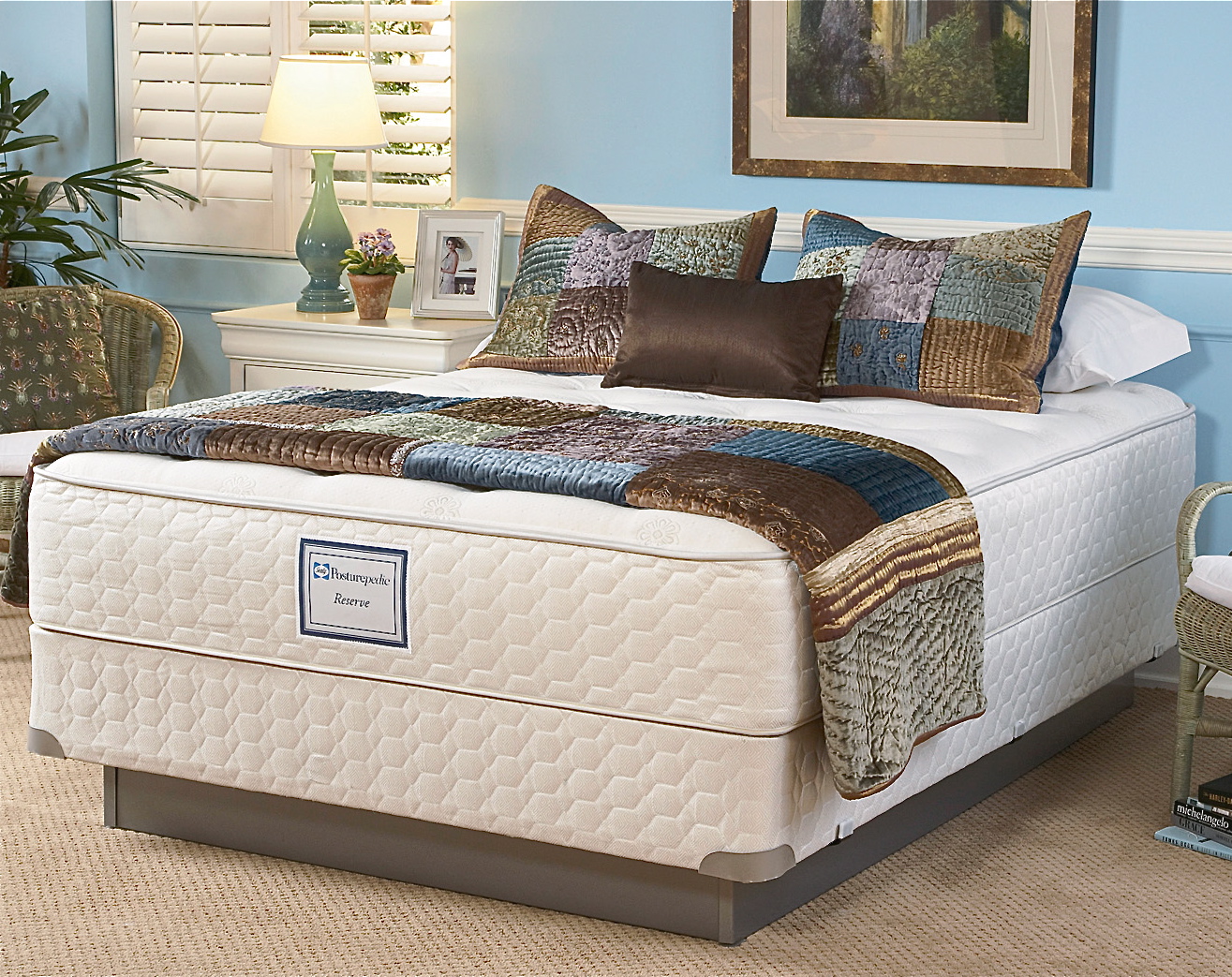
Attention Sealy Mattress shoppers – Beds are NOT Kitchens

With all the talk about controversial Groupon.com Super Bowl spot with Timothy Hutton (I thought it was a poor attempt at association humor, a bit insensitive, but hardly egregious as some people would have you believe), an overlooked spot in the New York and Boston markets was one run by Sealy Mattresses that took a very different approach than they and other mattress manufacturers have in the past. Here is the link if you want to watch – http://bit.ly/dZMjor
You should know that I personally am in no way offended by the spot from any kind of social perspective. A Media Post article from this past Wednesday http://bit.ly/eQgcui outlined the ‘strategy’ behind Sealy’s repositioning (or is it rebranding?). From the article: “The campaign — which comprises three spots — takes the tack that beds, kind of like kitchens, have evolved to have a more central role in family life.”
The concept that people do a lot more in bed than sleep sounds interesting at first, but I fail to see how that approach is going to move more SEALY mattresses. Sealy CMO Jodi Allen reported that they had done studies that helped lead them to using this approach. ‘We wanted to connect the brand in an emotional way because there is just so much out there that is all about specifications, padding and coils. Consumers say this makes a brand unapproachable.”

I can appreciate the good use of consumer research and even more so listening to your customers as appears to be the case here. But while listening to customers is extremely important, more important is asking the right questions.

Our team has worked with a large mattress manufacturer for many years so we know a few things about this vertical market. One of those things we’ve learned is that highlighting and differentiating product attributes is tantamount to success in launching new models or lines. After all, people spend nearly a third of their lives in bed (to me that in itself is actually a dream), but they probably spend more than 85% of that time sleeping in the bed and not necessarily doing ‘other things’.

I am all for taking chances and trying very different approaches to help solve marketing challenges. It remains to be seen whether or not Sealy has hit upon a formula that will resonate with consumers. I still cannot tell if they are repositioning the brand or not. Certainly changes to Sealy’s marketing approach are needed to help bolster this once proud brand which has lost ground to competitors over the past decade or more.

But I point out that a mattress is definitely not a kitchen (nor vice versa) and I am puzzled how Media Post came to that conclusion – are you?

Posted in Customer Experiences, Marketing stuff | Tagged , , , | 4 Comments

Do you have Klout or are you a Twitalyzer?

If you’ve been paying rapt attention to the social media space, then perhaps you are aware of www.Klout.com and/or www.Twitalyzer.com (I was aware of the former but not the latter). The sites offer you a measure of your social ‘influence’. That is to say that based on a person’s publicly posted data on sites like Twitter, your measure of social influence is derived and scored.

Other social influence measuring sites exist like http://www.Peerindex.com and www.Topvoice.com as well. (Full disclosure – I have met the CEO of Top Voice and the Chairwoman is a business associate and friend).
In an article in Tuesday’s Wall Street Journal http://on.wsj.com/hZoFDb a 25 year old woman was given access to a ‘swanky holiday party’ on the basis of her tweets being ‘influential’. The woman was surprised. That would not have been my reaction but I’m far from being 25 years old.

I became aware of Klout several months ago and signed up for an account (my Klout score is a lowly 32 – even Hosni Mubarak has me beat at a 43). 70 is considered a pretty good Klout score and Justin Bieber has a Klout score of 100 (Bill Gates has a score of 76 BTW – I myself don’t find Bill Gates to be less influential than Justin Bieber but hey that’s me).

So the next question is (at least for this marketer) – “Where’s the revenue model?” While the WSJ article does not outline the revenue model , theoretically by using Klout consumer brands could reach out to top influencers by having them talk about the brand – positive or (dare it be), negative. Maybe it could work and I am probably missing something so help me out if you have a better idea.

Top Voice is also a new entry and they are working through the challenges of being a start up with regard to interface and site usability. I understand the Top Voice revenue model much better than that of Klout. People Tweet or post about their favorite brands and are rewarded with points which can then lead to them receiving merchandise for becoming a Top Voice influencer. So both the brands and the individual can benefit.

Social media influence is here to stay whether people want to accept that is important or not. Even if you personally feel it is a waste of time (as I often do) we marketers should be very aware and watchful of trends and developments. The authenticity of conversations from consumers will continue to gain traction.

So have you checked out your Klout? Will you?

Posted in Communication, Living in the World Today, Marketing stuff, Social Media, Technology | Tagged , , , , , , | Leave a comment

AOL shows Huffington Post the money

You cannot blame Arianna Huffington for taking the $ 315 million ($ 300 million in cash) for Huffington Post from AOL and Tim Armstrong. Greg Coleman who is the CRO (Chief Revenue Officer) at Huffington Post actually came over from AOL and was replaced by Tim Armstrong with current AOL ad sales head Jeff Levic. Under the agreement Mr. Coleman will leave the Huffington Post.

The Huffington Post increase in ad sales from $ 31 million in 2010 to a projected $ 60 million in 2011 is impressive. And it’s because Huffington Post continues to provide solid aggregated content and it plans to deliver more original content BTW. I’m not exactly sure how AOL Patch (the local citizen news branch of AOL) will be integrated by Arianna Huffington. She’s also now in charge of Engadget, Moviefone (how long will that be relevant?), MapQuest, and TechCrunch. And Arianna has planned to move to New York from L.A. and Mayor Bloomberg of New York will be happy about the tax revenue if nothing else.

I understand the motivation on the part of Tim Armstrong and AOL to bring the Huffington Post under the umbrella. AOL continues its quest to remain (or maybe once again be) relevant. However I don’t completely understand how the deal works in the long term for the Huffington Post aside from the$315 million. What makes The Huffington Post cool is its somewhat irreverent and challenger brand identity. By becoming part of the mainstream (yes AOL is part of the mainstream), I hope that Arianna has not sold out more than she counted on doing. I for one would rather have had Huffington Post hold out for an IPO to maintain its solo identity status.

Of course it could all work well in that AOL again becomes a force and Huffington Post acquires a great distribution platform. But it would be interesting if not surprising to me.

What do you think – good deal? Bad deal? Why?

Posted in Marketing stuff, Media, Social Media, Technology | Tagged , , , , , , , , , , | 2 Comments

Who will be the winners at Sunday’s Super Bowl Advertising Party?

Well it’s safe to say that Fox TV will be the biggest, if not one of the biggest winners. NFL viewership was off the charts this season and with the bad weather much of the U.S. experienced this winter more people have taken to watching pro football like never before. With a :30 spot going for close to $ 3 million this year Fox is poised to have unprecedented Super Bowl success . Even the cast of ‘Glee’ is going to be in a much anticipated spot.

Doritos will assume its rightful place, as will GoDaddy.com with the addition ‘Biggest Loser’ star Jillian Michaels joining Danica Patrick for a spot that leads viewers to the web to finish the ‘mystery’.

The beer wars will be in force, but Denny’s will be absent which I find interesting after two consecutive Super Bowls promoting its offer of a ‘Free Grand Slam’ Breakfast. I blogged about those spots a couple of times but we never did learn whether or not they were successful. Until now. Denny’s has a new CMO Frances Allen who has decided to move away from advertising on the Super Bowl and instead invested in focus groups learning more about Denny’s customers and how they view the brand and what Denny’s can do to better satisfy what their customers want. In fact in Denny’s new campaign – not to be seen on the Super Bowl – http://nyti.ms/hgQXXw – Denny’s ‘Diner’ concept is highlighted.

There will be the normal animal type spots (think, Bridgestone and Career Builder), maybe a baby or two (think E-Trade) and car ads from, Kia, Volkswagen, Mercedes-Benz, GM and Chrysler to name a few.
What you won’t see are direct response ads. In fact the last true DR ad was from Sales Genie in 2008 and while some people were offended it was very successful but apparently not enough for them to do it again since. The opportunity to have 100 million people respond to your ad directly by using a phone number or web URL should surely be more tempting shouldn’t it?

More than 100 million people around the world will tune into watch two of the NFL’s most venerated franchises, the Green Bay Packers and Pittsburgh Steelers do battle on the field. My New York Jets were sadly eliminated (again) in the conference finals two weeks ago. So while contest itself is of mild interest I will enjoy chicken wings, chili and my favorite beverage and watch the ads (and Fergie with the Black Eyed Peas at halftime).

What I also wonder is why our marketing group would ever recommend to one of our clients to invest $ 3 million to buy time on the Super Bowl for 30 seconds. For many of our clients $ 3 million more than is an entire year’s marketing budget. But I’d love our team to have the opportunity to make that decision sometime.

Do you leave the room to get something to eat or take a break during the Super Bowl ads? Or during the game itself?

Posted in Entertainment, Marketing stuff, Media | Tagged , , , , , , , , , , , , , | 7 Comments

Does the Groundhog know anything else besides predicting the weather?

I’m not sure I would trust anything Puxatawney Phil or Staten Island Chuck would ‘say’. After all The National Climatic Data Center believes the Groundhog prediction rate to be around 39% accurate. http://bit.ly/b1kIua – which would be good if you were a baseball player but lousy for just about anything else. I guess it’s actually better to bet against the Groundhog.

Groundhog Day is not a myth, legend or fact. But it is a tradition. The tradition goes back hundreds of years and is uniquely American. I really liked the Bill Murray and Andie McDowell movie ‘Groundhog Day’ from 1993. The idea of living the same day over and over again until you get it right was charming. But as far as Groundhog Day goes in 2011, I for one do not want to live through another winter like this ever again. Snow is great if you are going to ski on it, or enjoy wintertime activities. But for working men and women (except for snowplow operators), schoolchildren and managers of city and town budgets, snow is an expensive and just a miserable hassle.

I never really got the concept of Groundhog Day. The groundhog – Phil, Chuck or name that furry creature, comes out of his hole after hibernating. If it is sunny out he becomes frightened of his shadow and goes back underground and we end up with six more weeks of winter. However if it is cloudy – and today here in the New York City area and its environs we are experiences an ice storm, the non-sagacious Groundhog will not be scared of his shadow – he will not have one, and we are in for an early spring. If I were a groundhog and poked my head out in this weather I’d go right back into my hole. And right now, after this winter I’d sign up for only six more weeks of winter.

I guess we should be thankful that there is not a tradition of Groundhog Day being a predictor other things like for instance, the national economy. If someone told you a groundhog could predict the economy with 39% accuracy you probably would not concern yourself too much with that prediction.

So based on today’s cloudy, icy, rainy, weather one might be tempted to hope that we are in for an early spring. That’s something we all could really use right about now. But I will sign up right now for spring arriving 6 weeks from now thank you very much.

I’ve never seen any Groundhog Day activities but apparently there are celebrations. Ever been to one yourself?

Posted in Living in the World Today | Tagged , , , , , , | Leave a comment