Why wouldn’t Google buy Ford or GM?

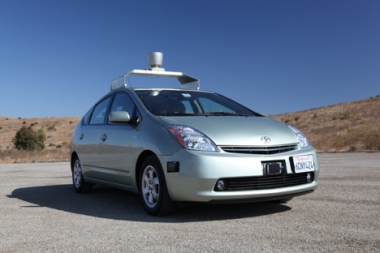
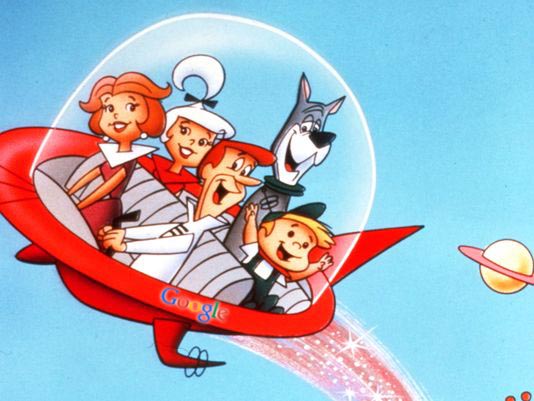
Jetson car 1Jetson car 2On my mind often is the development of the Google car.  I’ve posted about it more than once  http://wp.me/pn6jX-Ny  as I feel that this is one of the most interesting and potentially useful technological innovations – ever.

It came to mind that if Google is going to drive your car why wouldn’t Google want to manufacture the car?   Google has enough money to ‘buy’ Ford or GM, (or any automobile manufacturer for that matter, although the worldwide distribution offered by Ford and GM make them a far more appropriate target) and I would expect Google is far too smart to build its own automobile manufacturing facility.    Why build it when you can buy it and modify it to suit Google’s purpose and needs?    And what might that purpose be?    Google would then create THE singular personal communication and transportation vehicle.   Cars today, then Jetsons-like personal flying ‘cars’ or vehicles in the future.   It seems almost too obvious.

I will go out on a limb (probably more like a tree trunk) and suggest that Google would have the cash to buy Ford or GM.   For either of those two manufacturers the association with one of the world’s most innovative and leading companies would be a very positive one.   If Google bought Ford it would leave GM in a very tenuous position in terms of what they would do and how that move could be countered.   Is there another company out there trying to do what Google is doing with regard to having a network take over the operation of your car?   One article advanced the idea that people have indicated they would prefer to buy a self-driving car from Google than from Ford.  I am suggesting that the Google would cut to the chase and just make whole darn thing.

People sometimes forget that during World War II the automobile manufacturers made far fewer automobiles than they had been making before the war, and manufactured things like tanks and other military vehicles.    It’s conceivable that a Google technology robotic assembly line would have futuristic vehicles rolling off the line all of which would be fully interconnected.

Google is one of the U.S.A.’s most admired companies.    That is not necessarily the case with Ford and GM although obviously they are in better shape than they were in 2008.  The sum total would be greater than the individual parts.

Would a car from Google/Ford be something you’d want to buy?

 

Posted in Innovation | Tagged , , , | Leave a comment

The future will include mobile phone usage on planes

Mobile phone on planesWith the FAA’s recent decision to approve the use of electronic devices beyond airport gates and tarmacs, the vitriol and outrage against people talking on their mobile devices on planes is deafening.   Let me go on record as not being in favor of mobile phone usage on planes – at all.   But I am also aware that an old dog like me has to learn new tricks.   Do people really envision a future where mobile phone usage on planes would be possible but forbidden?   I guess the answer for many people is yes and that’s unrealistic and, well, wrong.

The FAA has noted that it would have the ability to monitor individual cell phone usage within the network.   And while a policy is not yet in place there has been discussion that abusers of mobile phone talk would be shut down on an individual basis.   Even if that is a little scary to me (I am not surprised since of course the NSA knows everything anyway apparently), that on/off switch is the safety net to protect against the inevitable idiot that will get on the phone in New York and talk non-stop to Los Angeles.   Maybe you will be allowed 15 minutes once, or twice in a five hour flight.  Whatever the protocol will end up being the foundation has to be that people will not be able to talk for any undue length of time.

I’ve been a daily commuter to New York City now for almost a year and have been riding trains on a regular basis to New York for an hour plus ride for many years.   People talk on the phone and sometimes they are loud and obnoxious.   A little personal anecdote from a few years ago:

I was on the train and a woman was talking when I boarded.  She continued to make call after call about her trip to Detroit, the kids coming to visit and another business trip to Los Angeles.  After about 20 minutes of this I could not take it anymore and tapped her on the shoulder (she was sitting behind me) and said, “Excuse me, Diane is it?”  The people around me went Uh-oh collectively and became VERY interested.  Diane had a shocked look on her face.  I went on, “I’m sure the details of your trip to Detroit and Los Angeles are vitally important but on behalf of my fellow passengers it would be great if you could make your calls from the vestibule by the doors.”    Her mouth dropped open a bit and she said nothing.   Then after a minute or so without moving she got back on the phone.   Like I noted, there will always be idiots.

Epilogue:  Later that same day and this really happened, I was in an elevator somewhere in Manhattan and a guy gets on, looks at me and says – ‘Hey it’s you!!  You’re the guy on the train.  I’m really glad you said something to that woman and if she said anything I was going to jump in with you.’   A lot of help he was!

There are good reasons to allow some use of voice calls on airplanes.   Emergencies can and do happen and a phone call is the best way.   But in this day and age of texting and emails most of the communication to the outside world on a plane should not require voice calls – just as they don’t on any kind of public transportation.

I understand that none of us wish to be seated next to chatty Cathy but to unilaterally ban phone calls on planes because people are afraid of what might happen is just a bad idea and a bad policy.  It’s going to happen and I can almost guarantee that.

Do you agree that like it or not phone calls on planes are inevitable – at least to some degree?

Posted in Airlines, Customer Experiences, Travel | Tagged , , , , , | 4 Comments

The end of bookstores is NOT at hand

BARNES-articleLargeThe New York Times story last week regarding bricks and mortar AND online bookstore Barnes and Noble  noted that The nation’s largest bookstore chain, Barnes & Noble said on Tuesday that its revenue decreased 8 percent, to $1.7 billion, in the quarter that ended Oct. 26.   Profits actually increased mainly due to cost-cutting.   Frankly I expected the news to be even worse.   What also was interesting to me was the note that e-book sales were flattening.

The constant drumbeat that bookstores will eventually be extinct is tiresome and I believe incorrect.   I am very happy to read books (newspapers and magazines) on my Amazon Kindle Fire.   But I also like to walk into a bookstore and browse books (particularly books I might not take a second look at if I were browsing online) maybe buy one or two, have a cup of coffee and just enjoy the great vibe that is part of a good bookstore.  Those are just some of the reasons that I believe bookstores will survive and perhaps even thrive.

Not to be blind to what has already transpired as it relates to independent bookstores (think about the 1998 Tom Hanks and Meg Ryan movie You’ve got Mail which in addition to being strangely dated, also forecast the downfall of independent bookstores), the bricks and mortar bookstore industry will never regain its former glory but that doesn’t mean they will not be relevant.

Lately there’s been much discussion about how the practice of retail store ‘showrooming’  is no longer feared by big box retailers like Best Buy.  In fact retailers are embracing customer (and potential customer) use of mobile phones in the store and are taking the opportunity to match prices offered by online providers while the customers is still inside the store.   The opportunity to sell these customers additional products raises the average basket sufficiently enough to make this a worthwhile practice.   The same should be true of bookstores.

The experience of online browsing of books pales in comparison to the experience in a brick and mortar bookstore.    At least once you actually arrive at the bookstore.  I highly doubt I will get much of an argument on that point.  The wonderful variety of book jacket covers, various thicknesses of books on the shelves (does it ever bother you like it does me that I never really know how much I have left to read in a digital book but ALWAYS know how far I have to go in a physical book?) makes for an unparalleled and maybe more importantly REAL experience.  I pick up books in a bookstore based on look and feel, read a few pages, flip through it and is something I would never do with a digital book.

Forecasting the end of an era like that of bricks and mortar bookstores may make for a newsworthy topic, but most of the time the chatter is just that – and overstated.   What would be wrong with a less ubiquitous bricks and mortar industry but one that remains vibrant and relevant?

The end of bookstores is NOT at hand.  At least that’s what I am hoping.

Posted in Best business practices, Brand Advertising, Customer Experiences, Marketing stuff | Tagged , , , , , , , , , | 4 Comments

When Google drives your car

Google Car image New Yorkergoogle-self-driving-car-380x253When I talk with people about the idea of driverless cars – i.e. Google driving you around, most people agree that it could happen in their lifetime.   I laugh a bit and ask if their idea of a lifetime is ten years from now.   Or less.   At the same time I think about what would be so different about not having to bother with driving.  (I’m on record as saying that I will really miss driving as old habits die-hard).

From Brad Tuttle in Business Time “

Interestingly, the reason that autonomous vehicles could theoretically be accompanied by cheaper insurance premiums is that they are projected to be much safer than cars with humans in control. While 75% of drivers in the Car Insurance survey said that they could drive an automobile better than a computer, a new paper from the Eno Center for Transportation states plainly, “Autonomous vehicles have the potential to dramatically reduce crashes.”

It is believed that more than 90% of traffic accidents are the result of driver error. Researchers estimate that if just 10% of the cars in the U.S. were autonomous, there would be 211,000 fewer accidents annually, and 1,100 lives would be saved each year. If the rate of self-driving vehicles goes up to 90%, each year accidents would be decreased by 4.2 million, and 21,700 people wouldn’t die due to road crashes, according to the study.”

A recent article in www.allthingsd.com highlighted the ‘adventure’ aspect of driving a Google Car.

A longer but more interesting article recently appeared in The New Yorker –

Some overall thoughts regarding when Google drives your car:

–          When Google drives your car, traffic accidents will be extremely rare and truly no-fault.

–          When Google drives your car it will cost extra for you to actually drive your car (insurance wise) versus having Google drive your car.

–          When Google drives your car – music will be even more important.  Sound systems in cars will be even more important to people than they are now.

–          When Google drives your car Wi-Fi will have to be ubiquitous so you can listen to streaming music, watch streaming video, command via voice activation whatever crosses your mind (where to stop for dinner, movies, interesting sights in the area).

–          When Google drives your car people will do things in the car that will need the shades to be drawn down.    Yes there will be window shades in cars.

–          When Google drives your car the journey, finally, can truly be its own reward.

How about you – do you look forward to having Google drive your car?   Will you miss it?

Posted in Customer Experiences, Living in the World Today, Technology | Tagged , , , , , | 3 Comments

Marketing November 22, 1963

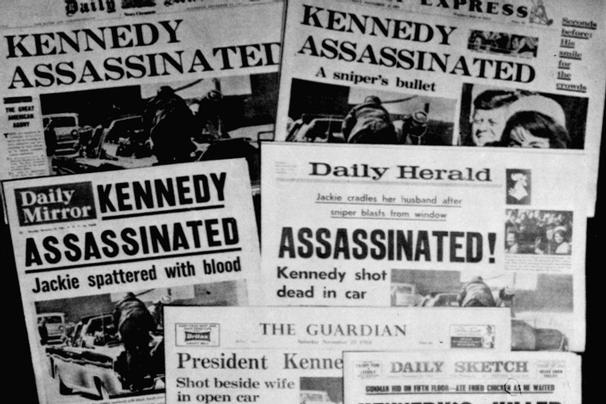
JFK4_606It will be fifty years tomorrow from that fateful day that by some accounts ended the innocence of the United States.  (Although that expression is thrown around too much as far as I am concerned – think 9/11).    To attach marketing to such a seminal event feels a bit nauseating to me but the plethora of retrospectives in television, print and digital are all about making money off the fascination that Americans have with JFK.   You don’t really think it’s about informing the public or bringing new light to an old controversy, do you?

Before you accuse me of being a total cynic keep in mind that I have fleeting memories of that fateful day – just before I turned 4 years old.  It’s one of my earliest memories.  And in truth what I remember is November 24th 1963 since the television (black and white of course) was on constantly after JFK was assassinated and that Sunday Jack Ruby shot and killed Lee Harvey Oswald as most Americans know.   I watched that happen live and it still plays vividly in my mind.     Later In school we watched the Zapruder film and spent what seemed to be a great deal of time discussing whether there was a conspiracy or not.   We grew up with the Warren Commission report, the Grassy Knoll, Texas Schoolbook Depository (where Oswald was employed).

Over the years several films have been made about JFK, his life, family, and of course the events of November 22nd, 1963.  I always expected that the 50th anniversary of that date  to generate renewed interest, nostalgia for a different time etc.  An article in USA Today highlighted that there are different events in Dallas and around the U.S. there are events commemorating the occasion – which to me seems a bit morbid to say the least.

All this is taking place under the headline of ‘honoring’ JFK.   Overall what I am seeing mostly is simply an opportunity to cash in on a defining moment in the history of the United States.  That hardly seems like honoring to me and I don’t like it at all.

How do you feel?

Posted in Marketing stuff | Tagged , , , , , , | Leave a comment

Will AOL’s Tim Armstrong ever find a way to make Patch.com profitable?

PatchThree years ago I posted that local newspapers needed to change to continue to be relevant.  Three years later not much has changed except that there are fewer local newspapers.   I thought that AOL’s www.Patch.com might fill the void (Tim Armstrong CEO for more than four years of AOL probably hoped so too), but that has not happened as Patch has yet to reach or even come close to reaching a significant amount of Americans.

Why has Patch.com failed to gain acceptance?   Mr. Armstrong has found great success with his stewardship of the Huffington Post after the departure of founder Arianna Huffington.  Earlier this month an interesting article on Mr. Armstrong in BusinessInsider.com (I admit I like this snackable content site) noted recent developments regarding the future of Patch (i.e. more layoffs of as many as another 1,000 employees).

Patch.com has such great potential but the inherent problems in obtaining reliable reporting for little or no cost continue to hamper the site’s ability to gain traction.  The platform has not figured out how to link with local reporters and newspaper editors without making them feel that their lunch is about to be eaten.   By the time Patch.com and Mr. Armstrong figure this out it may be too late for both Patch.com and local newspapers.

I still enjoy reading about the local news in my city – and I am far from alone in that regard.   What I don’t need is to have my local paper or Patch.com try to inform me as to what are the latest developments in Afghanistan or in Washington.   What I want is stories of local interest – like what store might be going in where the deli that just moved to another location in town.   Things like that affect me and my family directly, and only a truly local newspaper staff can report on things of that sort.  Even if that newspaper is not actually a paper but a digital newspaper that can be accessed on a tablet, mobile device or computer – I still am interested in that unique to my location content.

AOL’s Patch.com has all the ingredients in place to create a successful recipe for local news distribution.   How the high school volleyball team did last night, who won the spelling bee, how the weather is different in different parts of the city and how it compares to years past and the area in general.    A digital newspaper platform should, if anything, have too much content since there is no cost for newsprint and distribution.   That advertising on Patch.com is so overall weak that qualified reporters cannot be compensated enough to write for the platform is mind-boggling – and hugely disappointing. 

Will Tim Armstrong be able to fix Patch.com?   Is it even fixable?   


Posted in Best business practices, Communication, Community, Content Marketing, Newspapers | Tagged , , , , , , , , , , | 2 Comments

Singles Day in China and the future of Chinese brand development

Singles Day ChinaEarlier this week you might have heard about China’s incredible ‘Singles Day’ sales of not quite US $6 billion that occurred this past Monday 11-11.    Alibaba (full disclosure a recent client) has promoted this ‘holiday’ since 2009.  Last year on Nov. 11, Chinese online shoppers spent more in 24 hours than the $2.5 billion that Americans spent online on Black Friday and Cyber Monday combined. 

The scale of China and its market potential is at times truly staggering.   In addition at present there is only a 45% Internet penetration rate for Chinese consumers. While those numbers are staggering what can be forgotten is the idea of creating a day for singles to shop – an idea that smacks of marketing brilliance.   Talk about an underserved customer segment!

Yet the same day there was another article in the Wall Street Journal on Beijing weighing a bigger private role in state firms.  The article reported that “Reforming State-Owned Enterprises Has Been Thorny Because of Their Size, Political Clout’. 

This is perhaps even a more significant item since private Chinese firms are ill equipped to compete in today’s world marketplace.   Mainly due to the lack of understanding of risk – something we’ve encountered on a first-hand basis.    At long last the Chinese government has been forced to acknowledge that a competitive marketplace is the only way to create enterprises that can compete on a world stage.

What’s the connection between the two stories?   The Chinese are buying and ready to buy more.  But the Chinese are also ready to sell more in the world marketplace.   Within China creating consumer demand is a critical component to the future success of the Chinese economy.   I think equally important to the future of the Chinese economy is the growth and development of Chinese brands in the world marketplace.  There is a great deal of heavy lifting yet to be done as far as that is concerned.

How many Chinese companies can you name beside Alibaba and Lenovo?


Posted in Advertising, China, China Marketing | Tagged , , , , , , , , , , | Leave a comment

Welch’s and Mott’s – two separate American brands but yet so much the same

Welch's_logoMott's logoBeing a man of a certain age, when it comes to food I grew up in what consider to be an iconic age of American food brands.  Included in our refrigerator right now is a bottle of Welch’s White Grape Juice (albeit of somewhat indeterminate age), and a jar of Mott’s Apple Juice, (of equally indeterminate age).  Both brands seem to specialize in one thing – Welch’s primarily with grape juice and jelly products (Welch’s headquarters – this is no lie – are in Concord, Massachusetts), Mott’s primarily with apple juice and applesauce products.  I personally trust both brands to deliver a consistent and delicious experience.  The fact that they are both brands are more than 140 years old (Welch’s is 144 years old, and Mott’s even older at 171 years), surprised and somehow delighted me.

Of course I had to know more and learned that Welch’s Foods since 1952 has been by the National Grape Cooperative Association which is a cooperative of grape growers.  The Dr. Pepper Snapple Group under license handles distribution of Welch’s sodas (the fruit candies are licensed to a different group).  Mott’s is actually owned and operated as a separate unit of the Dr. Pepper Snapple Group.  It would not be surprising if Mott’s and Welch’s were often found not only in the same stores, but even on the same delivery routes.

So why don’t Welch’s and Mott’s combine operations?   Surely there would be some economies – possibly substantial economies, in combining the operations of these two iconic American brands.   After all, they appear to almost completely complementary.   True, Welch’s does make apple juice, and Mott’s does make an apple white grape juice (huh?) but I highly doubt either company would be giving up that much market share if they gave up producing and shipping their less well-known product.

Welch’s Foods was founded by Thomas Bramwell Welch in Vineland, New Jersey.  Welch’s 2012 annual sales were by one estimate near $650 million.

Mott’s was founded in Bouckland, New York by S.R. Mott, and today is headquartered in Plano, Texas the home of Dr. Pepper Snapple Group.   Mott’s annual sales are somewhere near $900 million reported before it was divested from Cadbury-Schweppes in 2010.  In fact Mott’s began as an apple cider and vinegar company and has tried to branch into areas such as vegetable juice in order to challenge V-8 (owned by Campbell Soup) – which come to think of it is another iconic American juice brand only 75 years old.

The overall performance of the packaged juice category itself has been rather flat for years. Yet with a renewed interest in fresh juicing there is opportunity as many people think more about juice more today than they have in years.

I’d love to work on a venerated juice brand like, Welch’s, Mott’s or even V-8.  I have lived with and used their products for years and think the opportunities in low-calorie juices – yes even boring old grape juice and apple juice, is extremely ripe!

Does it make sense for the operations of two (or three) iconic American juice brands to consider coming together?

Posted in Advertising, Brand Advertising | Tagged , , , , , | Leave a comment

After twenty years I have finally moved to Mac from PC – mostly

Mac v. PCPrior to moving full time this year to an office in midtown Manhattan I had been a dedicated PC platform guy.  I always have used and liked (and still do) Microsoft Outlook. Word, PowerPoint and Excel.    Sure we had Macs in my prior company for the artists but I was never even tempted to leave the PC platform for Mac.

In moving to my new office everyone – I mean EVERYONE, used a Mac.  It seemed silly to hold out based on some sort of principle.   Three months ago I got my first Mac.   It’s a good platform.   But my world has decidedly not been rocked.     This is despite the constant drumbeat from my colleagues on how much better the Mac platform is than PC, elegant, simple, non-crashing, secure (no viruses), etc.   The Apple acolytes at times can be Hari-Krishna-like.  I’ve used an iPod and IPad for quite a while and without a doubt the iPad has been the standard bearer for the best tablet since its inception.

News flash for non-Mac users, sometimes Macs do crash.   Safari is s decent web browser but I still prefer and use Chrome.    The Mac interface is intuitive although I am still struggling at times with things that disappear into the background and cannot always easily find things that I have saved.  That’s more of a function of my inexperience with the Mac platform than any issue with the platform itself.

The Mac platform continues to be the best and (nearly only) option for the art and design community.  Since we have so many people creating content and integrating video the Mac platform is the right choice for our team and having one single platform as opposed to mixture of Mac and PC made no business sense at all.

As any Mac champion will tell you, the Microsoft Office Suite of services works very well on the platform.  There are still issues with some software programs that claim to work on both platforms but actually function better on PC than they do on Mac (Quickbooks are you listening?).   But even those issues are being addressed and sooner than later all software will integrate seamlessly independent of platform.   Did I mention that Macs are always more expensive?    That’s a given and Mac (and all Apple) users proudly wear that as a badge of honor.   If that is not great branding I don’t what is.

The debate on Mac versus PC is not nearly as heated as it was when Justin Long and John Hodgman starred in the memorable Mac ads of several years ago.   The depiction was stark and there was evidence that in feeling sorry for ‘PC Guy’ Microsoft actually received some positives from an Apple campaign.    It was a snarky and smug campaign – the hill that Steve Jobs and Apple wished to preach from – and it was very effective.    I like my Mac.  I also like my PC laptop that I still use AND which works just fine after 6 years.

Is there any reason why I can’t like both?


Posted in Marketing stuff, Technology, Television advertising | Tagged , , , , , | 1 Comment

You’d miss Daylight Savings Time more than you think

DaylightsavingstimeIf you are extra-sleepy this Monday morning of November, you are probably blaming it on the ‘time change’.   The U.S. still adheres to the semi-annual moving of the clocks one hour forward on the first Sunday in April (spring forward), as well as moving the clocks one hour back (fall back) the first Sunday of November.

This year, I’ve heard more grousing and complaining about Daylight Savings Time, that the whole thing is just stupid, archaic, and should be discontinued.  I doth think people protest too much.   But if it did happen we’d have many new things about which to complain.   If you really wanted to complain about time you’d do well to move to China where for its own 3000 mile wide country (much like the U.S.), there is with one exception, a single time zone.   The exception is in the far west of China in Urumqi, proclaimed Ürümqi Time (UTC+6), two hours behind Beijing.   Were it not for this sunrise in Urumqi could be as early as 3:00AM in summer.

Many people believe that Daylight Savings Time was conjured up to help farmers be more productive.  While farmers may have benefitted, that in fact was not the reason.

I found a very interesting entry on Wikipedia:

“Daylight saving time was established by the Standard Time Act of 1918. The Act was intended to save electricity for seven months of the year, during World War I.[3] DST was repealed in 1919 over a Presidential veto,[4] but standard time in time zones remained in law, with the Interstate Commerce Commission (ICC) having the authority over time zone boundaries. Daylight time became a local matter.

During World War II, Congress enacted the War Time Act (56 Stat. 9) on January 20, 1942. Year-round DST was reinstated in the United States on February 9, 1942, again as a wartime measure to conserve energy resources.[5] This remained in effect until after the end of the war. The Amendment to the War Time Act (59 Stat. 537), enacted September 25, 1945, ended DST as of September 30, 1945. During this period, the official designation War Time was used for year-round DST. For example, Eastern War Time (EWT) would be the equivalent of Eastern Daylight Time during this period.”

Where you live in a particular time zone is also of significance.  Your latitude is important (Maine has longer summer days than does Florida), and the further west you live in a time the later the sunrise (and sunset)    For those of us in the eastern end of a time zone (like the U.S. East coast cities), without Daylight Savings Time sunrise in Boston at the summer solstice would be 4:07 a.m..   I can already imagine my early rising friends thinking about that 4:30AM tee-off time before work.  That the sun would set in Boston at 7:25 on the longest day would be less intriguing and as far as I am concerned, decidedly less useful.

Now that all Americans are on Standard Time (those wacky and innately rebellious Arizonans stand alone as the only U.S. State to deny Daylight Savings Time), we all face that first Monday evening where the sun will set seemingly in the late afternoon.   It’s depressing and portends what we all know is coming – the shortest days, the coldest nights that constitute winter.  

However with even more anticipation I so look forward to that first Sunday night in April when the clocks move ahead and sunset goes from 6PM to 7PM and summer is in the offing. 

I’d surely miss Daylight Savings Time if it were discontinued.  How about you?   

Posted in Living in the World Today | Tagged , , , , , | 3 Comments