5 reasons why it’s worth saving the U.S. postal service – after blowing up the old model

On Wednesday the USPS announced that as of January 1 the price of a first class stamp will be $0.45 (up from $0.44 for those of you that might not be familiar with the cost of mailing a letter in the United States). There has been much written about the declining fortunes of the United States Postal Service (USPS) and coincidentally (or not) an article in yesterday’s Chicago Tribune entitled ‘Can the postal service be saved’ http://trib.in/nf7FMK , caught my attention.

My first thought was, should the postal service be saved? Callous I know, but an organization that has changed not nearly enough in over 200 years will no doubt be difficult if not impossible to ‘fix’.
My subsequent thought was – what would be the reasons it would even be worth trying to save the postal service? Here are the few I came up with.

1) Experience. The postal service has the most experience in delivering to nearly all Americans where people and businesses are as well as the optimal routes to get there.

2) Costs and Service. The postal service delivers for Fedex and other third parties. Without the USPS, pricing for those third party services would no doubt increase and likely their service would be impacted negatively.

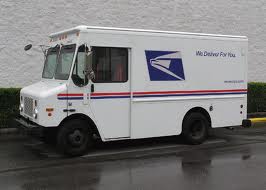
3) Avoid increasing U.S. unemployment. With 9.1% reported unemployment putting the remaining (as the USPS has shed more than 200,000 jobs over the past several years) 500,000+ employees on the street at this time would be devastating. The USPS is the second largest civilian employer in the country (after Wal-Mart). However the impact would be much more substantial than that as there are an additional 3.1 million people indirectly employed in jobs affected by direct mail marketing http://bit.ly/ptSGuA.

4) Trust. The postal service is a trusted institution. Americans by and large trust the postal service to deliver mail accurately and efficiently. That cannot be said of many U.S. institutions recently. When you compare mail delivery in the U.S. to that of other countries, the USPS fares quite favorably.

5) Opportunity. Although it may not always be apparent there are opportunities for the local post office to offer additional services – driver’s licenses, car registrations, passports – are just a few of the adjunct services that could be added.

Why do I say blow it up first? It is written a bit in jest but a bit seriously as well. I could have as easily written a post offering 5 reasons the postal service should be shut down. Like an archaic model built 200 years ago that has too many vestiges operating today. Or the fact that the postal service has been used as a civil service pasture for veterans and others but they’ve not been given the training to compete in today’s and tomorrow’s economy. I could go on. But at the very least a complete overhaul needs to occur in order for change to truly take hold.

Postmaster General Pat Donahue is saying some very right things – but will the postal service survive long enough to implement them?
Posted in Best business practices, Living in the World Today | Tagged , , , , | Leave a comment

Power cord madness – I can count the ways

People that travel a great deal are keenly aware of always bringing their requisite power cords for their various portable technology devices. I can tell you that at any given time in our kitchen we have numerous power cords plugged into various devices like mobile phones, iPods, eReaders, and Bluetooth devices. Fortunately our laptops are not kept in the kitchen.

For several years now there have been ‘Universal’ battery rechargers available on the market. Universal might be overstating the case. Many of them do not work across platforms such as Apple to PC devices, so at the least there needs to be two Universes.

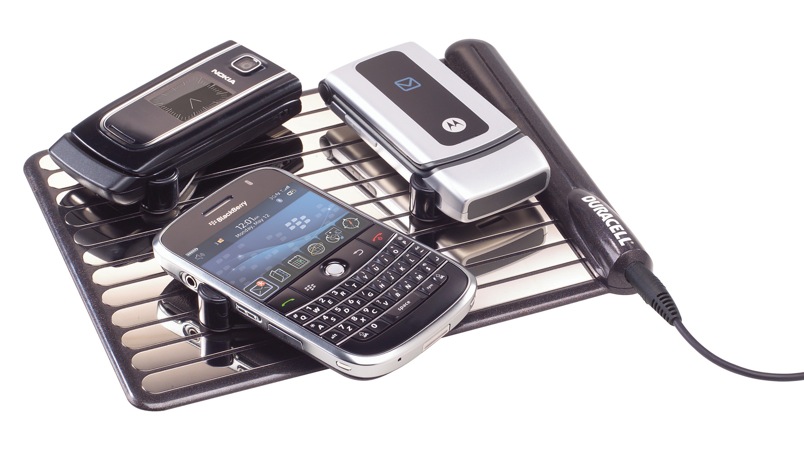
There are solutions on the market such as myGrid from Duracell (of course there is one for PC based devices and one for Apple devices) which offer the opportunity to charge multiple devices at one time. I have yet to try one but am quite ready to give something like myGrid a try in the interest of tearing down what I call spaghetti city when it comes to all our power cords gathered together. I wish they were a little less expensive as $ 75.00 is a pretty steep price to pay.

When I did a recent search on rechargeable battery pads I was surprised at the lack of choices in the category. It’s difficult for me to believe that my frustration with all the power cords I have to carry with me when I travel is not…universal.

Batteries that only last 8 hours or less are also really annoying. That is no doubt universal. And it does not matter whether you are an iPhone, Droid or Blackberry fan. It’s mind-boggling and aggravating that during a day of what one would consider ‘normal’ daily use battery life remains an issue. I realize it is somewhat difficult to keep weight down in portable devices unless the battery is kept to a smaller size but we’ve been waiting too long for that particular problem to be solved.

How do you deal with the power cord madness and does it bother you?

Posted in Innovation, Living in the World Today | Tagged , , , , | 1 Comment

Is Blackberry standing at death’s door?

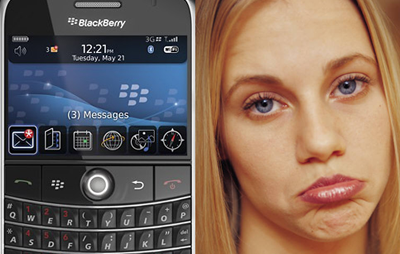
Like so many RIM – Research in Motion – BB users, last week’s worldwide Blackberry outage was a big inconvenience for me. I was traveling and even more reliant on the efficacy of BB’s email platform. A by-product was that for whatever reason the lack of messages was somehow combined with a fast depletion of my battery power so that for a time I could not even make telephone calls. Thoughts of iPhones and Androids were dancing before my eyes.

I’ve been a BB user for more than ten years. Most of us that are BB aficionados defend the lousy platform as being acceptable because the email is excellent as is the telephone. Conversely BB web browsing is slow and clumsy and the Apps are the worst of any of the smartphones.

I was with a friend on Sunday and he too claimed to have been a BB addict for almost fifteen years. He now has an iPhone and has for the past year. He noted that the iPhone telephone is terrible but email was ok, but his most interesting observation is the iPhone is a small version of an iPad. That something I’ve not heard anyone say that before.

My friend also noted that in 2010 at a friend’s daughter’s sorority rush all the ‘sisters’ have to throw their mobile devices into a pile and cannot use them during rush. Of the 38 devices 37 were Blackberrys. This did not surprise me as my own daughter who is a freshman this year has a BB and her primary reason for getting one was the BB Messenger service – immediate and ‘free’ texting. However he added that this year in 2011 of the 35+ phones – only one of them was a BB and the rest were iPhones. In his opinion BB is already dead since once the younger set rejects the BB platform they are truly going to be toast.

BB has been espousing its new forthcoming operating system (QNX – pronounced CUE-nix) including an entire new generation of Blackberrys. We’ve all seen what a disaster the BB Playbook tablet has turned out to be. So to say I am skeptical would be an understatement. The New York Times had an article about Blackberry today – http://nyti.ms/pp1J93 – I did not know whether to be optimistic or pessimistic after I read it.

Another friend of mine last week showed me his BB Torch (he is an email junkie like me) as well as his new Samsung Android i997 – a big touch screen, thin and fast web-browsing smartphone. And it was only $ 99. For him carrying two devices makes sense. I don’t think I could carry two phones around with me all the time.

As usual whenever I write about Blackberry, or any non-Apple platform all the Apple acolytes chime in that I am totally missing the boat. They say that the iPhone (particularly with the new 4S and Siri – a true world phone they aver) is the only way to go. However I also hear snippets that iPhone email can be problematic and that the phone is the weak link, while the Apps are fantastic and web-browsing is great. Since I primarily use my smartphone for email, telephone calls and THEN web-browsing and Apps, I remain unconvinced.

Posted in Best business practices, Communication, Innovation, Mobile Communication, Technology | Tagged , , , , , , , , , , , | 3 Comments

The Mobile Office Makes Airline Delays Easier to Endure

As I enter hour number three of an anticipated 6 hour wait after my flight was canceled due to ‘Air Traffic Control’, I am comfortable, able to work on my laptop and have made several telephone calls to clients and team members while sitting in an airline club lounge. Five years ago it wasn’t nearly as easy. In fact I would argue that I am in some ways more productive not being in the office. And I am far from alone as I look around and see that nearly everyone in the club lounge is on their laptop or tablet (ok mostly iPads) as well as on their mobile phone.

This week I’ve been on the road for three days visiting clients, associates and friends (as often now they are one in the same). Throughout the day I check email and phone messages from my smartphone and then at some point I head back to my hotel room in order to log on to my office desktop (we use gotomypc.com) to read and answer longer emails as well as write blog posts.

When I travel to Asia I am as connected as I want to be. I receive emails and text messages in real time (12 hour difference) and can get an internet connection virtually anywhere I am. There are people I know who remark that it must be exhausting and stressful to be that connected, but for me it is a stress-reducer and I am at least content that I am getting done remotely what I would have been doing in the office.

As recently as fifteen years ago a flight delay meant going to the newsstand to buy magazines, newspapers, or books and whatever else you could find to read in order to pass the time. Flight delays are still aggravating, inconvenient and sometimes even worse when they cause important meetings or events to be missed due to circumstances beyond control. However with the ability to work effectively from remote locations flight delays are not as bad as they once were.

Anyone that flies as much as I do knows that planes (or equipment as the airlines like to call them now) are filled to capacity with increasing frequency. Delays are part of the deal. If a flight is canceled it can be a challenge to re-book since there are so few open seats to begin with.

Of course I wish that I were already back home, but since I do not have a meeting or event to attend once I finally do get there the fact that I can work and conduct business independent of my location makes a 6 hour delay much more bearable.

Are you also more able to just roll with the punches delivered to travelers?

Posted in Best business practices | Tagged , , , , , | 1 Comment

The NBA work stoppage – Pro Basketball may not live to regret it

When I wrote about the NFL work stoppage http://wp.me/pJX7l-qv (i.e. lockout) that ended in time for the current season I was optimistic that NFL owners and players saw the forest for the trees and would come to an agreement in time. They did and Americans (and non-Americans for that matter) continue to be able to watch and enjoy what is their favorite television sport.

I also commented that I was worried that the NBA owners and players would not be as smart about having a work stoppage. Now that it has turned out to be the case (yesterday NBA commissioner David Stern canceled the first two weeks of the regular season), the NBA could very well be on its way to a catastrophic turn of events.

The last NBA work stoppage (lockout) was in 1998-1999 with the season being delayed until January 6 and being limited to 50 games. The NBA did recover by most people’s scorecards. But this time it likely will be different. The issue at hand is primarily – what else – money. The $4 billion pie is currently carved up with 57% going to the players and the balance going to the owners. The owners want a 50% or less take for the players citing that 22 of 30 franchises are losing money. The players are willing to take less than the 57% but are not close to agreeing to a 50% or less split.

While the millionaire’s basketball club fights, the NBA’s primary market – the United States – is yawning. I am sure fans of the current NBA Champions Dallas Mavericks want to see if their team can repeat, but many NBA fans are not paying much attention to the proceedings.

For years even casual NBA fans will tell you that there’s no need to watch regular season games until the last five minutes of the game. That can be true of NBA games seen on television but from my experience seeing an NBA game in person is a great experience and very different than watching on television. To see the power and grace of these amazing athletes in person cannot be appreciated nearly as much even in HD.

It also seems to me that college basketball is more popular than ever – in particular outside of cities like New York, Boston, Chicago and Los Angeles. Because the NCAA Men’s college basketball tournament is such a popular event, college basketball could take up a great deal of the void left by the absence of professional basketball. There are so many more college basketball games on television today as compared to what was the case in 1998.

The other huge factor in differentiating the 1998-99 NBA Lockout from the one that has begun this year is the internet. In 1998 Facebook, YouTube, Hulu, streaming video, and other social networking sites, failed to exist. The point is that people have so many other things to do with their time now as compared to a mere 13 years ago.

Will you miss the NBA? When they play again will you be in a hurry to watch again?

Posted in Best business practices, Entertainment | Tagged , , , , , | 3 Comments

The never ending recession

Yesterday (October 9th) was an anniversary of sorts. In 2007 on October 9th the Dow Jones reached the highest level it has ever recorded closing at 14,163.53. At the start of business four years later the index is 11,103.12. For those interested that’s a 27.5% reduction in value.

There are many ‘experts’ that said the United States recession began in December of 2007. Those same experts generally called the end of the recession for June of 2009. Economic recession is often categorized as beginning when industrial growth begins to contract and ending when it begins to grow once
again. At least that’s what it means in the technical sense.

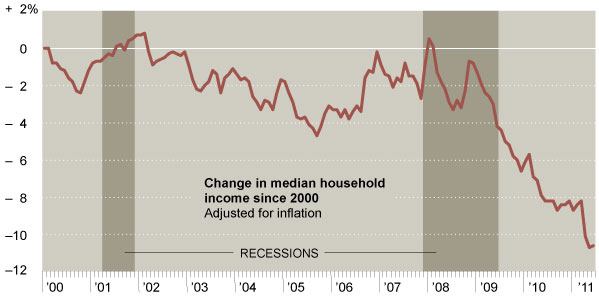
Throughout the period those Americans who have been down-sized and laid-off have found it increasingly difficult to find new jobs. It wasn’t as if there was an upturn in June of 2009 where people who were unemployed all of the sudden were able to find jobs. In my opinion this recession (or whatever one might term it) is one long unending event representing what (sadly) might be considered a ‘new normal’.

In general I’m a very positive person. I tend to not allow my mood to swing based upon reported economic news. I would no more be buoyed by a 3/10 of 1% drop in the national unemployment rate than I would be depressed by a similar increase. Nobody has to tell me that times are difficult, people are nervous and uncertain, and leaders in general are groping for the ‘right’ answers.

One thing that is of interest to me the most is the concept that economies need to consume more in order for true economic recovery to take place. That goes for more than just the United States. Consider China – a country where individual savings of its citizens is considered to be too high for its own good.

The growth engine of Chinese government investment that has stoked China’s rise could be running on fumes as Chinese banks have been lending people’s savings for a multitude of state projects. What the world appears to be hoping for is that the Chinese people begin to spend that saved money in order to help bolster the world economy. I find that concept to be bizarre don’t you?

The recent ‘Occupy Wall Street’ protests in cities around the United States underscores people’s frustrations with what they consider to be the elite 1%. While I understand people’s frustration I don’t understand a protest that has no defined outcome.

What if the current state of the U.S. and world economy is beyond the reach of policy changes and stimuli? While hope springs eternal, it might make more sense to come to grips with the idea that things may not get worse, but they also may not get much better.

How would that make you feel?

Posted in Living in the World Today | Tagged , , , , | Leave a comment

Why isn’t there a current advertiser tab on newspaper and magazine website home pages?

While I was thumbing through the newspaper this morning (yes the analog printed version) I was again thinking about switching to a tablet or e-Reader subscription when our current subscriptions expire. As I moved through the paper I noticed the advertisements – full page, half page, quarter pages and the like. If we choose to go the digital subscription route the ads that we have become so accustomed to seeing would no longer be available.

There are digital ads of course – on the right side, on the header, home page take-over’s, pop-ups (if allowed), even within the content itself. But the large full page ‘interruptive’ advertisement would be no more.

It then crossed my mind that on newspaper and magazine home pages there should be a tab of current issue advertisements. This would create additional value for the advertiser and act as a nice sales feature for the advertising staff.

For example, let’s say you are reading the newspaper and saw an advertisement while riding the train. You are interested in the product but don’t care to tear out the page from the newspaper. You could then access the website from any device and scroll down the list of advertisements for that day’s/week’s/ or month’s issue.

No doubt publishers would be tempted to charge an additional fee to their advertisers for this ‘added’ exposure. However that would defeat the idea of offering additional value to expensive on-page advertising buys. An added benefit is that advertisers would gain insight as to reader engagement of their ads when they were viewed online.

All I am suggesting is a small tab on the publisher home page creating additional value for advertisers.
Good idea or dumb idea? If a dumb idea why would it be such?

Posted in Advertising, Marketing stuff | Tagged , , , , | Leave a comment

Apple’s not new iPhone – Tim Cook drops a dud

Steve Jobs has ceded his CEO status to Timothy D. Cook. Apple aficionados (I do not count myself among them) were more than eagerly awaiting what they thought would be another watershed event – the unveiling of the iPhone 5. On Wednesday October 4th Mr. Cook introduced….the iPhone 4S. Huh?

Virtually indistinguishable from the iPhone 4 but billed as a ‘new’ version, the iPhone 4S comes with a so called virtual assistant ‘Siri’, that recognizes voice commands. I looked at Siri and thought – Iris spelled backwards. What does that mean? Having voice commands does not seem all that new or revolutionary to me.

Apple says it is packed with better technology, including a more advanced camera. It also includes a more powerful chip known as the A5, the same microprocessor that acts as the brains inside the iPad.
The company also said the new phone would run on two kinds of cell phone networks, GSM and CDMA, allowing it to operate worldwide – which is only something new for Apple since many other smartphones have been able to operate on both networks for years.

Thankfully Mr. Cook did not try to copy the black mock turtleneck and jeans look displayed by Mr. Jobs. The ‘new’ phone will be available on A T & T, Verizon and Sprint. Maybe the bigger news is that the now ‘older’ iPhone 4 will drop in price to $ 99 from $ 199 if customers commit to a two-year contract.

Apple has come out with a new version of the iPhone each year since its initial release in 2007. So Mr. Cook HAD to come out with something to stave off what would be inevitable questions of how different things would be ‘post’ Mr. Jobs. Unfortunately there were many more questions raised by the release than were answered. The iPhone remains the most important product for Apple as it is responsible for nearly half the company’s total sales.

There’s no question Steve Jobs will be sorely missed at the world’s largest company (measured by market capitalization). However, I can’t help but feel a little sorry for Tim Cook’s desultory debut as the lead dog. Mr. Jobs is very sick and his sudden departure no doubt caused a huge ripple effect as well as a change in plans for future releases of Apple products. I cannot imagine Steve Jobs having a press conference to announce such a boring and ho-hum upgrade.

Agree or disagree?

Posted in Communication, Innovation, Mobile Communication, Technology | Tagged , , , , , , , | 2 Comments

The metamorphosis of Hyundai – a study in changing brand perception

In the 1960’s the phrase ‘Made in Japan’ was not a positive one. At the time Japanese manufactured products such as televisions and transistor radios were known to be cheap and likely to break or break down. The Japanese worked hard to change that perception by making quality goods and imbuing the latest technology in their manufacturing processes.

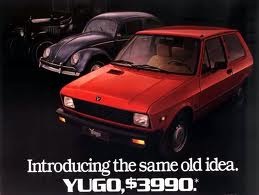
South Korea’s Hyundai Motor Company http://www.hyundaiusa.com was founded in December of 1967 – a fact that actually surprised me since I only recall hearing of Hyundai when it introduced the Hyundai Excel in 1986 (I was actually also surprised it has been twenty-five years already). The early Hyundai Excels were a slight step up from the horribly rated Yugo which was introduced in 1985, but in my mind they were pretty much lumped together as cars that were cheap, and ones that I would never purchase.

By 1988 the Yugo had virtually ceased being sold in the United States. Today Hyundai is one of the world’s more trusted automobile brands. In my mind it is one of the more impressive brand story turnarounds in history. Hyundai’s Elantra and Sonata are so popular that there are actually backlogs of several months for certain colors of those models.

Hyundai accomplished this by focusing on making reliable, smart looking vehicles that were affordable to the American public. Now people spend more than $ 30,000 for some Hyundai Sonatas and are happy to do so. The expectation is that when purchasing a Hyundai you are getting a reliable near-luxury vehicle at less than luxury car prices. Additionally Hyundai is not falling into the trap by attempting to churn our cars faster and faster to take advantage of its now positive market perception. In fact Hyundai appears to be doing the opposite, holding back production to be sure it maintains its new image for quality while creating an even greater demand for its cars.

To me Hyundai’s restraint is one of the most interesting things. Too often investors in companies once they smell an opportunity to cash in, push their limits, and in so doing create more problems than they solve and actually commoditize their own efforts (think flat screen televisions for example).

I don’t drive a Hyundai but have rented one and would consider it for a future purchase. I hope Hyundai can stick to its current conviction.

It’s difficult for me to recall another brand story turnaround quite like Hyundai. If you have any please share them.

Posted in Advertising, Communication, Customer Experiences, Marketing stuff | Tagged , , , , , , | Leave a comment

Amazon’s Kindle Fire – remember it’s only 1.0

Amazon.com CEO Jeff Bezos presented the new Amazon Kindle – called ‘Fire’ this past Wednesday in New York. I’ve written much about the Kindle in general and had not planned to write about it particularly since yesterday’s unveiling offered few if any surprises. We knew there would be a 7 inch color screen, a touch screen, Wi-Fi internet access and a 30 day free trial for Amazon Prime (which includes unlimited, instant streaming of over 10,000 movies and TV shows and free two day shipping on millions of items) which if consumers do not opt out it will be an additional $ 79 renewable ‘gift’ to Amazon that would keep on giving year after year – Mr. Bezos is a smart guy indeed.

Besides access to Amazon Appstore, the Kindle Fire will include a cloud-accelerated “split browser” called Amazon Silk, free storage for all of the user’s Amazon digital content in the Amazon Cloud, built-in email app that gets webmail (Gmail, Yahoo!, Hotmail, AOL etc.) into a single inbox.

We also knew there would be no cameras (unlike the iPad), and no 3G or 4G network access (iPad’s have 3G and Apple is planning 4G access). The Kindle Fire 1.0 does not seem to me to be the iPad killer. The sale price was a bit of a mystery although most experts predicted $ 249 or less and it came out at $ 199. Amazon also released pricing plans for its entry-level black and white Kindle at $ 79 which makes it the least expensive e-reader on the market.

In releasing the Kindle Fire in front of the 2011 Christmas season at what appears to be close to its manufacturing cost, clearly Amazon is banking on increased sales of digital music, videos and books as well as other content if it is to make the new Kindle platform a winning one. The iPad (at more than twice the price) will continue to appeal to those that have the ability to afford it, and are desirous of the larger screen (a pain in the neck to carry around as far as I am concerned) and Apple App Store.

Other tablet makers as well as the Barnes & Noble Nook have great reasons to be concerned. The RIM (Blackberry) Playbook tablet is already gasping for air and the Kindle Fire will likely snuff it out completely. I believe sales of other popular Android based tablets (Galaxy, Xoom etc) will be impacted since there truly is another non-Apple alternative. If the Kindle Fire is not the iPad killer it may turn out to be the killer of many other tablets.

It’s also possible that the market for tablets could be split into two – a premium market headed by the Apple iPad and the everyday (lower end) tablet that is affordable to so many more people. It makes me wonder how many people will decide to own both devices. After all – does owning an iPad preclude one from buying and using an Amazon Kindle Fire?

As a serial early adopter I likely will pick up an Amazon Kindle Fire – 1.0. I still don’t have an iPad although I’ve used one several times and it is a great and cool piece of technology. I have and actually use my original Kindle and it still works fine. But many times since I bought the original Kindle I have wished that I waited for the 2.0 version which has been out for quite some time now.

Amazon would never tell but my burning question is how long will it be until the improved version of the Kindle Fire comes out? I can hardly wait. And that’s the problem.

Posted in Best business practices, Customer Experiences, Innovation, Technology | Tagged , , , , , , , , , , , , , , | Leave a comment