Opposing Forces

Opposing Forces.   Thoughtful post from my partner @ocddavid

Posted in Uncategorized | Leave a comment

Are LinkedIn and Twitter anti-competitive?

social_media_monopoly_board4Linked In was in the news yet again this morning after yesterday’s news that Linked In had more sales, made more money, but its growth arc may be flattening.   Consequently the stock price took a hit after-hours as attention is also now being paid to Linked In’s recent 73x P/E ratio.

Twitter was also in the news ahead of its planned IPO on November 7th (oh I am tempted – oh so tempted as I have missed the boat on Facebook and many years ago had a position in Amazon which I was convinced to sell prematurely.  Grr.).  Twitter announced that photos/images will now be able to be seen without having to click out, in so doing this will add visual content to the Twitter stream to enhance the user experience.   Interesting timing no?

That Linked In can be both profitable and continue to add revenue streams yet be less appealing to investors is the way of Wall Street.   Linked In has become all-powerful as the go-to platform for business.  If I were an investor in Linked In (I am not) I would be more concerned about the prospect of the ‘M’ word being used to describe it – Monopoly.   Remember www.Plaxo.com?  It tried to be an alternative to Linked In, (it was founded in 2003 before Linked In) failed miserably, and today is a glorified online address book at best.   Why has there been nearly no competition emerging to challenge Linked In?    The paid services offered by Linked In are hardly a pittance.   There is a platform in Asia I sometime use called www.Ushi.com and it looks and feels a lot like Linked In but it can hardly be seen as a threat or competitor.  With no competition on the horizon, now that Linked In is a publicly traded company will the SEC begin to look at LinkedIn as being anti-competitive?

And what of Twitter?   Twitter still does not make any money, yet expects to raise as much as $12 billion in its upcoming IPO.  You can argue that there is competition for Twitter from platforms such as www.Facebook.com and to a lesser degree other (SMS) short message services (i.e. www.Instagram.com, www.Snapchat.com, www.pinterest.com, and in China, the giant www.Sinaweibo.com) , but since Twitter does not make money there cannot be any anti-competitive concern – for now.

And while I’m at it Facebook also has some Oz-like properties – all-powerful that is.  I would not be surprised if the SEC looked at Facebook as being possibly anti-competitive.  Think www.myspace.com.

What do you think about publicly traded social media companies and the possibility that they may be seen as anti-competitive and monopolistic?


Posted in Marketing stuff, Social Media | Tagged , , , , , , , , , , , | Leave a comment

Don’t be fooled – inertia is a powerful force

inertiacat inertiaNewton’s first law of motion is often stated as:

An object at rest stays at rest and an object in motion stays in motion with the same speed and in the same direction unless acted upon by an unbalanced force.

Inertia is the resistance of any physical object to any change in its motion (including a change in direction). In other words, it is the tendency of objects to keep moving in a straight line at constant linear velocity, or to keep still.   In your business and professional life inertia plays an important role.

Think about your professional relationships and opportunities.  The longer you go without seeing someone the easier it becomes not to call or contact them.   The same is true of the all too common business opportunity which begins with that promising first meeting or phone call, yet over time devolves into an attempt to stay in contact which becomes more half-hearted as time passes.   The status quo becomes easier to maintain than it is to change.

I read an interesting post from Pressed for Time regarding being careful of business inertia:

The law of inertia also applies to our emotional and intellectual life.  Did you ever decide that you were going to change something in your life once and for all, only to find that without realizing it, you slipped back into the same pattern again?  We all get stuck in a rut sometimes. The trick is to exert enough consistent force to be able to overcome inertia and create lasting change. And the key to this is time and consistency.

21: the number of days to change a habit.  That means it takes time and consistency to overcome inertia and affect change.

To change inertia we need an outside force, “something different”.  Here are the four things to do differently.  If you’re a strongly self-disciplined person the first three items will help change your inertia.  If you’re like most of us, the fourth item is mandatory and the key to success.  

  1. Write “it” down with deadlines – What your “its” are, and how many you have, are up to you.  They must be specific, attainable and written down.
  2. Review them daily.  Tape your goals and action items where you’ll see them.  Let them stare you in the face: guilt can be your friend.  Most of our New Year’s resolutions go by the wayside because it’s so easy to hide from them.
  3. Work.   Change takes work, which is usually difficult and easily avoided.  Be consistent and know that change takes time.
  4. Be committed and brave enough to share your goals with someone who will hold you accountable.

The tips on how to combat inertia are both simple and wise.  The one about sharing the goal with someone else who will hold you accountable is the bravest and most important.

What do you do to combat personal and business inertia?

Posted in Best business practices, Career Development | Tagged , , , , | Leave a comment

Supercell is the latest fast rising online game fad company

supercellFollowing is an article from last week’s Wall Street Journal that I found extremely interesting as it relates to the ‘faditzation’ of mobile games. (I have edited it only slightly.)

‘Last week on October 16 Japan’s  Softbank Corp. agreed to buy 51% of the Finnish company Supercell, which has two games and just 100 employees, for $1.5 billion. It is the largest ever investment for a mobile-app company, according to Rutberg & Co. Two of Supercell’s co-founders stand to make more than $200 million apiece.

The investment in Supercell is another cog in SoftBank Chief Executive Masayoshi Son’s sprawling empire, which now includes SprintCorp.’s.  Supercell will be paired with Gungho Online Entertainment to enlarge SoftBank’s stable of free-to-play mobile games.


Supercell co-founders Ilkka Paananen, left, and Mikko Kodisoja at its offices in 2012. Agence France-Presse/Getty Images

But it’s risky: Zynga Inc., a U.S. social-games maker that went public in 2011, has a market capitalization of $2.8 billion, down about 60% from its debut. Its prospects faded after it failed to create a convincing successor to its “Farmville” franchise.

Supercell is among an army of new firms to quickly generate significant value and disrupt mature industries by latching on to new distribution systems such as Apple Inc. app store and Facebook Inc.’s network. But unlike many of its peers, including Sweden’s streaming music company Spotify AB, Supercell is profitable.

The company serves as a poster child for the burgeoning “freemium” game distribution strategy. It allows players to download and play titles for free in apps stores, but it requires them to pay for extras, such as special weapons or power boosters that speed up a game’s play.

About 10% of Supercell users purchase in-game extras, much higher than the industry norm. Last year, the company made a profit of more than 40 cents on every $1 of goods it sold, or $40.3 million on sales of $105 million.

Supercell’s success has come with only two games on the market: “Hay Day,” an app that simulates farming, and “Clash of Clans,” which simulates combat. Both debuted last year on Apple’s iOS and “Clash of Clans” was recently launched on Google Inc.’s Android in a move aimed at better targeting Asian markets.’

Whether it is Zynga, Supercell or King. Inc (maker of the wildly popular Candy Crush), the new standard seems to be to cash in and on the fad wave since they are, fads.  That is to note that they will not last.  Everyone knows that and yet people still get excited enough to invest since catching the wave at the right time can turn some tidy profits.  But it’s a timing game that the average investor is unlikely to ever win.

Would you invest in any of these fad-based companies that claim they are technology companies? 


Posted in Best business practices, Innovation, Media, Mobile Communication, Mobile Gaming | Tagged , , , , , , , , , , , | Leave a comment

The Direct Marketing Association Annual Convention – DOA?

DMA 2013 conference logoI have attended more than twenty Direct Marketing Association conferences.    But I gave up going to the conference two  years ago after my then-company won a DMA Innovation award for a Twitter campaign at the 2011 DMA Boston event.   Four years ago I posted in October of 2009 on the future of the DMA itself, nothing has happened since then to change my opinion on the ultimate demise of the DMA itself.   I take no pleasure in that possibility but more for nostalgic reasons than any others.

This year’s show ended last week and like 2012 I did not attend.  In truth I never ever really considered going.  Several of my colleagues deeply entrenched in direct marketing inquired if I was going to ‘be in Chicago’ as if there would be no other reason to go other than to the DMA conference in mid-October which has had Chicago in the regular rotation of conference venues for many years.    I told them all that I was booked with client work that week (absolutely true), and I would miss seeing them (also true) and to send my best regards to all the longtime attendees that were still attending.

After the conference ended last week I happened to run into a colleague who had attended and he told me that as recently as just a few of years ago there were 10,000 attendees at the DMA annual conference.  This year the number was more like 3,000.   Even if the numbers are skewed, they still indicate that the interest has dwindled.    He also noted that there were very few young professionals at the conference (a fact about which everyone that attends is well aware), and there was a lot more gray hair around as a percentage of attendees than ever before.

You’ll find few greater champions of direct marketing than yours truly.  I love the immediacy of direct marketing, the creative challenges associated with it and most of all the measurability of it.   There are still a substantial number of extremely successful direct response focused companies.    Yet in the digital age of marketing in which we all reside, it’s vitally important to understand the intersection of direct marketing as well as brand marketing principles.   I don’t believe that one can any longer survive without the other.

Being a longtime direct marketer I too was much too smug in eschewing the value of brand due to the difficulties in measuring that value.   I was not the only direct marketer with that attitude.   At the same time brand marketers have become less dismissive of the value of direct marketing as they seem to have found a ‘secret sauce’ called campaign measurement.  It remains difficult (but not impossible) to properly attribute and measure the effectiveness of brand campaigns on television, radio, outdoor, and print.   But the measurement tools we use as they relate to brand campaigns are improving all the time.

Digital marketing has created the bridge between direct and brand marketing and the DMA has clearly missed that boat.    At best the DMA’s own ship is taking on water and may be beyond being saved.    At worst, well what’s worse than DOA?

Did you attend this year’s DMA annual conference?    If so what did you think?


Posted in Direct marketing | Tagged , , , , | Leave a comment

China Skinny does a good job curating China content

China Skinny logoOne of my new favorite China information sites is China Skinny It is a collection of stories related to marketing and lifestyle development in the Middle Kingdom.   The variety of stories is very good and I almost always find more than a few things about which to read and learn.

This week China Skinny cited an article (you can find the link below) that the Chinese version of the popular US show “The Voice” is the #1 television show in China (ironically the article was from the Wall Street Journal on September 19 even though I read it every day (somehow missed this article).  Apparently each week 70 million Chinese tune in to watch their now favorite show.   The reason for the show’s success is much the same as it is in the United States – the fact that the judges must judge entirely on the sound of the contestant’s voice before they see what they look like.   Chinese television audiences are very suspect of inauthentic programming.  Still 70 million weekly viewers in the United States approaches Super Bowl numbers – on a weekly basis!

Another article on mobile phone hardware company Xiaomi shed new light on the plan for the sensational growth of this budget handset maker.  Making a smartphone for $100US is no small accomplishment.   Making one that people actually want to buy and use is another.

China Skinny has  sections for a number of categories as depicted below:

Chinese Consumers

Chinese Consumers Shift To Lifestyle Brands, Engage In Price Arbitrage; High-End Luxuries Most Affected, Says Credit Suisse: Tori Burch, Kate Spade and Michael Kors, as well as lifestyle-oriented brands like Vans, have stronger relevance for these younger Chinese consumers than brands such as Louis Vuitton and Dunhill. 30% premiums for foreign luxury goods are likely to drop to 10-15% before converging with global pricing according to Credit Suisse.

Unleashing the Chinese Consumer: With the rising Chinese consumer, the biggest winners exporting to China are likely to be food and agriculture, environmental equipment, financial services and other services, such as health care, education, tourism and transportation.

Amway Bankrolls Harvard Course For Chinese Cadres: China has been Amway’s top market for the past 9-years, accounting for 40% of global revenue. The company pays commission of up to 27% and has brought more than 500 Chinese leaders to Harvard on a fellowship programme, with leaders of three provinces amongst former fellows.

Internet, eCommerce, Mobile & Social Media

Xiaomi’s Budget Smartphone Redefines What You Get for Just $130…: ¥799 gets you a lot of phone in China these days, which will only help bring more mobile marketing opportunities to the masses. 100,000 sold in 2 minutes and 5 seconds.

HTC Edged Out by Xiaomi in China’s Smartphone Market: Poll: Samsung is the most popular mobile in China with 21.5% of China’s mobile market – 66% of consumers would like to buy one. The one to watch is Xiaomi, which has 7.1% market share, but 75.1% would like to own one.

China’s smartphone shipments to exceed 450 million in 2014: IDC: Smartphones sales in China are expected to grow 25% next year to 450 million, including an expected 120 million 4G devices.

Apple Kowtows to China’s censors; Removes Circumvention App: Apple knows it’s in the best interests of stakeholders to keep the Chinese Government happy and has removed an app from the Chinese app store that allows Apple users to circumnavigate the Great Firewall.

China’s Online Retail Turnover Rocketed 70% YOY To 880 Billion Yuan In 2013 H1: The number of online shoppers in China grew 29 million, or 12%, to 271 million in the first half of 2013.

Alibaba, Baidu, Haier ‘most admired’ companies in China: Chinese consumers love tech companies: Alibaba is the most admired local company in China, followed by Baidu. Haier comes in at number three. Just three years after it was founded, Xiaomi is the 11th most admired.

China Employs Two Million Microblog Monitors State Media Say: In addition to a slew of automated tools, the Chinese Government has more than two million employees, monitoring, analysing, reporting, deleting and black-listing public opinion online in China. That’s one for every 245 Chinese people online.

Food and Beverage

China Probes Juice Makers into Allegations of Processing Rotten Fruits: In another food scandal, Chinese juice makers are buying cheap rotten fruit to lower their costs.

Travel

Condé Nast Traveller Targets Chinese Consumers in London: Condé Nast is targeting the discerning Chinese traveller giving advice on how to spend their money while in London – be it fashion, beauty, jewellery and watches.  This will be helped by the UK’s alignment with other European countries to make it easier for a single entry visa on the continent for Chinese travellers. Meanwhile, Chinese tourists in London spent an average of $12,800 each, breaking the record formerly held by the Middle Eastern countries.

Chinese Tourism Tastes Are Changing, and Here’s Why: A recent Tripadvisor survey found almost half of the top-20 international destinations for Chinese travellers were in SE Asia. Time-short, young, white-collar workers liked the proximity and were also inspired by films set in the region. 90% of China’s travellers over the past decade were under 45, with young increasingly opting for independent travel.

China’s Generation Winnebago Avoids Traffic in RVs: The number of RVs in China is forecast to grow from 9,000 in 2012 to 800,000 by 2022. Even Yao Ming has rented a Chinese-made one. The Government plans to increase the current 150 designated camping areas.

Fashion

Chinese Clothing Market Attracting Global Brands: Chinese paid $24.4 billion on foreign apparel and textiles last year, 6.6% more than 2011. For smaller foreign brands, there are many lessons to learn, from marketing strategies and where to advertise, to opening hours and talent recruitment.

Entertainment

In China, Where TV is Often Scripted and Predictable, ‘The Voice’ has Become the Nation’s Most Popular Show: ‘The Voice’ is the most popular TV show in China, with 7 million viewers per episode on TV and 70 million online.  A lot of the show’s popularity has been put down to winners chosen purely on their voices, not by their connections or good looks.

Property

Chinese Property Investors are Looking Beyond New York and California to Cities Like Houston, Seattle and Boston, as the U.S. Rebounds: Chinese investors in the US are increasingly diversifying from the traditional cities to diversify their investments and get bigger lot sizes.

Cars

Ford Comes From Behind in China to Stun Japanese Rivals: Ford’s sales grew 50% in the first eight months of this year to 552K, and may soon overtake Toyota and Honda in the market. By 2015 Ford will have the capacity to produce more cars and trucks in Asia than it made last year in North America. Although Ford was a slow starter in China, Morgan Stanley values Ford’s Chinese operations at $15 billion, more than the global value of Mazda and Fiat. VW and GM continue to dominate in China, both expecting to sell more than 3 million vehicles this year.

New Warranty Law Threatens Small Chinese Car Builders: New “lemon law” gives Chinese consumers more protection when buying new cars with free fault repair or replacement of defective vehicles.

I read a great deal of curated content and curating content is its own art form which most of the time in my opinion is poorly done.  The China Skinny does a great job of bucking that trend.  If you are interested in learning what’s going on with Chinese consumers and the marketplace in general you’ll find it worth your while.

Posted in Business in China, China | Tagged , , , , , , , , , , , , | 1 Comment

When will Foursquare sell you your own data?

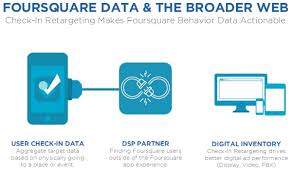
Foursquare 101413sI am still checking in on Foursquare.   I’m not entirely sure why I do, but it’s become part of my daily routine.   Earlier this year Foursquare received $451 million in additional funding.   According to Forbes Magazine and an article by Jeff Bercovici from April 12, 2013:

In part, it’s the value of the asset that is Foursquare’s application programming interface, or API. While not nearly as visible a part of the business as the consumer-facing app, the API is a hit with developers, some 40,000 of whom use it for location and venue data. That group includes trendy mobile apps like Instagram, Evernote, Waze, Path and Vine. Third-party API calls now total 75 million a day, a number that has doubled in the last 12 months. That’s the kind of growth you might even compare to a hockey stick.’ (a hockey stick??)

I was not aware of Foursquare’s API being adopted by so many well-known platforms.  I’ve always liked the Foursquare business concept, and now with multiple potential revenue streams I like it even more.    I also think years from now (like 2030) I might be interested in seeing where I ‘Checked-In’ back in 2010 and be willing to pay for that data.   It would be interesting to see where I was going, how frequently and all the memories that would go with it.   I suspect I am not the only person that might feel that way.

Foursquare has yet to strike it rich for its investors, but quietly and steadily it has been doing many things to enhance its opportunity for long-term success.   It would be good if Dennis Crowley and his team picked up the pace as without delivering new and varied value propositions people will tire and abandon the Foursquare ship.

Would you pay a little to check your day by day check-ins from the past?

Posted in Advertising, Best business practices, Data collection, Data driven marketing, Digital media, Social Media | Tagged , , , , , , | Leave a comment

CNN’s Headline News and Robin Meade – a bright spot wherever Americans Travel

robin-meade-jpgSince I have been back on the road lately I’ve had occasion to spend a number of nights in hotels.   Unlike what I do when I am home, whenever I travel, when I wake up I seem to always be able to find CNN’s Headline News Morning Express   The show is hosted by the vivacious and sometimes appealing goofy Robin Meade.

Whether I am in China, Japan, or any foreign country it seems western hotels always carry CNN’s Headline News.  The same is true in the U.S.    While it’s no secret that Ms. Meade is easy on the eyes first thing in the morning, she’s also has a twinkle in her eye when delivering the news.  And that twinkle and her overall attitude make the bad news just a bit easier to take.   And she also makes the good news even more entertaining.

A little background search on Ms Meade uncovered that she as a former Miss Ohio and runner up in the Miss America pageant and has been the host of CNN Headline News for more than twelve years.  In fact her first day on the air was September 11, 2001.  (I was not watching her since I was on a plane to Ohio that morning).  How about that for a first day on the job?   And she came back for the next day and the days after that and has been the one of the most consistent presences in national television news ever since.   No doubt she has to be one of the longest running news anchors on television today.

She is also the host on the Oprah Winfrey Network show Ask Oprah’s All Stars with Dr. Phil McGrawSuze Orman and Dr. Mehmet Oz.   I also like the fact that Ms. Meade talks about her family, her daughter, and husband upon occasion.   She just seems real to me.  Sure she’s been voted one of the ‘’sexiest’ newscasters on television but her smile and manner just work wonders to brighten my morning.   And Ms. Meade seems to travel so well.

I guess I am just a fan.   Maybe you are one too?  Or will be?   Let me know if you take a look.

Posted in Best business practices, Television News, Uncategorized | Tagged , , , , , , , | Leave a comment

Leaders don’t think about leading

leadershipAs I sit on a very cramped New Haven line train, I think about what makes a leader.  For whatever reason I had not realized that leaders don’t need to know everything.  I know this because I thought I liked being a leader, but knew I could not be one since I did not know everything about anything.

For the first tine in a long time I have business partners.  Really smart business partners.  They know things, no they have forgotten things about marketing and and consumer behavior that I will never know.  Yet since I thought to put the three of us together, there was a certain amount of deference being afforded me.  I had running room but did not realize it.

Partners can and should have a leader.  Here’s what that does not mean.  You don’t get to make decisions unilaterally.  What kind of partnership would that be?  At the very least not a collaborative partnership.   Any of us can and are encouraged to bring ideas to the table.

I also believe that it serves us best (collectively), if one of us is the front person.  What a partnership also means is that the good ideas can come from different areas.  That’s a much better thing than I ever imagined.  A one voice partnership is rarely about anyone else but the one voice.

From what I have seen the best leaders are interested in, and care about, other people.   There are also many examples of successful leaders that are not all that interested in their individual team members – i.e. people.  While they may indeed be successful, I don’t rank those leaders as the best of the best.  As important as it is, great leadership is more than the bottom line.

And that’s what I aspire to be.  A leader.  I did not know that before today but I know it now.   I want to help and guide those around me be the best they can be.  And in the process I believe our company can be the best we can be.

I think that might have to do with being a leader.  I hope so because if that’s true I really would like too be one.

Is that all it takes?  Or is that what it takes to begin with?
Continue reading

Posted in Communication, Leadership, Marketing stuff, Uncategorized | Tagged , , , , , | Leave a comment

Newspaper tablet apps – good but not great

NewspaperrI’ve been reading the New York Times and the Wall Street Journal exclusively on my Amazon Kindle for a few months (except for weekends as I could not bear to give up the printed Sunday Times).    Since I now have a daily commute of an hour by train it is infinitely more practical to use a tablet to read a newspaper.   True like many New Yorkers I have developed and honed my commuter oragami skills being able to read a broadside in a space smaller than a telephone booth.   There are increasingly fewer of my fellow commuters reading physical newspapers with each passing day.

Overall it’s a pretty good experience to read the newspaper on a tablet but I am having difficulty in understanding why there are things in the printed newspaper that are not included in the tablet edition.  For example, every issue of the NY Times and Wall Street Journal has a page dedicated to the weather.   Being a bit of a weather geek I like to see the temperature and weather conditions in various cities around the world – both for places I’ve been and places I’d like to visit.   But neither tablet edition has a weather page or map.   As far as I have been able to find, unless there is some type of weather catastrophe, the NY Times and Wall Street Journal tablet editions (which include two of the three largest circulation newspapers in the United States) don’t feel it is worth including.   Why would a digital edition have less than the printed one?

In addition the Wall Street Journal, which discontinued the printing of full stock market tables several years ago (this was apparently to save on ink and paper), does not include stock prices, ANY stock prices, in the tablet edition.   In case you are wondering I pay for my digital Wall Street Journal delivered on my Kindle.

While the Wall Street Journal does not include many sports stories (for years it did not have any sports stories aside from human interest sports stories), the New York Times has a daily sports section (a good one) and one can find all the written articles on the tablet version just as they are in the printed version.   But there are rarely overall league standings included for any of the four major sports, no lists of league leading scorers in the various categories and worst of all no box scores for any of the sports.   As a baseball fan not having the box scores available is a big sacrifice.    Yes I can find the information elsewhere but why should that be necessary?

So why do the tablet editions offer less content than the printed versions?   I am paying full price for everything, or so I thought.  Maybe the tablet editions are about to make me an offer to get more content if I fork over more money for my digital edition?     Uh-oh I think I just answered my own question.    What do you think the reasons are?

Posted in Best business practices, Communication, Newspapers | Tagged , , , , , | Leave a comment