
Chinese version of Facebook – RenRen is and isn’t for everyone

One of the benefits to my studying Mandarin is recognizing some Chinese words and phrases. This week RenRen http://www.RenRen.com – a Chinese company raised $ 740 million in an IPO on the New York Stock Exchange. RenRen in Chinese means ‘everyone’.

With 450 million internet users in China and Facebook access disallowed by the PRC, buying RenRen stock is a bet that despite Mark Zuckerberg’s continuing efforts, Facebook is not likely to make any headway in China in the near future. Since I don’t see too many people outside of China using the RenRen platform, RenRen isn’t for ‘everyone’.

The IPO was successful in that it was offered around $ 14/share and closed today at just under $ 17/share. Not a home run but something to consider as a buy and hold since its potential user-base of 450 million people and counting is a number to reckon with.

The problem with RenRen right now is that in 2010 the company lost money. That is in stark comparison to Facebook’s $ 2 billion annual income projection. However it does not take a huge leap of faith to believe that RenRen will be profitable shortly and quite possibly in a big way.

Alternative social networks to Facebook pop up all over the place but companies trying to make a dent in Facebook’s lead have been largely unsuccessful. RenRen will by default be successful unless the Chinese government allows Facebook access for Chinese citizens. Something I don’t suspect will happen in the near or even far future.

I think it’s sad that Chinese people will continue to not have the opportunity to interact on the world’s social network – Facebook. So while RenRen serves a purpose of offering Chinese people a social network interface, we all suffer due to the limitations of access.

I am guessing non-Chinese people will not be in a hurry to set up their own RenRen account. But maybe I am wrong?


Posted in Business in China, Social Media, Technology | Tagged , , , , , | Leave a comment

ZipCar and Hertz Connect – car sharing grows up

”Tis the season of IPO’s” and last week proved that with the offering of shares in car-sharing pioneer ZipCar. Nearly $ 175 million was raised creating a market cap of more than $ 600 million. The rent-as-you-need-it company founded in 2000 is trying to stave off car rental giant Hertz which launched ‘Connect’ in 2008. ‘Zipsters’ as users are referred to carry cards that enable them to access the fleet 24/7 (as the keys are inside) without necessarily making a reservation (although it is recommended that you do make a reservation).

The concept of car-sharing is very appealing (to me at least) and I daresay even green. At the Low-carbon business development forum I attended in Shenzhen a little over a week ago ZipCar was referred to as an embodiment of progressive transportation. I noticed little mention of Hertz Connect.

As the concept and business model matures there have been some rumblings of inadequate automobile liability insurance provided for ZipCar’s 560,000+ members. In an April 22nd article in the NY Times http://nyti.ms/ilpP4N both ZipCar and Hertz were cited as offering liability coverage that is sorely lacking. More members would obviously increase the pool and perhaps allow for the upper limits to be raised to the more traditional $ 1,000,000.

I’ve a few friends that are ZipCar members and they proudly note that they do not own an automobile and flash their card as evidence of being green. Decidedly ZipCar is for city dwellers and university students. For $ 13/hour you pick up the car at the ZipCar lot, drive it for as long as you need and return it; gas up to 180 miles per day, reserved parking and insurance are all included.

There’s something very green about not owning a car and city dwellers actually are greener on a per capita basis than non-city dwellers. ZipCar still has a first mover advantage (ZipCar bought Flexcar in 2008). An article in Fortune magazine last month did a good job of summarizing the advantages and environmental benefits of car sharing http://bit.ly/m8Vqyr.

Car sharing is an idea that is ready to take off in my opinion. But Americans are married to their cars and it will take time for car sharing to take hold beyond its niche status at present.

Would you give up your car?

Posted in Customer Experiences, Green Products, Living in the World Today | Tagged , , , , , | Leave a comment

Mobile phones are no longer the third screen

Having just returned from China and a trip to South Carolina I’ve had to use a mobile phone (it’s a Blackberry Storm) as my primary communication device for nearly two weeks. Although I won’t get into the problems that Research in Motion (RIM) has in general with loss of subscribers and a still paltry amount of applications, I have to report that the BB Storm performed admirably and reliably.

Despite the BB Storm’s limited apps, the ones I have downloaded, I use on a consistent basis. Even the Facebook, YouTube, and Twitter applications worked from my phone while I was in China although access via the hotel’s internet connection from my laptop was denied. I read newspapers, watched videos on YouTube, checked email, used Google Maps to find where I was going and even tried Foursquare (it worked fine but all the locations were written in Mandarin characters so that was a bit tricky).

In recent years mobile phones have been designated as the ‘third screen’. The idea is that television and computers are the other two screens. But in this increasingly fast paced and mobile world a smartphone is no longer a luxury but a necessity for many people – including me. My internet connection in the hotel in Shenzhen was glacially slow, such that at times I just did not even bother trying to do things that I would normally accomplish in a nanosecond here at home. Instead I used my mobile phone.

I also find myself using mobile sites with increasing frequency. In so doing I’ve found that many companies do a poor job of creating a good mobile experience for their customers and prospects. (Full disclosure – our team is building mobile sites for clients so we are attuned to this issue). With smartphone adoption continuing to grow the importance of having a really good mobile site has never been greater and will continue to grow.

I think mobile should be considered the first screen. A mobile phone is within arm’s reach at all times for most people and is likely the first screen people look at each morning.

How about you? Is your mobile phone ever out of sight or access? Is it the first thing you look at in the morning? Are you doing more and more on your smartphone?

Posted in Communication, Customer Experiences, Mobile Communication | Tagged , , , , , , , , , , | 1 Comment

In person social networking is best

I got off the plane from China on Tuesday afternoon and was back at the airport Wednesday morning heading to Myrtle Beach, South Carolina for what has become an annual sojourn (for at least the past 8 years give or take a missed year)..

One of my friends is the linchpin (apologies to Seth Godin) in this diverse group of more than 24, 16 – 20 of which show up any given year. What I find interesting and to truly be a pleasure is connecting once a year with people that I likely would never have met under any other circumstances. We eat together, ride together, drink together and laugh for 4-5 days.

They come from all over the United States, California, Colorado, Illinois, Indiana, Pennsylvania, New Jersey and Connecticut. The trip for some has been going on for more than twenty years. Over the time we spend together you will find yourself riding with or at least playing with every one of the guys, so you will have the opportunity to catch up on what’s been going on with everyone for the past year.

While there are some email contacts over the year nobody appears to be terribly interested in any kind of regular communication aside from pre-trip instructions and information. I can assure you there will not be a Facebook ‘group’ created for this bunch.

Yes it’s a vacation but for me not the usual kind since I’ve never been the type to have a regular boys’ poker game or guys’ night out – not that I am against it BTW. Over the years we’ve all gotten to know each other better – things are discussed about our families, lives, businesses and even plans for the future. The linchpin is a friend and business associate for close to twenty years but since I’ve been coming on the trip our relationship is closer as a result.

And that’s the point isn’t it? Today so many of us spend countless hours looking at a screen, responding to email, writing proposals and doing work, checking social networks, ‘surfing, around the web, ‘consuming’ content and searching out information. We think we are connected to people because we answer emails, respond to FB posts and to some degree that’s true and better than the alternative of NOT being connected at all.

But as I keep on saying – being there makes all the difference. When Sunday rolls around and we all say our good-byes and head back to our regular lives the countdown begins for next year’s trip. It’s something we all think about and look forward to as the trip approaches. For me that will start Monday because this social network is the real deal.

What interesting things do you do to network with people that do not involve looking at a screen?

Posted in Best business practices, Customer Experiences, Living in the World Today | Tagged , , , , | Leave a comment

4 things I learned on my trip to Shenzhen, China that I did not know before

Now that I am back in the good ‘ol USA after a 22 hour travel from my Shenzhen hotel back to my office, I can reflect a bit on my latest trip to the Middle Kingdom. This trip far exceeded my expectations both professionally and personally. As much as I enjoy Chinese food (and I truly to enjoy it) I have yet to satisfy my hankering for a cheeseburger. I will work on that today.

Although my first trip to China last fall was interesting and frantic (as was this one) I felt that I had more of an opportunity this time to spend time interacting with great Chinese people to a much larger degree. Here are four things I learned that I have as a quick takeaway:

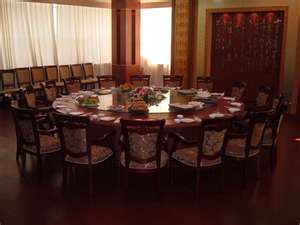
1) Chinese people have more variety on their table at every meal than anyplace I’ve ever been I had a series of banquet like events some with more than a dozen courses. There were a number of times I was not sure what I was eating right away. Unusual things I ate – sharkskin soup, honeybees and yes – scorpion. All the meals had a few varieties of steamed greens (even breakfast). Meals in China are at a much slower pace than in the USA. I also will have to get used to drinking the warm water as that’s the way it’s served.

2) Chinese people will consistently go out of their way to help. This was evidenced by so many different people, from driving me around to taking me out for meals (I only paid for 1 meal in China and had to fight to do that). I will keep that in mind when my Chinese friends and associates come to the USA since I will want to pick them up, drive them around and take care of them in the same manner. Not something that is a custom in the U.S. but it really helps grow a personal and then professional relationship.

3) China is under construction and dustier and less hygienic than the USA. I did not notice the amount of construction going on last time I was in Shanghai, Beijing, and Wuxi. Shenzhen is also growing like mad and building goes on 7 days a week. Bathrooms in China are not always all that clean (that is also true in the USA) and there are seldom towels with which to try your hands.

4) If you want to do business in China you have to be there. My second trip has demonstrated that even more clearly to me. I left with a number excellent business opportunities and will be following up with some proposals but in order to have a chance to make those deals happen I will have to present in person on my next trip which I expect will be in 3-4 months. Our company can really help Chinese companies in marketing to the west and the USA in particular. I felt the many CEO’s at the companies I met understood that (for example I met with the CEO of the largest television manufacturer in China – Skyworth) but also encouraged me to come back which told me that they need to see my commitment to China by returning again soon.

There are many other observations I have on my trip and I will detail things to a larger degree once I have had a chance for the experience to settle in a bit more. I really like going to China and look forward to exploring more of its culture, its people and its history.

By the way I read an interesting book on my Kindle on the way to China – ‘Big in China’ by Wall Street Journal writer Alan Paul. He and his wife Rebecca who works for the WSJ moved their young family to Beijing in 2005 for 3 ½ years and he describes the experience. Worth reading if you want to get a sense of what it is and was like living in China for an American.

Posted in Best business practices, Living in the World Today | Tagged , , , , , | 2 Comments

China Never Sleeps

</aAs I am in my last full day in Shenzhen (this trip at least), I had a productive weekend and Sunday in particular. But I am far from the only one to be productive as Shenzhen is busy seemingly seven days a week. I awoke early at the usual 5:30AM to the sound of construction outside my hotel room (I have yet to adapt to the 12 hour time difference and I also have heard rumblings that the PRC is considering adding time zones in China).

Shenzhen is building new subway lines all over the place with a plan for total of 12 subway lines – or so I was told. Consequently there is construction almost everywhere in the city. People are working on a Sunday and college students at the University are moving around and about the campus as if it were a Monday or any weekday for that matter. One of the big reasons for China’s rapid rise is its citizenry’s desire and willingness to go above and beyond in everything they do.

When do the Chinese sleep? I have absolutely no idea. I’ve been getting by on 4-5 hours per night while I am here and I suspect that the people around me are getting the same or less sleep than am I. The area near our hotel in University Park is a bit dusty and of course construction filled. Walking around at night – anytime from 8PM – 2AM you find people outside (the weather is warm and comfortable) milling about, shopping, cooking and eating. There are many outdoor food stands and like street food should be, the food looks and is tasty, cheap and wide ranging. Tony Bourdain of ‘No Reservations’ would do well to check out and around Shenzhen.

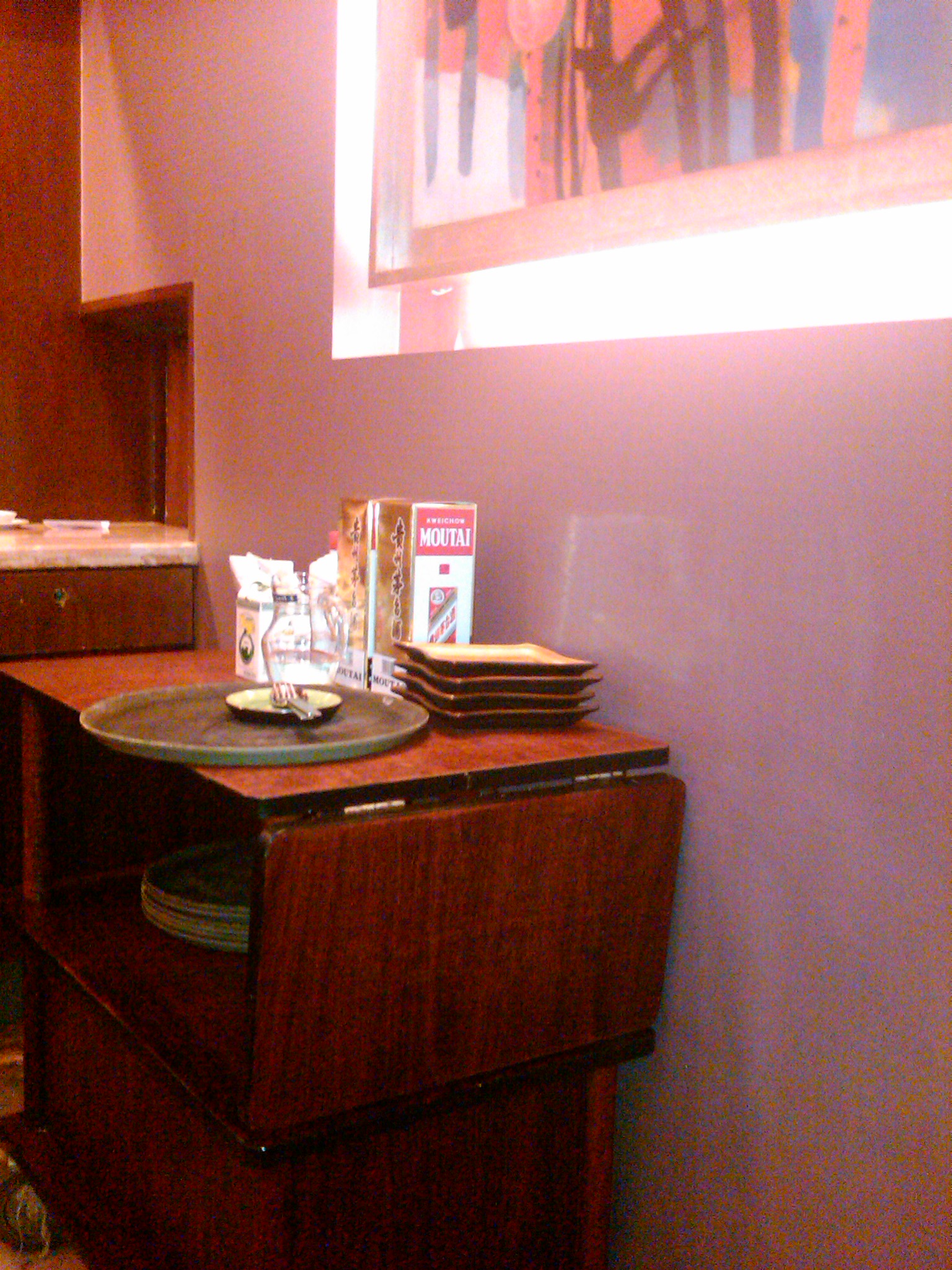
People work hard yet despite that they find time to play hard too. I have become fond of Moutai – Chinese liquor that is comprised of five different grains and can be found nearly everywhere and in varying degrees of quality and expense. Last night we drank two bottles (there were five of us) of really expensive Moutai – I was told that a small glass would be 50 Yuan – a little less than $ 8 dollars. I guess that there could be 30 small (1 ounce) glasses in a one liter bottle. You can do the math. Everyone toast one another constantly throughout meals – you never drink alone and I suspect it is bad form if you do.

Business discussions are woven in and around dinners and social engagements – something that I don’t mind at all and in fact even enjoy. The Chinese people I have met on both of my business trips are warm, inviting, and extremely concerned with my well being and that I am enjoying my trip and will come back to China soon. They have nothing to worry about as I continue to be fascinated by China and its people.

My now good friend Dr. Yufu Cheng has been my lifeline as my Mandarin is far from being what you would call proficient. At times I get frustrated at my inability to process the Mandarin (I tend to understand maybe 10-20% of full Mandarin conversations) and reply in real time. My tutor Grace Brennan will be happy that I kept on trying but learning Mandarin will be a work in progress and not nearly fast enough for my desire.

China never sleeps. When people do it’s not for long – something to which I can attest. Yet I wake up each morning energized and ready for the day. I can do this for a week or two at a time but I value sleep highly and believe I would have difficulty staying sharp if had to do it all the time. But maybe I’m wrong about that?

Americans should take note of the Chinese people’s willingness to constantly drive and push forward. After seeing the Chinese work I feel Americans are far too comfortable with the status quo even when economic times are difficult as they are now.

It should not be seen as a threat but a motivation. I will have more time to think about that on my 15 hour flight back. I’ll pick back up from the other side of the planet. Zai jian!

Posted in Business in China, Living in the World Today | Tagged , , , , , , | Leave a comment

Shenzhen, China – a truly modern city

What if you had the opportunity to start planning a city in the 1970’s? How different might it look than nearly all the large cities around the world? I’ve been in Shenzhen for the past two days and have received a first hand look at how a city can be managed when it is planned for growth – and a huge population.

With 14 million people (or so it is said in some circles – I’ve found that most cities in China have many different population figures associated with them depending on the source), Shenzhen is soon to be host of the World University Games. This has resulted in seemingly perpetual construction taking place all over the city. I imagine that it is much like what was happening in Beijing proior to the 2008 Olympic Games.

I actually took the subway into China from Hong Kong. I did have to transfer 3 times and haul my bag up and down stairs a few times but I was surprised at how easy it was. The MTR subways in Hong Kong are new, clean, and of course efficient. I took the subway to the last stop in the New Territories and literally rolled into China with my bag. Customs was a breeze as was finding a taxi to take me to my hotel.

I am here in Shenzhen for the Low Carbon Business Development Forum and today spoke as a panelist in one of the sessions. There are some amazingly intelligent people participating and I admit I was a bit nervous talking about a subject (branding and marketing Chinese green technology products in the United States), that I have been getting educated on. I still have much to learn.

The Chinese continully impress me as a warm and inviting people. As my Vistage associate Gary Young wrote in his blog – ‘the Chinese people are extraordinarily honest and honorable – because as he says -they are not a nation of laws.’ I’ve seen nothing that makes me feel differently so far.

The conference in Shenzhen is in University Park – where three different universities share one giant and well equipped library. That makes a great deal of sense to me and is something rarely seen in the United States or anywhere else for that matter.

Roads are multi-laned and have been designed to accomodate the exploding growth of Shenzhen which was a mere sleelping fishing port town only 30 years. Designated a ‘Special Economic Zone’ Shenzhen is known by most people as the place where electronics like the iPad and other cool technologies are assembled and shipped from.

But I see Shenzhen as much more than that. An incubator of innovation and cradle for entrepreneurs, Shenzhen in being adjacent to Hong Kong (which is noted as the ‘Gateway to China’) is becoming the gateway to innovation and green technology.

I hope I get to see more of the city on this trip but if I don’t I’ve a feeling I am going to be back here before too long. And I look forward to that.

Happy Earth Day and Good Friday.

Posted in Business in China, Living in the World Today | Leave a comment

OOH – Out of Home advertising in Asia is in your face

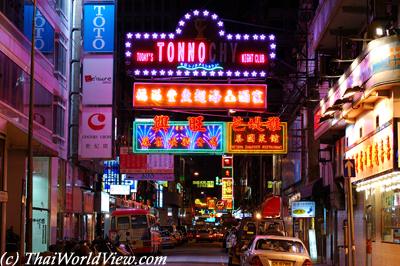
After a 15 ½ hour flight to Hong Kong from Newark my eyes are tired and a bit bloodshot. The efficiency of the transit system in Hong Kong (and Asia in general) is offset by the bright lights of outdoor advertising that is seemingly omnipresent.

My luggage was waiting for me on the carousel when I made it through customs (which took less than 10 minutes). Walking into the carousel there were advertisements left and right as I quickly walked to the train that was waiting to whisk me in to Central Station in HK. No Virginia, this was not LaGuardia.

Ads run on the TV’s on the train and once I arrived and took a taxi (again very easy to find and the taxi line was short) the rampant outdoor ads in Hong Kong put Times Square to shame. I don’t really know the reasons why OOH advertising is so popular in the places I’ve been in Asia – Japan, China, Singapore, and Vietnam.

Just the other day Jing Daily http://bit.ly/e00QUb out of China reported “Over the past weekend, Beijing’s much-hyped ban on outdoor advertisements that promote “hedonism, lavishness and the worship of foreign things” took effect. As Jing Daily wrote last month, the ban is ostensibly aimed at “[easing] public concerns about the country’s widening wealth gap” by ridding the city of advertisements that use words such as “luxury,” “high-class,” “supreme” and “royal” at risk of a 30,000 yuan (US$4,595) fine per infraction.”

So perhaps the OOH climate might be changing on the mainland where I am headed tomorrow but here in Hong Kong the lights are brighter than ever. I happen to like it as it brings home the hustle and bustle of 21st century Asian city life. But then I am partial to Times Square as well.

If you notice them do outdoor ads bother you?

Posted in Business in China, Communication, Marketing stuff, Media | Tagged , , , , | Leave a comment

Why I want to help Chinese companies sell products to Americans

`When I was in Hong Kong last March with my good friend Tom Eastling he offered an idea – why don’t you help Chinese companies market their goods and services into the United States? The moment he said it I was immediately smitten with the idea. After all American and western countries in general look at the rising middle class in China (300 million strong and growing) as a huge opportunity for first movers. And they’re right. Yet at the same time, China’s ‘Go-out’ policy focuses on Chinese companies selling into the United States, North America, Europe and South America.

Armed with that concept I spent a week and a half traveling to Shanghai, Beijing and Wuxi in China last September. Upon my return I quickly found a Mandarin tutor (a terrific Shanghainese woman named Grace Brennan – at least that’s what she is called here in the U.S.) with whom I have been taking lessons twice a week. I am learning the language but I am also learning more about Chinese culture.

This week I am on my way back as an invited speaker as a part of the Low Carbon Business Development Forum to be held in Shenzhen beginning this Friday. My proficiency in Mandarin leaves much to be desired but I will be giving it my best shot during my trip. Fortunately many Chinese people learn and speak English which is a great relief to me as I am traveling alone for the most part this time.

Helping Chinese companies market their products into the U.S. is becoming more prevalent as this past week Ogilvy & Mather announced they were investing in opening a unit (in New York for some reason) dedicated to helping Chinese businesses market to the U.S.. I wonder why that office was not opened in Shanghai. That’s something I’d like to do – open an office for our agency in China to help Chinese companies better understand the U.S. and European markets.

Chinese products are becoming more and more accepted in the United States. iPods, iPads and many other top quality devices are ‘Made in China’ – or at least assembled there. In fact Shenzhen is the city where many of those technology devices Americans use every day are put together. For the record I am neither blind nor insensitive to complaints about working conditions in some of the factories in China. I am also aware of the complaints about the value of Chinese currency (the Renminbi or Yuan) in relation to the U.S. dollar.

Part of the problem is the trade imbalance. Here’s a popular notion – as sales of Chinese products into the U.S. expand, the quality of the products will improve, and wages in China will increase making those products more expensive. Consequently U.S. made products will become more competitive in the process. It’s already been happening and some industries (clothing for instance) have moved out of China to other Asian countries and beyond. The role our company will play will be to facilitate the ‘Going Out’ of Chinese companies into the U.S. and beyond.

I’ve been doing a lot of reading on the Green Revolution in China – and the Chinese are working hard at leading the way in this area. Solar, Wind, and Lighting (both compact fluorescent and HB-LED) are fast growing industries within China. The automobile company BYD (owned in part by Berkshire Hathaway’s Warren Buffet) has opened an office in Los Angeles to build and sell a fully electric car. I am aware that China burns coal at distressingly high levels to power factories and municipalities. That’s what makes the greening of China all the more important.

I am excited to be going on yet another adventure into the Middle Kingdom. I will post a few times from Shenzhen (and Hong Kong). These kinds of trips really stimulate my creativity and thinking in general.

But I find that travel does that for me in general. How about you?

Posted in Business in China, Living in the World Today | Tagged , , | Leave a comment

A not so fun afternoon dealing with customer service at American Airlines and Verizon

Everyone I know that flies a lot has their own horror stories to tell. Everyone that has a mobile phone or mobile broadband service has complained about their carrier. While my experiences with American Airlines and Verizon yesterday would not necessarily fall under the ‘horror story’ category, they did illustrate how not to handle a customer.

Our flight back to LaGuardia from Raleigh, NC started out innocently enough (I was with our Executive VP and Creative Director Nader Ashway). We were seated and ready to go when an announcement from the cockpit informed us that there were mechanical difficulties with the aircraft and they were going to try to fix it but we would be better off getting off the plane and waiting in the gate area.

We immediately got on the long line to find out what were our options for other flights to LaGuardia. Note – when you sit near the back of even a small aircraft it becomes a bad thing since you end up with fewer options. We had not considered this when booking. We will next time. By the time we got to the counter our flight had been fully cancelled and our options were –standby list on two later flights and a ‘guaranteed’ seat on the flight to LaGuardia that was scheduled to leave four hours after our original flight. There were few if any announcements in the gate area informing displaced passengers of what was going on.

American blew an opportunity to make a little hay out of adversity. All of us know that sometimes planes have equipment problems and safety first must be the #1 policy. But the communication was so non-existent that I could simply not believe it. I booked electronically and American Airlines has my mobile number, my email and they have to know what happens to any passenger at any given moment. Not one communication have I received from American Airlines – nearly 24 hours later!

How about the idea of offering all displaced passengers complimentary access to the Admiral’s Club until they could be rebooked? For people that have never been in that club it might even convince them to join. Talk about a missed opportunity. For those that have been in there at least they would feel acknowledged that a problem (not weather related) occurred and American Airlines at least tried to do what they could. Offering me a seat on a flight four hours later did nothing to serve this customer.

Only because I am a glutton for punishment I then decided to use the time to repair my Verizon wireless modem card that had been acting up. I called the number and a helpful woman in Georgia named Angela tried to help me get the card back up and working since I had money on the card and wanted to get online.

After rebooting my machine two times and trying everything else under the sun for 45 minutes (draining my mobile phone battery in the process), Angela told me that she needed to fill out a ‘trouble ticket’ with a case number. And it would ‘only’ take 5-10 minutes. What? How does this serve me – the customer? I already had been dragged through a series of protocols that simply established that Verizon’s modem was defective. Now I have to wait for them to fill out a trouble ticket? But having invested 50 minutes into the call I was compelled to wait and see it through. At the close of the call (I was pushing hard to get off the phone to save what little battery I had left), I was told I would get a SMS text message with the ‘trouble ticket’ information. You guessed it. I am still waiting for that text and my mobile card still does not work.

Verizon has that age-old message at the start of a service call – ‘This call may be monitored for customer service”. I don’t think that they are really listening at all do you?

Posted in Best business practices, Communication, Customer Experiences, Marketing stuff | Tagged , , , , | 5 Comments