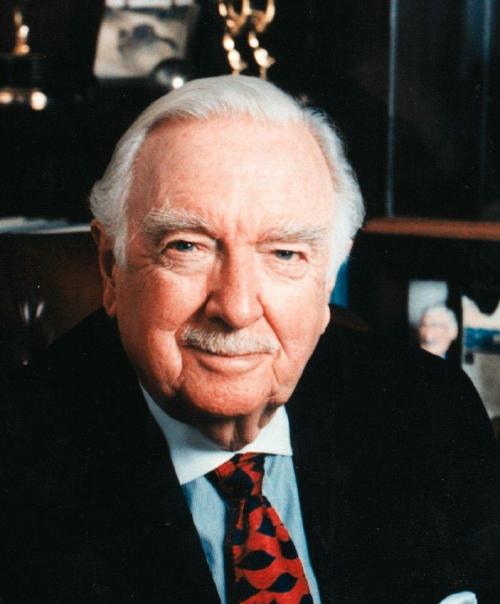

Today’s TV newscasters – watch them while they last

With Katie Couric’s departure from CBS News I find it increasingly difficult to remember who the evening anchors are on the national news networks (ABC, CBS, FOX, and NBC). Last night I saw a promotion in the New York market to watch the evening news on NBC with Sue Simmons. As someone that does not watch evening news it seemed to me that Sue Simmons has been around for ages. I was right. She started in New York on ‘Live at Five’ with Chuck Scarborough in 1980. This means Ms. Simmons has been on the air in the New York metropolitan area for more than 30 years. She is far from unique. New York television newscaster Ernie Anastos will be 68 years old in July and has been on the air in New York since 1978.

Since most Americans get their news from a number of news sources and nearly 60% get their news from both online and offline services (source Pew Research Center http://bit.ly/m3rAl1) it surprises me that television news has not already gone by the wayside. I have respect for the professional abilities of longtime newscasters like Sue Simmons, Chuck Scarborough (still on the air also) and Ernie Anastos but I am guessing the only reason they are still on the air is that the local networks have not figured out programming that would draw more viewers in the same time slot – and accordingly, command more advertising dollars.

Another essay from Pew Research http://bit.ly/kFuV87 on the State of the News Media 2011 discusses both the durability and decline of television network news. (I am aware the newscasters I am noting are local affiliate newscasters). I am postulating that television newscasters are truly a vanishing breed and we will never see again a newscaster endure multiple decades on air.
And the most trusted ‘national’ newscaster in the United States today is….Jon Stewart. What does that tell you?

Hyper-local sites like AOL’s Patch (http://www.patch.com) offer news and information on an individual town basis. I think Patch could be seriously upgraded and can see a time in the near future where video coverage of local events (updated every 3 or 4 hours) could be made available on a website. It would be ad supported both within the broadcast as well as on the page itself. I’m not sure a subscription would work for something like that. But having video and stories from your local town – news, events, and sports (videos of kid’s and high school sports would be a huge draw) is relevant and highly engaging.

I like to watch Bloomberg News and have in on in the office all day. Do you watch the evening news? Do you watch the morning news or any television news for that matter?


Posted in Entertainment, Living in the World Today, Media | Tagged , , , , , , , , , , , , | Leave a comment

The general problem with generalizing

I have traveled back and forth from New York to Lexington, Kentucky four times per year for more than 10 years. When I first went to Kentucky as a provincial northeasterner I had a general idea about what I thought Kentucky would be like. What I found out was that my pre-conceived idea was, by and large, incorrect. The people were and are and sophisticated, techno-savvy and there are great places to eat in and around the greater Lexington area. Not quite what I had imagined.

Today, when I talk to people about my trips to Kentucky they often roll their eyes and even snicker a bit. They have what they think is a general idea about what it’s like even though they’ve never been there. I am very careful now to not draw conclusions about things with which I have no experience. Of course I will have an idea or anticipation just like everyone else does, but I also want to allow myself to be surprised, while at the same time I want to be willing to challenge my own uneducated perceptions.

The same thing has been true regarding my travels to China. Before my first trip I had perceptions that in general turned out to be just plain wrong, like a country filled with morose, unhappy people living in a Socialist state or people that were unfamiliar with western customs and food that would be so unfamiliar I would not be able to eat. These perceptions like so many are built out of the limited information that is available to people – on television, in books and movies, and in the media.

It makes no sense to me to try to sum up people in places like Lexington, Kentucky or Shenzhen, China or anywhere else for that matter. Some people may fit certain generalizations but far fewer of them fit any particular category than one might imagine. And in so doing that’s how stereotypes are created.

Just because people live in a place does not mean they should be lumped together as being New Yorkers (loud and pushy), Angelinos (from Los Angeles – mellow and laid back) or Kentuckians – backward country bumpkins.

Generalizations are in my view counterproductive and even can be dangerous. We seem to want to make sense out of things by categorizing people either by where they are from, their ethnic or religious background, corporate affiliations or political views. I try very hard to take things as I see them and to not allow preconceived notions to rule my real-life experiences. It’s not always easy that’s for sure.

In general do you think this concept is worth your attention?

Posted in Living in the World Today | Tagged , , | 2 Comments

Advertising today – pardon the interruption

I spent the day today as a judging chair for the first round of the 2011 Direct Marketing Association (DMA) International Echo awards at the DMA headquarters in New York City. I’ve been judging the Echo awards for something like 7 years. I always enjoy the experience mostly for being able to sit and talk with my fellow judges who almost universally are very experienced and have interesting viewpoints on marketing.

The submitted campaigns are judged on marketing strategy, creativity and results. Over the years it’s been easy to notice the changes in the submitted campaigns. When I first started there were many more dimensional mail campaigns – that is odd shaped pieces that were mailed direct to consumers or businesses. However in recent years I’ve seen fewer and fewer of those campaigns (and most of the ones I do see are non U.S. based). This year a social media category was introduced which while it comes as no surprise is interesting since evaluating the effectiveness of a SM campaign is not quite as easy as other channels.

But what struck me most today was the speaker Rick Segal – President of Gyro Agency here in New York. The discussion was centered on interruptive advertising and how (finally!) that has to change. My associate David Adelman of OCD Media has been riding that same horse now for quite some time. The point was that the idea of interrupting whatever people are doing to get them to pay attention to your message is increasingly less effective if not offensive. As if whatever you are doing is not nearly as important as the message we (advertisers and agency folk) are trying to broadcast.

Do you like pop-up ads on the internet? And what viewer loves the concept of a pre-roll ad in order to watch a program? How about an increased frequency of television commercials toward the latter (and often better) part of a program? Historically interruptive advertising has been used because agencies (and clients) are convinced it works. And I am not averring that it does not or cannot work. However it is a tired old way of doing things and I believe not consistent with the idea of being PART of the conversation.

Being part of the conversation is not easy since it goes against our nature and against the expectations of consumers. Product placement is a great example of non-interruptive advertising. Mr. Segal made some interesting references to people being more productive since they are more connected. He also noted that technology is creating more capacity for work – not necessarily saving individual people time since they can do and are expected to do more. Interestingly he mentioned the concept of brands sponsoring parks (again non-interruptive) and leisure time activities so that people could unplug and enjoy themselves – even during a ‘work day’. (Don’t even get me started on that since in some ways – every day can be a work day).

Lastly, we talked about the idea of not accepting ‘good enough’ work and striving for excellence and standout campaigns. Creating a memorable but non-interruptive campaign is a challenge I will be throwing down to our team as I am fully on board with that idea.

We can and must do better. I for one am tired of all the advertising interruptions. How about you?

Posted in Advertising, Best business practices, Marketing stuff | Tagged , , , , , , , | Leave a comment

Are you prepared for identity theft?

I can assure you that I am not. Even if the theft is not a total assumption of your identity I (fortunately) can only imagine what it would be like if someone took out my credit cards numbers, online subscriptions or bank accounts on an individual basis.

When I was away last month I lost my mobile phone for 8 hours. My initial panic was that the people I cared about would not be able to reach me. But then I thought about what I had on my phone itself and realized that I was very vulnerable to someone going through what’s on my phone and lifting whatever they could. While I don’t have any credit card or financial information, I still have very personal things on there and my personal life would be greatly compromised if that information were to fall into the ‘wrong’ hands.

How about you? Do you (like me) have a bunch of passwords for a ridiculous number of accounts? And like me do you at times have difficulty keeping track or remembering which password goes with which account? What about the suggestion that you should be changing your password regularly AND changing it to some non-memorable string so that it cannot be easily decoded? That’s a great idea, until you considering having to remember all of these bizarre passwords. Carrying around a piece of paper or something in your wallet listing all the various passwords seems impractical to me. If that piece of paper or wallet gets lost (or stolen)… well you get the idea.

As time passes there will be more online accounts and even more passwords. More to remember (and while my memory is still pretty good it is not getting better). I’m sure you’ve seen the ads for services that offer identity theft protection. Just to name a few there’s Lifelock.com, Identityguard.com, Guarddog.com, TrustedID.com, IDWatchdog.com and a host of others. I’ve not been tempted to subscribe to any of these services as it just seems so unnecessary and a waste of money, but I am having second thoughts. I’m not certain they work and their guarantees would not save the hassle if someone were to really ‘steal’ my identity.

According to a US Government Accountability Office study it was determined that “most breaches have not resulted in detected incidents of identity theft”. However the report also warned that “the full extent is unknown”. A later unpublished study by Carnegie Mellon University noted that “Most often, the causes of identity theft is not known,” but reported that someone else concluded that “the probability of becoming a victim to identity theft as a result of a data breach is … around only 2%”.

So the percentages are pretty low but the effect catastrophic if you are one of the unlucky 1 out of 50.

I’m not sure if I need to do anything or not. How about you – what are you doing? Have you got any other ideas?

Posted in Customer Experiences, Living in the World Today | Tagged , , , , , , , , | Leave a comment

Solar Highways – could they be an answer to the energy question?

Because our company is actively working with green technology companies in China we all have a heightened sense of awareness in this area. One of our team members sent me a great link – about a 4+ minute video – http://www.wimp.com/solarhighways from a site called wimp.com (no joke!) on how LED based solar panels as road surfaces is a possible way to alleviate the U.S. reliance on petroleum based products.

The idea is that the road not only would pay for itself but that solar highways can generate energy to be used for other purposes. Scott Brusaw the inventor and co-founder of Solar Roadways, is both interesting and approachable – watch the video and see if you agree. The entire road would become an electric grid. People would be driving on glass. It is a concept that blew my mind.

I personally had no idea that there is a great deal of petroleum used in making asphalt. Actually I had not given much thought as to what’s in asphalt at all. With so much talk about the U.S. losing ground I am consistently buoyed with stories like these from what I consider to be brilliant American thinkers that are willing to throw out conventional thinking. The U.S. continues to be a world leader in innovative thinking and development of innovative products.

I took a tour through the http://www.wimp.com website and was surprised to find that most of the content is far from being as interesting as the Solar Highway video. Although for some reason I was compelled to watch the ‘Cat vs. Annoying Bird’ video. There are some other interesting videos on the site worth watching.

Separately, LED lights are increasingly becoming a topic of conversation as in January 2012 incandescent 100 watt light bulbs will no longer be sold in the United States. Incandescent bulb technology (if it can be called that) is more than 100 years old. An excellent article in USA Today by Peter Stevenson http://usat.ly/kUWxWh highlights the attributes and challenges of adoption of LED lighting for bulbs in particular.

Solar Highways may be a far off idea but LED light technology offers great opportunities to help lower energy costs and expenses.

Great ideas and innovations excite me and get me thinking. Do they do the same things for you?

Posted in Green Products, Innovation, Technology | Tagged , , , , , , , , | 1 Comment

Selling your house today? There have to be better ways – don’t there?

Selling any residential property (house or apartment) is far from a fun process. Right down there with selling one’s car. (I think the process of buying a house is much more fun than buying a car BTW). Since my wife and I have put our house ‘up on the market’ we have experienced all the things that are associated. Overlay a ‘down’ real-estate market and what you are left with is a daily exercise in frustration.

Remember Foxton’s from a few years ago – the home of the 2% real estate broker commission? They did not make it and went out of business in 2007. There are a few sites out there that promote only a 2% commission but they do not appear to have much traction. So the traditional real estate broker is the option if you choose not to sell your house directly (good luck with that we are told).

There aren’t nearly as many real estate brokers around today as there were 5 years ago. A crushing recession and horrible real estate market are the reasons for that. Back in the late 1990’s and early 2000’s it seemed everyone around me knew someone who was obtaining their real estate license. After all – 6% (now down to 4-5%) commission on homes offered a pretty nice payday – especially if you were selling homes in the more expensive areas of the United States.

Today the overall real estate market remains stagnant at best. It’s a buyer’s market as they say. And real estate brokers have no way to create buyers. There’s too much inventory, too many choices and anyone selling a house or apartment has to be ready to drop their price, possibly below what they paid for it, if they’ve lived in the house for less than ten years.

In our case we’ve been asked to make some ‘minor’ improvements (translate that to spending money for someone else to enjoy). And yes we’ve already been asked to drop the price which is the normal course of doing business my wife and I understand. Yet it irks me that a $50,000 price reduction only reduces the broker’s 5% commission by $ 2,500 yet the seller is still down a full $50,000. It’s easy to understand why a real estate broker would suggest lowering the price since the broker will feel little of that sting.

Everyone is aware that real estate markets ebb and flow – right now we are in a buyer’s market and have been for some time. When my wife and I sold another house in the late 1990’s it was a seller’s market and we actually had multiple bids and the house was sold (in a week) for more than the asking price. I readily admit that the pendulum can swing both ways.

But I cannot help thinking there’s a big idea opportunity here. Real estate brokers serve buyers more than they do sellers. There are ‘buyer’s brokers’ and related fees to engage them. I think that is a concept that should be explored even further. A buyer’s broker serves the purchaser in many ways with information on the area, schools, market conditions, local resources as well as can help the buyer understand and get the purchase for the best possible price.

But overall the process of buying and selling residential properties has changed little over the past 50+ years. While the MLS (Multiple Listing Service) has made an impact and online viewing of properties is cool, the actual process has not really changed.

I’m going to think more about how that might be altered and if you have any interesting thoughts or ideas please share them.

Posted in Best business practices, Living in the World Today, Marketing stuff | Tagged , , , , | 2 Comments

You can’t drive 55 but you can sell to them

The TV upfront season is at hand and the news is that ad spending on television is alive and thriving. One of the big reasons for that is the participation of the 55+ demographic. This group watches a lot of television but perhaps more importantly they also have discretionary income and they actually spend it.

An article in the NY Times last Friday – http://nyti.ms/jmcazW really got my attention. The figures were eye opening. ”The most recent unemployment rate for those 20 to 24 years old is 14.2 percent; for those 25 to 34, it is 9.4 percent. The rate for people aged 55 to 64 is only 6.2 percent.”

Financially, the disparity is similar. According to the Bureau of Labor Statistics, “…those people aged 45 to 54 and 55 to 64 had the highest median weekly earnings of any age segment in the United States: $844 and $860, respectively. Meanwhile, those 20 to 24 had weekly earnings of only $454. Those who are 25 to 34 earned $682.“

Mature consumers also seem to be spending on categories not traditionally associated with older people. NBC’s study of those people 55 to 64 showed that they spent more than the average consumer on categories like home improvement, large appliances, casual dining and cosmetics.

They have also become heavy spenders on electronics and digital devices. The study also showed that members of the 55-to-64 age group were just as likely as those ages 18 to 34 to have high-definition televisions, digital video recorders and broadband service.

The most interesting statistics I read were on audience age: The median age for audiences for every broadcast network has moved upward since 2006. NBC has moved to 50.1, from 48.5; ABC increased to 52.3, from 47.4. Fox, always the youngest network, aged to 45.4, from 41.5. CBS began at 53 and is now at a median age of 56.

“American Idol,” once considered the hot show for young people, finished its first season 10 years ago with a median age of 32.1. This season, its median age is 47.2. ABC’s biggest hit, “Dancing with the Stars” has a large complement of 50-plus viewers.

Patricia McDonough, senior vice president for insights, analysis and policy for Nielsen, said, “35 to 64 is becoming a relatively common target now.”

So the 55+ set is generally more employed, more financially stable and more prone to watching television and buying things. I guess they’re not getting older, they’re getting better. It’s not too long for me to join this group and somehow I am feeling a bit better about it.

Sort of.

Posted in Entertainment, Marketing stuff, Media | Tagged , , , , , , , , , , | 2 Comments

Are you tuned into your surroundings and paying attention?

Now that I’ve been traveling to and from New York to my home in Connecticut for over 6 months (I don’t do this every day so am far from battle scarred), I have developed a groove and routine to my 1 hour and 45 minutes (on good days) commute. One thing I do not do is listen to music with earphones while traveling by train or walking in the streets of Manhattan. To paraphrase sometime pundit Yogi Berra – ‘You can observe a lot by watching’. I think the same can be said for listening – ‘You can hear a lot by listening’.

I’ve never understood why someone walking down the street in New York would consistently wear earphones and tune out of the sounds of the city. There’s a lot to listen to and I believe that your powers of observation are greatly enhanced by adding sound to the mix. I’m not averse to wearing earphones on the subway – there’s neither much to look at nor much to hear other than the rattle of the trains careening up and down the tracks.

Even riding the train – the sounds, conversations and routines being displayed can offer information and intelligence on how people live and what they think and talk about. Maybe you might strike up a conversation with your seatmate – yet if you are wearing headphones you are saying – don’t talk to me’. I get that sometimes this is exactly what people want. There are also times that loud guy on his mobile phone in the seat behind you is oblivious, annoying and plain rude. So I can see tuning him out particularly if you are trying to catch up on some sleep. What I am asking is – does it have to be every time?

The idea of always tuning out and not paying attention to one’s surroundings makes little sense to me. It’s incongruous to me for people to live in a city of 8 million people (or however many people for that matter) and attempt to create an environment of what they consider to be peace and solitude. And in many ways it can be dangerous to your health. When you cross the street while tuning out you are risking your life (and those that drive with ear buds on make me crazy!).

Spring has sprung here in New York and in Soho where our office is. This week’s weather has been amazingly good and to walk the streets to and from wherever I need to go is a never ending pleasure. I often think about what I would be missing if I simply tuned out.

How about you – do you tune out more often than not? If so why? If not why not?

Posted in Living in the World Today | Tagged , , , , , | Leave a comment

Will Microsoft acquisition destroy Skype?

With its $ 8.5 billion acquisition of Skype announced yesterday Microsoft will yet again be put under the microscope to examine how it will manage one of the world’s most popular web portals. Skype has more than 660 million members/users around the world. Only a small portion of Skype ‘customers’ actually produce revenue for the company since the VOIP (voice over internet protocol) is free unless you call or text an actual phone or mobile device.

So Skype does not make all that much money even though it’s been in business since 2003. EBay could not make its acquisition of Skype work and sold it off to Silver Lake Partners. What makes Microsoft think that it will be able to leverage Skype’s assets and users? After all 107 million users are connected for more than 100 minutes per MONTH on Skype? But how will you get them to PAY for the service that people have come to know and love as FREE?

I for one thought Facebook was a better match for Skype as I believe that the integration of Skype-calling with Facebook’s social networking would be a powerful combination. But Microsoft ‘won the battle’ for Skype – although the battle was not a public one. Microsoft’s history of involving itself in consumer based companies has been mixed at best. http://nyti.ms/muGV9C

Skype investors had considered a public offering but undoubtedly came to the conclusion that increasing the valuation by selling it to Microsoft was a surer bet for Silver Lake Partners. And in the process Microsoft at the very least kept Skype out of the hands of Google and Facebook. So maybe Microsoft is playing some sort of corporate preventive defense?

Excerpt from the article in the Times –

“Microsoft and Skype share the vision of bringing software innovation and products to our customers,” said Tony Bates, the current head of Skype who will become the president of the newly created Microsoft Skype Division. “Together, we will be able to accelerate Skype’s plans to extend our global community and introduce new ways for everyone to communicate and collaborate.”

I use Skype all the time and really find it a useful application. However I don’t really have any idea what Mr. Bates’ comment means but for some reason it makes me nervous. How about you?

Posted in Best business practices, Communication, Marketing stuff, Technology | Tagged , , , , , | Leave a comment

Will “Made in the USA” be on the rise again?

An excellent article from Reuters http://reut.rs/jyJxvS cited a recent study that the next few years will bring a wave of reinvestment by U.S. multinational manufacturers. For a number of years Americans have watched products formerly manufactured in the U.S. be outsourced to China along with the jobs that went with them.

Nothing lasts forever right? As China’s economic boom matures its own citizens are becoming true consumers and filling its own demand will become even more critical to the Chinese economy. Think about it – it was not possible for many years for the Chinese to sell Chinese made products to Chinese people. Labor was cheap, as was real estate and the main issue was the time and expense of shipping goods overseas to the west in general.

So many things have changed. The rising income of the Chinese (although there is a long way to go for many and a two tiered climate of haves and have-nots is emerging in China – where have we heard that before?) and skyrocketing energy costs being primary factors.

As I’ve noted manufacturing has already begun to move out of China to other places in Asia (Vietnam, Thailand, Philippines for example). Africa has yet to take hold as a manufacturing center but conditions today in many African countries do offer opportunities similar to those found in China thirty plus years ago.

So what might happen? Well as the article notes, U.S. manufacturing could see a big rebound. Even with the recession the U.S. continues to have a consuming based economy – we like and even feel a ‘need’ to buy things. American ingenuity is still a force to be reckoned with, so with innovation and efficiency remaining a premium the cost-benefit of manufacturing and shipping within the U.S. will make an increasingly better value proposition.

The Chinese are well aware that American-made products remain the standard by which much of the world measures manufacturing. As Chinese wages increase, so will costs to make products, and they will be less inclined to ship (or dump as some would say) products into the U.S. market.

As this process has been unfolding for a number of years it’s often hard to see any rainbows when there are black clouds all around. But perhaps it won’t be long before Americans can look ahead and not feel so threatened by Chinese-made products and feel good and confident in making and buying products made in the U.S.A. since they will be good products at competitive prices.

Isn’t that what we all really wanted in the first place?

Posted in Best business practices, Business in China, Living in the World Today | Tagged , , , , , | Leave a comment