Wikipedia – crowdsourcing making the world a better place

I attended the OMMA http://bit.ly/q9cZ36 (Online media and marketing association) conference in New York City yesterday. While it is a two-day event I could only steal away for the opening sessions on Monday morning. I’m glad I went since the opening keynote was delivered by Jimmy Wales – Chairman Emeritus and founder of Wikipedia.com. Mr. Wales did a really good job in his short fifteen minute keynote (which by the way seems to me to be an ideal amount of time), and I gained an ever greater appreciation for Wikipedia.com and its mission.

If you spend any time on the internet you are no doubt aware of Wikipedia.com. Touted as the world’s free encyclopedia Wikipedia is available in 282 languages. There are more than 3.7 million articles in English, 19.7 million articles in all with more than 90,000 regularly active contributors. Of course there are reports of errors and vandalism that most of the time are corrected – and corrected quickly. And yes my source is – Wikipedia.com.

The content on Wikipedia.com is all user-generated and contributors are not paid. The crowd acts as its own police force when it comes to what is accepted as content and what is not. The accuracy (as of 2005) as reported in Nature showed that the science articles they compared came close to the accuracy of Encyclopedia Britannica. Personally I have come to rely on the accuracy and concise and easy to digest information contained on Wikipedia.com. I may never buy another set of encyclopedias again.

When Wikipedia.com founders Mr. Wales and Angela Beesley determined that there were topics that did not fit a traditional encyclopedia model, they then started Wikia.com. Wikia’s user-generated wikis range from video games and movies to food and environmental issues – it is considered a collaborative publishing platform for pop-culture. Wikia, Inc. attracts more than 45 million unique visitors per month to its 275,000+ enthusiast communities. Particularly popular with the gaming community, Mr. Wales noted that some Wikis are started and then simply die-off due to lack of interest. It would have to be that way when you really think about user-generated content and the areas of interest in which people would feel compelled to start a Wiki.

What I like best about this ten-year old platform is that at its core it is all about making the world a better place.

I wonder if and how much Julian Assange’s Wikileaks.org (unaffiliated with Wikipeida.com) has damaged Wikipedia.com’s brand?


Posted in Community, Technology | Tagged , , , , , , | 3 Comments

Netflix shows how to kill the Golden Goose – and win?

Netflix CEO Reed Hastings has made a number of really good moves over the past ten years. From knocking out Blockbuster (and nearly every other brick and mortar video store) to becoming THE default source for movie rentals, Netflix parlayed it all into a high flying stock offering and has continued to be a consistent performer. In fact the business even remained solid through the recent (since 2008) seemingly endless economic downturns.

And even more suddenly it all is coming crashing down. The rise in pricing for Netflix subscribers was more than eyebrow-raising but even more so was the creation of something Mr. Hastings is calling ‘Qwikster’. The plan was to have ‘customers’ have both a Netflix account as well as a Qwikster account. I cannot think of a single person that would want to operate two accounts when they only had to have one account before.

The result was that more than one million Netflix account holders cancelled their accounts. That’s a stunning number. A company known for being customer-friendly and really understanding their customers apparently does not have a clue at all.

Supposedly Netflix had 25 million customers paying $ 10 per month before the move, so by losing 1 million customers it would follow that there are now 24 million customers paying $ 16/month. Doing the math would make you think Mr. Hastings remains a genius. In fact there are reports that Netflix had figured in a certain amount of customer attrition in raising their prices.

I am not sure how many people have signed up for Qwikster. I can assure you that I am not one of them. In fact we had cancelled our Netflix account before Netflix made the changes as we were not watching enough to make it worth the expense.

Netflix has made it better for…. Netflix. They did not solve a customer problem at all and may have created some in the process.

But I cannot keep from wondering – was Mr. Hastings really that stupid for making the move? They now have fewer but more profitable customers.

What do you think?

Posted in Best business practices, Customer Experiences, Entertainment | Tagged , , , | 2 Comments

QR codes will die soon – Here come ‘Near Field Communications’ (NFC)

I have made no secret of my disaffection with QR (Quick Response) Codes. You know them as the funny looking little square that you’ve noticed popping up in advertisements in print, billboards, the web and even on television. Although the technology is new to many Americans, it has actually been in use since the 1990’s having been used in Japanese automobile manufacturing factories as an inventory control tool.

In my experience QR codes are clumsy, and don’t work as often as they do work. The smartphone QR code readers are not great and I frequently have to shoot a QR code multiple times in order to get it to ‘register’. For marketers and companies that wish to more deeply engage current and potential customers, QR codes can end up being more harmful than helpful. And asking your prospect or customer to make excessive efforts in order to get information on your company or offer is hardly a path to a consumer-friendly experience. I’m not saying QR codes do not work at all – just that they do not work well.

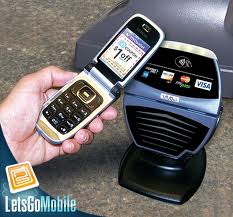
So if QR codes are to meet their demise something has to be there to replace them – and it has to be better. Near Field Communications (NFC) very well could be the answer. From http://www.Wikipedia.com: ‘NFC, allows for simplified transactions, data exchange, and wireless connections between two devices in close proximity to each other, usually by no more than a few centimeters. It is expected to become a widely used system for making payments by smartphone in the United States. Many smartphones currently on the market already contain embedded NFC chips that can send encrypted data a short distance (“near field”) to a reader located, for instance, next to a retail cash register. Shoppers who have their credit card information stored in their NFC smartphones can pay for purchases by waving their smartphones near or tapping them on the reader, rather than bothering with the actual credit card’.

David Pogue in his excellent column Thursday in the New York Times discusses the relationship between NFC and Google Wallet – http://nyti.ms/nPdh7C. It’s interesting that NFC technology is nearly ten years old and is still being finessed. In fact in the U.S. the current generation of NFC technology is only available on Sprint’s Google Nexus – and admittedly this is NFC 1.0.

For those of you that prefer Katie Boehret’s video review (she also has a written column from Thursday’s Wall Street Journal) that can be found here – http://on.wsj.com/oK7we8
But there have to be many people who like me would welcome the day when we could use a digital wallet and have our phone (which is with us all the time anyway) be able to do so much more when it comes to purchasing goods, receiving timely offers, as well as to request information easily and in a timely fashion.

It’s the wave of the near future. Are you ready?

Posted in Communication, Customer Experiences, Innovation, Mobile Communication, Technology | Tagged , , , , , , , | Leave a comment

Spotify.com – I love this music site!

Pandora.com is pretty cool but in my view Spotify.com blows it away. You have to be ‘invited’ but I don’t think that is a big problem – after all I received an invitation and did nothing special to receive one. In fact all you need to do is invite yourself – http://www.spotify.com/invitation/

Spotify was in Europe for a couple of years before coming to the U.S. in July. There have been many questions on its revenue model which is a mashup of paid subscriptions, ad revenue and display ads (90% of users do not pay) and retail partnerships where music is sold directly to users. John Paul Titlow wrote a good post on the subject back in July – http://rww.to/ngA4sK – and he does note that the company as of that writing was not profitable even with more than 10 million subscribers. Spotify has a goal of having 50 million users within the first year of being live in the U.S.

It suffices to be said that music industry executives are not nearly as enamored of Spotify as are its users. All they can see is the potential loss of revenue. My thoughts and questions are more aligned with creating new sources of revenue and how those new revenue sources would stack up with the declining revenue generated from the sales of singles and albums.

There are several things that make me prefer Spotify over Pandora. At the top of my list is that I like to listen to entire albums and Pandora’s free model precludes you from doing that. Spotify allows you to search for a particular artist and album and immediately it comes up and you can listen to it song by song. There are occasional ad interruptions, but they are not overly frequent and the benefits far outweigh the commercial breaks.

Also on my list is the very user-friendly functionality of the site. Setting up play queues, play lists, syncing with iTunes and other devices are all easy. Pay options allow for the creation of a library, and use ‘anywhere’. The entire experience is good enough that I am even considering opting for one of the pay models.

There’s a ‘Premium’ subscription at $ 9.99/month – advertising free – a bit steep but it also allows you to listen on your mobile device as along with ‘enhanced audio’ and ‘exclusive content’. Also available is a Spotify ‘Unlimited’ subscription for $ 4.99/month which although advertising-free, does not offer Spotify on your mobile device, nor does it offer the enhanced audio or exclusive content. For me the audio quality is very good and I consider myself a bit of an audiophile. I am uncertain of how much better the enhanced audio might be (perhaps Spotify should offer me a ‘free trial’ so I could compare?)

If you like music you should really give Spotify a spin. Yesterday I went to see Steely Dan at the Beacon Theater in New York (they were at the top of their game) and while I was in the office listened to ‘Royal Scam’ (the album they will play this evening) to get primed. It was great and I love it!

Posted in Best business practices, Customer Experiences, Entertainment, Innovation | Tagged , , , , , , , , | 1 Comment

Car rental fees are getting more creative

Perhaps car rental companies figure that people won’t pay much attention to the continuously creeping up of additional fees tagged on car rentals. The airlines have mastered this and car rental companies are taking pages out of the airlines’ playbook.

I booked a trip last Friday including a car rental. The base rate for a full-size car (which is a Chevy Malibu and something I would not consider to be ‘full-size’) was $ 84.00/day including unlimited mileage. Since I will drive more than 250 miles on the trip, unlimited mileage was a must-have. I am not even certain it’s easy to rent a car without unlimited mileage these days, or if it would be any less expensive.

The car rental company we chose offers an estimated rental total as part of its confirmation. When I looked at the total it came to $ 108.35/day. This represents a nearly 29% increase over the ‘quoted’ daily rental price. And I am a frequent renter a perquisite that apparently entitles me to an automatic best-rate or discount. I don’t want to buy the car – just rent it for a couple of days!

The additional fees are listed below and maybe they will cause you to scratch your head the way I did mine.

1) Airport concession fee – $ 16.96 – no explanation given. I guess I am forced to make a
concession as well.

2) Fees – $ 5.04 – no explanation given. Perhaps it’s filling the tires with air.

3) Energy recovery fee – $ 0.66/day or $ 1.98 (for the 2 days and 2 hours but somehow it counts for
3 days). I cannot figure what this could mean since I intend on having all the gas stay in the
gas tank.

4) Vehicle license fee – $ 0.50/day or $ 1.50 for again the 2 days 2 hours which kicks up to three
days. Another bizarre fee since I would have thought the vehicle was licensed to and paid for
by the car rental company. Apparently not.

5) Customer facility fee – $ 3.75/day again – three days charge here too for $ 11.25. Is that a
facility fee to make it easy for me to pick up the car? A ride on the shuttle bus?

6) Taxes (no explanation which is no surprise) – $ 11.98 for the 2 days 2 hours (or three days
depending on how you look at it. There always have to be taxes right?

BTW – I have no ‘protections’ and no options as part of my rental.

Perhaps there are some good explanations for the fees – I am sure they are creative ones and I’d welcome your take and postulation on what those explanations might be. In the meantime like everyone I will just fork it over.

It makes you feel violated doesn’t it?

Posted in Customer Experiences, Living in the World Today, Travel | Tagged , , , , , , | 1 Comment

Home telephone service – it’s time to cut the cord

Call me old school but we still have a ‘land-line’ telephone at home. However a year or so ago we bundled our internet and cable service to include our telephone service. There was a financial incentive to do so at the time. I am actually not sure that is still the case.

Another aspect is that when the phone rings at home it is nearly never for me. There are few people that call me at home – those that know me call me on my mobile or at work. Consequently I try to avoid answering the phone at home even though we have caller ID.

Hurricane Irene (which actually ended up being a tropical storm by the time it reached us in Connecticut), wrought havoc with so many things including our cable, internet and telephone service. My wife was able to route the calls to her mobile phone – which was just fine by me since they would not be for me anyway.

Yesterday we woke up to having no home phone service. When we reached our cable provider they told us they could schedule a service call Sunday from 2-5 (it was Thursday), or the following Tuesday from 8-11. Who are these guys – the phone company? The cable and internet continue to work and for whatever reason my wife can receive calls to our house on her mobile phone once again. But we are unable to dial out of the house for what will be at least the better part of a week. What kind of service is this?
At one point having a home security system necessitated having an actual land line since the system was routed through phone lines. But then if your phone line is out so is your security system. I have no idea now that I think of it how our security system is tethered at present.

What does it all mean? Well for one thing that I am seriously thinking about NOT having a telephone land line anymore (my wife will no doubt have something to say about that). Both of our children do not have land lines and operate only on their mobile phone. It’s only a problem if the phone is not charged – or it gets lost. I noticed a statistic this week that apparently a mobile phone is reported missing within one hour. However, reporting a lost or stolen wallet takes much longer. There’s no doubt about what people value more.

With service like what our cable is offering I sure hope our cable and internet don’t go out.

Are you still tethered to a land line? Thinking about cutting the cord?

Posted in Communication, Customer Experiences | Tagged , , , | 2 Comments

Amazon’s Tablet – I think I may try it

I don’t consider myself a technology nut although there are those that might disagree. For instance I do not own an iPhone (although I am moving closer to breaking down each and every day), nor an iPad. Actually I don’t even own a tablet computer at all. My now ancient Blackberry Storm 2 (no longer produced by Research in Motion) has slow and at best adequate internet access and I primarily use it as an email platform since there are so few apps made for the BB Storm.

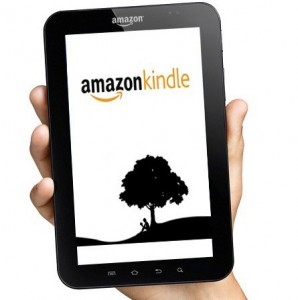
But Amazon’s impending release of its 7 inch tablet has me intrigued. First the suggested retail price is more compelling than an iPad – $ 250 for Amazon’s yet-to-be-named tablet (although rumor has it they are going to name it – the Kindle) vs. $ 400 or more for an iPad 2. Second the 7 inch color screen is attractive to me since I have always found the iPad’s larger size (10 inch touch screen) be a detriment and not an asset. Don’t get me wrong – the iPad is an amazing piece of technology but if I really want something to supplement and not yet replace my laptop it should be smaller and more portable. Eweek.com wrote about this last week – http://bit.ly/nW95Fq

I still own and use an original Amazon Kindle – actually that’s not exactly true. It took three times for Amazon to get me a Kindle that worked correctly but they did that and at Amazon’s cost each time. I’ve been using my current (or re-furbished I assume) Kindle since 2008. While many new e-Readers have come into the market the original Amazon Kindle remains a useful and good working piece of technology.

For that reason I am likely to give the new Amazon tablet (er..Kindle?), a chance. I also like the ideas being tossed around regarding an annual subscription-based (think Netflix for books) library to ‘rent’ certain e-books on Amazon.

There’s no word yet on what the connection charges might be. The current Amazon Kindle’s internet access operates on the Amazon ‘Whispernet’, which is free, but I have serious doubts that the new tablet will handle internet access in the same fashion.

I’ve waited a long time to get a tablet. The iPad did not seem to be right for my needs. But perhaps the waiting is going to have been worthwhile. Here’s hoping.

Do you have a tablet computer? Did it replace your laptop such that you will never use a laptop again?

Posted in Entertainment, Innovation, Technology | Tagged , , , , , , , , , , | 3 Comments

It won’t be possible to forget 9/11

Any American over the age of 14 years old yesterday (September 11th 2011) will be unlikely to forget the events of 9/11/01. In fact I am a bit put off by the constant reminder to ‘Never forget’ – as if that would be even remotely possible.

The tragic events of 9/11 will be etched in the memories of Americans as long as we live. I was not quite four years old when President John F. Kennedy was assassinated November 22, 1963. While I was far too young to truly understand the significance of day I do have memories of my family’s sadness and consider that day to be the first important world event that ever impacted me.

I suspect that as in the case of 9/11, Americans that were around and old enough to understand the events of JFK’s assassination in 1963 can remember exactly where they were and what they were doing when they first learned of the tragic event.

Can two events like 9/11 and the assassination of JFK be compared? Not in the context of more than 3,000 people losing their lives, the impact on their families and the psyche of an entire nation. But I do compare those two events in the context of watershed days in my life that can never be forgotten. As is the case with 9/11, JFK’s assassination in fact did impact the psyche of an entire nation. It could be argued that both events represented a loss of American innocence – in decidedly different ways but no less impactful.

It has to be acknowledged that perhaps the most significant difference in the scope of the two events is the aspect of heroes. First responders to the World Trade Center, people in the Towers, Pentagon, and on flight 93 displayed courage and fortitude that was in fact – heroic. The sheer amount of stories and displays of that courage exhibited during the events of 9/11 far exceed those of the events of 11/22.

It took several years for the classroom history books to ‘cover’ the assassination of JFK as a historical event. In contrast, the coverage (in a historical sense) of 9/11 began almost immediately. Ten years after 9/11 we have some perspective regarding the events that led up to and followed that fateful day. However I wonder how different our perspective will be in another 38 years. As we approach the 48th anniversary (or remembrance) of the events of November 22nd, 1963, how different is the perspective than it was only ten years (1973) after?

Of course we will never forget and it bothers me that anyone could ever suggest that would be possible.

Posted in Uncategorized | Tagged , , , | Leave a comment

Google buys Zagat – it should have bought Yelp

I have been familiar with and have used Tim and Nina Zagat’s restaurant guide for more than twenty years. I’ve long since given up the printed books for an on-line subscription which offers me access to Zagat reviews for restaurants all over the world as opposed to one city, state or area in a printed book.

AdAge released a pretty thorough overview yesterday – http://bit.ly/o6Mdv1 noting that Google’s reasoning was that Zagat was truly local and this fits with Google’s desire to elevate Google Places to a higher value proposition. The New York Times called Google’s purchase of Zagat a ‘consolation prize’. I agree.

While Zagat has a good history of delivering solid user reviews I have become accustomed to Yelp’s easy to used location based application and am dubious that Zagat and Google can improve upon the user experience provided by Yelp – http://www.Yelp.com.

Zagat does not cover many places I visit and consequently it would be of no use to me in a small town that Zagat does not cover. However that’s not the case with Yelp. Yelp’s main drawback as far as I am concerned is the paucity of user reviews when it comes to individual restaurants. The sample reviews are often too small to trust.

When it comes to Yelp I do love the amount of choices that the location based service offers me – the distances to the locations are very helpful, and Yelp goes far beyond restaurants – bars, attractions, movies, museums and much more. Did I mention that the downloaded Yelp app is free?
Google did ‘try’ to buy Yelp a couple of years ago for $500 million. (The terms of the Zagat sale to Google were not released). The article in AdAge notes there are conflicting reasons why the sale did not go through. Rest assured if Google really had wanted to buy Yelp the deal would have happened.

I can see the deal making sense from the family owned perspective of the Zagat’s. It probably is exactly the right time for them to cash out and work on other things as the company they started 32 years ago is in a much different marketplace today. I am betting they would rather spend their time (and money) doing other things.

Google has made a lot of really smart moves (see YouTube and Google+ for instance). However I think they bet on the wrong horse in this race.

How do you find places to eat when you go to a new city – or want to try any new restaurant?

Posted in Best business practices, Marketing stuff, Social Media, Technology | Tagged , , , , , , | Leave a comment

Today’s tennis technology wouldn’t allow John McEnroe to argue

As a tennis fan for more than forty years I’ve seen technology change the game in many ways. From major changes in equipment (I think I still have an old Dunlop Maxpli somewhere in my house) to electronic scoreboards, and more recently video replays as part of a player line call ‘challenge’ system. In fact the camera for it is sometimes called a ‘Mac cam’ in honor of John McEnroe.

But there would not have been as notable a John McEnroe had he come around in 2010 instead of 1977. Almost certainly he would not have been remembered as the mercurial and volatile performer the world came to know. Several years ago pro tennis instituted a ‘challenge’ system whereby the player can challenge up to three line calls per set, (this is only available at tournaments that employ the technology, and at the U.S. Open it is limited to a few large courts). A video replay shows definitively if the ball is in or out. If the challenge is won by the player and the line call reversed, the player does not lose the challenge.

The players watch the replay just like the spectators and then based on the result they go back to the match. No replacing of lines-people (the ones that call the ball in or out) or yelling at the umpire or calling them names like ‘You are the pits of the world’.

Watching tennis today is very different than it was when McEnroe was playing. That is not to say it is better or worse – just different. The racquets have changed the way the game is played, as have size, strength, and player fitness. But while I support the challenge system since the idea is to get the calls right and I agree with that, some of the game’s personality has been lost in the process.

The bottom line here is that I miss the dynamics of player eruptions on the court during a match. Of course at times McEnroe and Jimmy Connors, and Ilie Nastase went too far with their antics and foul mouth tirades on the court. But it was SO unpredictable, exciting and interesting! Even Andre Agassi played in the era before the challenge system and at times would offer some colorful comments in the middle of a match. Those days are dwindling once the challenge system is in place for all matches – and that day appears to be coming all too soon.

I fear that tennis is losing some of its uniqueness and drama. For that reason I hope baseball does not go to electronic umpires as arguments like balls or strikes, safe vs. out are part of the game and if technology took the uncertainty away would that make it better?

I was at the U.S. Open Monday and a friend commented that tennis was the only sport he could think of in which you warm up your opponent prior to trying to defeat them in a one-to-one match. That has been the case as long as I have played or watched tennis. It is one of the interesting idiosyncrasies of the game. Is that tradition the next thing to change? I hope not.

I feel that tennis needs to hold on to its personality and should be careful not to give up any more of it.

One more thing – I wrote a post http://wp.me/pJX7l-66 last year about how much I liked the Tennis Channel. This year Tennis Channel was the sole provider of coverage at night from the U.S. Open on several occasions. Only as of September 2nd a dispute between Cablevision, Verizon and the Tennis Channel caused those two systems to no longer carry the Tennis Channel. While it’s good that people can watch the U.S. Open (for free) on their computer (www.usopen.org), without internet enabled television watching it on the small screen is not nearly as good as on a big HDTV screen. The Tennis Channel is really relevant for two weeks – the two weeks of the U.S. Open. The small amount of viewers that watch it the other times of year are a fraction of the potential audience. How could this happen?

Is technology taking away tennis’ personality and traditions?

Posted in Customer Experiences, Entertainment, Technology | Tagged , , , , , , , , , , , | Leave a comment