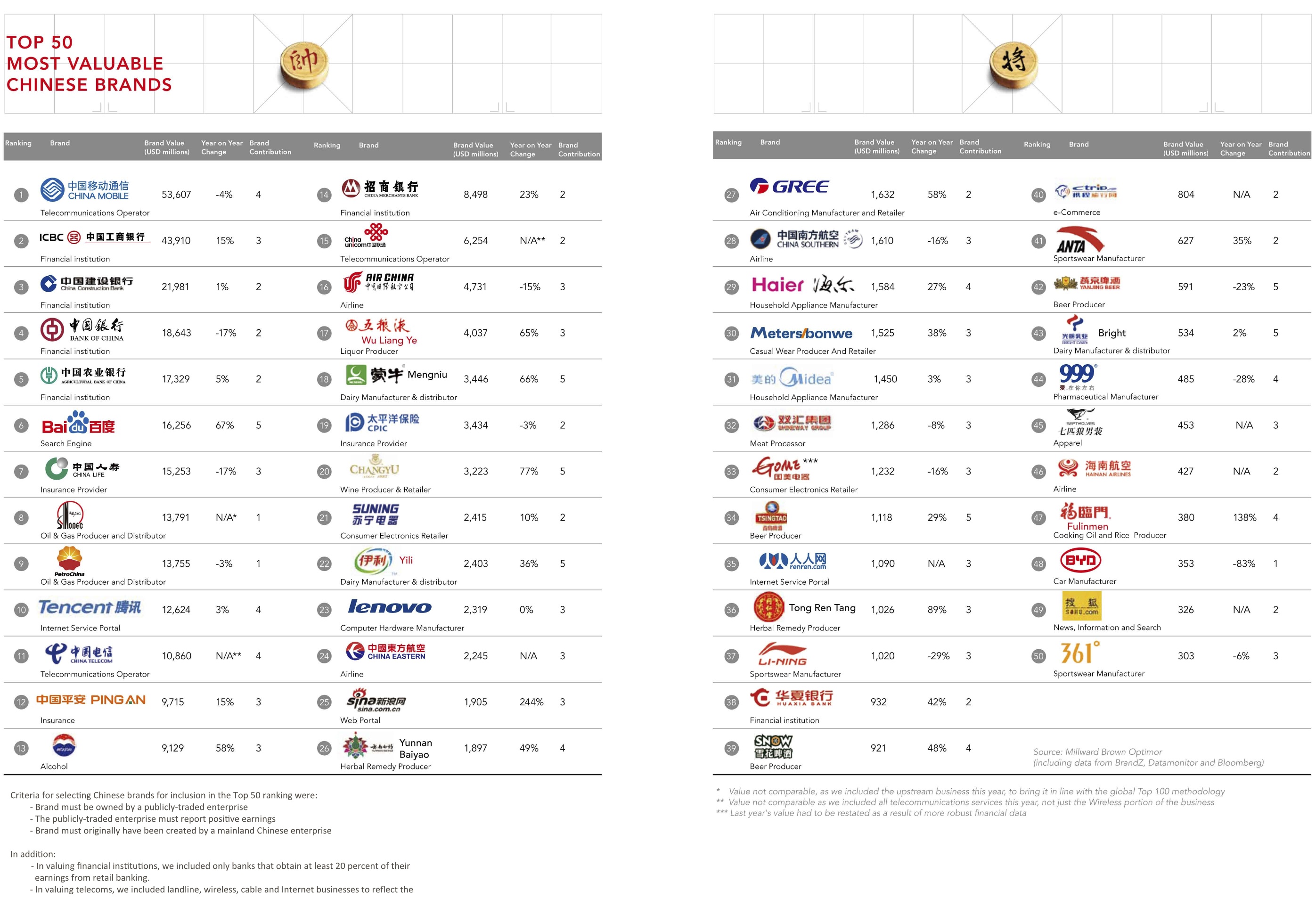
Marketing Chinese brands in the U.S. – it’s a learning process

It’s not as if the Chinese companies I’ve met with lack any understanding of good marketing principles. Nearly every company and everyone I’ve met in those companies have highly educated people that are focused on growing the sales of the company as well as entering new markets such as the U.S.A. It isn’t easy and often what appear to be marketing related issues are actually overall corporate strategic issues that are unsettled, in flux, or both.

To offer that product distribution is the centerpiece of any successful (or unsuccessful) market development strategy would be an understatement. While the Chinese companies that I’ve met seem to understand this concept in an overall sense, their lack of understanding of how things work in the U.S. marketplace can lead to taking what they see as the shortest and easiest route to success – using U.S. based distributors. This strategy is more likely to be unsuccessful than successful.

I’ve seen first-hand examples of how using a U.S. based distributor can be counterproductive. I’ve explained to my Chinese counterparts that distributors rarely offer product line representation in any exclusive fashion. This means that when a U.S. distribution partner is talking to or meeting with its potential customers (note that they might not always correspond with desired customers of the represented companies) they will try to make a deal that best suits themselves (the distributor).

In the U.S., independent of industry, distributors have a number of manufacturers they might represent (in the same discipline) at any given moment. Consequently this affords the distributor the choice of who they want to promote based on the customer need, AND the best compensation arrangement they have from within their network of companies they represent. If a manufacturer wonders why deals never get done on their behalf it could be that the deal set up is relatively unattractive for the distributor and they are promoting other resources. What makes it more frustrating is that the manufacturer will probably never know the real story.

So why do Chinese (and other non-U.S.) companies prefer to use distributor relationships? The biggest reason is that it’s so much easier for them to deal with and manage. Most of the smaller Chinese companies I have met with (I’m not referring to larger enterprises such as Alibaba.com, Huawei and Mindray for example) do not have the knowledge, energy or resources to truly set up an office in the U.S. in order to handle product shipments and distribute those shipments within the U.S. By the way there are similar issues for American companies (save for larger U.S. based enterprises) trying to navigate selling their products in China when it comes to understanding legal issues, duties, distribution etc..

What results is that the Chinese companies I talk to jump in with a distributor and too often become disenchanted and ultimately get rid of them. But those types of efforts to gain traction in the U.S. have made little or no progress and as the saying goes ‘it’s back to the drawing board’.

I advocate a direct approach to developing the market here in the U.S. and yes realize that it is a more challenging approach since it requires thinking on how to import and distribute product. The approach forces companies to carefully consider product lines and the placing of company personnel also which are not shortcut methods as in the case of the distributor approach. My question is, why continue doing the same thing over and over again and then expect a different result?

Posted in Business in China, China, Communication, Marketing stuff | Tagged , , , | Leave a comment

The jig is up – it’s time to charge internet sales tax

I saw an article http://bit.ly/KBzWqm while I was away regarding Amazon.com ‘agreeing’ to charge sales tax in New Jersey beginning July 2013. The first thought I had was – Amazon.com now has a business ‘presence’ in New Jersey and that is often (but not always) the big factor on whether or not a company has to charge ‘internet’ sales tax or not.

My instinct tells me that whether it is to be state by state or nationally, the debate over whether or not to charge sales tax for internet sales is a sham. In my opinion the simple answer is that any buyer of products or services over the internet should be charged a tax based on either where they live or a flat internet national sales tax (dare I say a ‘flat’ sales tax?). This opinion on the subject is in stark contrast to that of the DMA (Direct Marketing Association) which has a primary mission of fighting internet sales tax on behalf of its members. I remind readers that we own a company that is completely reliant on internet sales and I realize what I am offering to sign up for.

Charging internet sales tax could result in other benefits. For example, at the retail level there are many buyers that are ‘showrooming’ http://bit.ly/LLJ89h pricing by visiting retail locations and then either use a mobile best price application to see if any other local retailers will beat it, OR they simply go online and try to beat that price at any one of hundreds of online retailers. By charging internet sales tax I believe brick and mortar retailers will recapture some of those lost sales to the web. The problem of showrooming has been going on for longer than retailers would like to admit but finally the word is getting around.

In reality I am surprised (in retrospect) that a world without internet sales tax has lasted as long as it has. Good lobbying by organizations like the DMA has a great deal to do with it. This is sure to be an unpopular opinion particularly with my many associates that are part of the DMA. An internet sales tax is really a consumption tax and is not received equally since those that are more well off are less impacted than those that are less well off.

How about a 3% across the board internet sales tax? Collected by the state (please keep it away from the federal government) in which the purchaser resides or has a place of business, it would raise some state tax revenues, is not usurious and is a start at acknowledging that internet buying (mobile or otherwise) is great for consumers and brands alike.

If you do not see my idea as a potential middle ground do you have a better idea? Is the status quo better?

Posted in Best business practices | Tagged | 2 Comments

I’m not quite ready to move to China to live – yet

Even after a fifteen plus hour flight from Hong Kong back to Newark, I’m strangely not tired although I’ve not been to bed in more than 30 hours (and that’s after a 4 hour night’s sleep). My mind is buzzing with ideas and thoughts related to my travels to Japan, HK, And China.

The last two trips to China have had occasions where people strongly encouraged me to move there to do business and live in an exciting place in an exciting time. While there have been signs of an economic slowdown and possible burst in the real estate market, a China-revised economic growth rate of 7.5% is something Americans would sign up for in a heartbeat – not to mention nearly the entire EU. I’ll admit that I’ve toyed with the idea of moving to China more than once or twice over the past year, but I’ve realized that for the present where I am at (being U.S. based) is the very best place for me to help accomplish the mission of helping Asian companies expand their market in the United States and helping American companies expand into China and beyond in Asia.

While I’ve been to both Japan and China numerous times and do study as much as I can, there’s so much more to learn. In the process of traveling around China I’ve visited somewhere between ten and twenty factories (there are days when we visited four or five and I’ll admit they sometimes blend together). I’ve met people in various positions at those factories and have learned how different they think and behave from the harder charging businesspeople of Beijing and Shanghai.

I’ve made so many new connections in Asia, and have gained many new friends that I like and work at keeping in touch with, that I feel as if I am straddling twelve time zones all the time. And at my age doing a split would be a catastrophe.

What makes it work is that (not uniquely) our team knows the market here in the United States, and has been successful in growing and sustaining audiences and customers for many years. I think what is unique is our being truly interested in helping Asian companies in the United States. This takes work – learning the language and customs so that we can better understand and communicate the cultural differences that impact marketing strategies and executions.

In turn we are learning about doing business in Asia (and I get to travel to cool places on business) and what has resulted from my multiple trips to Asia over the past twelve years is a developing network of friends first, and those friends and their associates are already helping me help American companies get things accomplished in China, Japan and Vietnam for example.

The goal has always been to make it work both ways, there to here and here to there, but it takes time and the best place I can help make things happen right now is to stay U.S. based. Besides that I am totally enjoying the ride along the way. Maybe that’s the best part.

And yes, despite the cacophonous rancor of the current U.S. political season (if you watched news reports from Asia on things in the U.S. you’d be totally depressed) – it’s good to be home.

Posted in Business in China, China | Tagged , , , , , | Leave a comment

Business in China for Americans means hurry up and wait

Having moved around quite a bit during this trip – Tokyo to Hong Kong and then to Shenzhen, China I’ve been able to experience the stark contrasts of doing business in China with that of doing business in Japan or Hong Kong. Yes Hong Kong is officially part of China but ask anyone from Hong Kong where they are from and they will tell you Hong Kong – not China. And anyone in Hong Kong will also tell you that doing business in Hong Kong is vastly different than doing business on the mainland.

Yesterday my friend Simon drove me around to several meetings with Chinese companies. The first meeting started as many meetings I’ve attended do – with a seat in the lao ban’s office (boss) and we were served tea made by the boss (in this case the factory’s General Manager) on his personal tea set – a ritual that I’ve experienced many times in China. It reminded me how different business is in the U.S. and I would never in a million years anticipate visiting a prospective customers and then have the boss make and pour tea and serve it to me. This was followed (as it often is in China) by the boss taking us out to a delicious Chinese lunch. The whole experience took more than two hours and we did talk business but not all that much as it was more about us getting to know one another.

As an aside, while we drank tea, we peeled and ate fresh li-ci berries which as I suspected were what we Americans call lychee nuts. I had never had them fresh before and they were good. They are also in season and sold roadside all over the Shenzhen area – sort of like lemonade stands except there are many, many, people standing by the side of the road selling the li-ci.

Other meetings yesterday also left an impression one of which is that Chinese business people will answer their mobile phone (that rings frequently) while in a meeting. The conversations last anywhere from thirty seconds to as much as five minutes and while it happens you have to just sit there and wait. The others in the meeting do the same. At one point Simon had to get up to take a call and left me in the office for more than five minutes while I smiled and waited. My Chinese is ok but more than five minutes of conversation in a business setting is still more than I can handle. It was different, that’s for sure.

When in China there’s a constant rush from one meeting to the next and meetings scheduled often start and run late. Sometimes late afternoon meetings lead into dinner, sometimes they do not. When in China doing business get used to being flexible and having your stamina tested.

The Chinese I have met in a manufacturing city like Shenzhen are all highly educated, very friendly and professional – in a Chinese way. It’s important to keep in mind that western customs of conducting business should not be compared since we’ve been at modern business for many more years than the Chinese. Cultural differences play such a big role and for many westerners can be frustrating if not fruitless.

I am prepared for most of what I have seen over the past two plus years of traveling to China for business. But I am still surprised by things I’ve not seen before and maybe more importantly the opportunity I’ve found for personal growth (or so I’d like to think) in going to China has given me a new perspective on relationships both personal and professional.

As an American business person ‘Hurry up and wait’ is still tough to handle at times but that’s the way things are done here and to try to approach it any other way would be foolish and counterproductive.

One last thought – if Hong Kong is not really China as I have posited, then Shenzhen is China – easy. The subways are new and really easy to use, it’s a totally planned city and there’s lots of English around for those that do not speak Chinese, and the people are very friendly and wish to be helpful. I’ve been to Guangzhou (Canton), Shanghai and Beijing – all tier-one cities that are much more representative of what China is really like. But you could do a lot worse than start your China experience in Shenzhen.

I think it’s just about time to come home. Next post from the other side of the globe.

Posted in Best business practices, Business in China, China | Tagged , , , , , | Leave a comment

Mobile data service in Asia – Verizon and 4G phones are a bad match

4G mobile phones are still being labeled as ‘next generation’ but I am already looking forward to the following generation since my Motorola Droid Razr with Verizon service is not only bad – it’s mostly non-existent.

Verizon is one of the mobile giants in the United States. It’s unfathomable that despite the fact that I paid an extra fee for an international data plan so I could receive mobile data in addition to making phone calls ($1.99/minute charge!) and sending ($.50 each) or receiving ($0.05) SMS texts. I was forewarned that it might be ‘spotty’.

In Tokyo I rarely was able to receive a mobile network signal, in fact I was walking back from being out using Google Maps when I lost the network and consequently got a little lost. The only way I could use the phone was via the hotel’s wi-fi connection. Which really only worked in the hotel lobby (yes I will be staying somewhere else next time). Like so many of us I have become so reliant on the phone that the idea of being untethered in a foreign country changes the way I have to conduct business.

While, in Tokyo, I called Verizon and they were diligent about trying to help but in the end blamed the difficulties on the 4G phone integration in Tokyo. Attention Verizon customers – in Hong Kong the problem is worse. There is no mobile data network signal available. I was warned about this before the trip as well and knew that I’d need to entirely rely on Wi-fi. For a guy like me on the move constantly living in a Wi-fi world is a big problem. Trying to log-on to Wi-fi networks all over a city like Hong Kong is a big pain. It knocked out consistent use of Google Maps in Tokyo and sometimes in Hong Kong (but strangely sometimes I get Google maps but not a mobile data signal, something that I am trying to figure out.

I can always send texts and pay or receive them and pay, or even make phone calls, and pay. Notice any pattern there? Verizon should be embarrassed at the lousy service they offer that I paid for. It’s not what you’d expect from one of the largest and most well-known U.S. Corporations. Verizon had to know what they were getting into when they partnered with Google/Motorola’s technology. I’ve heard that iPhones don’t have the same issues. Man I am I tired of hearing that.

I have found ways to use Skype via Wi-fi to make phone calls to the U.S. for nothing or next to nothing. There are limitations as for instance I cannot use Skype to call some China phone numbers. I met an associate today who gave me a handsome but inexpensive (as he put it) HTC phone for my trip into China tomorrow including minutes for me to use. Of course it does not work in Hong Kong.

Would things like these aggravate you as much as they do me? Am I wrong to expect and demand better?

Posted in Best business practices, Business in China, China, Communication, Customer Experiences, Innovation, Living in the World Today, Mobile Communication, Technology | Tagged , , , , , , , , , , , , , , , | 4 Comments

Television commercials as content in Japan – groundbreaking?

It’s my last day in Tokyo on this trip and it’s been an interesting and very enjoyable one. Last night after I returned from a walk and a libation I picked up a can of Chu-hi (why do I love this stuff so much?) and flipped on the hotel room television after midnight. Since I’ve never spent any time in a hotel in Tokyo on my prior four trips it was ‘interesting’ to say the least.

The first thing I noticed is that there were no news programs – Japanese, American, UK or otherwise. It might have had as much to do with the time of day (or night) as the hotel’s desire to get customers to pay for programming. The Japanese are very good at monetizing things as I found out this morning when I asked to stay one hour past my checkout time only to be told it would cost me 157 Yen – U.S. $2.00. I politely declined.

The next thing I noticed is that there all the channels (there were only 12 or so available) were Japanese with no other feeds from any other country – not even an old episode of Friends. As I moved around I stumbled upon some sort of game show with Japanese soccer players (or at least they looked like soccer players) who were involved in some sort of contest partnering with a Japanese celebrity (so I think) who preened around a bit like Yul Brynner in the King and I. The show segments were really short and commercial breaks really long. I don’t get the feeling that there are rules in Japan like those made by the FCC regarding how many minutes of television commercials can be seen each hour.

I watched the show and suddenly it was over with no resolution (remember my lack of ability to speak Japanese makes it more than a little difficult to tell). What followed was a series of television commercials one right after the other for the next nearly half-hour. I kept waiting for the program to return but it never happened. The advertisers ranged from Uniqlo, to HTC, to Hitachi, an energy drink, and a few restaurants. I saw the same ad repeated more than twice for HTC in the half-hour I was watching.

The whole experience made me think about having a cable or internet channel completely dedicated to – television commercials. No content other than television commercials. That’s completely in contrast to the near constant buzz in the U.S. regarding content marketing (which I believe in but am already tired of hearing about!). I have a suspicion that people would watch those television commercials – at least at first – waiting for programming that was never to arrive. After a while I became a bit mesmerized – many of the spots were 15 seconds and an occasional 30 second or 60 second spot popped up as well. But the fast pace of the 15’s kept me paying attention. Maybe it was the Chu-hi but I don’t think so.

Here’s a link to one of the ads – and I admit it’s a big gratuitous but then again when in Tokyo (and it was 1AM) http://www.youtube.com/watch?feature=player_embedded&v=RH2BzHUUnOM

Television ads as a content channel – what do you think? Could it work in the U.S.? Would brand advertisers be willing to test running on a cable channel dedicated solely to commercials?

Posted in Advertising, Brand Advertising, Japanese advertising, Living in the World Today, Marketing stuff, Media | Tagged , , , , , , , , , | Leave a comment

Tokyo is much easier to get around in than you think

I don’t speak Japanese except for hello, good-bye, and where’s the bathroom? But I am back in Tokyo this time operating without a ‘net’ that is my friend who lived here for nine years and speaks Japanese. So far it’s been easier than expected.

Google Maps is definitely not evil when it comes to navigating a foreign place. Fortunately there is enough English to understand where you are and where you are trying to get to. Despite only a wi-fi connection – I am still working through some Droid/Verizon phone issues, I walked last night from Roppongi to Akasaka which is about a fifteen minute walk and the weather was cool for late May in Tokyo. One consistent challenge in Tokyo is the fact that street addresses are ephemeral and far from exact.

Somehow I managed to figure it out. I asked a Japanese waiter who spoke tiny bit of English at the excellent restaurant I walked into called Uoshins.com – the Nogizaka outlet. I knew I was close but I was too hungry to wait and had both a great meal and got the confirmation that I was literally down the street from where my next meeting was to be held. At least I am not just another guy who won’t ask for directions.

As I waited for my 10PM meeting sitting outside the Orange restaurant (a meeting which ended up being at 11PM since my associate was delayed with a conference call with the U.S. office), I heard a voice in English ask me if I was waiting for my friend Joe. It turned out that he was sitting outside waiting as well and we had a very nice meeting and I learned about his business and family.

I write often about the need for people to get out of their comfort zone. You’d think I’d have more than I can handle being in Tokyo and not speaking Japanese. Instead I find that I am squarely in my comfort zone and loving it.

It’s worth finding out how far you can stretch your comfort zone. Next time why don’t you meet me here?

Posted in Communication, Customer Experiences, Living in the World Today, Mobile Communication, Travel | Tagged , , , , , , | 2 Comments

Tokyo – you should try it

I don’t speak Japanese except for hello, goodbye and where’s the bathroom.  But I’m back in Tokyo this time without the net that is my friend who actually speaks Japanese.  So far it’s been easier than I expected.

Google maps is definitely not evil.  Despite only a wifi connection – still working through some phone issues, I walked to an area Akasaka which is 20 minutes from my hotel.  Of course you may be familiar with the fact that addresses in Tokyo ate ephemeral and wholly inexact.

Somehow I managed.  Asked a Japanese waiter at the excellent restaurant I stumbled into and after a great meal he confirmed it was nearby.  I kind of knew it but did not want to be just another guy who would not ask for directions.

I write about the need for people to get out of their comfort zone.  You’d think I’d have more than I can handle being in Tokyo not speaking the language.

Instead I find I am squarely in my comfort zone.  And loving it.

You should try it if you’ve never been to Tokyo.  I’m not kidding at all.

Posted in Customer Experiences, Living in the World Today, Uncategorized | Tagged , , | Leave a comment

Has the U.S. tried just about everything else yet?

I am still enjoying the unofficial start of summer here in the United States which is Memorial Day weekend. Spending time with family and friends is a big part of that tradition and I relish every moment. Tuesday morning immediately following I will get on a plane to Tokyo for a few business meetings followed by a trip to Hong Kong and then into China for more meetings. I won’t be in any one place for more than three days so it will be a fast trip – at least for me.

Whenever I go to Asia and meet with non-Americans I am invariably asked about how things are going back in the United States. At this moment I am having difficulty coming up with any answer aside from – feh. That’s a technical term for those of you that don’t know – you can look it up on Google if you like.

I am think that American to American, people would describe the overall situation of many as not being great, politically divisive in a nearly unprecedented way, and fraught with uncertainty. When you think of it that way that description would fit many country’s today – in Europe and now in Asia as well. But
I am not sure that I would represent the current USA status in those terms to my friends and associates in Japan and China.

The situation in Japan is extremely difficult in many ways as the country tried to rebound not only from the 2011 earthquakes and tsunamis, but from major changes in Japanese society and the Japanese economy itself. I will offer more thoughts on that after I’ve been there a couple of days as I’ve not been in Tokyo for over three years and from what I’ve heard things are far from being back to ‘normal’ – whatever that means.

And then there’s China. While the U.S. election season is set to be in full bloom, the nine member standing committee of the PRC is undergoing its own preparations for new leadership as of October. With more and more information leaking out of China the world is getting glimpses of things that normally stay under the radar. The Chinese economy is cooling off and the RMB is slowly (too slowly for many financial market experts) appreciating. That’s often perceived as a bad thing which is odd to me since it was not long ago that the Chinese economy was in danger of overheating. I don’t seem to recall a period of equilibrium but maybe I was absent that day.

Obviously things could be better in the U.S. as well as around the world. Major transitional changes continue to unfold as the countries of the world are rejiggering to be best prepared for the overall emerging world economy. It’s changing fast, it’s confusing, it’s scary at times but it’s also very exciting.

There’s an expression I’ve heard said about the United States that I will probably use as an overall description. It goes something like ‘The U.S. can be counted on to do the right thing – after it’s tried just about everything else’.

Do you think the U.S. has tried just about everything else yet?

Posted in Business in China, China, Living in the World Today | Tagged , , | Leave a comment

Winning in the U.S. market is still a big win

Despite slow progress the American economy is moving forward (or sideways), and foreign brands being successful in the United States continues to be a worthwhile pursuit. I am preparing to head to Japan, Hong Kong and China next week to meet with companies who have a desire to enter or be more successful in the U.S.A. I think aside from the American penchant to spend another big reason is the maturity of the American consumer.

I am not referring to the age of the American consumer but the overall sophistication and predictability of American consumer behavior in comparison to major markets like Brazil and China. When taken as an entire market the EU is certainly large enough but what really exists in Europe is a number of local markets that do not behave in any coordinated fashion. While consumers in the EU are sophisticated, what plays well in France is unlikely to do so in Germany or the U.K., so on and so forth. Each market has to be approached as a unique entity.

Today the talk (and rush to make a marketing impact) is all about marketing to the mainland Chinese. Wages are increasing, tastes both luxury and non-luxury are continuing to develop and the opportunities are enticing. Yet China is a very immature market in comparison to the U.S.A. market. Fold in the Chinese government’s watchful eye and influence and what you end up with is a very tenuous and unpredictable market. What will happen to the Chinese consumer when the real-estate bubble finally bursts, (and it will eventually despite the massive efforts by the government to stave it off)? The Chinese having savings deeply imbued in their psyche and in my view could easily go back to what is both familiar and not a distant memory. This is in stark contrast to the American consumer who is conditioned to buy and spend – something that is highly unlikely to change unless there is a financial catastrophe.

Brazil and China will continue to be an allure to brands that are looking to expand and capture the minds of new prospective customers. But it will be a number of years before any multinational brand will think of bypassing the U.S. market as not being worthwhile. Having success in the United States is still vitally important as well as financially attractive.

American consumers understand marketing and their being marketed to, and that is a part of their everyday lives. That sophistication forces all marketers looking to attract American consumers to raise their games. But it’s worth it since a brand making it in America is still a big win – even if it’s harder than it used to be.

Posted in Best business practices, Living in the World Today | Tagged , , , , , | Leave a comment