Buy Gold Now! Direct Response Radio advertising at its worst

Listen to any news program on terrestrial or satellite radio recently you’ve no doubt heard a direct response commercial touting reasons to buy gold now. With the stock market as volatile as it’s ever been the pitch is aimed at nervous investors who are beside themselves with what to do next.

Gold has always had special allure for many people and it is used not only for jewelry but for many industrial applications. In fact all the gold mined in the world in history would fit in a cube 60 feet on each side, that is to say, it would fit in the space underneath the Eiffel Tower. Gold occurs as part of the earth’s crust at approximately .0025 parts per million, and is widely distributed throughout the world. Gold also occurs in seawater, to the tune of approximately 10 parts of gold per trillion parts of water, concentrations too small to profitably extract.

The price of gold spiked to nearly $ 1,800 an ounce Thursday and an opportune direct marketer had spots in the can and ready to go. I listened to it a couple of times over the past few days, the spot points out that you could have bought gold for $ 300 an ounce back in 1998 and even $ 1,200 an ounce just a couple of years ago.

There are some financial pundits that have surmised the price of gold could rise upwards of $ 2,000 an ounce on its way to $ 3,000 or even $ 4,000 an ounce. Since I am not a speculative investor I will refrain from commenting on the likelihood of that occurrence. I will note that yesterday the CME (Chicago Mercantile Exchange) raised the margin requirements for gold futures http://nyti.ms/nfuhwg which helped knock the price of gold down 3% for the day. You have to have a strong stomach to ride that kind of drop down the tracks.

Here’s what does bother me – preying on average people’s fears and lack of knowledge when it comes to investing in general and investing in a commodity such as gold (or any precious metal for that matter). Most of the ads for investment vehicles have some sort of accompanying disclaimer about the risks of investing – right before the phone number and URL is barked several times, but this particular ad doesn’t have the disclaimer.

I guess one could be impressed with the timeliness of this advertiser in buying spot radio time during this current stock market roller coaster ride. Yet what is worrisome is the possibility or even probability that non-professional investing people do not really understand how fast the price of a precious metal like gold can drop. (And yes I realize it can also rise).

The point I am making is that a making a move into a precious metal like gold that has appreciated dramatically over the past two plus years (nearly 50%) requires careful consideration and attention both before and after the fact.

The attempted frenzy being created by the recent radio ads I refer to just seems cheesy and sleazy to me.

How about you? What do you think?

Posted in Advertising, Marketing stuff, Media | Tagged , , , , , , | 1 Comment

LinkedIn’s market value may have taken a hit but it’s more valuable to me than ever

Last Friday and this past Monday the stock market took major hits. Yesterday it came back. One of the biggest losers was LinkedIn which some say was overvalued. While I am not all that knowledgeable when it comes to company valuations I have been using LinkedIn more and more and with great success.
The main reason I consider it a success is that people respond to inquiries on LinkedIn more than any other social networking portal I have used.

An article in DM News http://bit.ly/pMMuZF highlights increases in LinkedIn’s revenue – and it was from Friday August 5th shortly before the stock took a pounding.

My work in developing our China business requires expertise far beyond that of my regular circle of contacts. LinkedIn has offered me a way to engage total strangers by asking for help, offering help and simply offering my opinion on something they might have written or said. What continually surprises me is the rate of return on what I consider to be a very minor investment.

Of course not all my inquiries are responded to. And I know I need to be careful since there is a rating system on LinkedIn such that if enough people complain about being spammed or contacted inappropriately you can be blacklisted from making outreaches to people you don’t know using a feature on LinkedIn called ‘Inmail’.

But I am here to tell you that if you are not using the Premium or Pro access on LinkedIn you are missing out on opportunities to connect with people in way that has never before been possible. However I do wonder how long this open-networking will last. If people begin to be deluged with requests from all over the map the opportunity conduit that LinkedIn offers may well become unworkable and unusable.

In case you are wondering I try to be as open as possible myself when it comes to answering questions posed to me on LinkedIn. I also receive offers to Link In with people I don’t know but my policy is to not Link In with total strangers. Yet answering a question for a total stranger (provided it is a relevant question and something that I can help with) is something I always agree to do.

I believe LinkedIn is the best of all the social networks in offering a value proposition. Yes better than Facebook and better than Google+ (which is on the rise as far as I am concerned).

How about you – are you getting everything out of LinkedIn that you could? Or do you think it’s too much trouble and a waste of time?

Posted in Best business practices, Communication, Social Media | Tagged , , , , , , | Leave a comment

Reading is fundamental but how do you decide what to read?

When I travel one of the things I look forward to is the opportunity to read novels – both fiction and non-fiction. This is in contrast to what I read when I am not traveling. Three newspapers a day, countless emails, magazines and newsletters are more than enough ‘content’ for me to try to keep up with.
I don’t know about you but after a ten or twelve hour work day, reading a novel most often has my eyes closing within fifteen minutes. It’s not that I don’t enjoy what I read; I simply am most often unable to stay awake. While I don’t watch all that much television, it’s much easier for me to remain awake watching television than it is to read (unless I am watching a movie at home which to me is great sleeping time).

We’ve heard all the statistics on how much television Americans watch. Some statistics from a 2007 article are below:

From a website http://www.parapub.com – Each day in the U.S., people spend 4 hours watching TV, 3 hours listening to the radio and 14 minutes reading magazines.

And from http://www.JenkinsGroup.com
1/3 of high school graduates never read another book for the rest of their lives.
42 percent of college graduates never read another book after college.
80 percent of U.S. families did not buy or read a book last year.
70 percent of U.S. adults have not been in a bookstore in the last five years.
57 percent of new books are not read to completion.
70 percent of books published do not earn back their advance.
70 percent of the books published do not make a profit.

Emarketer has some figures on average time spend on line 2008-2010 although no mention of time spent reading.
http://www.emarketer.com/blog/index.php/time-spent-watching-tv-tops-internet

Maybe the numbers have changed a bit since 2007. But if I had to guess the data might show that some of the television time has been replaced by time spent on Facebook and other web-based activity.

Shortly after the statistics I have cited were released the Amazon Kindle came on the market. Today we have the Barnes & Noble Nook, and the iPad, along with other tablets that are ideal (or so it is said) for reading. I am impressed when I see commuters on the train reading books in the morning and I think they have the right idea. I am at my most-alert in the morning and yet I spend that time reading news stories, emails and whatever else comes my way via email.

Yet when I read a book (right now I am reading Bill Bryson’s – ‘A short history of private life’ and it is terrific), it is not quite a guilty pleasure but far more fulfilling that reading another news story about how the world financial crisis might turn out.

My wife is a dedicated reader of novels as is my eighteen year old daughter. My twenty-two year old son was a voracious reader but I suspect he has little time or interest in reading novels. I wish that were not the case.

How about you – do you read books, newspapers or magazines? All of them? None of them?

Posted in Communication, Living in the World Today | Tagged , , , , , , , | 2 Comments

I will pass on the double dip thank you

I remember in 2008 hearing some people say ‘I refuse to participate in the recession’. As if they had some control of general economic trends and forces. Oh sure it sounds defiant and strong but it’s also something like whistling through the graveyard.

The Dow Jones lost more than 4% (500 points) on Thursday. July unemployment figures came out and the news is not very good – no surprise. Yet the other night we went out to take our daughter for her birthday dinner (Thursday night) and the first two restaurants we went to in Connecticut were booked solid. They were nice restaurants and not inexpensive. I did not get the feeling that the people were nervous about the economy in general.

Is it that people have become so accustomed to dining out that they do it despite the fact that is expensive and a bit of a luxury? In fact the luxury market appears to be fairly immune to the overall economic downturn although before yesterday the stock market was 80% higher than it was in 2009 at this time.

Is the mounting U.S. national debt finally bringing everything to a head? While I (and people a lot smarter than me) cannot answer that, it does feel as if the U.S. and the world are in for a stretch of bad economic weather that could last a very long time.

If mood has anything to do with it then China has a leg up. The Chinese perceive the troubles of the west are a validation for their style of governance. However I had that same feeling in Hong Kong which is part of China but operates in a much more western environment. And the mood in Hong Kong also was positive and can-do. So I don’t believe the west’s problems are hardly a kind of referendum on socialism, capitalism or any kind of –ism for that matter.

Terms like ‘soft-landings’ and ‘double-dip recessions’ are increasingly tossed around – today in particular. I sincerely hope that in trying so hard to prognosticate the future, the experts are not willing bad things to happen even if inadvertently. When enough people talk about how bad things are and how they are getting worse or will get worse before they get better, the notion becomes so strong that any other outcome might become impossible.

Do you think attitude plays a role or are macro-economic trends and forces too powerful to be impacted by the way people feel?

Posted in Best business practices, Living in the World Today | Tagged , , , , | 2 Comments

It’s time to think about being your own corporation

I had lunch with a friend of mine today who recently completed a stint as a contract CFO. It was his decision to resign as he felt the company was not progressing and it was time to look toward new horizons. What I found to be particularly interesting was that he has incorporated himself as his own LLC and we agreed that more people should consider that option.

Different from freelance, incorporating oneself positions the worker to gain health insurance and retirement benefits as a corporation of one. It requires research to find the best prices for those things but it can be done at a much more reasonable cost than as an individual.

The agreement in Congress on Tuesday , highlights my idea that people should not expect to be taken care of by the government or the company they work for. Medicare, Medicaid and Social Security account for 40% of the budget spending in the United States. Clearly this has to change if the U.S. is going to make any headway in reducing the ever-increasing deficit.

Many people stay in jobs they do not care for, working for bosses they cannot stand and with people they despise. Why? Mostly for the benefit packages offered. Healthcare for an individual is beyond an affordable reach for most Americans and a retirement plan without a corporate match can be daunting. Yet the current 9.2% unemployment rate is in part due to corporations’ reticence in hiring full time employees due to the benefit packages they must provide – as well as the government mandated family leave and unpaid time off statutes.

Incorporating oneself is one way to approach the situation. Since corporations prefer to hire contract employees, hiring a ‘company of one’ to provide a specific service over a specific time offers flexibility to both the employee and corporation. People under 35 today do not expect loyalty from their employer. In fact they appear to embrace the idea of changing jobs and finding new and interesting work challenges. Of course obtaining healthcare and benefits as a corporation of one isn’t always easy as it takes discipline and planning.

On the other hand it is a possible new way for many people to work. If you do not care for the engagement that you are working on you can exit that particular engagement. The idea being that you should have more than one engagement in the hopper at any given time. As a corporation of one you command a higher fee than a salaried employee. Without healthcare and benefits mucking up the works a company can pay you for your true value and not the aggregated value of having to cover everyone the same regardless of performance or need.

It’s not for everyone and I realize for many people this is an unthinkable approach, but in times of turmoil there have to be alternate ways of thinking about how people wish to conduct their professional lives. What I am suggesting is that the days of hooking on with an employer who would nurture your career and keep you on independent of personal or company performance – are gone forever. It’s a mercenary world out there and people need to know that there are other ways to make a living than simply working for the man.

How about working for yourself

Posted in Best business practices, Innovation, Living in the World Today | Tagged , , , , | 3 Comments

Eating and playing in China – it’s like nowhere else I’ve ever been

Every time I go to China the days and nights are long and interesting. As I noted in a prior post tea flows freely during the day and night, and alcohol flows freely at night as does engaging conversation. The Chinese like to get out and do things. While staring at a computer during the day has to be part of everyone’s routine to a certain degree getting out and having great eating experiences is a big part of life in China.

I met with many senior executives while in China lunch and dinner meals are banquet style starting with soup and then dish after dish is brought out and put on the revolving glass table. Chicken, fish, beef, greens, vegetables and some things that would make many Americans a bit squeamish, (I like eating chicken feet but chicken heads not so much). The meals last for 90 minutes or (most often) longer, and at night they are accompanied by constant toasting and laughter as well as serious conversation about what’s going on in and out of China. I have even developed a liking for a potent Chinese liquor called Mou Tai.

To me it appears that there are not nearly as many overweight Chinese as there are Americans. I’m not exactly sure why since the quantities consumed at these meals are eye-opening. But the food is mostly healthy and desserts normally consist of fruit.

Breakfast is by far my least favorite meal in China which is too bad since I really like breakfast. At least in a hotel you get some western style options like bacon, French toast (sometimes), omelets and cereal. But other places I’ve been have only Chinese food for breakfast – greens, noodles, soup and lousy coffee.

I experienced KTV for the first time during this trip. It’s basically Karaoke Chinese style. Here’s a video from a few years ago that is somewhat close to what it’s like – http://www.youtube.com/watch?v=a7g5hUKSAZo. It was a ‘can’t say no’ invitation and I am glad I experienced it as it gave me another viewpoint of Chinese people. I will consider doing it again.

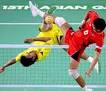
I was watching television one evening with my friend in Hong Kong and we saw a story on a new fad in China – Kung Fu volleyball, which is somehow called Sepak Takra. Here is a link to a video and it looks pretty crazy and amazing – I would get seriously injured if I even tried it just once.
http://www.youtube.com/watch?v=a7g5hUKSAZo

I also was invited to tour a city in Shanxi province (which literally means mountain west) where they are famous for their fruit as a very wealthy and a successful Chinese businessman is interested introducing some of his juice products to the US market. I really hope to make the trip next time as it is a much different part of China (colder and more wooded) than I’ve been to before and I want to experience a little bit of life, food, and play there as well.

Work hard and play hard. Two of the reasons why I enjoy going to China so much.

Posted in Business in China, China, Living in the World Today | Tagged , , , | 2 Comments

Things are getting more expensive in China – but life in China is cheap

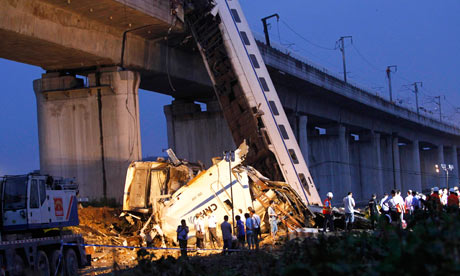
I have learned a new expression on this trip to China from people that live here – ‘Life is cheap in China’. This has been said to me by westerners and Chinese alike. The recent high speed train crash was an example of that as the controversy over the death count continues as does the way those that perished are being buried. If you follow the news in China you see examples of this every day – people perishing in strange accidents on the roads, on escalators and other public venues. While there are more than 1.3 billion people in China that should not be an excuse to cheapen the value of people’s lives.

And while the above may be the case with life in China, most other things in China are becoming more expensive. The cost of food, shelter, and clothing are all skyrocketing as the Chinese government tries to keep a lid on the worry of runaway inflation.

When it comes to business I have found that Chinese companies are not yet accustomed to the idea of paying for consulting services. The Chinese corporate focus is so strongly based on making money fast that hiring and paying experts seems unnecessary to them. After all many Chinese companies are still finding great success and growth in their businesses without implementing western expertise and best business practices (or as they say in still British influenced Hong Kong – best business practises).

Yet in many of the Chinese factories I visited on my trip this week (I think it was something close to ten), there was an increasing understanding of the idea that perhaps the Chinese companies are not experts outside the China marketplace. Things that worked prior are not working as well now and there are signs that new practices and strategies have to be implemented. It will cost more than the Chinese have ever paid before – but paying something when you are accustomed to paying nothing will always be a hard pill to swallow.

Doing business in China is very different than any place I’ve done business before in the west. The cultural aspect weighs heavily in everything that occurs. One example is tea. It’s a good thing I like tea because in nearly every meeting I would consume not three cups of tea (apologies to Greg Mortenson author of the controversial best seller ‘Three Cups of Tea’) but 10 cups of tea and then on to the next meeting where the same thing would occr. There were days that I drank thirty cups of tea! I sometimes felt that the expression ‘all the tea in China’ was underrated.

Things will continue to get more expensive in China as the overall living standards increase. I’ve noted before that the U.S. will become more competitive as the Chinese and the rest of the world’s standards of living rise. Yes there’s still a long way to go in many parts of China and the world for that matter.

So while things get more expensive in China I am hoping that the most precious thing of all – life itself, also gets more expensive and soon. I will be leaving Hong Kong in the morning but know I will be back in China very soon. Xian zai, zai jian Zhong guo.

Posted in Business in China, China, Living in the World Today | Tagged , , , | Leave a comment

China is moving at light speed – is that too fast?

It’s been 6 days since I came to China this trip and I am more convinced than ever that China is racing forward on all fronts to be the leader in anything and everything it can lead. The recent news of the high speed train crash is some evidence that China may be overlooking some very important issues in her effort to reclaim (in the eyes of the Chinese) her rightful place at the top of the world (remember the world’s highest mountain, Mt. Everest, is in China).

I had another amazing dinner tonight with some more new friends who are executives for very successful companies. I was amazed to hear them talk about the reports of the train crash and how the Chinese government is holding back on information. The official report is that 38 people died in the horrific crash over the weekend. My colleagues feel the number is closer to 800 and that eventually the real story will have to be told. And the reason for the crash may be linked to China’s rush to get their high speed rail system up and running while in the process leaving out some very important safety guidelines.

Things are happening fast here in China. Cities are built in rapid fashion, at times without a notion as to who actually could afford or be interested to live there. People work 100 hours per week although at times the lines between work and fun are blurry. The need to get to know business partners before any business engagements is different in China than anywhere else I’ve ever been.

Driving a car (or in my case riding in the back seat) in China is a true adventure. People cut off other people constantly and talk on their mobile phone. They also cross four lanes of heavy traffic to exit all with only horns blowing but no gestures of ‘friendship’ like you would see in the U.S. This may be due to the fact that most of China’s drivers are new and not yet as cynical as they are in the U.S. By the way – China made 2 million cars last year which makes China the world’s largest car manufacturer, yet only 1 in 100 Chinese own an automobile.

It’s as if China is experiencing what the U.S. went through from 1950-2000 but they are doing it in less than half that time. There are bound to be problems when you consider the scale issue of a country that is more than four times the current population of the United States.

Every day I do business in China there are so many meetings (and I drink so much tea my eyes are floating all day as seemingly every company has a tea set and the first that happens is the host makes tea – it’s extremely civil BTW – but it’s good thing that I really like tea), that I have to make notes as I go and write them all down at the end of the day. Having four or more meetings in a day over a period of 15 hours is not unusual.

Yes China has grown up in a hurry and is moving so fast it is nearly vibrating. It’s exciting, nerve wracking and I am thrilled to be here and am sorry to be leaving so soon even though I will have been gone for nearly ten days. Two weeks in China is barely enough. It passes at the speed of light.

Posted in Business in China, China | Tagged , , , | 2 Comments

Macau’s casinos are nice but they’re not like Las Vegas

I’ve been going to Las Vegas for more than forty years (my sister and I went so many times before I was eighteen we knew the Sands hotel very well). I am not much of a gambler but I do play a little from time to time and like casinos and the vibe of Las Vegas for a few days every few years. So when I planned my trip to Hong Kong and then Shenzhen I asked my friend Tom if we could make a trip over to Macau. He readily agreed and had been there a couple of times himself.

We took the high speed catamaran-ferry (about a one hour ride) from Hong Kong to Macau on Saturday. I was very interested to see Macau for myself. Now a Special Administrative Region (SAR), Macau was administered by Portugal for 442 years until it was handed back to China in 1999.

There has been some casino gaming going on in Macau for many years but over the past ten years giant, ornate casinos have sprung up in Macau. In fact the Wynn hotel in Macau generates 65% of the total profits for Wynn Gaming. There’s an MGM Grand Hotel and other familiar names like The Venetian (run by Las Vegas Sands) and the Four Seasons.

We went to the Venetian because there was an air-conditioned bus was right off the ferry landing and it was hot and free. I’ve been to the Venetian in Las Vegas so I was eager to see how much the concept was copied. The answer was – a lot. The casino floor is a big giant room, in fact the largest casino room I’ve ever been in and Foxwoods in Connecticut had a very large room when it opened but I believe they have parceled that room into smaller rooms now.

The shops and canals and restaurants were reminiscent of the Las Vegas version. But it was immediately noticeable that there were more than a few things missing in the overall casino experience. First the room lacked energy and sound. There were no slot machines ringing, no music playing and the people at the tables seemed bored. Perhaps it was a bit because it was 3PM on a Saturday afternoon but I think that’s the way the Chinese roll in Macau. No free drinks at the tables as the cocktail waitresses (dressed in the Vegas style short skirts) served up bottles of water.

The restaurants in the hotel were good and relatively inexpensive. The stores were expensive just like in the Venetian in Las Vegas but they were not crowded. The overriding sense I had was that the people were not having all that much fun. This may be what the Chinese government wants although Macau is still very profitable however maybe China does not need the money as much as it used to?

They have shows in the casinos and apparently Lady Gaga recently performed there. But what I really found interesting was that during Chinese New Year (normally February) the Chinese hop on planes in droves and head to Las Vegas (which is great for Las Vegas since it’s a normally slow time of year and it’s been a long hard recession that Vegas has suffered). Apparently Chinese people do notice that lack of energy and that something is not quite the same in Macau.

I am glad that I went and saw it for myself but have no real need or desire to go back. There are some remnants of Portugal’s influence around but not enough to make it more of a destination. A watered down Las Vegas just doesn’t have that much appeal to me. I bet you would feel the same.

Posted in Best business practices, Business in China, Entertainment | Tagged , , , , , , , | Leave a comment

The U.S. should not be threatened by China but could it be ignored?

Each time I visit China I am struck by how parochial the news is and the people are. This week the Chinese government made a public statement suggesting that the United States should extend the debt ceiling in order to maintain world confidence in its economy. It was hardly a magnanimous suggestion considering the China is the single largest holder of U.S. treasury bonds. A U.S. default on it debit would be very bad for the Chinese government.

China also announced this week that it had purchased an old aircraft carrier and was refurbishing it. This should not be seen as any kind of threat to the U.S. but for some reason it did cause a bit of consternation in the world community.

Asia is a very big place and China more than has its hands full managing what is seen as an overheating economy (despite reports that several Chinese factories have declared bankruptcy in the past couple of months – that sure does not sound very socialistic to me). I’ve noted it in prior postings that China is open for business. And it’s open all the time. The idea that China is attempting to ‘defeat’ the U.S. (economically) and ‘win’ is not apparent in anything I’ve seen or heard.

Walking around Hong Kong on a steamy Friday afternoon the hustle and bustle of a vibrant city was exhilarating and impressive. I walked through the mall at Times Square near Causeway Bay and it was filled with shoppers who were not window shopping – they were buying and buying at top end stores. While there were some westerners the bulk of the shoppers were Chinese.

In the U.S. the current ‘recovery’ appears to be moving in super slow-motion. While China focuses on continuing to develop an economy based on increasing domestic consumption, the purchasing power of Americans remains a powerful force. However, it seems to not be quite as powerful as it used to be.
As the quality of Chinese-made goods continues to improve (and the costs increase), what concerns me is China looking to other countries to sell its products while it tries to stir domestic consumption. The U.S. should not be threatened by China’s rise. In truth the U.S. might want to be more concerned that the Chinese will begin to ignore the U.S. if we don’t get our act together soon.

Being ignored is the road to being irrelevant. I’m not saying the U.S. is even close to being irrelevant but I don’t think I’d feel very good about the U.S. being ignored by China. Do you think that could happen?

Posted in Business in China, Living in the World Today | Tagged , , , | Leave a comment