I’m saying good-bye to my printed newspaper – mostly

Newspaper images


A study from Deloitte last week entitled “Readers abandon print for digital platforms but it’s a slow revolution’ really caught my attention.   

Excerpt from the article:

Newspapers

— Print plummets: 39 percent of newspaper reading respondents said print was their favorite format for reading their chosen titles, down massively from 75 percent just a year ago. It’s difficult not to make a connection between that fall and the rapid adoption of tablet PCs over the same period.

— But digital soars: Laptops and desktops still account for most news consumption online, but mobile is gaining. Of smartphone users, 32 percent say they use their device to read news articles every day or at least once a week, and that figure rises to more than half for tablet owners.’

I’ve been receiving three physical newspapers for many years now.  When I ride the commuter train to New York City I am in the minority of people who read a physical paper.  The usefulness of my long ago learned skill on how to fold the New York Times or Wall Street Journal so that I can read it without disturbing the person next to me is only useful to the unlucky passenger who sits next to me.   It’s obvious that most of the passengers read news on their tablets or phone.

What I’ve found when I read the news on my tablet (Kindle Fire or iPad) or phone is that it’s easy and I like it.  In fact I even tend to read articles in a different order than when I page through a newspaper.  The digital news reading experience is improving all the time and I never have to worry about the lights going on or off on the train ride or struggle reading because there is not quite enough light.

So I’m ready to give up printed newspapers – mostly.   I still enjoy the weekend edition of the New York Times – the Sunday Times Magazine with the crossword puzzle is one of my favorite guilty pleasures as is the NY Times Book Review.    What is the most likely compromise (my wife is resisting the change even more than I have) is that we will go digital for all but a weekender NY Times subscription.   My expectation is that we will quickly adapt to digital reading on an everyday basis and for a while enjoy the printed NY Times on the weekend.  For a while means that eventually we probably will be willing to give up the printed versions entirely once a digital means to do the crossword puzzle is made more user-friendly.

Will I miss the printed newspaper?   Well I won’t miss the residual ink on my fingers.  But chances are is that I, like many other people of a certain age will play the ‘remember when’ game once printed newspapers become extinct.  And the ultimate extinction of newspapers is really the only outcome isn’t it?

How about you?  Have you given up printed newspapers or will you hold on as long as you can?

Posted in Advertising, Living in the World Today, Newspapers | Tagged , , , , | Leave a comment

Screenvision commands a captive audience

ScreenvisionDon’t be alarmed but while you’ve been going to the movie theater over the past several years we’ve all been conditioned to accept advertising while we sit and wait for the feature presentation to begin.  (OK the endless previews followed by the feature presentation).

An article in Wednesday’s New York Times covered Screenvision’s move into an upfront sales market.   You may find that ads in movie theaters are annoying but they are also effective.    An upfront market for movie theater advertising will work in a big way.

Think about it from an advertiser’s perspective.

#1 – Movie Theater ads cannot be DVR’d or fast-forwarded through.

#2 – The demographics and geography of movie theater audiences are well-understood

and dare I say, predictable.

#3 – Whether you want to or not you are somewhat compelled to watch what’s on the

           screen.    You can look at your phone and try to ignore them but the sound and

flashing images are hard, if not impossible to ignore.

All of this adds up to what should be an advertiser’s dream.  Ads in movie theaters can be purchased in several different ways – nationally, regionally or locally.     I’m sure you’ve noticed that the production value of many local ads leave much to be desired particularly when compared to deep pocket national advertisers.

When I first saw ads in movie theaters I was incensed that I had just paid for a ticket and how dare they show me ads!   But I’ve been conditioned to accept them (as you have) and frankly it’s not as if a blank screen was a better option.   And I’ve really had about enough of stupid movie quizzes (with 10 questions that run in a mind-numbing loop).

As the article states, I too give Jimmy Tricarico credit for moving Screenvision into upfront market sales.   Advertising clients love the idea of guarantees.   I think movie screen advertising has an even brighter future than it had yesterday.

What do you think about movie screen advertising as a channel to reach prospective customers?

Posted in Advertising, Best business practices, Brand Advertising, Movie theater advertising, upfront in movies | Tagged , , , | Leave a comment

Are these the last days of the traditional college and university experience?

carroll-universityI went off to college (or university as it is referred to in most places outside of the United States) in the late 1970’s.  At that time there were neither personal computers nor laptops in use.   My college experience was more like one students experienced thirty years prior than thirty years later.

We have a daughter who is now finishing her sophomore year at college and I’ve begun to wonder if her generation will be one of the last to experience campus life in ways that I remember.     It’s no secret that attending a four-year college or university is expensive – sometimes brutally expensive.    That combined with continually improving and evolving online education programs which are eminently more affordable indicate to me that future generations may not have the opportunity to experience what might be the best four years (ok maybe five or six years) of their lives.

Like many of my fellow 20th century alumni I could rhapsodize about the many memorable experiences I had while in college (almost all of them OUTSIDE the classroom in case you are wondering).     I’m glad that my kids had the opportunity to experience some of their own memorable college on and off campus experiences.

What online higher education has to offer is both greater affordability, and a reduction in the barriers to learning.   There have been some indications that performance by online learners can at times be higher than those that actually show up in the classroom.   I think it’s safe to say that online learners have no disadvantage in obtaining resources when it comes to doing what it takes to gain a cognitive understand of course material.   Questions can be asked online and that’s an important way for learners to gain a deeper understanding of concepts.   In the long run there’s really no reason online learners should underperform compared to their in-class university counterparts.

At present U.S. universities are living off alumni contributions to the general endowment as well as foreign students whose parents have the means and desire to pay the full ride in cash.    The U.S. has more top-notch universities than any other country in the world.   Online education will level the playing field in an academic sense.   Yet do we really think things will be this way indefinitely?  The conclusion I am reaching is that the on-campus, amazingly expensive, traditional go-away-to-college experience is ultimately doomed although I am not exactly sure how long it might take for that to occur.   But I don’t see my children investing $500,000 for a college education for their own children.   The trend has to stop sometime doesn’t it?

Do you believe the halcyon days of the college experience to be a thing of the past?    If so how long do you think it might take?


Posted in Higher Education, University education | Tagged , , , , , , , , | 2 Comments

Is Social Media Coming Of Age?

Great post from my partner David – has social media reached a watershed? The answer is…maybe?

David Adelman's avatarDiary Of A Media Man

This week was a very tough week for many Americans and particularly for Bostonians.  What should have been an annual festive sporting event turned into a nightmare. This post is not about politics nor the attackers but how we became aware of the events and followed them.

On Monday afternoon I saw an item in my Twitter feed about an explosion quickly followed by multiple tweets from people/organizations I follow. Simultaneously some of my coworkers—we work in an open environment so everyone pretty much knows what anyone else is doing—found out about the bombing at the same time. All via social media.

We have two TV’s within easy walking distance of our desks in the conference rooms and no one left their desk to watch CNN. Everyone tracked their Twitter and Facebook feeds, selecting a link to follow.

In January 1986 the space shuttle Challenger exploded shortly after launch. The…

View original post 422 more words

Posted in Uncategorized | Leave a comment

Would an advertising agency ever advise to not do advertising first?

blank billboardAssuming that the true purpose of advertising and marketing agencies is to help drive awareness and sales (not separating clients from their money as it is joked); would an advertising agency ever advise to not do advertising first? I would offer that the larger the agency the less likely that is to occur, but that’s not to say smaller agencies would be all that much different.

In our small agency we have a broad variety of clients and marketing spend on behalf of those clients. When we begin a new client relationship there’s a ton of research we do to learn about the client’s marketplace, the client’s challenges in the marketplace and where we see the best opportunities to leverage their brand. In the process of learning about the client’s business we learn about non-advertising issues and roadblocks to their ultimate success.

While we admit our job is not to fix our client’s entire business process, we have in the past and will continue in the future to identify what we see as critical issues that will impact the success of their marketing and advertising efforts. But on more than one occasion we’ve recommended to the client that business changes (i.e. distribution, positioning, and company name) be undertaken before they do any more advertising.

Clients waving money at advertising agencies can be very convincing, (and adamant) in their intention to promote their brand and gain sales despite their having knowledge that there are inherent problems with their business model. When the alternative is that the client will go to an agency that will do what the client wants, an ad agency’s resolve to stand on its principles weakens if not disappears. After all we are all in business to make money.
If it appears we are willing to talk ourselves out of doing client business you misread me.

The point is that when an agency identifies a significant barrier to growth, and if the agency is going to work with one hand tied behind its back, the metrics for success need to be both clear and realistic. From experience these are not enjoyable discussions to have with clients but absolutely necessary.

One of the most interesting parts of our job is gaining understanding of our clients business and being aware of the client’s entire business process so that we are able to make fully informed recommendations. Telling a client that they should wait to do advertising hurts the agency in the short term but in the long run shows the agency to be a good long term business partner.

Have you ever told a client or potential client to wait to do advertising?

Posted in Advertising, Best business practices | Tagged , , , , | 2 Comments

Too many Groupon, Living Social, and Google Offers are wearing me out

daily-deal-sitesAnyone that’s followed this blog over the past few years know that I am dubious when it comes to the business models of Groupon and Living Social.   Since Andrew Mason Groupon’s now ex-CEO has been forced out, it appears both Groupon board members and investors feel similarly.    Despite the questionable business model, the daily deal business remains a good value for the customer.  

I will guess that like me, many people have used one of the daily deal coupons to visit an establishment that they’ve been to before.   I still don’t understand how at a substantial discount, bringing me back to a place to which I might go anyway is good business.   Rarely do I begin to frequent a place based on having used a daily deal coupon.   I simply purchase what I want for less money.   For other reasons I cannot understand, the frequency of daily deal offers in my email inbox has jumped in the past few months.   Have you noticed this too?

There used to be emails in the morning from the various platforms.   Now I seemingly receive multiple versions from all of them constantly throughout the day and night.    The content is often simply repositioned so as to lead with different offers at different day parts.   That’s no surprise and well within best marketing practices.    However in the process since I receive emails from all three platforms and am registered in different locations for offers, I might receive as many as 12 communications in a day!    I realize that I can control the frequency (if I had the time and desire to go into my account and change my settings – which I don’t and bet I am not alone here) or simply ignore and delete them.    

That’s what’s happening to me as I have become desensitized and am now deleting many of the daily deal emails without even reading them.  I suppose the platforms expect that a certain amount of people will jump off the boat and unsubscribe or, like me, quit looking at them.   It must be good business for them to deluge the rest of the subscribers at an increasingly alarming rate, or so one would deduce from the evidence.     

Another issue is that I see the offers on both my phone and in my email so sometimes if I neglect to immediately delete the offer on my phone I see it again when I view my emails on another device.    I do have a viable and customer-friendly solution to the problem.   Each of the daily deal sites sends me an email asking me to update my preferences.   Would I like just one email a day?  Two?  More?   One a week?  One a month?   

Giving me the choice as to how I’d like to design the flow in one SIMPLE email would keep me on the line and I have shown that if the offer is right I engage,  sometimes even with brands I’ve never had interaction with prior – which is the whole point.    How likely do you think that is to happen?   

Do you have any tips?   I’d love to hear how you are handling the daily deal deluge.   


Posted in Advertising, Best business practices, Brand Advertising, Customer Experiences, Daily Deals, Marketing stuff, Social Media | Tagged , , , , , | Leave a comment

Are the best days ahead or behind for public transportation in New York City?

Rome subway... Eeeh, I like!subways 2013 stock-footage-new-york-circa-january-manhattan-midtown-buildings-and-subway-trainFor the first time in over twenty years, four or five days a week I am now commuting over an hour each way (often an hour and a half) to and from New York City.   I’ve commuted before and tried it in different ways – driving and riding the train.   I never had the bus option but don’t lament that in any way.

Commuting to any city is an expensive proposition.    In New York even more so.     Wiki Answers says, “7.6 million people use the NYC subway and buses (combined) each day. About 6 million of them use the buses and subway to get to/from work. But this includes all 5 boroughs. Into Manhattan?… 4 million a day would probably be a good guess; then another few hundred thousand more commute by car as well.”    The numbers are truly impressive.

I remember what public transportation was like in New York City back in the 1980’s and no, it wasn’t pretty.   Back in the 80’s many of the commuter trains were old and in a general state of disrepair.   There were new passenger train cars that came on to the (Metropolitan Transit Authority) MTA lines in the 1970’s – many of which are still in operation today, but it took many years to roll-in the ‘new equipment’.

Today the MTA has again rolled out the ‘new’ M-8 cars on the Metro-North Line.   I do not ride the Long Island Railroad frequently but my recollection is that the cars were less than spanking new.   Riding one of the new cars offers a glimpse of how commuting can be improved.    At my cost of more than $300/month just for the commuter rail  monthly I will say that if all the train cars were new M-8’s and people rarely had to stand (it happens far too often), I’d have no real complaints.

Riding the New York city area commuter rails can be frustrating (think service after Hurricane Sandy and blizzards) but it’s overall extremely safe (this ain’t China or India folks) and there are trains at least hourly even in off-peak hours.   As for punctuality, from my experience I’d offer an overall B+, could be better but it’s been much worse.

The subways in New York are for the most part graffiti-free much unlike most of the 1980’s when you could hardly find a graffiti-free train.   Again subways are relatively safe, go out of service with much less frequency than in the past, and are increasingly crowded.    It always strikes me oddly that New York City is the only city that I can think of which has one fare for any trip of any duration.   You can pay $2.50 and ride the subway from Morris Park in the Bronx, to the Rockaways in Queens.     Don’t count on that lasting much longer as I believe the days of one fare anywhere are numbered.   Low numbered.

Commuting is by far ‘greener’ than driving and since increasing numbers of Gen Xers, Gen Yers, and Millenials are less likely to own an automobile than their fathers and grandfathers, public transportation’s popularity and its greater needs will only increase.    I want to believe that public transportation’s best days are ahead.   I’m dubious as to whether public officials, who seemingly understand this, are up to the challenge.

What do you think?

Posted in Living in the World Today, Public Transportation, Travel | Tagged , , , , , , , | 4 Comments

5 ways you should maximize your opportunities – start by connecting the dots

Connect the dotsFrom the time I was very young I enjoyed playing connect the dots.   It is such a simple concept.   Connect the random dots of similar sizes and the shape of something familiar is revealed.   While some connect-the-dot layouts are more difficult to negotiate than others, I’ve always found it satisfying to solve the puzzle.

I’ve met and talked with many people who have had severe career upheavals as have I.   While the initial reaction from nearly all is shock (and awe), after the shock wears off then next thought it – what now?   For many people who’ve been in the workplace for more than fifteen years the first answer is to find another job.   For those of us who had been working for the same company for many years (much less running your own), finding a job, or more likely the next career move is an unwelcome odyssey.

Everyone seems to inherently know that their network is the key to future success.   Yet so many people have little idea on how to leverage their network.   The answer is as simple as connecting the dots.  Here’s how:

1)      Group your contacts into industries in which they work or have influence.    This is a task and not an easy one but it is critical.    How many groups should you have?   That depends.  Some people can appear in more than one group and that’s completely acceptable.   Create categories like finance, publishing, marketing, engineering, healthcare, construction, advertising etc.  The list can be endless but should probably not be any more than ten categories to start.

2)      Highlight those contacts that have the most clout and influence both in their organization and their respective overall marketplaces.   These are people that can if nothing else, serve as advisors in aiding you on your future career path.    Many people actually do like to help and even more like to be asked for help by someone they know and respect.    Note:  be prepared to only have one of those ‘asks’ with each of those high-influencers.

3)      Evaluate your network with a relational database mindset.    Think of the people in your network and those that might benefit from being introduced to others in your network.   Putting people together that were unknown to one another is at the crux of connecting the dots.   Do not always look for a way for you to benefit or profit from putting people together.   Of course it’s fine to help manage the new relationship in order to find opportunities where you might be able to add value.

4)      Pay attention to what is going on with your network members’ individual companies and industries.  Example:  I have an associate/friend that develops software to manage complicated inventory control systems and would like to expand his client list.   I connected him with another associate who is involved in importing/exporting and distribution of commodities and natural resources.   I put them together and while no deal has yet been arranged, both parties understand the value of their being connected.  I look good for putting them together and…you never know if, when and how they might be able to work together.

5)      Keep apprised of news and developments in the industries in which your network operates.   Sometimes all I do is send an article to someone in my network related to that person or the industry in which they are involved.   The feedback is nearly universally positive.   First you almost always receive thanks for thinking about them and their business.    You might also have an opportunity to learn more about the situation straight from the horses’ mouth.

Too often people spend their time performing tasks without really thinking.   It’s easy to plug in every morning and just start toiling.   Connecting the dots oddly enough is a linear (one line through a bunch of dots – what could be more linear?) yet non-linear exercise as it takes creativity and some abstract thinking to do something that other people may not have considered.  

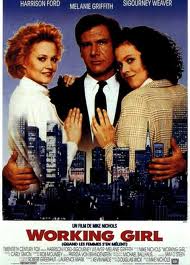
Working Girl

I remember the movie Working Girl with Melanie Griffith from 1988.   In the movie Ms. Griffith’s character (Tess McGill) is a stockbroker’s secretary who comes up with an idea to purchase a radio network when everyone else was thinking about purchasing a television network.    It’s a great example of connecting the dots in a non-linear way.

By thinking about your network and how you can help put people together, you may well hatch ideas on how to create new opportunities out of those new relationships so that everyone benefits.   Yes even you!

Posted in Best business practices, Networking | Tagged , , , | Leave a comment

Facebook privacy issues are no laughing matter

Facebook privacyWhen it comes to how I view my online social media behavior I practice the tried and true – ‘Don’t post anything online that you wouldn’t want your mother to see’.    This has served me well over the years and while it does impact what I might post ribald and cheeky replies, I don’t feel it my online social behavior is all that different from the     way I am in person.   I am probably not the right person to judge that I realize.

Like many people I receive messages from my FB friends to change access to their photos and posts in my preferences as it pertains to our FB friendship.   For the most part I have felt that people tend to over-dramatize their worries about non-friends access to people, posts, and photos within the FB network.    However I do comply and change the settings on behalf of any friend that asks.

This week I really got a sense of what can be creepy about FB.  A friend of mine ‘liked’ a photo of a Mom and her 2 daughters.   I had never met nor even seen the family before.   But because the photo was ‘liked’, that ‘like’ pops-up on my status feed since we are FB friends.   I then notice that the photo has 20 ‘likes’ and out of curiosity I mouse over the 20 likes.   20 names pop-up (I knew exactly none of the people) and while I didn’t, I could write down their names and then FB message them directly referencing my friend as a link between us.

So I’ve changed my mind and wholeheartedly agree that FB users should protect their profile from being viewed by FB depicted category ‘Friends of Friends’.   There is clear and present danger in the fact that I can reference a person that two complete strangers have as FB friends as an entree.

A recent and well-done article on techlicious.com offered pointers on how to better protect your FB privacy settings.  

It’s an increasingly creepy world out there.  FB users and netizens need to become even more wary than ever before.     Sad but true.

Posted in Best business practices, Social Media | Tagged , , , , | Leave a comment

Truth in advertising can make for a lukewarm message

TruthInAdvertisingI’ve been watching a little (ok more than a little) bit of basketball recently with the NCAA and the NBA in high season.   Since sporting events are among the last events that I watch live on TV I have seen and seen again the same rotation of ads that are run by the broadcast and cable networks.    One ad that I’ve seen a great deal lately is an ad for the GMC Acadia SLE-1.     It’s an SUV if you are not aware.

All the spots have the same tag – you can watch one here.   The tag is ‘Now lease the 2013 GMC Acadia SLE for around $299 per month.’   The first time I heard that I did a double-take – AROUND $299 per month?   Since when has any product advertised itself as having a price in that fashion?     We’ve heard for years the ‘starting at $299 per month’ and people are conditioned to expect that starting point means the price only gets higher.

So what exactly does ‘around $299 per month’ mean?   More importantly, I am wondering why the change from ‘starting at’ to ‘around’?    Am I as a consumer meant to figure outonce I have added whatever options I choose, taxes, license and all the trimmings that the $299 will be $350/month?   $375/month?   And why now?  Did U.S. FCC regulators encourage GMC to be less misleading and promote an ‘around’ price?

Whatever the reasons are, what is left behind is an offer that is less compelling and less motivating as far as I am concerned.  At the very least, good product promotion and advertising should leave a positive brand impression and help move the prospect closer to purchasing.   I can’t say that on the basis of the GMC Acadia spots the brand has gained or lost in my view, but I am put off by the nebulous term of ‘around’ when it comes to pricing.    If this becomes a trend one of the next things you could see is an airline advertising a fare for around $200.    How would you evaluate buying a ticket in that instance?

What do you think?  Is there a difference in your mind using ‘starting at’ versus ‘around’ when it comes to advertising price offers?

Posted in Advertising, Brand Advertising | Tagged , , , , | 2 Comments