
 As I posted recently I have reconsidered my relationship with the Amazon’s Kindle. Having read the limited warranty that came with the device as well as what is posted on the website it seemed clear to me that after one year there was no guarantee. At the time I was aggravated, unhappy and perplexed. I was wrong too. Sometimes you have to make that phone call.
Of course I did not make it. My wife did since she had originally bought me the Kindle and had worked out the (now) 3 replacement Kindles. She spoke with them (although finding the right customer service number was a little bit tough) about the fact that my Kindle had simply died. They said no problem and sent a replacement Kindle to arrive THE NEXT DAY at Amazon’s expense. It was already loaded with my contact information such that as soon as I charged it up and turned it on it was easy to download the books that I had previously purchased into the replacement device from the content manager.
I am pleased, impressed and yes still a little perplexed. While I still hold that Amazon should send a replacement Kindle to any customer that complains their Kindle has stopped working (which they have done) as long as the customer sends back the old one (still at Amazon’s expense which is the case). But I have two questions.
1) Why don’t they publicize this feature? Possible answer – Amazon does not want to advertise that the device is somewhat fragile since that could undermine overall customer perception particularly in view of the new e-reader devices on the market. Anyone that calls will receive a replacement Kindle but one HAS to call.
2) Did anyone from Amazon actually read my blog post such that they decided to send me a replacement Kindle? I’m hardly one to be over-impressed with my own impact or self-importance so I highly doubt that.
Sales of e-books had reached just shy of $ 100 million as of August 2009 according to the Association of American Publishers. Additionally analysts are calling for sales to triple again over the next 13 months. And the Kindle is Amazon’s best selling item across ALL of its markets.
The Kindle aims to be the I-pod of e-readers. I think Amazon has a good shot there. However I do think they missed an opportunity with me to ‘buy’ up to the newer device the Kindle 2 or large screen tablet. I would have paid 50% (or less) of the purchase price of one of those newer devices. Instead I have a refurbished original Kindle – which I am grateful for but it was an opportunity lost as far as I am concerned.
Of course I could just be being greedy. Amazon continues to prove to be one of the leaders in customer service and satisfaction. And that’s high ground to hold.
 So maybe you are skeptical that content matters? Here’s food for thought. According to Broadpoint AmTech analyst Ben Schachter Activision’s Call of Duty: Modern Warfare 2 had already sold over 1.2 million copies the first day of release in the U.K. alone.
  I got 7 ½ hours last night and almost always get from 7-8 hours of sleep nightly. I have been thinking about how people sleep today versus throughout human history. Full disclosure – one of our clients Tempur-Pedic is a highly successful manufacturer of mattresses but they know nothing (and are not the least bit concerned) of my blog posts.
 In my small town we have two food/multi-purpose markets in the town center. One is a nationally recognized chain owned by a large public company. The other is a local grocery called the Village market that has been in existence for more than 70 years. Both offer different value propositions and I shop at both for different reasons.
  As an early adopter (November 2007) of the Kindle I have been a rather ardent fan of what could now be considered the forerunner of e-readers. I recently downloaded several titles that I wanted to read. I opened my Kindle the other night to see some odd horizontal lines across the entire screen yet the device was in the off position. After charging and recharging with no change in the display it was obvious that the flame had gone out on my Kindle.
  Yell loud enough and people will hear you. That premise has enveloped television direct response ads for many years. Billy Mays was a prime example of an affable yeller. At the recent Direct Marketing Association conference I came away with a sense that maybe, just maybe the days of shouting out a promotional message are coming to an end. I hope that is the case.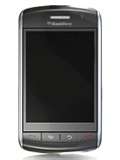
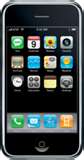 In a report, titled “Mobile Devices Market Sizing and Share,” market research firm ABI says that more than 171 million smart phones were shipped in 2008 compared to 116 million shipped in 2007. The report says that smart phones accounted for 14 percent of all cell phones shipped in 2008. ABI noted that the sales are expected to grow 18% to 203 million 2009 as operators seek to sell lure users with aggressive strategies. Strategy Analytics estimates that smart phone shipments will total 177.2 million in 2009. Juniper Research forecasts that annual sales of smart phones will rise by some 95 percent to more than 300 million between now and 2013. The report says that by 2013 at least 23 percent of all new mobile phones will actually be smart phones.
  As I sit in the San Diego Airport waiting to go home I have just spent three nice days in one of America’s nicest cities. I have attended my 22nd DMA conference. This membership organization that began as the Direct Mail Association became the Direct Mail Marketing Association (DMMA) then and now the DMA.
 The Way I See It - Mark Kolier