Where are the tour guides and advocates for the Travel Agency business?

Maybe they are on vacation. After travel agencies and travel agents themselves are vanishing one by one and have been for a long time. Like most people I had thought of this many times before although I don’t frequently arrange for my own travel but sometimes I do.

The internet killed the travel agency business right? Well sort of. One recent blog report on ‘That Said’ http://bit.ly/hBnSOZ noted that less than 1 in 10 people use travel agents. That figure probably does not surprise anyone especially me.

At a Rotary club meeting today one of our charter members (almost 30 years now) Judy White spoke about her travel agency – Wilton Center Travel www.wiltoncentertravel.com which she started in 1978 as part of her ‘third career’ as she put it. As I listened to Judy list the virtues of why she is the lone remaining travel agency in town I thought ‘I wish I would have known her story sooner as it likely would have had me sit down with her and have her help arrange a past family trip or vacation’. That’s not to say that I won’t do that now but I feel as if we might have missed some opportunities to make great past family vacations even greater.

Having been to all seven continents (and at 70 plus years young she is soon off to the Galapagos Islands with her granddaughter – what energy!) and having been to every destination in the brochure she handed out, the level of Judy’s credibility is virtually unsurpassed in the travel business. She also noted that people’s misperception of travel agents is rampant. She related that from a pricing standpoint travel agents normally can match the lowest prices found on the internet nearly every time. The message is – you will not pay more to use a travel agent. How many people have received THAT message? The travel industry does a lousy job supporting the legion of remaining travel agents.

And experience counts. Big time. People that think they want to go to particular destinations because they look nice in the pictures on the internet are using hope as their strategy for picking the right place. Travel agents like Judy KNOW about the destinations people are considering. They can advise you of what’s really going on with their inside connections. When is the last time you got that kind of information over the internet? And if you have a problem with a reservation you made over the internet exactly who are you going to call? Good luck with that.

People seem to think that ‘beating’ a travel agent out of their fees is to be worn as some sort of badge of honor. But what they don’t realize is that there are very few fees paid directly to a travel agent (air fares are one exception as that is a turnover fare the airlines charge travel agents so you are probably better off buying airfares on the internet in most cases). So by surfing it up on the web looking for your vacation you are probably not ‘winning’ that game at all and while all the time you spend rummaging through a myriad of travel and vacation sites may be an enjoyable experience and even exciting, it probably is not the most practical way to go about booking hotels, cruises, tours and the like. After all time is money isn’t it?

It appears to me that the travel agency business is poorly represented by ASTA (American Society of Travel Agents) their association since key attributes as I’ve described are hardly promoted at all (if at all). Perhaps ASTA could use a new marketing agency (sorry I could not resist)?

Are you running your business like a travel agency? If you are running like Judy White does then I think that’s a good idea. Here’s hoping people like her hang around for a really long time.

What do you think?

Posted in Best business practices, Communication, Marketing stuff | Tagged , , , , , , , | Leave a comment

Tracking people down using social media

Last week I posted that I thought Facebook was heading toward being the new telephone. Social media is now the ‘party line’ platform where people are congregating both personally and professionally. In the last few weeks I have received many LinkedIn invitations which makes me think that the business side of social networking is becoming a mainstream channel and is still maturing.

What I am finding is that in both my personal and business life the telephone is being used less frequently than ever. I don’t know about you, but contacting people by telephone (in business) has become increasingly difficult. In fact I know a number of people that intentionally leave their voice mailbox full so they don’t get any additional messages. This is particularly true if these people have any buying responsibility as they are often assaulted with constant phone calls by salespeople.

On some occasions I send a business contact an SMS message on their mobile to try to get their attention. This is because sending them emails appears to get lost in a sea of hundreds of emails they (and I) receive daily. Sending SMS messages is not always possible as I don’t always have a mobile phone number for a business contact. And I am noticing that response to SMS messages is declining rapidly as well.

I am also LinkedIn with a large number of my business contacts. But I find sending a LinkedIn message can be no more effective in generating a reply than sending an email. And while I am not connected on Facebook to any substantial number of my business contacts, (I had the idea of trying to keep business and personal contacts separate but it’s a losing battle), when I send people messages on Facebook I am surprised at the rapidity in receiving a reply.

So what I have learned is, if I cannot get you to reply to a phone call, email, or SMS message because you are too busy, I can send you a Facebook message and it appears I have the best chance of receiving a timely reply. What does this mean? To me it means that accepted entry into one’s Facebook circle warrants a reply over just about any other channel. The trust factor compels people to respond.

I wonder how long that will last.

Posted in Communication, Social Media, Technology | Tagged , , , , , | Leave a comment

The golden days of group couponing are almost over

Groupon http://www.groupon.com and Living Social http://www.livingsocial.com are red hot as the two of the most successful online social couponing sites with IPO’s in the offing for both companies. I’ve been getting the daily emails from both sites for quite some time now and upon occasion have purchased coupons for something I use all the time, or to try something I might not have without the incentive of the discount.

Accordingly I think these sites serve consumer needs since the consumer gets a good deal, and it serves (or should serve) the retailers in the form of sales promotion and even increasing a brand’s overall awareness. But now is the time to make your best deal with either of these two fast growing companies, (Facebook is set to unleash its own social couponing platform any moment now) since the game will likely change very soon.

Here’s how it works: Right now both Groupon and Living Social take a percentage (likely half) of the buy-in on the part of the consumer. For example if you were to be offered a deal at a hair salon for 50% off hair coloring that normally costs $ 100, you would ‘buy’ a coupon worth $ 100 for $ 50. Then the salon pays $ 25 to either Living Social or Groupon (at 50% of coupon value). So the salon collected $ 25 on a $ 100 value. Doesn’t sound so great does it? Keep in mind that not everyone will actually redeem their coupon (at times more than 30% can go unredeemed entirely) and some people will not use the entire coupon value if they purchase something else with their coupon as the entire amount has to be spend in one trip. And the retailer gets the cash up front before the consumer comes in to actually buy the product or use the service.

So it suffices to say that by using this discount strategy, retailers and companies alike are hoping to gain new customers that will come back again and again. This is a fairly simple business model. And it’s not going to last.

Ultimately these sites will become advertising vehicles like television and radio stations, magazines, OOH and other general advertising mediums that aid in building overall consumer awareness and hopefully stoke sales at the same time So the future of social couponing may look like this: Retailers or marketers pay a flat fee to access the Groupon or Living Social audience and then they will take a smaller percentage (than say 50%) of the value of the actual transaction. A marketer might pay $ 1,000, $ 5,000 or more to reach a certain size audience and then also pay that smaller percentage of the coupon redemptions.

I think the present model is a better one for marketers but I cannot see it lasting since it is completely dependent on consumer redemptions. Groupon and Living Social will be much more valuable once they can develop a more predictable revenue stream. That does not happen in the present model but it would in my future model.

Get ‘em while they’re hot folks. The bottom line is that Groupon, Living Social and (when it goes live – Facebook) will all be just another media buy and I fear that the small companies that are helping build their platforms now will be forced to seek out second tier (and arguably less impactful) couponing sites.

I’d be interested in your take.

Posted in Best business practices, Marketing stuff, Social Media, Technology | Tagged , , , , , | Leave a comment

March Madness equals a drain on worker productivity – or does it?

The NCAA basketball tournament begins this Thursday (or Tuesday/Wednesday if you count the new 2 games pre-tournament tournament to get from 68 teams to 64 teams). I always enjoy the NCAA tournament and in particular the Thursday and Friday games that open the tournament. Since the games start at Noon and go until midnight there is constant action and often many exciting finishes.

After a long winter the NCAA tournament is truly a harbinger of spring. But it’s also a harbinger of lost worker productivity. One article from last year http://bit.ly/9zrEtQ noted that more than $ 3.8 billion would be lost in worker productivity during the 2010 tournament. The simple fact is that a large number of people are distracted (happily so) from their day to day activities. And there are arguments on both sides of the equation – is that loss of productivity offset by an improvement in employee morale?

The largest illegal betting event in the United States, the NCAA’s position on betting the games is that it is illegal and frowned upon. Tell that to the newspapers that print point spreads and CBS Sports which has coined the term ‘Bracketology’ to help people with their strategy in filling out their game by game tournament predictions.

But I argue that while there is definitively lost productivity during the tournament the overall excitement and positive feeling generated by the games helps make the workplace a much more pleasant environment in the short term, and an even more productive workplace in the long term. Why? Because people talk to one another, email one another, call one another, customers and co-workers interact in a fun and more casual way which results in building better relationships all around.

Interpersonal relationships are built one moment at a time. And the more people get to know one another the better the chance is for a deeper understanding of what the person is all about. Having fun in the office is a part of that – an undervalued one if you ask me. It’s hardly a secret that the best working environments have a big component of fun and laughter being a part of their everyday life.

March Madness allows for the opportunity for your team to blow off steam, have a little fun and not have the same old conversations over and over. I’m not suggesting hosting an office pool but for those people that manage teams and employees you should consider how you can make a big event like the NCAA tournament a team building exercise instead of trying to police the situation in the hope of recovering what you perceive as lost productivity.

Besides that, you can take solace there are still many people who don’t like college basketball anyway.

Too bad for them.

Posted in Best business practices, Living in the World Today | Tagged , , , | 3 Comments

To get new ideas and experiences think about getting out of your comfort zone

While I am hardly qualified to be a psychologist, I do constantly observe behavior in people and things in and around my life. One thing I have observed (and this is no revelation) is that people consistently fall into routines which make them comfortable and in so doing that makes them feel they are simplifying their lives and even making their lives less stressful.

My take is the routines stifle your own creativity and can make your life more stressful – and incredibly mundane. Last night I was at an event at Google’s NYC office sponsored by the BMA http://www.bma_nyc.org (Business Marketing Association) of New York City entitled “Creative: 2.0 Ideas and Innovation in a Brave New World”. The excellent panel was put together by Nader Ashway (full disclosure Nader is our Creative Director) and Phil Johnson of PJA Advertising of Boston. If you want to read some of the tweets from the event @BMA_NYC, was the Twitter address.

The panelists Claudine Cheever of Saatchi & Saatchi, Susan Westre of Ogilvy & Mather, and Harry West of Continuuam, who discussed how advertising and general creativity have changed and where they might be headed.

What I was reminded of was that doing things the same way day after day is a big reason people lose that sense of creativity and adventure. I am aware of this since I like to travel so much and I always feel like I achieve a new sense of perspective when I take a trip – anywhere, and get out of the daily routine.

Sometimes I meet people that tell me they are not creative at all. Most of the time they are referring to copywriting or art directing, writing prose, painting, writing music, or playing a musical instrument. But creativity goes far beyond the bounds of the arts. People can be creative in so many different ways and some of the most creative people I know could not draw a straight line or carry a tune in a suitcase.

I find that having new experiences is a big generator for creative ideas and thoughts. I try to force myself to get out of my routine and to do my everyday things in a different way and this has resulted in a bunch of new ideas – some of which are not-so-good but also every now and again something worthwhile.

So think about changing your routine to help you jump start some creative thinking. You could start by going about your morning routine in a non-routine manner. Do things you don’t normally do. Take some chances and don’t do things in what you feel are the easiest way possible. Have new and different experiences that you might normally pass up because you think you know what they will be like. You may not come up with a brilliant idea right away but I guarantee you will gain a different perspective and become a more interesting person to engage with.

And who knows where that could lead?

Posted in Best business practices, Marketing stuff | Tagged , , , , , , , , , | 2 Comments

Is Charlie Sheen a marketing genius?


With a dizzying total of more than 2,200,000Twitter followers in a little over a week Charlie (aka Tiger Blood) Sheen has reset the bar for attracting attention and gaining social media status. Now terming himself “Born small…Winning…Now Huge…Bring It!…unemployed winner…”, the apparent slow moving train wreck that was Charlie Sheen appears to have been a rocket ship in disguise.

Since nearly all of us know the story I’m not going to explore how Mr. Sheen got to this point other than to say that prior to last week he was more in the running for ‘celebrity moron of the year’ than he was ‘marketer of the year.” BTW – In my book Mel Gibson still has a good chance of retaining his title as celebrity moron of the year. But Mr. Sheen has been able to parlay a bizarre anti-hero status into an endorsement business and is now a paid promotion’ engineer’.

Mr. Sheen would have you believe that he – much like Jessica Rabbit ‘isn’t bad – I’m just drawn that way’. An article in Tuesday’s NY Times http://nyti.ms/hFYt3G highlighted the idea that Mr. Sheen has been ‘coached’ and directed. So what? If Mr. Sheen is smart enough to have professional marketing people help him leverage his newfound super-fame I suggest he is far from crazy. Now that he has been fired from ‘Two and a Half Men’ (does this mean Jon Cryer is now starring in ‘One and a Half Men’?), he is free to make movies or whatever he wants to do on Twitter or anywhere else. And the $ 10 million owed to him for the balance of his CBS contract for ‘Two and a Half Men’ will probably have to be settled since his agent claims he is ready, willing and able to work. And for what it is worth he has always shown up for work despite whatever trials and tribulations he has suffered. So he is likely to get paid a substantial sum for NOT doing the show unless CBS has a change of heart. Talk about the catbird’s seat.

I don’t admire Charlie Sheen. He’s obviously got some issues going on but the notion that he is out of his mind is out of bounds. But I am intrigued with this case study on how to maximize your reach in the shortest amount of time. He has leveraged recent events about as much as could be possible and I am betting more opportunities will come his way. Will he be able to answer the bell? Nobody knows for sure least of all Mr. Sheen. But in terms of increasing awareness and becoming his own brand sensation (might he be the anti-brand?) Mr. Sheen appears to be thumbing his nose at just about everyone while having a very good time doing it.

Is Charlie Sheen a marketing genius? What do you think? Mr. Sheen has had way more than his fifteen minutes. My question is what will he do for an encore?

Posted in Communication, Entertainment, Marketing stuff, Media, Social Media | Tagged , , , , , | 6 Comments

Is Facebook the new telephone?

Since I am of a certain age (I was born when Ike was President of the U.S.), I have friends that refuse to engage on Facebook. While that is of course their right I cannot understand or even accept their reasoning behind not engaging in something that more than 600 million people find relevant. There are obvious benefits to being ‘connected’ on Facebook. And yes there are privacy issues and permission problems that are ongoing. But for me, and for most people I presume, the benefits far outweigh the detriments.

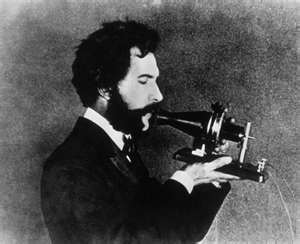
I suspect this situation is not all that different than when the telephone first came into popular use. Limited use of the telephone occurred starting with its invention by Alexander Graham Bell (or at least attributed to him) in the 1870s. Usage increased rapidly in the 1880s and 1890s as phone technology developed and central exchanges were built. It’s not difficult to imagine that there were many people that said and felt ‘why would I need to talk to anyone over a wire?’ And there were probably those that felt telephones would prove to be intrusive, (as anyone that has ever taken a telemarketing call during dinner can appreciate) and at times a general nuisance. But because the benefits far outweighed the detriments the telephone not only survived, it flourished. And today people carry telephones around with them wherever they go and they are nearly always ‘on’.

Is Facebook the new telephone? I am here to argue that in fact that’s exactly what it is. Telephone conversations are necessary at times but time consuming and cumbersome. It’s mostly a one-to-one dialog as opposed to the more open platform of Facebook. Don’t go thinking that I have drunk the Marc Zuckerberg Kool-Aid (I haven’t) or that Facebook has paid me to write this post (like that would ever happen).

Our children use Facebook the way party lines were used over fifty years ago. They post photos, music, share articles, suggest friends, have conversations and interact in a way that allows for faster and more than Mr. Graham Bell could have ever imagined. Ask any teenager if they’d rather speak with someone or text them over their mobile device. I think we all know the answer to that one.

So for my friends who feel that they are making some sort of statement by not engaging in Facebook’s communication platform the only statement they are making to me is that they prefer to remain unconnected to the world and in so doing are Luddites. Since the fastest growing Facebook segment is people over 40 these Facebook holdouts are truly in the minority. My prediction is that eventually they will
succumb and then wonder why they didn’t join in sooner.

It’s over folks – Facebook has won the game of connecting the world. You are either with the program or on the outside looking in.

Posted in Communication, Social Media, Technology | Tagged , , , | Leave a comment

Why don’t the best and brightest want to teach?


Our daughter is a high school senior and interested in becoming an elementary education major (a teacher) when she begins college this fall. When she told my wife and me this nearly a year ago, we were very happy and proud of her. The world certainly can always use more great teachers and more importantly people that seek out teaching as an avocation as opposed to those that end up there.

Being an aware person, our daughter is also cognizant that teachers are not very well compensated. And new teachers are even less so. An article in Wednesday’s New York Times reminded me of something that’s been bothering me for a long time http://nyti.ms/hyBDEM which is the financial disincentive for bright young (and not young) minds to enter the education field. The idea that teachers only work from 8 until 3 and have weekends and three months off is a fallacy. Teachers grade papers and create lesson plans at night and on weekends; they take courses in the summer to keep up their certifications. Additionally, many teachers take second jobs simply to make ends meet.

How did it get to be this way? It’s not the same as in politics where I feel many smart and capable people stay away from ever getting involved even if they would want to help due to the scrutiny and shenanigans that accompany a life in politics. One could argue that politicians are at least appreciated to a certain degree. But that’s not often the case with the teaching profession.

When you are a parent and you meet your child’s kindergarten teacher you are focused on ascertaining that the teacher is a good one and will understand the individual skills and needs of your child. At that moment many people would be willing to hand over the cash in their pocket to ensure that the teacher would pay special attention to their cherished, precious baby. Yet it doesn’t happen that way.

As students matriculate parents become less patient and more aggravated with their school systems, their administrators, and yes individual teachers as well. Of course there are plenty of bad teachers out there and that’s an ongoing problem that has to be addressed. And politicians consistently discuss improving our schools, installing more benchmarks, testing score targets and the like. But to do that with shrinking budgets, increasing class sizes and uninvolved parents makes it increasingly difficult.

So here’s the conundrum. I feel teachers should be among the BEST paid workers. The United States is losing ground across the board to countless countries across the globe. Students in other countries have higher test scores and have more motivation and desire to learn. The world is going to eat our lunch right from our under our noses. It’s happening day by day.

To me it seems so horribly out of place that a backup Major League Baseball utility infielder should make $ 500,000 annually (more than ten times what teachers get paid) for – hmm, let’s see – 8 months of work (if you include spring training) although in season they do have to work weekends.

While there are so many problems inherent in the world of education, I remain convinced that our daughter is doing a great – and brave, thing by considering getting into the education field. I hope that for her sake that once she is educated and sees how teachers are perceived and compensated, she does not use that knowledge to abandon ship and seek other fields. But I wouldn’t blame her if she did. And that’s just sad.

Posted in Living in the World Today | Tagged , , | Leave a comment

Stock brokerage cold call prospecting – how could it still work?

I am sitting at my desk and the phone rings. For some reason our company does not have caller
ID. On the other end of the phone is a young (or so I assume) man (in fact I cannot recall a woman ever calling me with stock recommendations) who reminds me of a conversation we had a couple of months ago where he offered a few stocks for me to follow. The problem is that conversation never took place and I have a very good memory.

Brokerage houses obviously have some sort of prospect profile that identifies me as a potential customer. Aside from running a business for 15 years I am not sure what else identifies me as a person that would pick up the phone to speak with someone I do not know and be interested enough in some random stock recommendation that I would agree and engage them in a ‘relationship’ as a stock broker. Let me just say that I would NEVER do that.

But it has to work right? Dialing (pressing?) for dollars has been around nearly as long as the telephone has been in existence. So I surmise that the numbers game must be effective or else why would brokerage houses continue to employ this as a tactic? But the tactics are cheesy, sleazy and in my view even lower than a fast talking used-car salesman. On many occasions over the years someone employed to simply get me on the phone will call and ask me to hold for someone else – like this somehow makes it more important.

Having been involved in direct mail for much of my career, I was and am often asked why companies send junk mail. The answer is – because it works. No mailer wants to send mail to a person that does not wish to receive or respond to it. However the idea is that enough people will respond to make the promotion a success.

Receiving a mailing is incredibly less interrupting (and offensive) than a cold phone call from someone I don’t know asking me to trust them with investing money when they know nothing of my personal financial situation.

If I actually did receive a mailing from a stockbroker outlining their thought process, capability, and track record, and then that mailing was followed up by a phone call, if the information was compelling I would at least be more inclined to have some sort of conversation out of courtesy. That has never happened. And I don’t expect that it ever will.

I feel that the model of stock broker cold calling probably has not changed in fifty years. Isn’t it time it did? Do you get these kinds of calls? If so do they aggravate you?

Posted in Communication, Customer Experiences, Marketing stuff | Tagged , , , | 9 Comments

Oscar advertising doesn’t resonate like Super Bowl advertising

Three weeks ago (doesn’t it somehow seem longer?) the Super Bowl attracted a record amount of television viewers (and oddly the largest game crowd in Super Bowl history as well). As reported in Ad Age last week the cost for a 30 second spot on ABC TV during the Oscars was $ 1,700,000 http://bit.ly/ekr21s . The Oscar audience will likely be near 43 million. This year’s Super Bowl set the all time record with a reported average of 111 million viewers with overall viewers more than 160 million http://bit.ly/i78n3Z . The reported cost for a 2011 Super Bowl 30 second spot began at $ 3,000,000.

Just doing simple arithmetic it seems to me that the Oscar audience was 40% smaller and yet the cost was just only 60% less. I am here to ask why? Do people look forward to Oscar ads more than Super Bowl ads? I think not. Are they more engaged with those ads when they run? Again – I don’t think so but please correct me if you think I am mistaken.

$ 1,700,000 is still a great deal of money where I come from. I’ve questioned why advertisers would spend $ 3,000,000 for a Super Bowl 30 second spot. I am completely perplexed why an advertiser would spend even MORE per minute for an Oscar spot. And before you fire off a reply to me that the audience is not the same and more upscale for the Oscars than it is for the Super Bowl, I want you to keep in mind what I had to say about viewer engagement with Oscar ads as opposed to Super Bowl ads.

How much talk around the water cooler will there be on Monday after the Oscars? Will people be going online after the Oscars to view the ads they missed or review the ones they wanted to see again? The point is that Super Bowl ads often live on after the event and they can be provocative, memorable and ground-breaking – even if this year’s lineup fell short. I don’t feel the same way about Oscar ads do you?

Even though I always enjoy the Oscars, I look at commercial breaks as great opportunities to go to the bathroom or get something to eat or drink. As opposed to Super Bowl ads for which I often have to cross my legs and make sure everyone stays quiet so I can get the full effect.

Agree? Disagree?

Posted in Entertainment, Marketing stuff, Media | Tagged , , , , | Leave a comment